
2 Cape Town office buildings sold for R107m as CBD demand rebounds
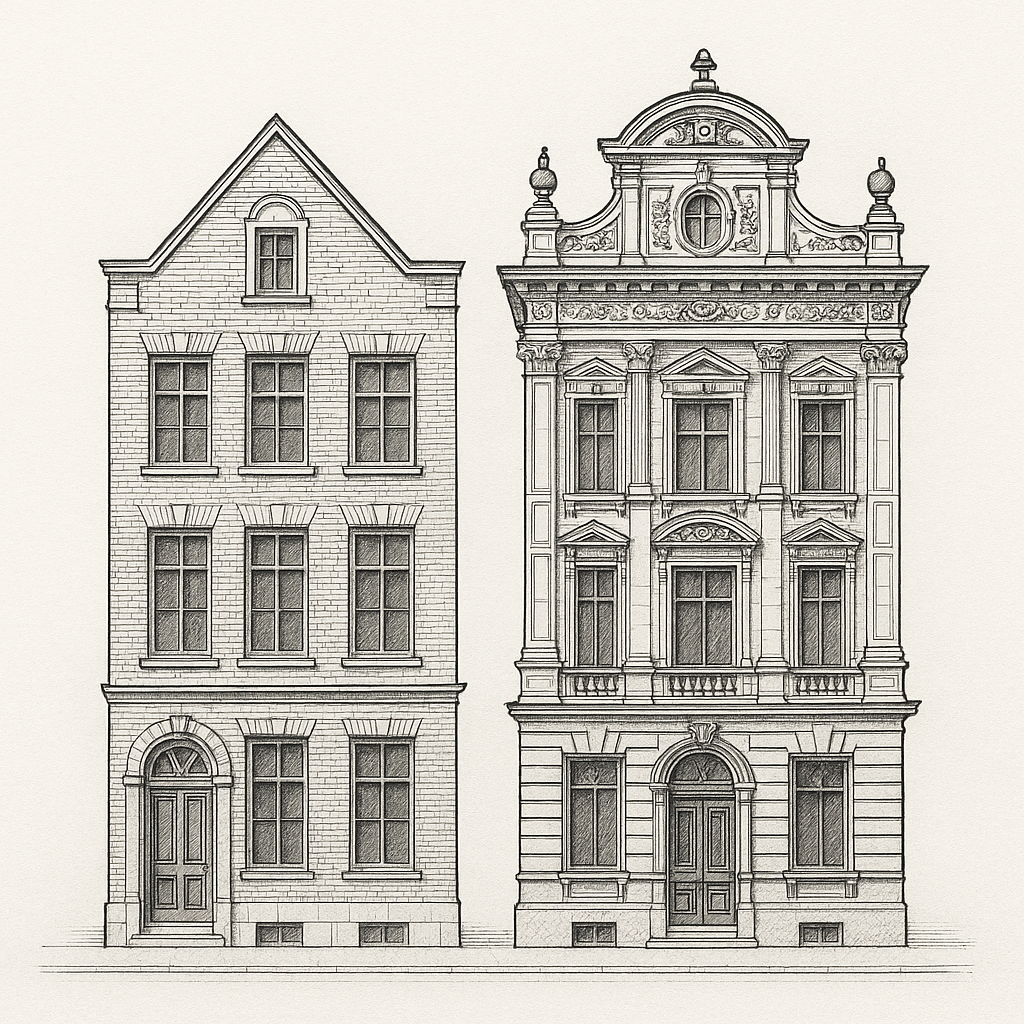
How two Cape Town CBD blocks generated a 32% gain, revealing shifting work habits, gentrification, and tightening office vacancy.
Two old office buildings in Cape Town, Hamilton House and Chiappini House, were sold for a whopping R107 million. This sale, by Spear REIT, shows a big change in the city's property market. It proves that old, less-liked buildings can become super valuable if redeveloped, especially in areas once thought of as not so great. This huge profit, far more than usual, highlights new work trends, the charm of historical buildings, and a lack of good office spaces. Essentially, it signals that what was once overlooked is now gold.
What is the significance of the Hamilton House and Chiappini House sale in Cape Town's CBD?
Spear REIT's sale of Hamilton House and Chiappini House for R107 million signifies a major shift in Cape Town's property market. It highlights the potential of redeveloping older B-grade offices into high-value assets and indicates that formerly "fringe" areas of the CBD are becoming prime investment locations due to changing work patterns, heritage appeal, and a shortage of quality space.
Get Cape Town news in your inbox
Stay updated with the latest stories from the Mother City.
The R80m Gamble That Turned Two Ageing Blocks Into a 32 % Jackpot
Spear REIT never shouted about the purchase. In late 2024 the JSE-listed landlord simply folded Hamilton House and Chiappini House into its portfolio for a combined ± R80 million, two beige 1980s blocks squashed between Chiappini and Duncan Streets. Eighteen months later the same pair traded for R107 million, a gain that would make crypto traders blush.
The eye-popping 32 % jump is almost five times the average annual distribution South African listed property companies have delivered lately. Yet the windfall is more than a spreadsheet flex; it is a neon sign flashing across De Waterkant that yesterday’s “fringe” is tomorrow’s frontier.
Behind the numbers sits a cocktail of post-pandemic work patterns, heritage aesthetics and a plain shortage of decent space. Spear’s sale is therefore not a mere exit - it is a market memo stating that tired B-grade offices are worth more as redevelopment clay than as dull yield cows.
Bricks, Beams and the Airbnb View: What the Buyer Actually Got
Hamilton (1987) and Chiappini (1993) are six-storey concrete sandwiches thrown up in the final decade of apartheid speculation. Each floor plates out at roughly 850 m², wrapped in tinted single-glaze and roofed by ancient York chillers that still groan every summer.
A decade ago the combo of noisy weekend nightlife and obsolete lifts made long leases almost impossible. Today the same cobbled lane, now lined with Victorian cottages flipped into short-stay boutiques, delivers walk-to-the-Waterfront convenience and 15-minute-city bragging rights.
The purchase price equates to about R24 000 per square metre; rebuilding the shells from scratch would nudge R35 000/m² before land cost, a gap that gives the buyer immediate paper upside and a hedge against construction inflation racing at 18 % for cement and even more for steel.
Recycling Capital: How Spear Turns CBD Dust into Logistics Gold
Spear loves a clean story: dump the non-core, bank the profit, channel the cash into high-kicking logistics assets and keep loan-to-value under 30 %. The R26 million realised gain slips neatly into that script, funding the forthcoming 20 000 m² last-mile facility in Montague Gardens without tapping shareholders.
Earlier cycles saw the group unload tired Pretoria retail strips at similar valuation spikes and redeploy into Riverfields Logistics Hub next to OR Tambo. Inside the REIT wrapper the gain attracts zero corporate tax, so every rand marches straight into the next acquisition - what insiders call swapping low-beta CBD rent for high-alpha logistics yield.
The manoeuvre also tidies the balance sheet ahead of year-end, allowing Spear to maintain dividend guidance while quietly upgrading the quality of its income stream.
The Invisible Hand Tightening Cape Town’s Office Noose
City-wide office vacancy hit 16.5 % in late-2021; by early-2026 it had collapsed to 9.4 %, the slimmest reading since Covid began. Three engines keep sucking up space:
Return-to-office peer pressure nudges corporates back to three-plus days a week, so banks and law firms now chase contiguous floors instead of scattered satellite suites. Landlords have also “recaptured” swathes of sub-lease stock, erasing another ±180 000 m² from available supply. Meanwhile the new-build pipeline is bone-dry - only one major office tower broke ground nationally in 2025 - so tenants must back-fill older blocks.
Hamilton and Chiappini, once dismissed as fringe B-grade, suddenly qualify as swing supply within a five-minute stroll, giving the seller pricing power no brochure could have promised five years ago.
Who Paid the R107m and Why They Think 18 % IRR Is Conservative
Deeds office data shows buyer 44 Chiappini Proprietary Limited, a shell fed by two Cape private-equity families and a Johannesburg hotel group. They lodged plans two weeks before transfer, pushing for mixed-use rights that would stack two penthouse levels and 38 micro-units above the offices.
Their underwriting assumes a blended income stream: conventional rent from retained suites, short-stay rev-par from the new studios and rooftop hospitality pods. Stress-tests already pencil IRR “north of 18 %” even before counting the Instagram premium that heritage bronze-anodised fins will add once SAOTA’s R3.5 million design hits social feeds.
An instalment-sale structure delays transfer duty of R4.28 million until rezoning is sealed, freeing immediate cash for lifts, PV arrays and co-working lounges that should wow Deloitte and Woolworths Financial Services - both rumoured to be lining up tenant-improvement allowances before the paint is dry.
Infrastructure, ESG and the R30-per-Hour Parking Shock
The City’s R480 million plan to pedestrianise Bree Street into a mobility spine places a future LRT stop 90 metres from Hamilton’s front door, adding the so-called “latte-warrior premium” tech employers gladly subsidise.
New municipal bylaws force buildings above 2 000 m² to benchmark energy intensity by 2027; 5 % of the purchase price sits in green escrow until the buyer tables a net-zero roadmap. Nedbank’s Green Bond desk is circling, tempted by projected peak-demand savings of R1.3 million a year once rooftop PV and lithium storage are bolted on - an upgrade that could pad exit valuation by another R15 million come 2028 refinance.
Neighbouring landlords have already reacted: asking rents popped from R140/m² to R175/m², ground-floor food concepts trade at R750/m² (Sandton territory) and a private operator now charges R30 an hour at the once-sleepy DP Marais parking lot - triple the 2023 tab.
In short, the Hamilton–Chiappini price discovery is redrawing the entire CBD-fringe comparable map, proving that cultural cachet, tightening vacancy and a dash of financial engineering can still mint blockbuster returns in South African real estate - provided you know when to hold, when to fold and when to swap bricks for logistics sheds.
[{"question": "What is the significance of the Hamilton House and Chiappini House sale in Cape Town's CBD?", "answer": "Spear REIT's sale of Hamilton House and Chiappini House for R107 million signifies a major shift in Cape Town's property market. It highlights the potential of redeveloping older B-grade offices into high-value assets and indicates that formerly \"fringe\" areas of the CBD are becoming prime investment locations due to changing work patterns, heritage appeal, and a shortage of quality space.\""}, {"question": "How much profit did Spear REIT make from this sale, and what does it indicate?", "answer": "Spear REIT purchased Hamilton House and Chiappini House for approximately R80 million and sold them for R107 million, realizing a 32% gain. This significant profit, far exceeding typical listed property company returns, indicates that outdated B-grade offices are now valued more for their redevelopment potential than their traditional rental income, especially in areas previously considered less desirable but now benefiting from new urban trends."}, {"question": "What factors contributed to the increased value of these properties?", "answer": "Several factors contributed to the surge in value: post-pandemic work patterns (leading to a return-to-office trend), the appeal of historical buildings and heritage aesthetics, and a severe shortage of decent office space in Cape Town. Additionally, the properties' location, once considered noisy, now offers '15-minute city' convenience with proximity to the Waterfront and transformed into vibrant short-stay areas."}, {"question": "Who purchased Hamilton House and Chiappini House, and what are their plans for the properties?", "answer": "The properties were purchased by 44 Chiappini Proprietary Limited, a shell company backed by two Cape private-equity families and a Johannesburg hotel group. They plan a mixed-use redevelopment, stacking two penthouse levels and 38 micro-units above the existing offices. Their strategy involves a blended income stream from conventional rent, short-stay accommodation, and rooftop hospitality, aiming for an internal rate of return (IRR) of 'north of 18%'."}, {"question": "How does Spear REIT plan to utilize the capital generated from this sale?", "answer": "Spear REIT intends to recycle the capital by investing the R26 million realized gain into high-growth logistics assets. Specifically, the funds will be used to finance a forthcoming 20,000 m² last-mile facility in Montague Gardens, aligning with their strategy to shift from lower-beta CBD rent to higher-alpha logistics yield. This move also helps clean up their balance sheet and maintain dividend guidance."}, {"question": "What broader market trends in Cape Town's CBD are highlighted by this transaction?", "answer": "This transaction underscores a significant tightening in Cape Town's office market, with city-wide office vacancy rates plummeting from 16.5% in late-2021 to 9.4% by early-2026. This is driven by corporate return-to-office mandates, a 'recapture' of sub-lease stock, and a near-empty new-build pipeline. The sale also reflects the 'latte-warrior premium' for well-located properties near future public transport (like the planned Bree Street LRT stop) and the growing importance of ESG factors, indicated by green escrow payments and potential green bond financing opportunities."}]

Tumi Makgale is a Cape Town-based journalist whose crisp reportage on the city’s booming green-tech scene is regularly featured in the Mail & Guardian and Daily Maverick. Born and raised in Gugulethu, she still spends Saturdays bargaining for snoek at the harbour with her gogo, a ritual that keeps her rooted in the rhythms of the Cape while she tracks the continent’s next clean-energy breakthroughs.
View all articles →