
21-year court battle over TB in prisons ends in R1-million payout
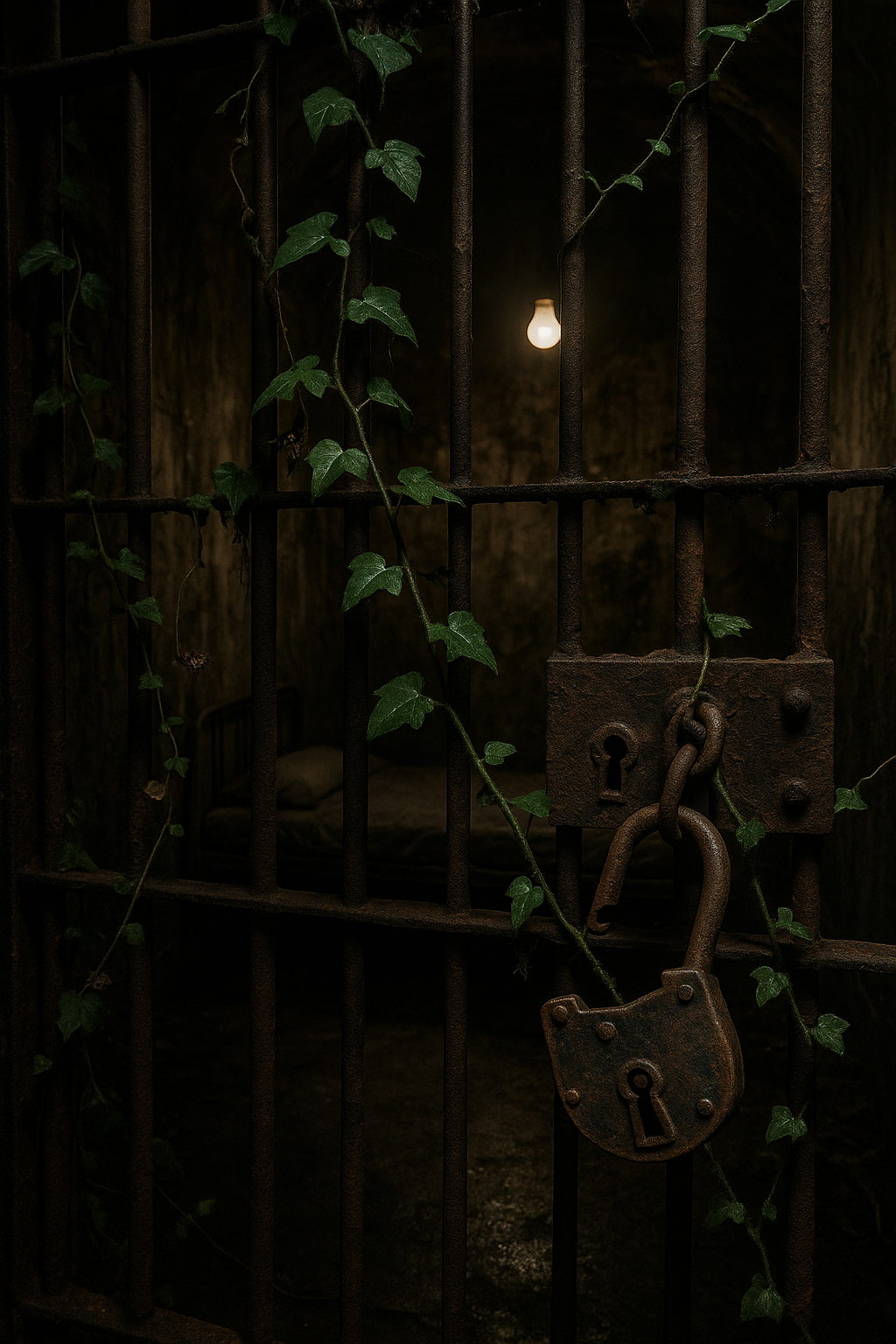
A man's TB battle in Pollsmoor Prison leads to a R1-million legal payout, exposing systemic failures and potential future liabilities.
Zaid Seedat won a huge R1 million lawsuit against Pollsmoor Prison! He got very sick with TB there because the prison was super crowded and dirty. It took 24 long years for him to get his money, as the government fought him every step of the way. This case shows how badly managed our prisons are and how the law can be slow, but it also gives hope to others fighting for their rights.
How much did Zaid Seedat receive in his tuberculosis lawsuit against Pollsmoor Prison?
Zaid Seedat was awarded R1,067,734.50 in his lawsuit against the Minister of Correctional Services. This payout, stemming from a tuberculosis infection contracted at Pollsmoor Prison, took 24 years to materialize due to extensive legal battles and state appeals.
Get Cape Town news in your inbox
Stay updated with the latest stories from the Mother City.
A Price Tag That Refuses to Fade
- R1 067 734,50* is the precise rand-value the Minister of Correctional Services must now hand over to Zaid Seedat, a 47-year-old Durban entrepreneur. Seedat entered Pollsmoor in June 2000 and left 38 months later with a cough that doctors would not explain for another year and a half. The headline figure grabs attention, yet the calendar behind it is the real shock: twenty-four years from infection to payout, thirteen of those lost in procedural ping-pong while the state appealed, settled, un-settled, then settled again.
The delay was not accidental. After the landmark Lee judgment in 2012, Pretoria’s strategy shifted from denial to attrition: concede liability, but haggle over every rand of interest. Seedat’s team argued the debt crystallised the day the Constitutional Court spoke; the state insisted it only matured once quantum was fixed in 2024. The eventual compromise - 15.5 % simple interest from December 2012 plus 10.25 % compound thereafter - turned an original R350 000 offer into the million-plus award now on the table.
The Wing That Became a Petri Dish
Pollsmoor’s hospital section opened in 1964 with 80 beds and working negative-pressure ducts. By 2000 it crammed 340 remand prisoners into the same space. Ventilation bricks had been blocked to keep winters warm; extractor fans seized up; window frames were painted shut. An internal memo unearthed during litigation showed airborne bacilli levels 300 times the World Health Organization’s “intolerable risk” threshold. Seedat slept 417 nights on a rubber mat in that space, wedged between two other men, the mat hosed down weekly and never fully dry.
Overcrowding was not the only accelerator. Medical staff shortages meant one nurse supervised 120 inmates; doctors visited twice a week. The prison’s own 2001 infection-control policy demanded two positive smears before treatment could start - a bar so high the average wait stretched eleven weeks. By the time Seedat produced bloody sputum, X-rays already revealed gaping cavities in his right upper lobe. Therapy began on 6 December 2001, seventy days after his first written complaint and 540 days after admission.
The Bug That Thrives on Bureaucracy
Mycobacterium tuberculosis doubles every sixteen-to-twenty hours when air stands still. One untreated carrier infects five to fifteen contacts annually; in packed dormitories the reproductive rate leaps to thirty. Genotyping later tagged Seedat’s strain as Beijing lineage 105 - the same hyper-virulent family behind Tugela Ferry’s 2006 XDR-TB disaster. Molecular dating suggests he caught it within six to eight weeks of arrival, yet systemic bottlenecks delayed medication for months, gifting the organism ample time to spread.
South Africa’s prisons recorded 7 400 TB cases in 2000; Pollsmoor alone contributed 12 % of the national prison total. The state’s own data showed awaiting-trial inmates were four times more likely to fall ill than sentenced prisoners, largely because remand wards housed double their design capacity. After the Lee ruling, the Department promised segregation, rapid testing and UV-C lights. A pilot project launched in the female wing - home to 312 women - yet the male remand sections, where Seedat lived, were declared “too overcrowded to retrofit.”
The Constitutional Bomb That Reset the Rules
While Seedat fought side-effects from streptomycin, another remand prisoner, Dudley Lee, quietly prepared the case that would rewrite the rules. Lee’s lawyers refused two pre-trial settlement offers, gambling that a Constitutional Court declaration would unlock larger precedent. They won: on 11 December 2012 the Court ruled that “deliberate exposure of inmates to a foreseeable and preventable risk of TB infection” amounts to negligence per se. Paragraph 63 of the 78-page judgment became the lodestar for every damages action that followed.
Seedat’s attorneys invoked Lee immediately, but the state still stalled. Treasury regulations required ministerial sign-off for any payout above R250 000; officials who initialled a R300 000 settlement in March 2024 were disavowed weeks later. A rescission application forced Seedat back to court, where Acting Judge Adrian Montzinger held that once Lee existed the state could not credibly claim ignorance of its liability. Interest therefore ran from December 2012, adding R717 734 to the R350 000 capital and producing the seven-figure total now payable.
The Cheque That Cannot Buy Breath
Seedat’s windfall will clear his home loan, fund university fees for his two children and leave roughly R200 000 invested. Yet money cannot reverse the physical toll: surgeons removed his right upper lobe in 2009 after repeated bleeding; liver-function tests every quarter bar him from alcohol; lung capacity hovers at 60 %. Epigenetic studies from the University of Cape Town link severe prison-TB to triple the normal risk of chronic depression and an 80 % jump in cardiac mortality - damages no cheque can quantify.
Meanwhile, the queue of new claims keeps growing. Attorney Jonathan Cohen currently manages eighteen post-Lee matters against Western Cape facilities; seven have settled for R270 000–R420 000 each. Legal Aid SA’s “Prison Health Project” lists another 519 potential plaintiffs in Gauteng, KwaZulu-Natal and the Eastern Cape. If half succeed, aggregate exposure could top R400 million - money that could rebuild every dilapidated prison clinic in the country, yet the Department still prefers payouts to bricks-and-mortar fixes.
The Virus That Outruns the Law
Hungary paid €5 million to 1 100 infected inmates in 2013; Latvia disbursed €2.3 million in 2018; Rhode Island’s Palmigiano decree cost $1.2 million plus negative-pressure retrofits. South Africa’s distinction is speed: the average lag from infection to payout is eighteen years, the longest globally. Treasury will not release funds for UV-C lights or Gene-Xpert cartridges without a ministerial directive; the directive has sat unsigned since March 2023. Every postponed month adds interest to future claims and fresh infections to prison wings.
Sometime after 31 March 2026 Seedat’s phone will ping: “EFT: CJN-2026-Seedat-Z R1 067 734,50.” Far below the prison’s granite façade, a twenty-two-year-old awaiting-trial prisoner will cough into a towel stitched from discarded shower curtains, unaware that the precedent validating his eventual suffering has already been written in the Constitutional Law Reports. The money will move; the bacilli will stay.
What was the outcome of Zaid Seedat's lawsuit against Pollsmoor Prison?
Zaid Seedat successfully sued Pollsmoor Prison and was awarded R1,067,734.50 for contracting tuberculosis (TB) due to the prison's overcrowded and unsanitary conditions. This landmark case highlighted severe mismanagement within correctional facilities and set a precedent for other inmates seeking justice.
Why did it take so long for Zaid Seedat to receive his settlement?
It took 24 years for Zaid Seedat to receive his R1 million settlement. The delay was primarily due to the government's persistent legal battles, including appeals and protracted negotiations over interest. The state's strategy shifted from denial to attrition after the 2012 Lee judgment, prolonging the process by haggling over every detail and appeal.
What were the conditions like at Pollsmoor Prison that led to Seedat's TB infection?
Pollsmoor Prison's hospital section, designed for 80 beds, was crammed with 340 remand prisoners. Ventilation was severely compromised with blocked bricks, seized extractor fans, and painted-shut windows. An internal memo revealed airborne bacilli levels 300 times the WHO's "intolerable risk" threshold. Seedat slept on a rubber mat, wedged between two other men, in these unsanitary conditions, facilitating the spread of TB.
How did the "Lee judgment" impact Zaid Seedat's case and future similar lawsuits?
The "Lee judgment" in 2012, from another remand prisoner's case, ruled that "deliberate exposure of inmates to a foreseeable and preventable risk of TB infection" constitutes negligence. This Constitutional Court ruling became a crucial precedent, allowing Seedat's attorneys to argue for liability and ensuring that interest ran from December 2012, significantly increasing his final award. It now serves as a lodestar for all similar damages actions.
Beyond the financial compensation, what were the long-term health consequences for Zaid Seedat?
Despite the R1 million payout, Seedat faces severe long-term health consequences. Surgeons had to remove his right upper lung lobe, his lung capacity is reduced to 60%, and he undergoes regular liver-function tests. Studies suggest that severe prison-TB can lead to a triple risk of chronic depression and an 80% increase in cardiac mortality, damages that money cannot fully compensate.
What broader implications does Zaid Seedat's case have for the South African correctional system?
Seedat's case exposes systemic failures within the South African correctional system, particularly regarding prison health and overcrowding. It highlights the government's preference for costly payouts over implementing essential infrastructure improvements like UV-C lights and better ventilation. The case also provides hope for other inmates fighting for their rights, with hundreds of similar claims currently being pursued, potentially leading to aggregate exposure topping R400 million.

Amanda Wilson is a Cape Town-born journalist who covers the city’s evolving food scene for national and international outlets, tracing stories from Bo-Kaap spice shops to Khayelitsha micro-breweries. Raised on her grandmother’s Karoo lamb potjie and weekend hikes up Lion’s Head, she brings equal parts palate and pride to every assignment. Colleagues know her for the quiet warmth that turns interviews into friendships and fact-checks into shared laughter.
View all articles →