
5 of the best forest escapes in and around Cape Town
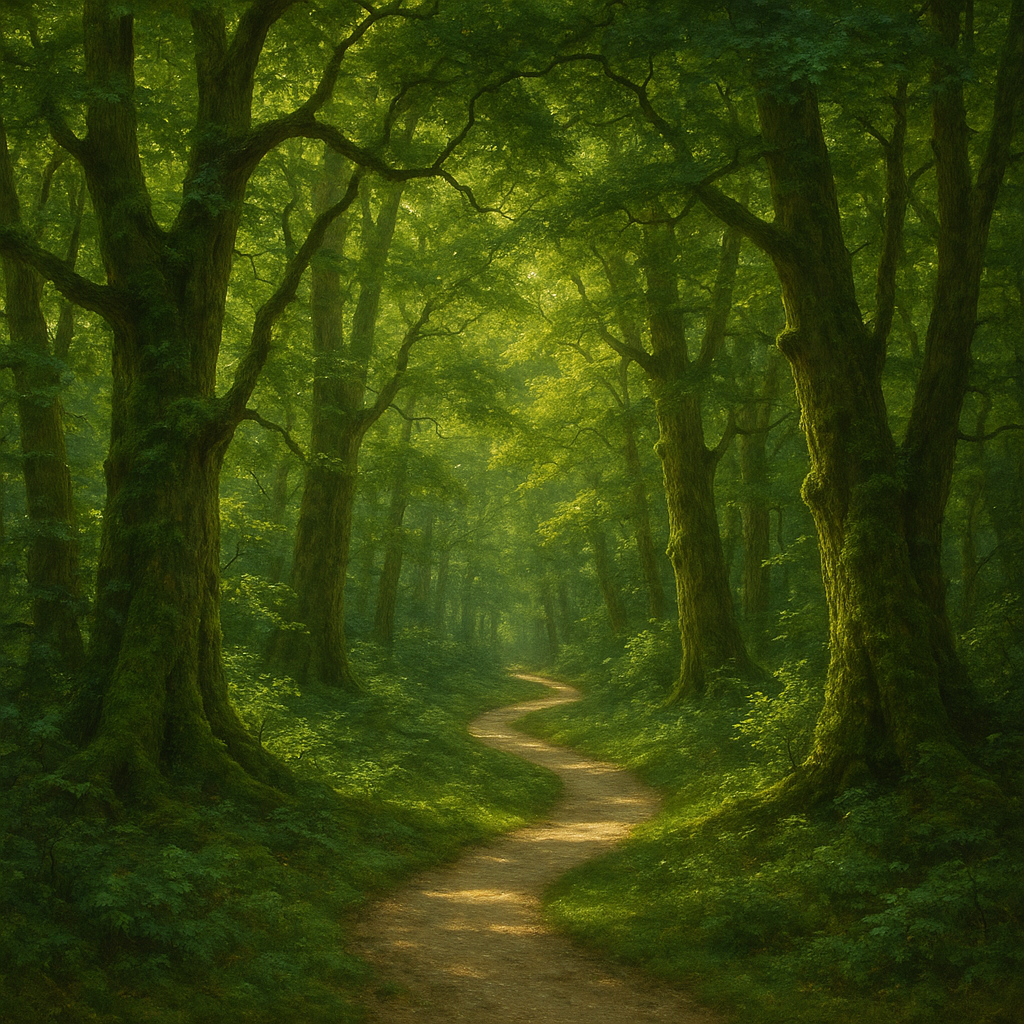
Explore Western Cape's ancient Afromontane forests and hidden green gems. Discover nature trails, unique wildlife, and micro-adventures.
Explore the secret 'pocket rainforests' of the Western Cape! From ancient yellowwood giants near Cape Town to misty cloud forests along the coast, these magical places offer wild adventures. Discover hidden waterfalls, spot rare creatures, and walk through living history. It's an unforgettable journey into nature's green heart.
What are the best rainforests to visit in the Western Cape?
The best rainforests to visit in the Western Cape include Newlands Forest and Tokai Arboretum near Cape Town, Grootvadersbosch and Marloth Nature Reserve in the Langeberg Range, and Tsitsikamma, Knysna, and Platbos along the Garden Route. These diverse locations offer unique ecological experiences, from ancient yellowwood trees to coastal cloud forests.
Get Cape Town news in your inbox
Stay updated with the latest stories from the Mother City.
1. City-Edge Sanctuaries: Newlands & Tokai
Step off the pavement at -33.977° S / 18.428° E and within fifteen minutes you can be under a 300-year-old yellowwood. Newlands Forest survives because 18th-century ox-teams balked at the gradient; the timber barons never reached the steeper gullies, so stinkwood, ironwood and white pear still form a natural buttress against Table Mountain’s eastern flank.
The Contour Path is the quickest handshake: six kilometres out-and-back, only 200 m of climbing, yet it delivers waterfalls in winter and pre-dawn porcupine sightings when the rest of Cape Town is queuing for coffee. Branch onto any of the unsigned Fernwood spurs and you’ll bump into katjiepiering shrubs so dense they feel like walking through green snow.
Below the canopy, the 1891 masonry inspection hatches stamped “CCT” mark Cape Town’s first municipal water line; touch the iron lid and you’re literally feeling Victorian engineering. Sunrise tip: be on the path by 06:45 in midsummer - by 08:00 the parking lot resembles a music festival.
Hop ten kilometres south and Tokai Arboretum flips the script: instead of indigenous relict, you get a 138-year-old United-Nations of timber trials. Joseph Storr Lister planted camphor, swamp cypress, Himalayan cedar and 271 other species to see what could feed the Royal Navy’s appetite for masts. The result is a living library where every tree wears a brass tag like a museum label.
Camphor Avenue, 150 years old and fused into a photosynthetic tunnel, has doubled as wedding aisle and mountain-bike feed zone. After gate-closing time the neighbouring pine blocks stay open; headlamp up and you may hear the endangered geometric tortoise scraping lichen off old bark - an odd, chalk-board screech that makes novices think the forest is haunted.
Parents take note: the “tree-detective” backpacks (free from the picnic office) contain beetle bingo, bark-rubbing crayons and a magnifier strong enough to see stomata - instant junior ranger credentials.
2. Deep in the Fold: Grootvadersbosch & Swellendam’s Secret Gorge
Three hours east the Langeberg Range swallows the horizon. Tucked behind a dairy-farming valley lies Grootvadersbosch, 250 ha of closed-canopy forest that feels like someone dropped a piece of Knysna on the wrong side of the mountains. Winter fronts from the Cape collide with summer thunderstorms from the Karoo, so you’ll find coral trees alongside cedar-like witels - a botanical mash-up found nowhere else.
Choose the Bushbuck loop for a quick three-kilometre flirtation: Narina trogon and Francois’ orange-wing flash like living gemstones through the mid-storey. Add the 200-metre spur to Red Fin Pool if you want to tick the critically endangered fiery redfin; it breeds only here, in tea-coloured water that mirrors the forest roof like liquid bronze.
Stay-over strategy: four off-grid cabins sit just inside the tree line - solar lights, hot-water donkeys, zero signal. Book through CapeNature, but first detour into Heidelberg and buy a roosterkoek the size of a steering wheel; crumbs on the dirt road are practically a sacrament.
Most visitors stop at Grootvadersbosch and turn back, completely missing Marloth Nature Reserve 30 km further. A 12-kilometre kloof carved by the Duiwenhoks River hides beneath 400 m cliffs draped in riverine forest so tight you’ll switch on your head-torch at midday.
Morning mission: abseil 60 m beside a waterfall that sprays like a fire hose. Lunch happens on sun-bleached boulders where fish eagles circle overhead. Afternoon finish: seven kilometres of yellowwood gallery ending in a rock jacuzzi big enough for four - nature’s own plunge pool.
3. Where Salt Meets Moss: Tsitsikamma, Knysna & Platbos
Tsitsikamma is the only place on Earth where temperate high-canopy forest grows within a wave’s crash of cliff-bound coastline. Mean annual rainfall exceeds 1 200 mm; humidity hovers around 80 % - essentially a cloud forest the Garden Route keeps for itself.
The 2 km Suspension-Bridge boardwalk is the sampler tray: kelp-scented air, 77 m of cable sway above a black-water gorge, and tidal pools that starfish the size of dinner plates call home. Apply for a one-day Otter permit and you can push 4 km further to a waterfall cave where the sand is always damp and the echo always sounds like distant thunder.
Need adrenaline? Clip onto the canopy tour and zipline 30 m above the crowns; guides radio when they spot Cape-leopard prints in the mud below. Post-hike, rent a mask at Storms River Mouth and drift the kelp lanes - you’ll float past Knysna seahorses, the planet’s only estuarine member of the genus.
Knysna itself has lost 90 % of its original 600 km², yet the remaining 60 000 ha still guard myths. DNA from fresh dung proves at least one female elephant - the world’s southernmost free-roaming individual - still ghosts between plantation and town.
Jubilee Creek is the family gateway: three kilometres of tannin-stained water where Victorian steam engines once cooled. Millwood Circuit (10 km) adds a ghost town - rusty rail, abandoned mines, and Mother Holly’s tea room where scones emerge from a wood stove so old it could claim a pension.
Obtain the R60 “Forest 4×4 & Hiking Permit” online and gates like Gouna open onto six-hour walks where the only footprints are your own and perhaps those of the phantom ellie.
Drive two hours west and you reach Africa’s southernmost indigenous forest: Platbos at 33°34′ S, surviving on a shallow limestone aquifer that squeezes out moisture even in February. Milkwoods here have celebrated a millennium of birthdays; their trunks twist like frozen cyclones.
Francois and Melissa Krige fund restoration through R150 “Tree-of-Life” sponsorships - each seedling gets a GPS coordinate and an annual photo update. Add an artist-led palette walk: crush wild olive leaves for khaki, use ochre clay for sunset orange, mail the postcard to your future self.
Night-time delivers a geodesic sound-bath dome; quartz singing bowls vibrate at 432 Hz while butterflies land on the canvas, tapping out polyrhythms. Cabins run on paraffin and stars - zodiacal light so bright you’ll swear someone turned on a floodlight behind the ridge.
4. High-Altitude Oddities & How to Move Through Them
Table Mountain isn’t famous for forests, yet on south-east gale days the pine belt above Kirstenbosch turns into a dripping cloud strip. Hike Skeleton Gorge: four kilometres, 700 m of ladders and root scrambles until you pop out at Hely-Hutchinson dam.
Swim in rust-coloured water while the Cape Flats shimmer 600 m below - forest plus view in a single ticket. Time it for October–November and you’ll witness Disa uniflora blooming straight from the moss - orchids that prefer waterfalls to vases.
Farther north, the Cederberg’s ravines hold Waboom figs gripping sandstone like eagle talons. They’re 200 km beyond the main Afromontane line, surviving as micro-refugia where perennial seepage never quits. Link the four-day Rock-Art Trail: sleep in caves under 2 000-year-old San paintings, shade your tent beneath 15 m yellowwoods whose roots look ready to take flight.
Moving without wheels is easier than you think. MyCiTi buses #108 and #109 dump you at Kirstenbosch gate; from there Newlands and Tokai are a stroll. The Overberg Hopper shuttle leaves Cape Town Civic Centre at 07:00 daily and reaches Stanford; pre-arrange collection and Platbos will fetch you like a long-lost cousin.
Intercape coaches roll overnight to Knysna; hire a bike at the station and pedal six mostly-flat kilometres to Jubilee Creek. Baz Bus drops at Storms River Bridge - hitch the last stretch or book a hostel transfer straight to Tsitsikamma’s gate.
Fieldcraft quick-fire: Leeches in Tsitsikamma and Knysna hate sunscreen - dab a ring on each sock. Peak-fire season is December–April; a 25 m cotton bandana doubles as sweat-rag and emergency fire-beater. Estimate yellowwood age by multiplying trunk circumference (metres at chest height) by twelve; accuracy within a decade.
Pack an 18 L compressible pack, 1 L water plus 750 ml electrolyte - forest air is deceptively desiccating. A 28 mm prime lens captures dim understorey without cranking ISO to noisy levels. Rooibos tea bags neutralise tannin if you must refill from streams; a zip-locked sit-pad turns cold granite into instant lounge furniture.
The Western Cape’s forests will never win a size contest, yet their punch lies in contrast: step off fynbos glare into green twilight, wait seven motionless minutes, and the soundtrack re-calibrates - drip, creak, rustle, heartbeat. No app required, no entry fee for silence. Just lock the car, switch the phone to aeroplane mode, and walk under the leaves.
[{"question": "What are the 'pocket rainforests' of the Western Cape?", "answer": "The 'pocket rainforests' of the Western Cape are unique, often isolated patches of indigenous forest that thrive in specific microclimates, offering diverse ecosystems. They range from ancient yellowwood forests near Cape Town, like Newlands and Tokai, to misty cloud forests along the coast, such as those found in Tsitsikamma and Knysna. These areas are characterized by high humidity, lush vegetation, and often host rare flora and fauna."}, {"question": "Where can I find ancient yellowwood trees in the Western Cape?", "answer": "You can find ancient yellowwood trees in several locations across the Western Cape. Newlands Forest, just outside Cape Town, boasts 300-year-old yellowwood giants. Grootvadersbosch and Marloth Nature Reserve in the Langeberg Range also feature significant yellowwood galleries. Along the Garden Route, Tsitsikamma and Knysna are well-known for their impressive yellowwood forests, some with trees that are centuries old."}, {"question": "Are there any forests accessible from Cape Town for a quick visit?", "answer": "Yes, there are two easily accessible forests near Cape Town. Newlands Forest is a quick 15-minute drive from the city center, offering trails like the Contour Path and opportunities to see waterfalls and diverse indigenous flora. Tokai Arboretum, about ten kilometers south, is a 'living library' of trees planted in the 19th century, with different species from around the world. Both offer unique walking and nature experiences close to the urban environment."}, {"question": "What unique wildlife can be spotted in these rainforests?", "answer": "The Western Cape's pocket rainforests are home to a variety of unique wildlife. Pre-dawn porcupine sightings are possible in Newlands Forest. At Tokai Arboretum, the endangered geometric tortoise can sometimes be heard. In Grootvadersbosch, you might spot the vibrant Narina trogon and Francois’ orange-wing, as well as the critically endangered fiery redfin fish. Tsitsikamma offers Knysna seahorses in its marine areas, and there's even evidence of at least one free-roaming elephant in the Knysna forest."}, {"question": "How can I access these remote forest areas without a car?", "answer": "Accessing these forests without a car is possible through various public transport and shuttle services. MyCiTi buses #108 and #109 can take you to Kirstenbosch, from where Newlands and Tokai are a short stroll. The Overberg Hopper shuttle serves Stanford, near Platbos, with pre-arranged collection. Intercape coaches run overnight to Knysna, and the Baz Bus stops at Storms River Bridge for Tsitsikamma, where hostel transfers are available. This allows for eco-friendly exploration of the region's green heart."}, {"question": "What are some essential tips for exploring the Western Cape's pocket rainforests?", "answer": "When exploring, prepare for diverse conditions. For Tsitsikamma and Knysna, apply sunscreen to socks to deter leeches. Be aware that the peak fire season is from December to April. To estimate a yellowwood's age, multiply its trunk circumference (in meters at chest height) by twelve. Pack an 18L compressible pack, 1L of water plus 750ml of electrolyte, as forest air can be dehydrating. A 28mm prime lens is ideal for understorey photography. Rooibos tea bags can neutralize tannins if refilling from streams, and a zip-locked sit-pad provides comfortable seating on cold surfaces. Always remember to lock your car and switch your phone to airplane mode to fully immerse yourself in nature."}]

Isabella Schmidt is a Cape Town journalist who chronicles the city’s evolving food culture, from Bo-Kaap spice merchants to Khayelitsha microbreweries. Raised hiking the trails that link Table Mountain to the Cape Flats, she brings the flavours and voices of her hometown to global readers with equal parts rigour and heart.
View all articles →