
A dive in Cape Town’s kelp forest led to this TIME magazine cover
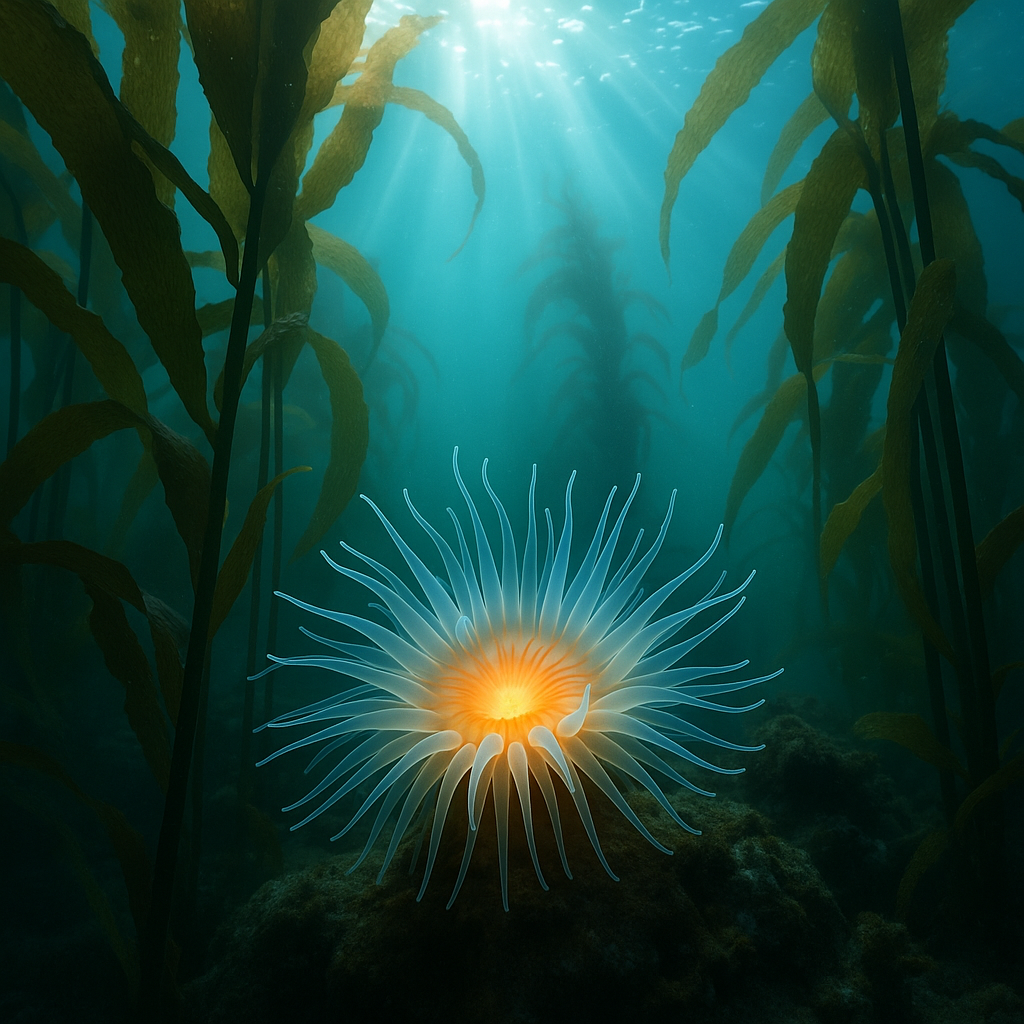
Meet Helen Walne, the underwater photographer whose stunning image of a Southern African kelp forest graced TIME's cover, revealing the hidden beauty beneath Cape Town.
Helen Walne, a brave photographer, shows us the secret world beneath Cape Town's waves. She dives deep into the amazing Great African Seaforest, a massive underwater jungle of kelp that's bigger than the city itself. Her beautiful pictures, like the one on TIME magazine, make everyone see this magical place filled with strange and wonderful creatures. Helen wants us all to love and protect this hidden forest that cleans our air and water.
What is the Great African Seaforest?
The Great African Seaforest, stretching along the Cape Town coast, is a vast underwater kelp forest spanning 1,000 square kilometers, larger than the city itself. It locks away 12 million tonnes of carbon and produces significant oxygen, yet remains largely unseen. Helen Walne's photography brought this vital ecosystem into global focus.
Get Cape Town news in your inbox
Stay updated with the latest stories from the Mother City.
1. First Dive, First Light
A single pulse from a strobe never looks the same twice underwater. On that Tuesday in late April 2022, the Atlantic was so calm the surface felt like polished obsidian. Helen Walne rolled off a yacht at Oudekraal before sunrise, carrying nothing but a battered Nikonos V, a faded weight belt and a roll of Fuji 400. She kicked gently across 80 metres of pale turquoise until the reef dipped into a natural amphitheatre ringed by swaying kelp. There, wedged in a sandstone pocket, glowed an anemone the colour of crushed raspberries. Walne hung upside-down, lungs compressing until her body became a living tripod. She exhaled three silver bubbles, sank twenty centimetres, and pressed the shutter once. The frame - grainy, slightly tilted, defiantly analogue - out-competed 9 000 submissions from 67 countries to land on the cover of TIME’s Oceans issue dated 4 October 2023. It was the first time a southern-African kelp forest fronted a global news weekly.
That cover still astonishes regular shoppers at Cape Town supermarkets who barely realise the forest exists. Stretching from Melkbosstrand to Cape Point, the Great African Seaforest spans 1 000 square kilometres - an expanse larger than the city itself - yet remains invisible to most commuters. Its cold canopy rides two metres above the seafloor; its limestone holdfasts anchor living tapestries of urchins, seastars, and nudibranchs whose names read like craft-beer labels: gas-flame, jewelled, orange-eyed blue. Walne’s photograph rammed that overlooked world onto every airport news-stand from New York to New Delhi.
2. From Hillside Chicken Runs to Cathedral Canopy
Helen Walne first learned patience among dew-jewelled spider webs and tick-hunting drongos on a 30-hectare free-range farm outside Howick in KwaZulu-Natal. Born in Oxford, England, she emigrated with her family at six. Collecting eggs before sunrise, she discovered that if you lay perfectly still in long grass the landscape eventually forgets you exist. Stillness, camouflage, reciprocity - those childhood tools became the invisible spine of an underwater philosophy she would only articulate decades later.
Boarding school in Pietermaritzburg and a gloriously unstructured zoology gap year in Durban followed. Romance then flung her north to St Andrews, Scotland, where archaeologists were mapping 8 000-year-old middens along the Fife coast. Carbon-dated shells and fish bones spoke of a forgotten era when Scots harvested kelp for alkali that powered the soap and glass revolutions. The lesson stuck: history is merely a ledger of how humans treat shorelines. Homesickness finally yanked her south; she rented a stone cottage on the Cape Peninsula and began walking the 300-kilometre spring-tide spine, notebook in one dry-bag, second-hand Nikonos in the other.
3. Becoming the Forest’s Memory
Walne’s first accidental descent happened in 2013 while photographing a shark-tagging crew off Smitswinkel Bay. Dropping backwards from a rubber duck, she fell through shattered shafts of light into a corridor so thick with Ecklonia maxima she lost sight of her fins. A school of strepie parted like green confetti; a juvenile cowshark, mottled like antique pewter, glided between bronze pillars. Forty-three minutes later she surfaced with burning lungs and a new religion. Since then she has logged more than 1 800 freedives, almost all solo, ascending only when her diaphragm quivers its first warning.
She refuses neoprene except in winter, preferring skin against 13 °C water for the “neural intimacy.” Bottom time is measured in heartbeats - ninety to one-hundred-and-twenty - before she drifts upward, eyes scanning for silhouettes. Individual sevengill sharks are recognised by the constellation of white freckles on their dorsal fins; a pyjama catshark she nicknamed Socks grew from palm-size to a metre over five years. All of it is logged, logged again, then tucked into catalogued hard-drives that now hold 40 000 stills and 200 hours of 4-K footage.
4. Guardians of the Quiet Breath Brigade
Walne’s lens refuses to let Cape Town look away. The forest locks away an estimated 12 million tonnes of carbon - roughly the annual belch of South Africa’s coal-fired power fleet - and produces more daytime oxygen than the entire fynbos biome. Yet less than five percent enjoys formal protection, and municipal outfalls still pump 55 million litres of only partly treated effluent into False Bay daily.
Her counter-weapon is a loose fellowship she calls the Quiet Breath Brigade - freedivers, surfers, grandmothers, taxi drivers - who meet at dawn for mask-and-snorkel immersions followed by public storytelling in beachside cafés. The rules fit on a napkin: no scuba tanks, no cameras until you have spent ten minutes simply watching. “Observation is the first act of stewardship,” she insists. “You can’t defend what you haven’t fallen in love with, and love begins with attention.”
When the southeaster howls at forty knots, Walne retreats to a garage darkroom scented by emulsified kelp she boils herself. There she prints negatives or threads a 1979 Soviet Krasnogorsk 16-mm camera into a homemade pressure box. The spring-wound motor grants only thirty seconds per wind; every dive becomes a meditation on impermanence - light, breath, film spool all running out together. A waterproof children’s book printed on stone-paper is due in 2025, stencil-cut so kids can project kelp shadows onto bedroom walls. Until then she loads fresh rolls into an orange plastic box once meant for naartjies, walks barefoot across the sand, and slips again beneath the canopy that first taught the city how to breathe.
What is the Great African Seaforest?
The Great African Seaforest, stretching along the Cape Town coast, is a vast underwater kelp forest spanning 1,000 square kilometers, larger than the city itself. It locks away 12 million tonnes of carbon and produces significant oxygen, yet remains largely unseen. Helen Walne's photography brought this vital ecosystem into global focus.
Who is Helen Walne?
Helen Walne is a brave photographer known for her stunning underwater images of the Great African Seaforest near Cape Town. Originally from Oxford, England, she immigrated to South Africa at six and developed a deep connection with nature. Her iconic photograph of an anemone was featured on the cover of TIME magazine's Oceans issue, bringing global attention to this hidden ecosystem. She is also the founder of the "Quiet Breath Brigade," advocating for the protection of the seaforest.
How did Helen Walne begin photographing the seaforest?
Helen Walne's journey into photographing the seaforest began accidentally in 2013 while documenting a shark-tagging crew. During this experience, she found herself immersed in a dense kelp corridor, which ignited her passion. Since then, she has logged over 1,800 solo freedives, using a battered Nikonos V camera and film, capturing the intricate beauty of this underwater world.
What makes Walne's photography unique?
Walne's photography is unique due to her commitment to analogue methods, using a Nikonos V and film, and her dedication to freediving. She prefers

Kagiso Petersen is a Cape Town journalist who reports on the city’s evolving food culture—tracking everything from township braai innovators to Sea Point bistros signed up to the Ocean Wise pledge. Raised in Bo-Kaap and now cycling daily along the Atlantic Seaboard, he brings a palpable love for the city’s layered flavours and even more layered stories to every assignment.
View all articles →