
African health security is vital in the face of new threats, says Ramaphosa
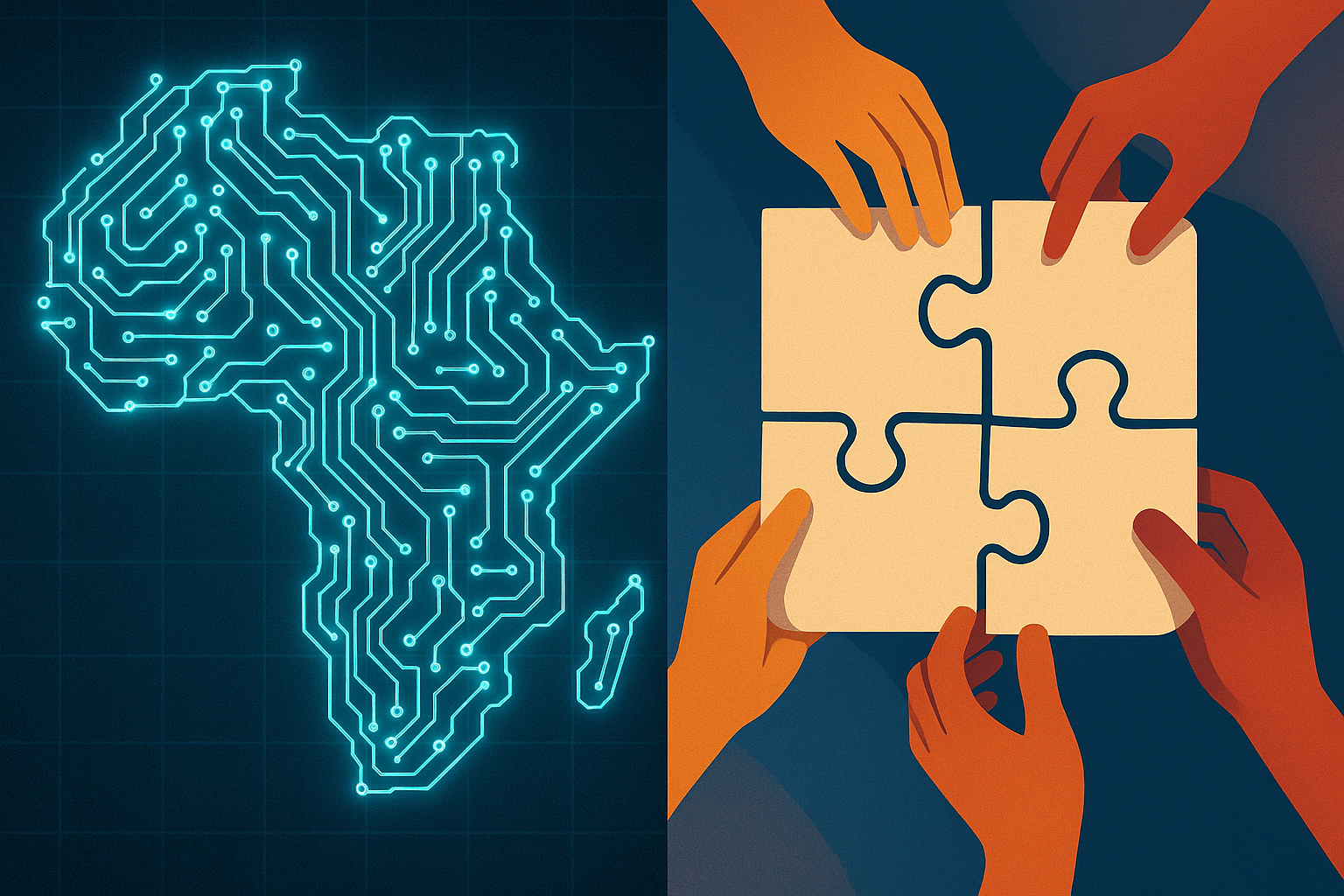
Ramaphosa urges stronger African health systems post-Covid. The continent is building self-sufficiency, from vaccine manufacturing to data networks.
Africa is building strong health defenses against future pandemics. They are making their own vaccines and medicines, so they don't have to wait for other countries. They are also using smart computer programs to find new diseases quickly. This way, Africa can stand on its own feet and be ready for any health challenge.
How is Africa building health security to prevent future pandemics?
Africa is strengthening its health security by investing in local vaccine manufacturing, enhancing data surveillance with early-warning algorithms, and developing regional pharmaceutical hubs. Key initiatives include the Partnership for African Vaccine Manufacturing, continent-wide data dashboards, and training programs for epidemiologists and contact tracers to reduce reliance on external aid and improve rapid response.
Get Cape Town news in your inbox
Stay updated with the latest stories from the Mother City.
When the Memory of Loss Still Lingers
Four years after President Cyril Ramaphosa declared South Africa’s first state-of-disaster, the continent refuses to forget. Over 100,000 South Africans never witnessed the recovery; two million bread-winners learned overnight how quickly pay cheques evaporate when borders slam shut and supply arteries rupture. Gravestones, shuttered shops and altered household budgets still testify to Covid-19’s visitation.
Scientists had long sounded the alarm: Africa hosts world-class genomic sleuths, inventive community-health brigades and centuries-old botanical know-how, yet remains shackled to pharmaceutical umbilical cords stretching to Europe, India and China. When doses finally docked in African ports in March 2021, fewer than 2% of adults across the continent had received a jab; North America had already surpassed 40%. Wealthy governments had covertly pre-purchased three-quarters of expected global production, locking most African ministries out of the market before procurement officers could lift a pen.
Ramaphosa’s mantra - “stand on our own feet” - springs from both ethics and economics: every rand that leaks abroad for vials and reagents is a rand denied to school meals or irrigation canals. Yet slogans do not conjure factories. Pretoria’s Biovac Institute, launched two decades ago to bag imported vaccines, now finishes Pfizer–BioNTech mRNA product under licence. Retrofitting sterile suites, installing air handlers that strip 0.3-micron particles and calibrating bioreactors to ping engineers’ phones if temperature drifts 0.1 °C consumed eighteen frenetic months. Multiply that complexity by the 27 diseases the World Health Organization classifies as vaccine-preventable priorities and one glimpses the Everest Ramaphosa has vowed to climb.
Data Highways, Dollar Gaps and the Push for Regional Factories
Parallel to bricks-and-mortar expansion flows an invisible architecture of digits and early-warning algorithms. In 2022 the Africa Centres for Disease Control unveiled the Partnership for African Vaccine Manufacturing, targeting 60% domestic output by 2040. A continent-wide dashboard swallows data from fever clinics, genome labs, rainfall gauges and livestock waypoints; machine-learning models flag spill-over signals days earlier than legacy surveillance. Ghana’s Accra sequencing hub trimmed poliovirus confirmation from 42 days to three after adopting RNA-extraction robots whose firmware libraries were crowdsourced by Cape-Town collective OpenAfroGen.
Cash remains lopsidedly donor-driven. Ramaphosa’s US$13.5 million pledge to Africa CDC carries symbolic punch - South African taxpayers subsidising prevention 3,500 kilometres north - yet pales against projected demand. The Global Health Security Index calculates that lifting every African Union member to a 50-point preparedness score demands US$33 billion over ten years, nearly half for cold-chain and coaching. To crowd-in private coin, the continent’s new African Pharmaceutical Agency is piloting advance-market commitments reminiscent of the historic meningitis-A deal that saved Niger’s children: APA guarantees bulk purchases once regulators grant stringent approval, letting firms like Gqeberha-based Aspen Pharmacare risk-proof new anti-TB plants.
Genes, steel and finance converge in Kigali, Cape Town and Nairobi. Rwanda now graduates 120 field epidemiologists yearly who rotate through urban and rural hospitals, embedding vigilance long after donor fatigue sets in. Cape Town’s field school trains contact-tracers in English and isiZulu, acknowledging that linguistically matched interviews yield richer narratives. Modules teach sangomas - responsible for 85% of primary-care transactions in parts of Limpopo - to file alerts via WhatsApp hotlines while herbal batches receive digital barcodes. Kenya’s new HIV drug plant outside Kisumu sources 40% of its electricity from adjacent solar farms, proving that laboratories can double as climate experiments.
Intellectual Property, Cityscapes and Philanthropy Rewritten
Legal terrain remains thorny. The South Africa–India bid to suspend Trade-Related Aspects of Intellectual Property rules for Covid tools was neutered at the World Trade Organization into a narrow, temporary vaccine-only waiver that evaporates in 2027. Ramaphosa now campaigns to make that waiver permanent and stretch it to diagnostics and therapeutics before the next ministerial meeting in Abu Dhabi. Stakes are high: Cape Town’s mRNA hub ships only inside Africa under a non-export clause that inflates unit prices roughly 30% above global mean, choking the production volumes needed to retain skilled staff.
Urban blueprints increasingly double as epidemiological fire-breaks. Johannesburg’s “Healthy Building” ordinance forces new multi-storey blocks to include 15% cross-ventilated communal space and ultraviolet-C lamps in air handlers, trimming future airborne transmission by an estimated 35%, while raising construction outlays scarcely 2%. Similar codes pilot in Lagos’s Yaba suburb and Nairobi’s Eastleigh estate, incubating markets for South African HVAC makers who sharpened skills in Baragwanath Hospital Covid wards.
Philanthropy is shifting. Motsepe Foundation recently pledged US$100 million, reserving 30% expressly for biotech incubators in Botswana, Namibia and Zimbabwe to compress the average journey from lab discovery to commercial licence from seven years to three. Applicants must meet two iron-clad conditions: at least 40% female equity and carbon-neutral production footprints, yoking health security to climate justice and gender parity.
From Flood-Proof Hospitals to Diaspora Bonds - Capitalising on the Lessons Learned
Even war-torn zones plug into the preparedness grid. In Mozambique’s northern Cabo Delgado, where insurgency displaced 800,000 residents, mobile clinics bolted inside armoured Land Cruisers ferry 3,000 vaccine doses inside solar fridges that hold the cold for five days without grid power. A women-majority Maputo start-up won the logistics tender; satellite backhaul uploads biometric jab records once vehicles reach safe bandwidth pockets. Joint funding from the UN Central Emergency Response Fund and a Mozambican fintech firm shows that pooled instruments can sustain outbreak shielding where governance frays.
Climate shocks are stitched into the master plan. The 2022 KwaZulu-Natal floods obliterated 40% of district pharmacy stock overnight - half a billion rand erased. South Africa’s disaster-management arm is prototyping floating modular clinics: barge-borne primary-care units towed to inundated townships within 36 hours. On-board reverse-osmosis purifiers and hydrogen micro-grids - field-tested in Western Cape Covid hospitals - promise continuity across cyclone belts and South Sudan’s Sudd wetlands, where seasonal floods routinely sever antiretroviral corridors.
A diaspora-financed renaissance is accelerating. The African Development Bank’s US$3-billion “Build Africa Bonds” issuance - snapped up by pension funds in Johannesburg, Lagos and London - earmarks 17% for continent-wide cold-chain upgrades. A Stanford spin-off founded by Nigerian engineers deploys AI to optimise drone routes for blood deliveries in Rwanda, cutting spoilage rates by 60%. Networks such as the Nairobi-headquartered African Biomedical Engineering Consortium knit Cape-Town students to mentors in Seattle and Guangzhou, sprinting prototypes past visa snarls and xenophobia.
A genomic nervous system now spans the continent. A Rockefeller- and Wellcome-backed surveillance grid sequences 3% of all African Covid positives - ten times the 2020 rate. An open repository, licensed Creative Commons, recently flagged two novel SARS-CoV-2 sub-variants whose mutation signatures diverge from dominant European lineages. Feeding into machine-learning forecasts six months ahead, the data lets the Serum Institute of South Africa recalibrate vaccine composition without waiting for northern guidance.
Ramaphosa’s refrain - “do the heavy lifting today” - rings less as political slogan and more as existential insurance. Viruses mutate faster than procurement officers can amend contracts; only resilient, self-funded systems can sprint ahead of the next pathogen shadow stretching across Africa’s horizon.
How is Africa building health security to prevent future pandemics?
Africa is taking significant steps to build health security by focusing on local manufacturing of vaccines and medicines, reducing its reliance on external aid. This includes initiatives like the Partnership for African Vaccine Manufacturing, which aims for 60% domestic output by 2040. They are also establishing regional pharmaceutical hubs and investing in advanced data surveillance systems.
What specific technologies and programs are being used for early disease detection?
Africa is leveraging cutting-edge technology for early disease detection. This includes continent-wide data dashboards that integrate information from fever clinics, genome labs, rainfall gauges, and livestock waypoints. Machine-learning models are used to analyze this data and flag potential disease spill-overs days earlier than traditional surveillance methods. For example, Ghana's Accra sequencing hub significantly reduced poliovirus confirmation time using RNA-extraction robots.
How is Africa addressing the issue of vaccine and medicine manufacturing independence?
To achieve independence in vaccine and medicine manufacturing, Africa is investing heavily in retrofitting facilities, installing advanced equipment for sterile production, and calibrating bioreactors. The Biovac Institute in Pretoria, for instance, is now finishing Pfizer-BioNTech mRNA products. The goal is to produce a significant portion of the continent's vaccine needs locally, addressing the historical disparity where African nations had limited access to essential medical supplies during global crises.
What challenges does Africa face in funding its health security initiatives?
Funding remains a significant challenge, with current efforts largely donor-driven. While pledges like South Africa's US$13.5 million to the Africa CDC are symbolic, they fall short of the estimated US$33 billion needed over ten years to elevate preparedness across all African Union members. To attract private investment, the African Pharmaceutical Agency is piloting advance-market commitments, guaranteeing bulk purchases to de-risk investments for companies like Aspen Pharmacare.
How is Africa developing human capital and local expertise in health security?
Africa is heavily investing in human capital development. Rwanda graduates 120 field epidemiologists annually, who rotate through hospitals to embed vigilance. Cape Town's field school trains contact tracers in multiple languages, including isiZulu, to ensure culturally and linguistically appropriate communication. There are also programs to integrate traditional healers (sangomas) into the surveillance network through WhatsApp hotlines, leveraging existing community structures.
What innovative approaches are being used to make health infrastructure resilient and sustainable?
Africa is adopting innovative approaches to build resilient and sustainable health infrastructure. This includes prototyping floating modular clinics that can be deployed to flooded areas, equipped with reverse-osmosis purifiers and hydrogen micro-grids for continuous operation. New urban planning codes, like Johannesburg's "Healthy Building" ordinance, incorporate features such as cross-ventilated communal spaces and UV-C lamps to reduce airborne transmission. Additionally, some new facilities, like Kenya's HIV drug plant, are sourcing electricity from adjacent solar farms, demonstrating a commitment to climate-friendly development.

Amanda Wilson is a Cape Town-born journalist who covers the city’s evolving food scene for national and international outlets, tracing stories from Bo-Kaap spice shops to Khayelitsha micro-breweries. Raised on her grandmother’s Karoo lamb potjie and weekend hikes up Lion’s Head, she brings equal parts palate and pride to every assignment. Colleagues know her for the quiet warmth that turns interviews into friendships and fact-checks into shared laughter.
View all articles →