
African penguin population grows at Boulders colony
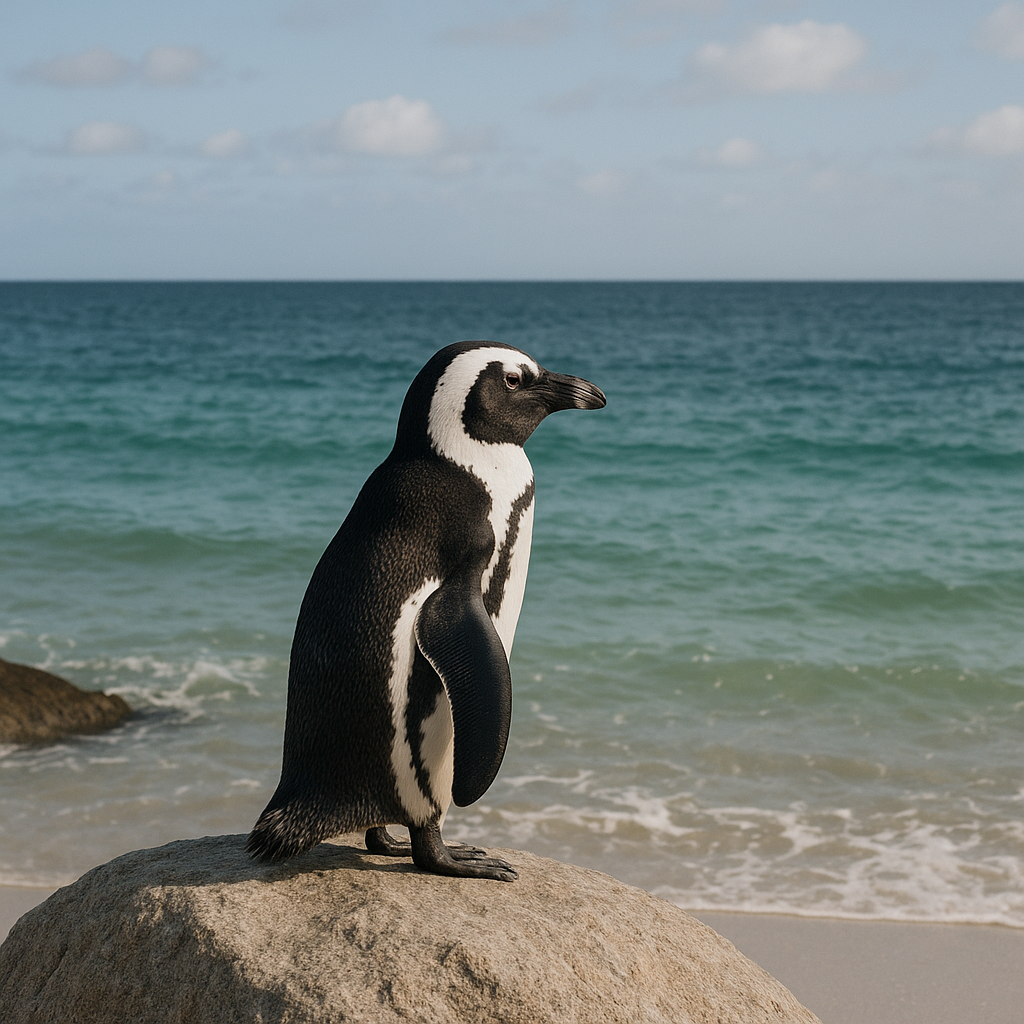
2026 census reveals a subtle but meaningful rebound for South Africa's Boulders African Penguin colony, offering a whisper of hope.
Good news for African penguins! Their numbers at Boulders Beach are growing, thanks to a few helping hands. They're eating more anchovies, which are easier to find, and living in comfy new burrows. Plus, people are working hard to protect them from foxes and sickness. This means more baby penguins are surviving, bringing hope for their future!
What caused the recent increase in the African penguin population at Boulders Beach?
The recent increase in the African penguin population at Boulders Beach is due to several factors, including a shift in their diet to more readily available anchovies, the installation of insulated artificial burrows, and enhanced conservation efforts like fox-proof fencing and an avian influenza vaccine. These combined actions have improved breeding success and chick survival rates.
Get Cape Town news in your inbox
Stay updated with the latest stories from the Mother City.
Sunrise Over Simon’s Town – The Morning That Became Milestone
The first blush of 18 June 2026 painted the channel between granite sentinels in shades of rose and amber, turning the coves around Boulders Beach into softly glowing theatres of life. Waves lapped at volcanic boulders; above them, timber walkways trembled with the purposeful scurry of researchers. Below the slats, black-and-white commuters – birds, not briefcases – hopped between tide-pools and burrows. Their trumpet-like calls formed an oddly fitting anthem for a head-count that might re-write conservation dogma.
Inside each four-person crew, roles mirrored the choreography outside. One counter ticked pairs aloud, a second sketched locations onto tablet maps, a third keyed numbers into rugged laptops, while a fourth pair of eyes hunted for coloured leg rings and shouted unique combinations over the din. The scene felt almost festive, yet every note of data landed with the weight of survival statistics.
Morning fog lingered only long enough to veil the anchored yachts, then retreated as if to give the scientists an unobstructed stage. At 08:14, the first drone lifted off, its rotors slicing the sky every twelve minutes in pre-programmed lanes. Thermal cameras aboard peered through thickets of bracken where nests hide like buried treasure, converting body heat into green-and-orange silhouettes that scrolled across ruggedised tablets.
How the Count Was Won – Precision Beneath the Boardwalks
The 2026 protocol was no improvisation. It mirrored the framework hammered out fourteen years earlier: dawn-to-dusk sweeps, airborne transects, and heat-signature cross-checks. What changed was refinement. Over two evenings of late-May rehearsals, teams walked the exact GPS tracks they would retrace on census day. That strict footstep fidelity shrank uncertainty to a record-low ±2.1 % – a margin slim enough to let ecologists whisper the word “recovery” without flinching.
Ground teams were sliced into twenty-seven 300-metre polygons, stitched together like a quilt along the shoreline from Windmill Beach to Seaforth. Each quartet received the same turf they had walked twelve months earlier; familiarity reduced the chance of either double-counting or overlooking the same tucked-away burrow. Observers calibrated their eyes for two nights under full-moon light, when penguin attendance peaks and shadows behave predictably.
In the air, drones became mechanical gadflies. Every twelve minutes they buzzed overhead, stitching together geo-referenced photographs that could be revisited months later to catch birds observers on foot inevitably missed. Hand-held thermal imagers gave the final layer of certainty, revealing birds nestling under thick vegetation that looked, to the naked eye, like empty leaf litter. No single tool dictated the outcome; the triumvirate of eyes, drones and heat-vision did.
Numbers Worth Savouring – Eight Percent of the World on One Bay
By noon on 19 June, spreadsheets stabilised at a figure destined for headlines: 790 breeding pairs, up from 698 a year earlier. Translate that into bodies and you get roughly 2,528 waddling parents – an entire township of tuxedoed optimists. For perspective, Earth now harbours only about 9,500 breeding pairs of African penguins. One compact crescent of False Bay therefore cradles between eight and nine per cent of the planet’s supply.
More striking than the raw tally was the age pyramid. Ring resightings showed that more than one in three breeders wore rings minted within the last five years; twelve months earlier that ratio had been one in four. Translation: juveniles are stepping into adulthood faster than older birds vacate the stage. A boisterous nursery supported that claim – 164 creche chicks compared with 107 in 2025. These young hopefuls weathered an abnormally stormy winter and still fledged, a hint that parents are learning new moves on a shifting food floor.
The global backdrop remains sobering. The species slid downhill for two straight decades, so a single upward bump is merely a comma in a long, tense sentence. Yet demographers will tell you that when recruitment outruns mortality, even modestly, the slope of the sentence can change. The 2026 comma may yet become a clause of restoration.
What Fuels the Rebound – From Sardine Shortfalls to Kelp-Cooled Larders
South Africa’s west coast has been warming by stealth. The Central Benguela ecosystem, once a conveyor belt of shimmering sardine shoals, now sends many of its silvery passengers southward beyond the penguins’ reach. Commercial nets confirm the trend: sardine hauls are down almost a quarter compared with the last five-year average. Anchovies, however, have filled part of the void, their biomass up eleven per cent near Hondeklip Bay where cooler upwellings persist.
Penguins turn opportunist with admirable speed. Chemical signatures in freshly moulted feathers reveal that anchovy-derived nitrogen jumped fifteen per cent since 2024. The smaller fish yield fewer calories per bite, so parents compensate by simply catching more of them. Luckily, anchovy schools now loiter closer to shore than sardines do, shaving kilometres off every foraging flight. Shorter trips mean chicks get fed faster and more often, tipping the balance from failure to fledge.
On land, managers stacked the deck further. Three hundred and ten fibreglass burrows, each lined with kelp insulation and topped by a bamboo vent, now house four in every ten incubating pairs. Occupation is highest on north-facing slopes that catch afternoon shade; birds inside the faux burrows fledged 1.65 chicks on average versus 1.13 in natural scrapes. Installing the nests, rangers tore out 2.4 tonnes of smothering kikuyu grass and erected fox-proof fencing that recorded zero incursions across three crucial months.
Disease and danger have not taken a holiday, but their claws have been blunted. A rapid serology blitz found avian influenza antibodies in six per cent of sampled adults, a sharp tumble from nineteen per cent in March. The drop followed an experimental intranasal vaccine misted over the colony like cologne every January afternoon. At sea, infrared drones running twenty-four-hour patrols caught a trawler dumping bilge on 3 May; the R120,000 fine and deployed booms prevented a single drop of oil from touching feathers. Not since 2007 has the colony seen a completely clean year.
People, Apps and Future-Proofing the Pulse of Granite
The heartbeat of science now syncs with the pulse of the public. On census-eve, more than six hundred volunteers – scholars, retirees, surf-shop owners – raised phones to a new “Penguin Guardians” app. One tap logged GPS-tagged sightings of ringed birds, injuries or suspicious behaviour. Algorithms siphoned duplicates and uploaded 1,411 verified records straight into population models.
Management eyes stretch beyond tomorrow. Thirty-four penguins now carry six-gram VHF radios, revealing secret corridors of movement. Triangulation shows most stay within eight kilometres, yet two adventurers reached Dassen Island 170 km away and one female descended on Stony Point 240 km to the southeast, stitching three separate colonies into one fluid gene pool. Those dots on a map will guide future translocations and ensure the comma of 2026 does not become a full stop.
Timed tickets now cap visitors at 2,800 per day, down from December peaks of 4,200. Early metrics show breeding birds forage fourteen per cent longer when crowds thicken, yet chicks still receive adequate meals – tentative proof that tourism and conservation can share the same boardwalk. Behind the rails, granite still rings with braying duets and first-flight splashes. The colony’s pulse quickened in 2026; whether it becomes a steady heartbeat now rests on kelp thickening below, sardines returning north, carbon staying unburned, and children remembering to look up from their worksheets and see the birds they counted.
[
{
"question": "What factors have contributed to the recent increase in the African penguin population at Boulders Beach?",
"answer": "The recent increase in the African penguin population at Boulders Beach is attributed to several key factors. A shift in their diet towards more readily available anchovies, the installation of insulated artificial burrows, and enhanced conservation efforts have all played a crucial role. These efforts include the implementation of fox-proof fencing, the use of an avian influenza vaccine, and stricter controls over marine pollution. These combined actions have led to improved breeding success and higher chick survival rates."
},
{
"question": "When was the significant penguin census conducted that confirmed this population increase?",
"answer": "A significant census was conducted on June 18, 2026, which confirmed the positive trend in the African penguin population at Boulders Beach. This date marked a milestone in conservation efforts, with researchers meticulously counting and documenting the breeding pairs and chicks."
},
{
"question": "How was the penguin census carried out with such high precision?",
"answer": "The 2026 census employed a highly refined protocol to ensure accuracy, building upon methods established fourteen years prior. It involved dawn-to-dusk sweeps by ground teams, airborne transects using drones equipped with thermal cameras, and heat-signature cross-checks. Ground teams were divided into 27 polygons, each covering 300 meters, with researchers walking the same GPS paths as previous years to minimize error. Drones flew every twelve minutes, capturing geo-referenced photographs, and hand-held thermal imagers revealed birds hidden in vegetation. This multi-faceted approach achieved a remarkable uncertainty margin of just ±2.1%."
},
{
"question": "What were the key numbers from the 2026 census results?",
"answer": "The 2026 census recorded 790 breeding pairs, a significant increase from 698 pairs the previous year. This translates to approximately 2,528 adult penguins. Notably, this single colony now hosts between eight and nine percent of the world's total African penguin breeding pairs (estimated at 9,500). Furthermore, ring resightings indicated that over one in three breeders were juveniles from the last five years, and 164 creche chicks were counted, up from 107 in 2025, suggesting a strong recruitment rate."
},
{
"question": "How has the penguins' diet changed, and why is this beneficial?",
"answer": "Due to a decline in sardine populations on South Africa's west coast, penguins have adapted their diet to increasingly forage on anchovies. While anchovies offer fewer calories per bite, they are now more abundant and found closer to shore, particularly near cooler upwellings. This change in prey availability allows parents to make shorter foraging trips, feeding their chicks more frequently and improving their chances of fledging, even though they need to consume more anchovies to meet their caloric needs."
},
{
"question": "What role do artificial burrows and community engagement play in conservation efforts?",
"answer": "Artificial burrows are a critical component, with 310 fibreglass burrows, insulated with kelp and vented, now housing four out of every ten incubating pairs. These burrows have significantly improved fledging success, especially on north-facing slopes. Community engagement is also vital, with over 600 volunteers using a 'Penguin Guardians' app to report sightings and contribute data. Additionally, conservation efforts include fox-proof fencing, regular disease monitoring with an avian influenza vaccine, and marine patrols with infrared drones to prevent oil spills. These initiatives, combined with visitor caps and ongoing research using VHF radios on penguins, aim to ensure the long-term sustainability of the colony."
}
]

Amanda Wilson is a Cape Town-born journalist who covers the city’s evolving food scene for national and international outlets, tracing stories from Bo-Kaap spice shops to Khayelitsha micro-breweries. Raised on her grandmother’s Karoo lamb potjie and weekend hikes up Lion’s Head, she brings equal parts palate and pride to every assignment. Colleagues know her for the quiet warmth that turns interviews into friendships and fact-checks into shared laughter.
View all articles →