
Afrikaner ‘refugee’ resettlement
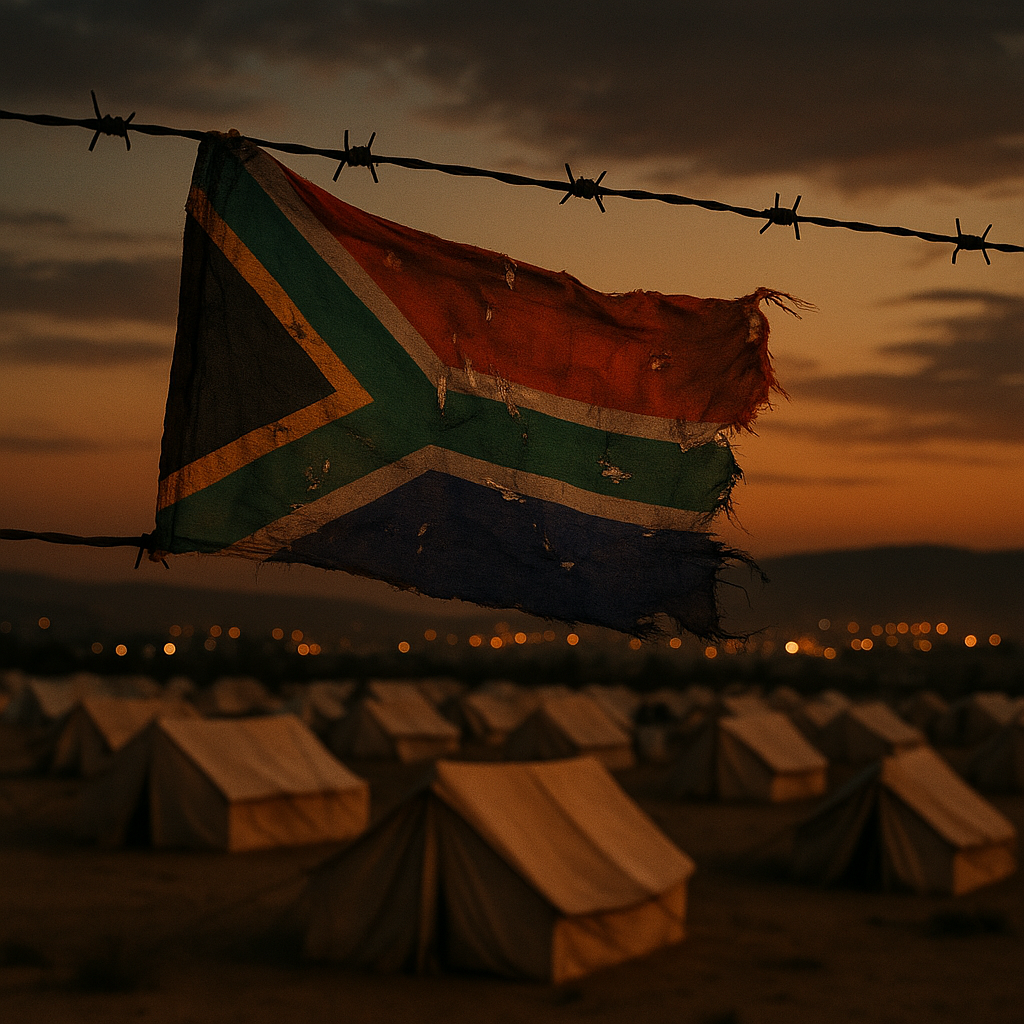
Inside Trump's 2026 Afrikaner refugee program: a 17,500-slot lottery for one group, a life-or-death lottery for others.
In 2026, a surprising U.S. plan gave 10,000 extra refugee spots to white, Afrikaans-speaking South Africans. This move, made quickly and without much talk, upset many because it took resources from other desperate refugees. Critics say it's unfair and racially biased, costing a lot of money and leaving thousands of others in limbo. It's causing big problems for international aid and even for the small South African town these refugees are leaving.
What is the 2026 Afrikaner Refugee Plan?
The 2026 Afrikaner Refugee Plan is a controversial U.S. presidential determination that allocated 10,000 additional refugee slots specifically for white, Afrikaans-speaking South Africans. This decision, made without extensive congressional consultation, dramatically increased the overall refugee ceiling and diverted resources from other urgent refugee crises, sparking widespread criticism and legal challenges.
Get Cape Town news in your inbox
Stay updated with the latest stories from the Mother City.
The Friday Email that Detonated on the Hill
At 09:14 Eastern on 30 April 2026 a four-page cable dropped into congressional inboxes under the bland heading “Emergency Presidential Determination.” The note annulled the refugee ceiling that the same White House had signed off on only four months earlier and added, without fanfare, “10 000 places for persons fleeing targeted violence in the Republic of South Africa.” No mention of religion, language or province – yet every staffer on the Hill read the same subtext: the slots were earmarked for white, Afrikaans-speaking Protestants.
By 7 May the memo had become political TNT. Senator Jeanne Shaheen (D-NH) delivered a five-page letter to Secretary of State Marco Rubio with surgical precision: “Explain why one ethnic cohort vaults to the front while 1 100 Afghans who fought beside our troops rot in Qatar.” Her staff attached a bar chart: 7 500 slots in January, 17 500 in May – a mid-year leap of 57 percent that Congress had never debated.
Staffers scrambled for precedent. The largest mid-cycle adjustment before this had been President Reagan’s 1981 increase for Indochinese evacuees – 57 000 additional places – but Reagan held hearings for three months. Trump’s revision arrived after one classified briefing from acting PRM Director Matthew Reynolds, who cited “rapidly deteriorating safety indicators.” The only public evidence the Bureau offered was a single page noting South Africa’s murder rate of 36 per 100 000 – without any ethnic breakdown.
How 7 500 Became 17 500 – and Who Pays
The Refugee Act of 1980 allows the president to lift the ceiling after “appropriate consultation,” yet revisions of this magnitude are virtually unheard of. In the hearing room Reynolds pointed to unnamed NGOs and “on-the-ground partner assessments.” When Senator Chris Murphy (D-CT) asked for the NGO list, Reynolds produced a half-page list: the European Christian Political Action Network, AfriForum USA and the Suidlanders – a South African civil-defense group that sells末世 bunkers. CRS later informed the committee that South Africa’s murder rate had fallen for nine straight quarters.
The White House budget shop pegs the first-year federal cost of every refugee at $11 500 – medical screening, plane ticket, cash and Medicaid for eight months. Ten thousand extra Afrikaners therefore cost $115 million, the exact figure quoted in the Determination. That number, however, omits downstream expenses: ESL classes, SNAP, eight federal agencies and nineteen separate state programs. The non-partisan Niskanen Center projects a ten-year tab closer to $367 million.
Offsetting revenues are plausible but not guaranteed. Long-term studies show refugees eventually pay $21 000 more in lifetime taxes than they receive in benefits – provided they naturalize and find skilled work. Early labor data on the 4 500 Afrikaners admitted since October 2025 are sobering: 63 percent remain jobless after six months, double the rate of Syrians, Congolese or Karen in the same intake. The Bureau of Labor Statistics blames credentialing gaps: South African millwright or pesticide applicator licenses are not recognized in most U.S. states without costly re-testing.
The UNHCR Gap – and the Stories Washington Ignores
U.S. law requires that every refugee first obtain UNHCR recognition based on the 1951 Convention definition – persecution on account of race, religion, nationality, political opinion or membership in a social group. Between 2010 and 2025 UNHCR submitted 2.4 million names to Washington. Not once did it classify white South Africans as a priority population. Pretoria’s field office told Reuters in February 2026 that it had “no evidence of systematic, government-backed persecution targeting white farmers.”
Meanwhile the global resettlement pipeline is frozen. UNHCR has 63 000 referrals in the queue for 2026 – the smallest number since 2003. Diverting 10 000 places to Afrikaners means 10 000 Congolese rape-survivors, 10 000 Rohingya children, 10 000 Syrian torture victims remain in camps for another year – possibly two – waiting for seats that may never open.
Collateral Damage: Afghans, Aussies and an Orange-River Town
Camp As Sayliyah in Qatar still holds 1 100 Afghans whose Special Immigrant Visas have cleared every security check yet cannot board flights because the refugee slots vanished overnight. Germany took 368 last December, Albania 214, North Macedonia 97. Senator Shaheen’s staff estimate America could clear the entire backlog in 90 days by re-allocating just 2 000 of the new Afrikaner reserve. The White House refuses, arguing the regional reserve is non-transferable.
Half a world away, the tiny volkstaat of Orania grapples with its own unintended consequence. Since October, 370 of its 2 300 residents – 16 percent – have left for U.S. parole flights. Their departure drains the pecan harvest labor force, forcing town council to truck in black seasonal workers from Pixley ka Seme district – a practice that sits uncomfortably alongside Orania’s own racial residency rules. Town CEO Joost Strydom calls the contradiction “a necessary compromise” and lists abandoned houses on AirBnB to recoup lost rates.
Russia, Australia and the Netherlands are watching. Moscow’s Duma has floated a “Boer repatriation” package – 10 000 hectares and fast-track citizenship – though only 77 families have applied, deterred by mandatory Russian conscription. Australia’s One Nation party praised Trump’s move; Canberra’s private-member bill for “persecuted white farmers” has admitted 430 South Africans since 2018. The Dutch caretaker government, worried about its Surinamese coalition partners, has kept silent despite Wilders’ tweet: “Oranje zal helpen.”
Money, Courts and Cable News
Legal pushback is gathering pace. On 10 May the International Refugee Assistance Project filed a 92-page suit in D.C. district court, alleging the revision violates the Administrative Procedure Act because it is “arbitrary, capricious and racially motivated.” Plaintiffs include six stranded Afghan interpreters and one Somali Bantu family bumped from May travel. A second suit, brought by the Southern Poverty Law Center, invokes equal protection and cites Trump’s 2017 “shithole countries” remark as pattern evidence.
Cable amplifiers have not paused. Tucker Carlson released a 52-minute film “Bloodland” on 27 April – drone shots of shuttered Free State homesteads and a call for “emergency sanctuary.” Within 72 hours the hashtag #BoervolkRefugees surged to 1.8 million mentions; Data-for-Policy traced 42 percent of the accounts to prior Stop-the-Steal networks. AfriForum, meanwhile, has spent R18 million on K-Street lobbying since 2022 and arranged 17 congressional visits, including a five-day tour for Representative Marjorie Taylor Greene.
And so the game plays out: a Friday email becomes a 17 500-slot golden ticket for one group while another waits in desert tents, courtrooms and overcrowded ICE barracks.
[{"question": "What is the 2026 Afrikaner Refugee Plan?", "answer": "The 2026 Afrikaner Refugee Plan is a controversial U.S. presidential determination that allocated 10,000 additional refugee slots specifically for white, Afrikaans-speaking South Africans. This decision, made without extensive congressional consultation, dramatically increased the overall refugee ceiling and diverted resources from other urgent refugee crises, sparking widespread criticism and legal challenges."}, {"question": "How did the 2026 Afrikaner Refugee Plan come about?", "answer": "The plan was initiated through an 'Emergency Presidential Determination' sent to Congress on April 30, 2026, which annulled the existing refugee ceiling and added 10,000 places for those 'fleeing targeted violence in the Republic of South Africa.' While not explicitly stating 'white, Afrikaans-speaking Protestants,' this was the widely understood subtext. The decision was made after a single classified briefing citing 'rapidly deteriorating safety indicators' in South Africa, despite evidence suggesting otherwise."}, {"question": "What are the financial implications of this plan?", "answer": "The White House estimated the first-year federal cost of these 10,000 additional refugees at $115 million. However, non-partisan analyses, such as that by the Niskanen Center, project a ten-year cost closer to $367 million due to downstream expenses like ESL classes, SNAP benefits, and various state programs. While refugees can eventually contribute significantly to taxes, early data shows a higher jobless rate for these Afrikaner refugees, potentially impacting long-term financial benefits."}, {"question": "How does this plan impact other refugees and international aid efforts?", "answer": "The plan has significantly impacted other refugee populations, as the 10,000 slots diverted resources from existing queues. The UNHCR, which did not classify white South Africans as a priority population, has 63,000 referrals in its 2026 queue. This diversion means thousands of other refugees, including Congolese, Rohingya, and Syrian individuals, face longer waits or may never be resettled. Additionally, it has left 1,100 Afghan Special Immigrant Visa holders stranded in Qatar, as their slots were effectively 'vanished'."}, {"question": "What legal and political challenges has the plan faced?", "answer": "The plan has faced significant legal challenges. The International Refugee Assistance Project filed a lawsuit alleging violations of the Administrative Procedure Act, claiming the revision is 'arbitrary, capricious and racially motivated.' The Southern Poverty Law Center also filed a suit, invoking equal protection. Politically, the decision sparked outrage in Congress, with senators questioning the lack of consultation and the racial bias. It has also garnered attention from international media and right-wing groups, with some advocating for similar 'Boer repatriation' programs in other countries."}, {"question": "What are some of the unintended consequences of this refugee plan?", "answer": "Beyond the financial and humanitarian impacts, the plan has created several unintended consequences. For instance, the small Afrikaner town of Orania in South Africa has seen 16% of its residents leave for the U.S., causing a labor shortage for their pecan harvest and forcing them to hire black seasonal workers, which contradicts their racial residency rules. The plan has also put a spotlight on South Africa's murder rate without ethnic breakdown, and drawn criticism for its perceived racial bias and the rapid, unconsulted nature of its implementation."}]

Sarah Kendricks is a Cape Town journalist who covers the city’s vibrant food scene, from township kitchens reinventing heritage dishes to sustainable fine-dining at the foot of Table Mountain. Raised between Bo-Kaap spice stalls and her grandmother’s kitchen in Khayelitsha, she brings a lived intimacy to every story, tracing how a plate of food carries the politics, migrations and memories of the Cape.
View all articles →