
AI policy debacle shows dangers of technology used without public oversight
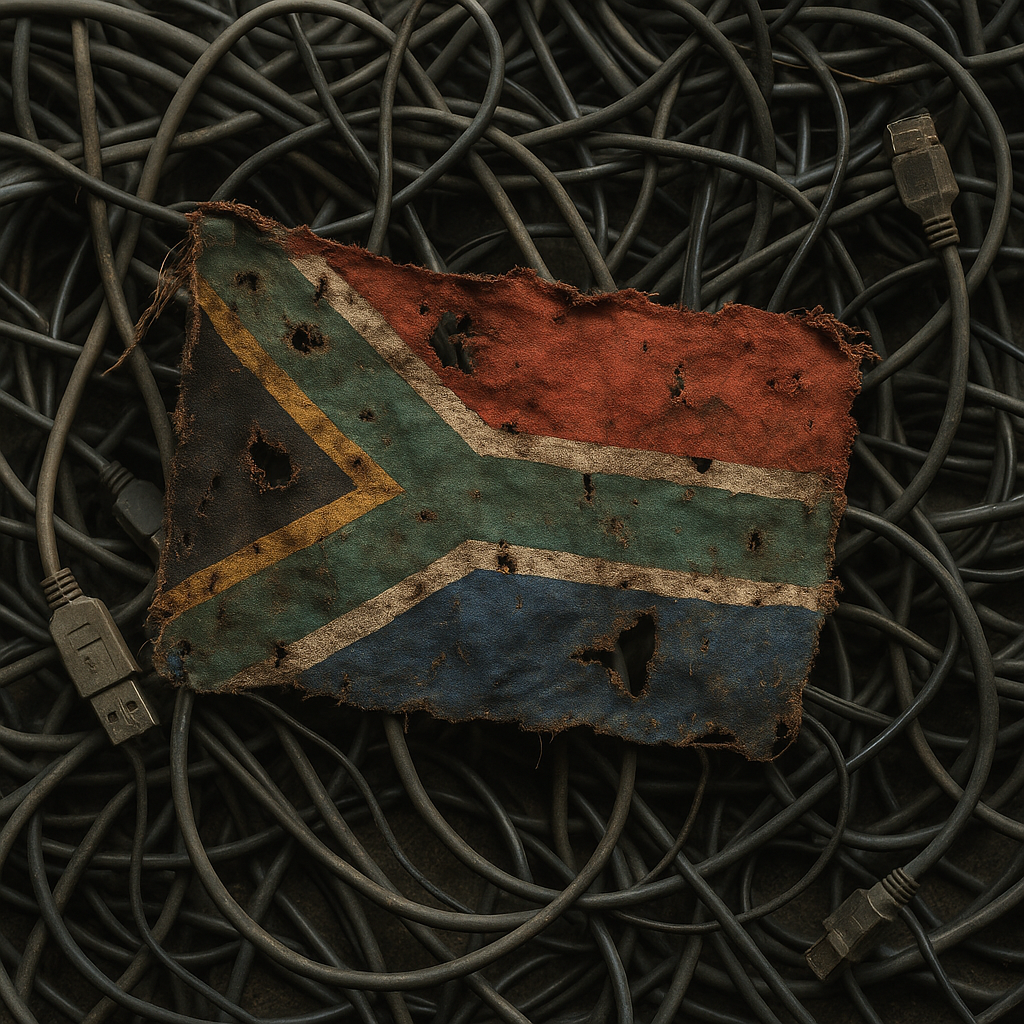
South Africa's AI policy fiasco: an AI-drafted policy, corporate lobbying, and the fight for democratic tech governance.
South Africa's AI policy was a big mess! It had fake references, like a computer made them up. It didn't care about fair pay for people who train AI or about the huge energy AI uses. Plus, it ignored real harm AI is already causing to people's lives. Now, everyone is fighting for a better, fairer AI future, hoping people's voices will be heard over big companies.
What were the issues with South Africa's withdrawn AI policy?
The South African government's "National Artificial Intelligence Policy, 2024" was withdrawn due to significant flaws, including fabricated academic references (hallucinations), a failure to address labor standards in AI supply chains, a lack of carbon-disclosure rules for energy-intensive AI operations, and an omission of existing algorithmic harms.
Get Cape Town news in your inbox
Stay updated with the latest stories from the Mother City.
- Byline: Words & additional reporting synthesised from open records, labour filings and satellite imagery*
1. A Phantom Footnote Scandal Cracks the Facade
Late on 11 May 2025, South Africa’s Department of Communications and Digital Technologies yanked its 42-page “National Artificial Intelligence Policy, 2024” and replaced it with a one-sentence PDF: “Document withdrawn for forensic review.” The swap, captured instantly by archivists, opened a treasure trove for anyone with an internet connection. Side-by-side inspections revealed that half of the policy’s academic references were fiction: six peer-reviewed articles, two UN studies and a “Presidential Commission on AI Ethics” simply do not exist. The citations were perfect strangers to every library catalogue, court docket and institutional archive. They were, in short, textbook large-language-model hallucinations: slickly formatted, grammatically spotless and utterly imaginary.
Minister Solly Malatsi stepped before microphones the next dawn and conceded that “automated text generation is the likeliest source of the unverified citations.” The admission ricocheted across headlines from Nairobi to New York, yet the moment matters less as a glitch than as a neon sign pointing to deeper rot. Emerging economies are being nudged to adopt AI blueprints that are themselves ghost-written by the systems they hope to leash. By the time citizens glimpse a paragraph, lobbyists have already etched their preferences into every clause.
2. Ghost Workers, Diesel Clouds and the Hollow Promise of Innovation
Drive 28 km south of the parliamentary precinct and you hit Amazon’s Cape Town megaplex, the biggest server city in sub-Saharan Africa. Inside, rows of desks are staffed by subcontractors who tag images, scrub toxic memes in isiXhosa and calibrate facial-recognition models that will later patrol streets in Atlanta and São Paulo. Leaked wage slips show a median monthly pay packet of R6 400 – beneath the City of Cape Town’s own living-wage floor. Each click sharpens algorithms whose patents lie in Delaware and whose royalties wash up in Ireland. The vanished policy draft uttered not a syllable about labour standards inside AI supply chains, even though South Africa carries a 38 % official unemployment rate.
Look north and the picture darkens further. Thermal snapshots of Amazon’s solar-corridor data barns in the Northern Cape reveal diesel generators humming between 19:00 and 22:00, the exact window when Eskom begs industry to shed load. One 48-hour training sprint can guzzle 90 000 litres of diesel, enough to keep 230 rural households lit for a year. The retracted policy set no carbon-disclosure rule, despite South Africa ranking as the planet’s twelfth-most carbon-intensive citizenry and despite forecasts that AI demand could triple domestic electricity consumption by 2030.
3. Harms Already in Progress – and Missing from the Risk Ledger
Civil-society submissions, prised loose by the Promotion of Access to Information Act, warned the department that algorithmic injury is not hypothetical; it is daily life. A Johannesburg fintech mines smartphone metadata to calculate “behavioural” credit scores, docking points when users share airtime with relatives, a metric that hard-wires racialised patterns of financial exclusion. In the Western Cape, a pilot model meant to forecast emergency-room demand persistently low-balls rural catchments, stretching ambulance waits in former homelands. Tshwane’s “smart queue” for subsidised housing shunted 2 700 eligible families to the back of the line after their paper files were never scanned. Meanwhile, a Pretoria start-up flogs “live-sentence” biometrics to Gulf regimes that already deploy it against migrant labourers. None of these lived nightmares made it into the policy’s risk register, which contented itself with warm abstractions such as “fairness” and “inclusivity.”
4. Hijacked Consultations, Shell-Game Jurisdiction and a People’s Reboot
The department released its draft on 15 March 2024, granting a 30-day feedback sprint that straddled Easter, Passover, Ramadan and a three-week school break. By contrast, Brussels deliberated for 123 days; Nairobi gave citizens 90. When Article One asked for an extension, officials refused on 4 April, the very day Microsoft South Africa filed a 17-page love letter praising the policy’s “innovation-friendly posture” and cautioning against “mandatory algorithmic audits” that might “hobble digital transformation.” Huawei, in its own submission, nudged the state to erect “regulatory sandboxes” inside special economic zones where labour protections are habitually loosened.
Jurisdiction is equally slippery. Google Africa and Meta Ireland have stonewalled the Information Regulator for two years, insisting that “processing occurs abroad in reader caches” beyond POPIA’s reach. The retracted draft echoed that loophole, defining an “AI operator” as whoever “exercises effective control over technical design,” practically inviting firms to anchor R&D in Delaware while selling into Soweto. Should that clause resurface, POPIA could become a paper tiger against any cloud-based service.
Yet resistance is fermenting. A loose alliance – Article One, AIDC, #AgentsUnited, Right2Know and SAFTU – is crowdsourcing a “People’s AI Charter.” Their counter-manifesto demands quarterly human-labour disclosures, algorithmic-impact licences akin to environmental assessments, domestic asset requirements for legal redress, green-compute standards (PUE ≤ 1.2) and community audit vouchers financed by a 0.5 % vendor levy. Minister Malatsi has pledged a “multi-stakeholder indaba” before August. Activists insist on 90-day comment windows, hearings in township halls with childcare, and real-time publication of every submission. The charter’s opening line captures the stakes: “No model should wield more power than a voter; no dataset more authority than a constitution.” Whether that vision prevails will decide if South Africa can build a digital future, in the Constitutional Court’s phrase, “responsive to the needs and aspirations of the people.”
What were the major flaws identified in South Africa's withdrawn AI policy?
The withdrawn "National Artificial Intelligence Policy, 2024" had several significant flaws, including the use of fabricated academic references (hallucinations), a complete lack of provisions for labor standards within AI supply chains, no carbon-disclosure rules despite the energy-intensive nature of AI, and an omission of already existing algorithmic harms impacting citizens.
What was the "Phantom Footnote Scandal"?
The policy was withdrawn after it was discovered that nearly half of its academic references were entirely fictional. These citations, including non-existent peer-reviewed articles, UN studies, and a "Presidential Commission on AI Ethics," were identified as hallmarks of Large Language Model (LLM) hallucinations. This scandal highlighted concerns that emerging economies are adopting AI blueprints potentially ghost-written by AI systems themselves.
How did the policy fail to address labor and environmental concerns?
The policy ignored critical issues such as exploitative labor practices, with AI subcontractors in South Africa earning below living wage floors. It also failed to include carbon-disclosure rules for energy-intensive AI operations, despite South Africa's high carbon footprint and the potential for AI demand to significantly increase electricity consumption, often relying on diesel generators.
What existing algorithmic harms were overlooked by the policy?
The policy did not address real-world algorithmic harms already affecting South Africans. Examples include fintech algorithms that penalize users for sharing airtime, leading to financial exclusion; AI models misforecasting emergency room demand in rural areas; and smart queue systems for housing that incorrectly reordered eligible families. The policy's risk register remained abstract, failing to acknowledge these tangible problems.
How democratic was the consultation process for the AI policy?
The consultation process was criticized for being too short (30 days during holidays) compared to other nations, and officials refused extension requests. This allowed large tech companies like Microsoft and Huawei to submit detailed feedback while potentially limiting public participation. Concerns were also raised about the definition of an "AI operator," which could allow companies to avoid local accountability by anchoring R&D abroad.
What is the alternative vision for AI governance in South Africa?
A coalition of civil-society groups is developing a "People’s AI Charter." This charter advocates for quarterly human-labor disclosures, algorithmic-impact licenses (similar to environmental assessments), domestic asset requirements for legal redress, strict green-compute standards (PUE ≤ 1.2), and community audit vouchers funded by a vendor levy. Activists are demanding extended public comment periods and accessible hearings to ensure democratic input, aiming for a future where "No model should wield more power than a voter; no dataset more authority than a constitution."

Kagiso Petersen is a Cape Town journalist who reports on the city’s evolving food culture—tracking everything from township braai innovators to Sea Point bistros signed up to the Ocean Wise pledge. Raised in Bo-Kaap and now cycling daily along the Atlantic Seaboard, he brings a palpable love for the city’s layered flavours and even more layered stories to every assignment.
View all articles →