
Ambassador Roelf Meyer tackles trade hurdles
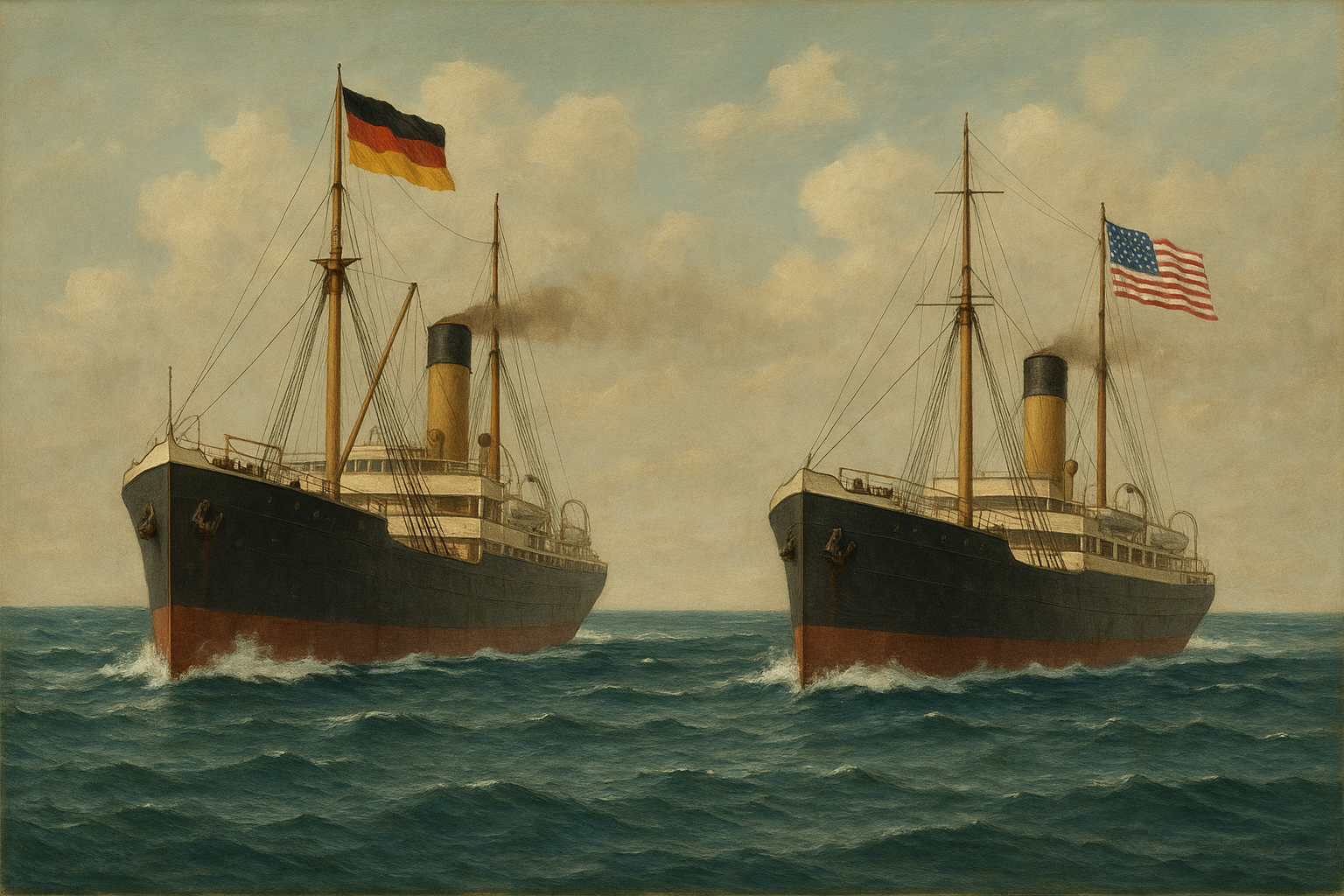
US tariffs caused South Africa's trade to pivot sharply to Germany and China, impacting exports, jobs, and diplomatic ties.
In 2026, when new US tariffs hit South Africa hard, Germany quickly stepped in, sealing over €4 billion in deals for green hydrogen and car parts. This helped South Africa recover, especially since many German car companies already operated there. At the same time, China also strengthened its economic ties, removing tariffs on many products like platinum, which South Africa has a lot of. These big changes quickly rewrote South Africa’s trade map, shifting its focus from the US to Europe and Asia and making its money stronger.
How did South Africa respond to new US tariffs in 2026?
South Africa rapidly rewired its global commerce strategy in 2026 after new US tariffs. Germany stepped in with over €4 billion in deals, primarily for green hydrogen and automotive components, leveraging existing German manufacturing presence. Concurrently, China tightened economic ties through a zero-tariff protocol on 886 lines, particularly for platinum, leading to significant shifts in export destinations and a strengthening rand.
Get Cape Town news in your inbox
Stay updated with the latest stories from the Mother City.
A Seismic April – Washington Turns the Dial to 11
At 09:00 on 3 April 2026, President Trump signed “Liberation Day,” an executive order that yanked the rug from under South Africa’s long-standing export playbook. Overnight, automotive axles rolling out of Port Elizabeth no longer enjoyed predictable entry into U.S. ports. Within weeks the South African Reserve Bank tallied the carnage: auto and transport shipments to America plunged 38 %, the country forfeited R23.4 billion in hard-currency inflows, and 17 000 workers - most clustered in Eastern Cape and KwaZulu-Natal - were handed retrenchment notices.
Durban’s container yards turned eerily quiet. Charleston-bound carriers cancelled berthing slots; Delta freighters pulled their Sunday rotations to Atlanta. Maritime brokers watched the U.S. lane evaporate and scrambled to re-price trans-Atlantic contracts. By late April the rand had slipped nine cents to the dollar, but the currency slide failed to cushion order volumes. American importers, spooked by headline risk and a new U.S. State Department advisory branding parts of Limpopo and Mpumalanga as “tier-three” travel zones, simply stopped returning calls.
Washington’s pivot also fired the starting pistol for competitors. German flags began appearing off Ngqura with metronomic precision, and Lufthansa Cargo quietly added four MD-11 rotations to its Johannesburg–Frankfurt-Hahn run. The map of South African commerce was being redrawn at sea level and at 35 000 feet - before Pretoria had finished drafting its first crisis memo.
Berlin Steps in – Contracts, Credits and Culture
Barely a month after the American tariffs bit, Chancellor Lucas Neuendorf landed at Waterkloof with an entourage of 120 captains of industry. Over 48 breathless hours in Pretoria, signatures flew onto three accords that jointly exceeded €4 billion. The headline project is a green-hydrogen offtake deal with Sasol worth €2.8 billion, locking in 100 000 tonnes of green ammonia annually starting 2029. A second instrument injects €1.2 billion into Eastern-Cape supplier parks that will stamp out lightweight aluminium chassis components. The third document, easily overlooked by the media, is a mutual-recognition pact on automotive safety and emissions testing; it shaves four weeks off every shipment and embeds German standards inside South Africa’s compliance DNA.
What made the absorption so frictionless is that Volkswagen, BMW and Mercedes-Benz already owned 62 % of local assembly capacity. The missing piece was component flow. Catalytic converters that once sailed for Charleston now steam to Hamburg; leather kits cut in Pietermaritzburg board pallets labelled MUC instead of ATL. The numbers confirm the shift: South African vehicle-parts exports to the EU leapt 29 % in Q2, and Germany captured fully 71 % of that surge. By August, South Africa had overtaken Turkey as Berlin’s primary source of catalytic converters, a niche market now worth €1.9 billion every year.
Cultural ripples followed hard cash. The Goethe-Institut doubled engineering scholarships, SAP widened its dual-study intake to 120 South African matriculants, and #DankeschönDeutschland trended when Berlin couriered 2.5 million AstraZeneca boosters to rural clinics. German bakeries replaced Tex-Mex diners in Sandton’s malls, and braai-side chatter adopted phrases like “Abitur equivalency” without a hint of irony. Soft power entered through a syringe, lingered in pastry aromas and finally cemented itself in employment contracts.
Beijing Subtly Tightens the Silk Knot
If Germany executed a swift flanking manoeuvre, China opted for encirclement. Delegates in Kazan stitched together a zero-tariff protocol on 886 tariff lines - citrus, wine, PGMs and processed manganese alloys - then switched it on at midnight 1 September. The timing was exquisite: China’s hydrogen economy needed platinum, and South Africa controls 80 % of global reserves. September export statistics show platinum shipments to China up 46 % year-on-year, a leap that single-handedly offset half of the rand lost to the American pullback.
ICBC underwrote the logistics layer by lending Transnet USD 700 million against a new container-terminal concession at Durban’s Pier 2. The wharf will first feed China’s appetite, but spare slots will be marketed to any carrier - an elegant hedge that keeps options open. Meanwhile, ships leaving Durban now load mandarins and manganese in the same hull, leveraging China’s appetite for both nutrients and metals.
Currency traders report a new macro signal: the EURZAR cross has decoupled from the platinum spot price, anchored instead by Berlin’s front-loaded contracts. The rand firmed so fast that the Reserve Bank intervened twice in July and August, buying dollars to slow appreciation and protect mining margins. Exporters to Europe grumbled, but importers of German machinery cheered; lower euro-denominated capex fed yet another round of import substitution and productivity upgrades.
Ripples on Home Soil – Winners, Worriers and What Comes Next
Industrial Clusters - Expansion and Bottlenecks
Coega logged a 17 % jump in German FDI applications during Q3, led by aluminium-chassis subcontractors humming beneath BMW and Mercedes assembly roofs in Rosslyn. Stellenbosch University and RWTH Aachen launched a joint PhD track in hydrogen combustion, blending German thermodynamic know-how with South Africa’s platinum bounty. NUMSA inked a three-year wageing pact pegged two points above CPI, claiming victory “without a single picket line.”
Yet horticulture is hurting. Deciduous-fruit exporters who relied on U.S. east-coast consumers now try to wedge 18 000 tons of late mandarins into Hamburg and Rotterdam, only to see European prices slide 11 %. Sasol’s rerouting of catalytic-converter cargo to Germany has monopolised key rail spurs to Durban, bumping up logistics costs for citrus pallets competing for the same rolling stock.
Infrastructure - Rails, Ports and Pipelines
Transnet’s balance sheet sports a new R14 billion rail spur and two ammonia-ready berths at Richards Bay, financed by KfW. Ammonia trains will start rolling in 2029, but contractors have already driven domestic steel prices up 7 %. Black-owned SMMEs supplying ballast, signal cable and security fencing are the unintended beneficiaries, seeding a new cadre of industrialists along the 580-kilometre route.
Diplomacy - Roelf Meyer’s Tightrope
Pretoria’s new envoy to Washington, Roelf Meyer, had an eight-minute credentials ceremony with President Trump on 15 September; camera shutters ate three of them. Meyer’s file contains two shopping lists - South Africa wants relief on 19 000 automotive tariff codes,, while the White House tables the so-called “five asks,” from ranging from land-reform guarantees to pension-fund assurances on U.S. Treasuries. A tariff-rate-quota workaround - USD 400 million duty-free, anything above hit by the residual 10 % - is under hush-hush discussion in Geneva. No one expects resolution before February 2027, when the WTO panel finally convenes.
Future Gazing - AGOA, Tata and the African Realignment
The African Growth and Opportunity Act expires in 2027, and Senate hawks already lobby to recategorise South Africa as an “upper-middle-income competitor.” Meyer is preparing a double response: court AGOA-friendly congresspeople while courting India’s 1.4-billion-consumer market. Tata Motors has floated a plan to assemble right-hand-drive electric pickups in Durban, exploiting the same duty-free access that Germany now enjoys.
Behind closed doors, BMW’s South African arm has requested Industrial Development Corporation backing for a fuel-cell stack plant in Rosslyn. The Department of Science and Innovation has quietly released R400 million in matching grants for platinum-catalyst start-ups, betting that Germany’s hydrogen appetite will outlast America’s policy tantrums.
High above the political fray, Maersk and MSC have rewritten their Southern Africa strings: Ngqura now wins first-port-of-call honours for Europe, trimming six sailing days off the Cape Town detour. September’s outbound volumes confirmed the shift - TEUs to Europe eclipsed those to North America for the first time in recorded history, an exclamation mark on six months of relentless structural change.
What prompted the significant shift in South Africa's trade relationships in 2026?
In 2026, new US tariffs, enacted as President Trump's "Liberation Day" executive order on April 3rd, severely impacted South Africa's export playbook. This led to a 38% plunge in automotive and transport shipments to the US, a loss of R23.4 billion in hard-currency inflows, and 17,000 job retrenchments. This economic shock compelled South Africa to rapidly pivot its trade strategy.
How did Germany assist South Africa in mitigating the impact of US tariffs?
Germany quickly stepped in, sealing over €4 billion in deals within a month of the US tariffs. Key agreements included a €2.8 billion green hydrogen offtake deal with Sasol for 100,000 tonnes of green ammonia annually, and a €1.2 billion investment in Eastern Cape supplier parks for lightweight aluminum chassis components. A mutual recognition pact on automotive safety and emissions also streamlined trade, leveraging the existing presence of German car manufacturers like Volkswagen, BMW, and Mercedes-Benz in South Africa.
What role did China play in South Africa's economic realignment?
China subtly tightened its economic ties by implementing a zero-tariff protocol on 886 tariff lines, including platinum, citrus, wine, and processed manganese alloys, effective September 1st. This timing was crucial as China's hydrogen economy required platinum, of which South Africa controls 80% of global reserves. Platinum shipments to China subsequently increased by 46% year-on-year, significantly offsetting losses from the US pullback. Additionally, ICBC provided a USD 700 million loan to Transnet for a new container terminal concession at Durban's Pier 2, further solidifying logistics ties.
What were the immediate economic consequences for South Africa following the US tariffs?
The immediate consequences were severe, including a 38% drop in automotive and transport shipments to the US, costing R23.4 billion in hard currency. This also resulted in 17,000 job losses, primarily in the Eastern Cape and KwaZulu-Natal. The rand initially slipped nine cents against the dollar, and American importers ceased orders. However, due to German and Chinese interventions, the rand quickly firmed, to the extent that the South African Reserve Bank intervened twice in July and August to slow its appreciation.
How did South Africa's internal industries and infrastructure adapt to the new trade landscape?
Industrial clusters, particularly in the Eastern Cape, saw a 17% jump in German Foreign Direct Investment (FDI) applications. Coega experienced growth, and Stellenbosch University partnered with RWTH Aachen for a PhD program in hydrogen combustion. Transnet benefited from a new R14 billion rail spur and two ammonia-ready berths at Richards Bay, financed by KfW. Black-owned small, medium, and micro-enterprises (SMMEs) supplying infrastructure components also saw an uptick in business. However, horticulture, particularly deciduous fruit exporters, faced challenges due to disrupted US supply chains and increased logistics costs for European markets.
What does the future hold for South Africa's trade relations and economic development?
South Africa is preparing for the expiry of the African Growth and Opportunity Act (AGOA) in 2027 by courting AGOA-friendly US congresspeople while simultaneously engaging with India's consumer market. Tata Motors is exploring assembling right-hand-drive electric pickups in Durban. Domestically, there's interest in developing fuel-cell stack plants and investing in platinum-catalyst start-ups, betting on sustained German demand for hydrogen. Logistics are also shifting, with Ngqura becoming a primary port for Europe, indicating a lasting redirection of trade routes away from North America.

Aiden Abrahams is a Cape Town-based journalist who chronicles the city’s shifting political landscape for the Weekend Argus and Daily Maverick. Whether tracking parliamentary debates or tracing the legacy of District Six through his family’s own displacement, he roots every story in the voices that braid the Peninsula’s many cultures. Off deadline you’ll find him pacing the Sea Point promenade, debating Kaapse klopse rhythms with anyone who’ll listen.
View all articles →