
Artscape Women’s Humanity Festival returns with a renewed call to action
Cape Town's Artscape Women's Humanity Festival celebrates 20 years, 3 anniversaries, and a radical vision for inclusion in August 2026.
Cape Town's August 2026 is buzzing with three big celebrations! It's the 20th Artscape Women’s Humanity Festival, 70 years since the amazing Women’s March, and Artscape Theatre's 55th birthday. This special month will be packed with cool events, performances, and community fun, all about including everyone, remembering the past, and looking to an exciting future.
What is the significance of Cape Town's August 2026 events?
Cape Town's August 2026 marks a unique convergence of anniversaries, including the 20th Artscape Women’s Humanity Festival, 70 years since the Women’s March, and Artscape Theatre's 55th anniversary. This month-long curriculum emphasizes inclusion, memory, and momentum through diverse cultural events, performances, and community engagements.
Get Cape Town news in your inbox
Stay updated with the latest stories from the Mother City.
1. A City Rewrites Its Winter Script
Cape Town’s August usually pounds with business breakfasts and break-the-frost street parties. In 2026, however, the month steps onto a once-in-a-lifetime stage. 9 August – National Women’s Day – kicks off the Artscape Women’s Humanity Festival’s 20th season. Three milestones collide that day: 70 years since the epoch-making Women’s March, 55 years since Artscape Theatre opened its doors, and two full decades of the festival itself. Curators did not merely mark the dates; they let the overlaps rewrite the whole month into a breathing curriculum on inclusion, memory and momentum.
The festival stretches far beyond a single venue. Audits began in March: ramps widened by 20 cm, digital supertitles in four languages plus South African Sign Language, quiet rooms stocked with stim toys, and a screen-reader-friendly microsite replacing glossy paper programmes. Everything signals that “A Place for All” is not marketing copy; it is the daily brief.
2. Dawn on the Ninth: Two Routes, One Heartbeat
At 06:15 the city gathers at Grand Parade. For the first time the Women’s Humanity Walk splits. One trail retraces the historic 4.5 km journey toward the Union Buildings. A second, co-designed with the Disabled People South Africa youth caucus, rings the Artscape Piazza in a tight 100 m loop lined with yellow tactile paving. Each marcher carries an indigo cloth printed with faces from 1956. At the finish the strips become a floating quilt, suspended above the square for the rest of the month.
Sophie Williams-De Bruyn, sole surviving organiser of the original march, will glide the shorter route in an open vintage car. At 07:30 her recorded voice urges everyone to “Stop the Silence.” Marchers peel symbolic tape from their mouths, then eight minutes of interfaith blessing follow: Muslim, Jewish, Christian, Khoisan and atheist speakers each claim 45 seconds. The sequence is timed to match an average South African news bulletin, insisting that history can fit inside everyday media space.
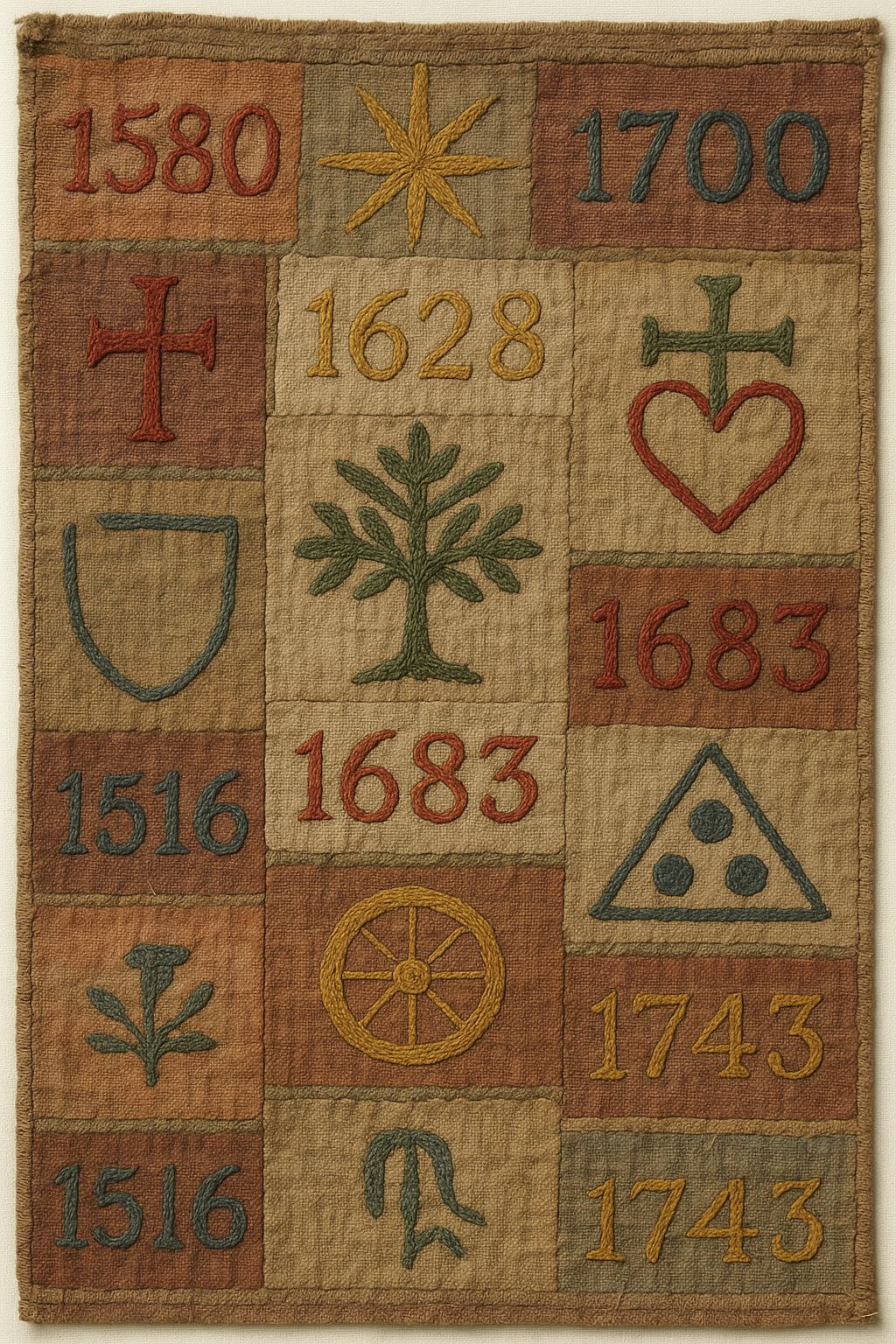
Woman Zone – the collective that turns community stories into cloth – hangs two new pieces from the Opera House fly-tower. “Artscape 55” is a 15-m tapestry sewn from old curtains, uniforms and seat fabric. Every embroidered date records a landmark night: the 1999 premiere of “The Cry of Winnie Mandela,” the March 2020 lockdown curtain-call, Thandiswa Mazwai’s 2021 reopening concert.
The companion piece, “1956/2026,” uses 70 strips of rooibos- and beetroot-dyed cotton. QR codes stitched into the hem link to short videos of present-day women – sex workers, queer teens, farm hands – reciting the 1956 demands. After the closing ceremony the cloth will be sliced into scarves for gender-based-violence shelters across the province.
3. Five Pillars, Five Ways to Shake the Stage
Curators slice the 83 productions into five roaming “pillars,” each anchored in a different corner of the complex.
-
Pillar 1: Bottelnek Breekbek*
The Arena hosts a physical-theatre triptych. A petrol-station cashier, an undocumented Malawian domestic worker and a retired Afrikaans professor collide on the N1. A real glass cube hovers overhead, cracking a little more with every scene. The cube is replaced nightly – a costly ritual director Jemma Kahn calls “a daily indictment of our roads, our borders and our brittle selves.” -
Pillar 2: Kom Fietna Saam*
A bike-opera rolls out at 18:00 from the V&A Waterfront. Riders wear LED capes synced to beats by electronic artist Angel-Ho. The twelve-kilometre loop halts at the District Six Museum for a site-specific choral burst, then at Sea Point for a rap battle between climate and gentrification voices. Audiences dismount at Artscape and become a mass choir. -
Pillar 3: The Divalicious Dames*
Drag finally owns the main stage. Beulah Hashe-De Wet’s cabaret slides from lip-sync to opera to verbatim testimony by trans sex-workers. A sensory-friendly show on 13 August dims lights to 30 %, kills strobes and flags every surprise through a SASL interpreter. -
Pillar 4: ABFAB (A Body for All Bodies)*
Dance refuses to segregate bodies. Two paraplegic dancers on customised chairs, one amputee aerialist and three non-disabled performers share pressure-sensitive flooring that triggers both light and sound. Neo Muyanga scores the work for marimba, cello and modular synth. When the last note fades, the stage itself has become a 200-square-metre graphic equaliser. -
Pillar 5: Bones / Falling Forward*
The Arena Loft is stripped bare for a double-bill. Rehane Abrahams’ one-woman show interrogates the Sarah Baartman archive; Mamela Nyamza answers with choreography. Seats disappear, spectators walk among performers who never drop eye contact. A 3 August open rehearsal lets school groups watch “difficult history” translate into muscle memory.
4. Beyond the Curtains: Night-schools, Data and Hidden Labour
Evenings do not belong to spectacle alone. The foyer hosts daily “10x10” talks – ten minutes each from ten speakers – on topics ranging from AI voice-cloning for survivors to land-restitution models that put women farmers first. Closed workshops coach journalists on protest safety, and a 24-hour WhatsApp hotline fields harassment reports within five minutes.
Books drop mid-run. “Choreographing Resistance” pairs Japanese butoh with Khayelitsha Pantsula, bundled with an AR app that projects archival footage onto your living-room floor. Rusana Philander burns typewriter keys into newsprint while reading passages from “Typewriter in the Fire,” her memoir of late-1990s crime reporting.
Thirty-seven choirs rotate through three amphitheatres in a relay. On 24 August their dawn, noon and dusk songs are patched live into Radio Tygerberg and low-power FM stations in Delft, Langa and Ocean View. Each group gets both a stipend and a professional recording archived under Creative Commons.
Meanwhile the fifth Arise Women of Africa Symposium meets at the CTICC from 27-29 August. Free shuttles link the two sites every half-hour. Delegates workshop micro-grants, then pitch to investors in the Artscape piazza on the 30th.
Tickets refuse to stay downtown. Forty-seven corner cafés, braai stands, hair salons and spaza shops house handheld Webtickets terminals, each taking a 15 % commission. Once the main halls close at 23:00, the party moves: a disused dry dock becomes “Siren Alley,” Zeitz MOCAA’s rooftop hosts a silent grandmother-lullaby dance, and Clarke’s Bookshop stages candle-lit feminist sci-fi until the 05:00 train departs.
For learners, the Opera House morphs into a classroom from 08:30-13:00 on weekdays. Kids cycle through recycled-vinyl costume design, VR reenactments of 1956, legal-literacy games and protest-chant Kwaito remixes. Teachers receive pre- and post-festival lesson kits.
Can’t travel? A zero-rated “digital twin” lets anyone on a 1 Mbps line drop into rehearsals, symposium snippets or 3-D scans of the textiles each night at 20:00 SAST. Seventeen satellite sites from Worcester to Piketberg stream performances and let viewers vote on camera angles in real time. One hundred “pay-it-forward” tickets appear daily through a voice-note lottery.
Security colours itself purple, not high-vis yellow. Consent cards – teal, orange, red – govern every photo. Violators leave immediately and stay banned. An open Google sheet scrolls nightly on the piazza wall, listing who hauled water, stitched costumes or fed the crew. On 31 August the data blooms into a final visualisation released under Creative Commons.
Finally, the city carries itself onto the stage. Performers keep talismans in their bags: a vuvuzella painted with missing-women portraits, soil from the Langa Pass Court, a grandmother’s candle-lit reading photograph, broken tap-shoes repurposed as percussion. Visitors scan each item, then add their own 30-second audio reply. The cart’s looping soundtrack grows hour by hour.
And the rumour no brochure confirms? On 30 August at 21:00 the entire complex will black out for three minutes. Torches will dot the façade, blinking Sophie Williams-De Bruyn’s name in Morse code. No speech. Just lights spelling gratitude directly onto the building that has learned to speak.
Travel, watch remotely, buy a ticket in a township braai shop, or simply point your phone skyward at 21:00 on the 30th. You will still be inside the syllabus Cape Town wrote for itself – a month-long proof that history is a verb, and everyone gets to conjugate it.
What is the main reason for the August 2026 celebrations in Cape Town?
Cape Town's August 2026 is a significant month due to the convergence of three major anniversaries: the 20th Artscape Women’s Humanity Festival, the 70th anniversary of the historic Women’s March, and Artscape Theatre's 55th birthday. This unique alignment has inspired a month-long curriculum focused on inclusion, memory, and future momentum.
How is accessibility being addressed for the events?

Aiden Abrahams is a Cape Town-based journalist who chronicles the city’s shifting political landscape for the Weekend Argus and Daily Maverick. Whether tracking parliamentary debates or tracing the legacy of District Six through his family’s own displacement, he roots every story in the voices that braid the Peninsula’s many cultures. Off deadline you’ll find him pacing the Sea Point promenade, debating Kaapse klopse rhythms with anyone who’ll listen.
View all articles →