
As Cape Town cools down, hiking season quietly returns to the Mother City
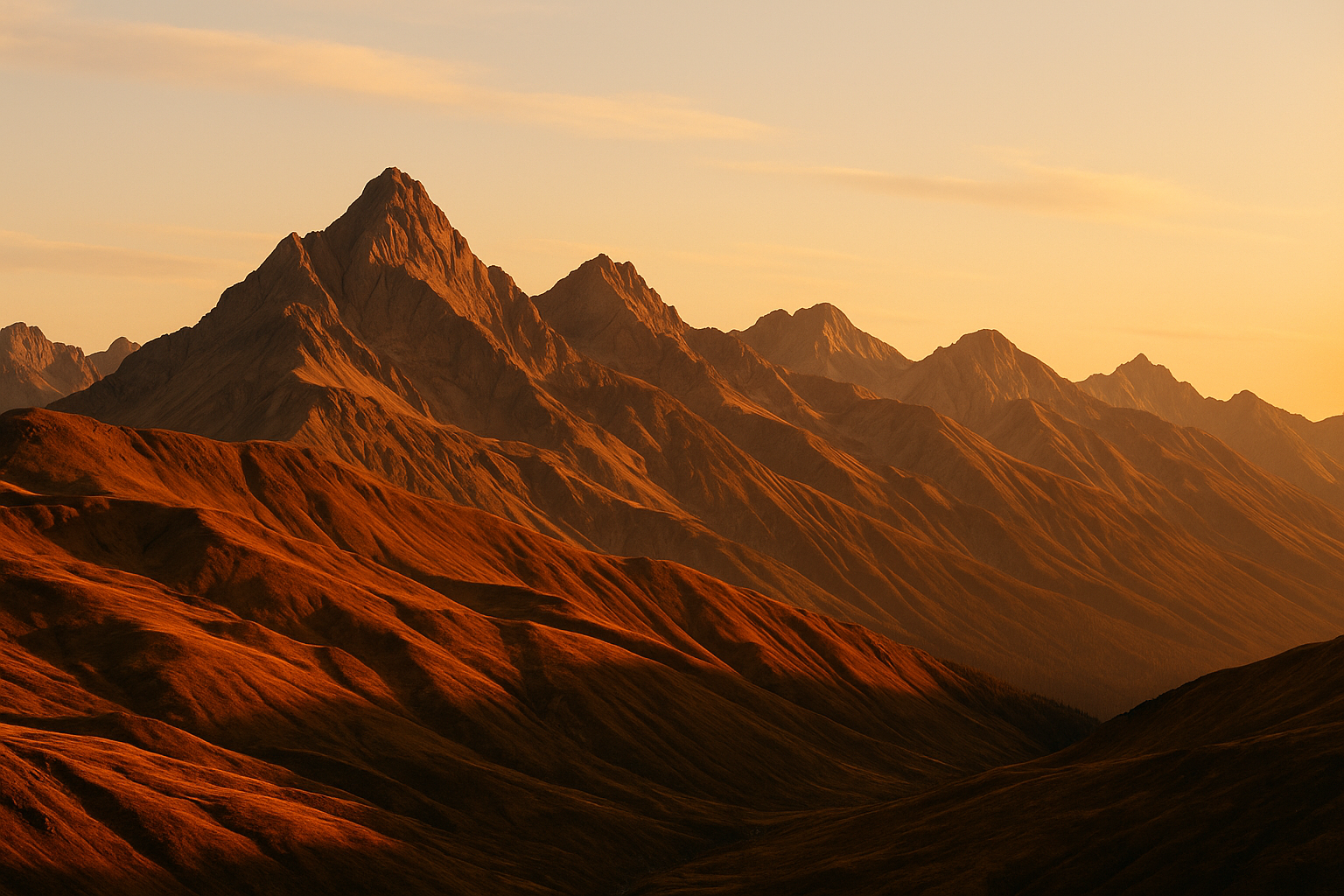
Discover Cape Town's autumn transformation: from shifting winds and light to unique wildlife and hiking insights. Experience the mountain's magic.
Autumn in Cape Town's mountains is like a secret language, whispered through cooling air and clearer skies. The mountains wake up, showing off their beauty with golden light and sparkling dew. Animals become more active, and hikers return to explore the trails. It's a special time when nature resets, offering peace and stunning views to all who visit.
What are the signs of autumn's arrival in Cape Town's mountains?
Autumn in Cape Town's mountains is signaled by several natural cues: the cooling of air as high-pressure systems shift, an increase in visibility and golden hour duration, the reappearance of dew which revives water sources, and the increased activity of nocturnal mammals as temperatures drop. These changes collectively mark the mountain's transition from the harsh summer.
Get Cape Town news in your inbox
Stay updated with the latest stories from the Mother City.
1. The First Inhale – When Summer Finally Lets Go
At 05:42 on an ordinary Tuesday, the city exhales.
Cicadas along Tafelberg Road abruptly mute, as though someone twisted a dial. Oaks that rattled all night hang motionless, eavesdropping. Thirty-three minutes later the stone-pines above the old cable-way parking lot release the heat they hoarded in their cores, sending a resin-scented sigh downhill into the faces of the earliest Lion’s Head climbers. That invisible puff is the peninsula’s starting pistol: the three-month parade of boots, ideas and pulses back onto the folded spine of Table Mountain.
The heatwave that drove Ravensmead to 43 °C and split Langa’s cricket clay is still archived in every hiker’s senses - the crackle of collapsing pine needles, the iron taste of dust on Chapman’s Drive, dassies pancaked against the coolest centimetres of rock. Trail counters logged a 68 % plunge on the 100 km network monitored by TMNP; even Kirstenbosch’s aerial walkway recorded its first visitor-less hour since opening. The city’s outdoors became a strict members-only club for the heat-proof or the fool-hardy.
Then the high-pressure anvil migrates east, making room for the first Southern Ocean front. Rain-free but loaded with a 15 °C marine layer, the system slides inland and drags the hiking calendar along. No government website announces the season; Capetonians simply feel the mountain open like a book that has been pressed shut since December.
2. Mathematics, Light and the Mountain’s New Clothes
From now until mid-May, each dawn gift-wraps another three minutes of visibility. The sun’s angle drops roughly 0.4° daily, stretching the so-called golden hour to a lazy hour and a half. Photographers shoot tack-sharp landscapes at f/8 without filters; botanists gain extra minutes to split Watsonia borbonica from the rarer W. tabularis; trail-runners earn 180 extra heartbeats before sweat salts their eyes.
Table Mountain’s sandstone beds strike almost north-south on either side of Maclear’s Beacon. In summer the high sun flattens them into a single blond wall. Come March, slanted light fingers every bedding plane and turns the upper 300 m into a topographic map of itself. Rangers treat the show as an informal erosion audit: if a ledge still hides in shade at 09:30, something - weather, porcupines, ropes - has nudged the cliff profile since last year.
Wind rewrites the rulebook too. February’s straight-line 50 km/h blast that tormented Kloof Nek now fractures into spinning cells. The result is a “box wind” that can shove warm air up the north face while cold draughts slip down Nursery Ravine. Stand on the 700 m contour for half a minute and you’ll feel both breaths - mountain lungs inhaling and exhaling across your skin.
3. Water, Roots and the Return of the Wild
Summer dehydrates more than humans. The dependable seep 200 m above Kasteelspoort’s first ladder shrinks to a dark kiss by mid-January. Its resurrection is not courtesy of rain but of dew: cool night air meeting warm rock condenses, and gravity herds the droplets downward. At barely 0.2 L per minute, the trickle restarts food chains anyway - sunbirds within a day, flat-geckos after three nights, a millimetre-thick moss carpet within a week.
Autumn also reboots mammals. Porcupines, genets and grey mongooses shun full darkness in summer because surface rock stays above 24 °C until 23:00. Once overnight lows slide under 16 °C for three consecutive nights, they shift to nautical twilight, letting descending hikers spot eyeshine 80 m away. The payoff is the “silver parade” of the first full moon, when quills and guard hairs flash like broken fibre-optics.
Even the tiniest engineering failures make noise. In 2019 a dehydrated mat of Protea repens roots - 4 × 1.5 m and 30 cm thick - peeled off Lion’s Head after an out-of-season drizzle. The slab accelerated to 17 m/s, snapped saplings and carved a 60 cm gully you can still trace. Decade-old records say the third week of March is the danger window; if you spot aligned needles or guitar-string root cables, traverse one at a time with thirty metres between bodies.
4. Quiet Data, City Re-entry and the Dose That Needs No Prescription
Copper mesh sewn inside a buff cuts bee stings by 60 % during late aloe blooms. A frozen 500 ml yoghurt bottle slots perfectly into pack side-mesh, cooling your back and supplying the first two hours of drinking water on sun-scorched northern slopes. An old bicycle inner tube - 10 cm band, 8 g - can wrap a sprained ankle tightly enough to walk 5 km at 3 km/h; UCT Mountain Rescue verified it in 2021.
Above the city, light pollution dims 0.4 mag/arcsec² after 22:00 when motion-sensor security lights go to sleep. Star count doubles from 450 to 900. On new-moon weekends the summit becomes an open-air observatory; the ISS blazes magnitude –4.2, brighter than Venus, while the glow of squid boats on the Walvis Ridge - 1 800 km away - paints a second, miniature sunset on the horizon.
Trackers register lower heart-rate variability on autumn walks, yet they miss the real trophy: a 22 % drop in hair-sample cortisol after six weekly outings, the same result luxury silent retreats claim. The cocktail is simple - quieter soundscapes, phytoncide inhalation, fynbos fractal complexity averaging 1.38, the sweet spot for alpha-brainwave calm. The mountain writes prescriptions, but only if you walk slowly enough for the medicine to seep in.
The final kilometre home is part of the journey. Descending the old pipe track above Camps Bay at twilight, you pass through olfactory layers - fynbos, salt, beach-braai charcoal, finally the biscuity sigh of a craft brewery on Victoria Road. Each stratum is a decompression chamber, easing you out of mountain time so that when your shoes kiss tar the city feels newborn, its neon and traffic lights just another topography - one that, for the next twelve hours, will hum softly, knowing the mountain is still there, breathing cooler air, setting tomorrow’s 05:42 alarm.
What are the signs of autumn's arrival in Cape Town's mountains?
Autumn in Cape Town's mountains is signaled by several natural cues: the cooling of air as high-pressure systems shift, an increase in visibility and golden hour duration, the reappearance of dew which revives water sources, and the increased activity of nocturnal mammals as temperatures drop. These changes collectively mark the mountain's transition from the harsh summer.
How does the change in sunlight affect the appearance of Table Mountain?
As autumn progresses, the sun's angle drops by approximately 0.4° daily, extending the 'golden hour' to about 90 minutes. This slanted light illuminates the sandstone beds of Table Mountain, highlighting every bedding plane and turning the upper 300 meters into a detailed topographic map. This visual change also serves as an informal erosion audit for rangers.
How does the mountain's water supply recover in autumn?
Even without significant rainfall, the mountain's water sources, such as seeps, revive in autumn primarily through dew. Cool night air meeting warm rock surfaces condenses, and gravity collects these droplets. Although the trickle is minimal (around 0.2 L per minute), it's enough to restart food chains, attracting sunbirds, flat-geckos, and promoting moss growth.
What changes in animal behavior can be observed during autumn in Cape Town's mountains?
With overnight lows consistently dropping below 16 °C, nocturnal mammals like porcupines, genets, and grey mongooses shift their activity to nautical twilight. This makes them more visible to hikers, especially during the 'silver parade' of the first full moon when their quills and guard hairs are illuminated.
What unique atmospheric phenomena occur during autumn on Table Mountain?
Autumn brings a unique 'box wind' phenomenon where February's strong, straight-line winds fracture into spinning cells. This can result in warm air being pushed up the north face while cold drafts simultaneously slip down ravines, creating distinct temperature differences that can be felt in different areas of the mountain.
How do autumn hikes in Table Mountain contribute to well-being?
Autumn walks on Table Mountain have been shown to significantly reduce stress levels, with a 22% drop in hair-sample cortisol after six weekly outings. This benefit is attributed to the quieter soundscapes, inhalation of phytoncides from plants, and the 'fynbos fractal complexity' (averaging 1.38), which is considered ideal for promoting alpha-brainwave calm.

Michael Jameson is a Cape Town-born journalist whose reporting on food culture traces the city’s flavours from Bo-Kaap kitchens to township braai spots. When he isn’t tracing spice routes for his weekly column, you’ll find him surfing the chilly Atlantic off Muizenberg with the same ease he navigates parliamentary press briefings.
View all articles →