
BIRD FLU AFTER RECENT VIRUSES: WHAT IS DIFFERENT
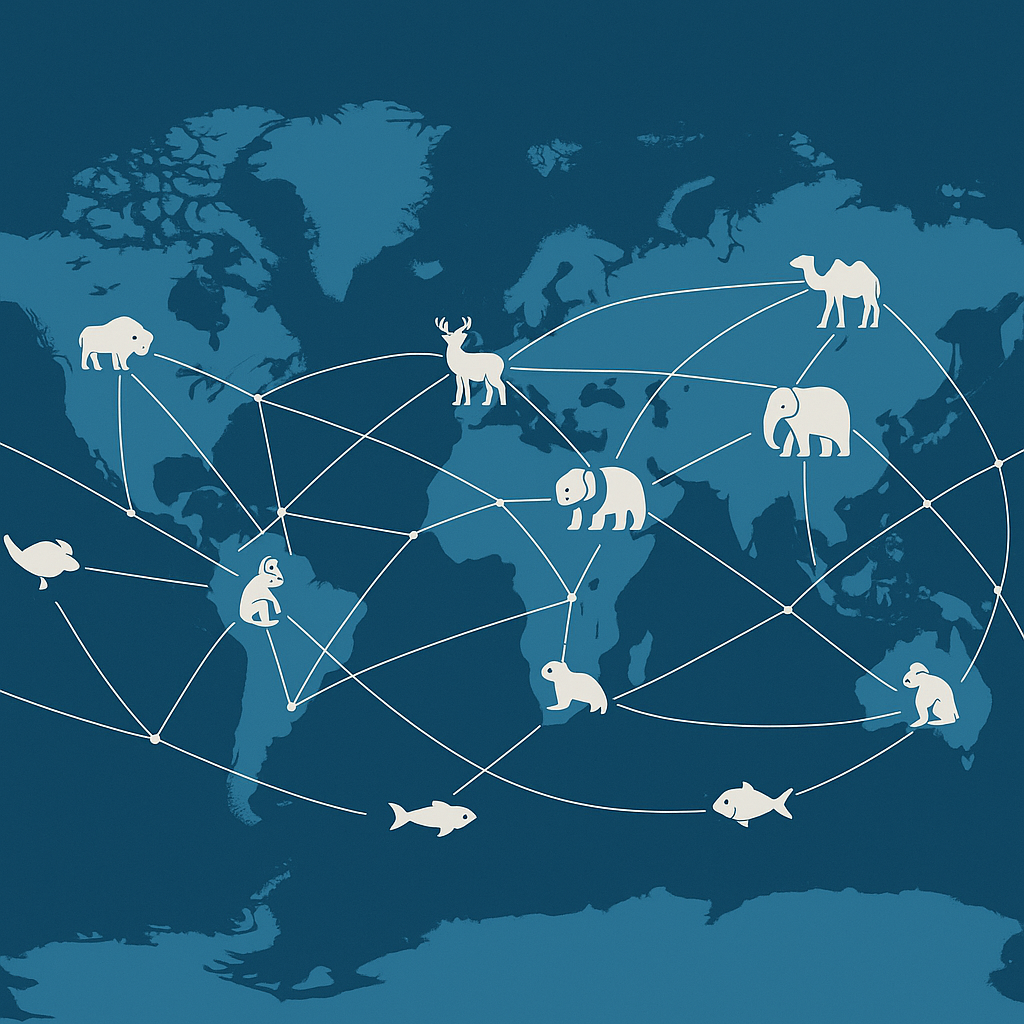
H5N1 bird flu and other zoonotic diseases highlight global surveillance. Learn how interconnected systems track emerging viral threats like Ebola and Hanta.
The world is buzzing with new disease alarms, like Hanta virus, Ebola, and now H5N1 bird flu. These outbreaks show how connected our world is, making it easier for diseases to spread. H5N1, a bird flu, has changed a lot since 1996 and can now infect many animals, including some people. While human cases are rare, the virus keeps changing, which worries health experts, especially in places like South Africa where animals, trade, and travel can move diseases around quickly. This means doctors and scientists are constantly watching, sharing information, and updating advice to keep us safe.
What is H5N1 bird flu?
H5N1 bird flu is an avian influenza A virus subtype that has evolved significantly since its initial identification in 1996. It can infect various bird species globally and has shown the capacity to spread to mammals. While human cases are uncommon, the virus's evolutionary flexibility and potential for mutation make it a continuous concern for public health surveillance.
Get Cape Town news in your inbox
Stay updated with the latest stories from the Mother City.
The rhythm of infectious disease alerts has accelerated noticeably across recent months, with Hanta virus warnings, Ebola regional concerns, and now H5N1 avian influenza commanding attention in South Africa and globally. This succession is not coincidental but rather reflects the operational reality of modern disease surveillance - an integrated system where shared international datasets allow health agencies to detect, compare, and contextualize outbreaks across vastly different geographies and species boundaries. The implications extend far beyond immediate public health response; they reshape how populations perceive risk, how governments allocate resources, and how scientific understanding evolves in real-time. For South Africa specifically, this global connectivity matters profoundly, as wildlife migration corridors, agricultural trade networks, and international travel routes create multiple pathways through which pathogens can traverse continents and ecosystems.
The Architecture of Modern Disease Surveillance
Contemporary outbreak monitoring operates through unprecedented data integration. When the World Health Organization, the Food and Agriculture Organization, and national agencies like South Africa's National Institute for Communicable Diseases track viral emergence, they draw upon standardized reporting mechanisms that enable immediate cross-referencing of events. A rodent-borne Hanta virus cluster in one region can be evaluated against hemorrhagic fever patterns elsewhere; an avian influenza detection in wild birds triggers automatic comparison with poultry industry data and human case reports across hemisphere. This interconnectedness serves practical epidemiological purposes - identifying common risk factors, predicting spread trajectories, and coordinating containment - but it also generates a distinctive information environment where local risk perception becomes inseparable from global event patterns.
The velocity of this system carries significant consequences for public communication. Health agencies now revise guidance with exceptional speed, sometimes within days or weeks, as laboratory findings and field observations accumulate. This responsiveness represents scientific integrity - adapting recommendations to evidence rather than adhering to predetermined positions - but it also creates communication challenges. Populations accustomed to relatively stable health advice must navigate frequent updates, uncertainty intervals, and evolving precautionary measures. The transparency that enables informed decision-making simultaneously demands greater public sophistication in interpreting provisional findings and probability-based risk assessments.
Recent Viral Alerts: Context and Sequence
The temporal clustering of Hanta virus, Ebola, and avian influenza alerts in early 2024-2025 illustrates how surveillance sensitivity and actual ecological risk interact. Hanta virus outbreaks, typically associated with rodent exposure in specific environmental conditions, generated initial concern through their association with human activities in rural and peri-urban settings. These events activated established protocols for rodent-borne disease management, including environmental modification and individual protective guidance. Shortly thereafter, Ebola alerts emerged in response to regional spillover risks in Central and East African locations where fruit bat reservoirs and human populations interface through hunting, butchering, and consumption practices.
Neither event escalated to sustained transmission crises in South Africa, yet their sequential appearance established a perceptual framework - heightened vigilance toward zoonotic emergence - that shaped subsequent reception of H5N1 developments. This pattern recognition, while potentially amplifying anxiety, also serves adaptive functions: populations primed to consider animal-human transmission pathways may implement protective behaviors more readily when novel threats emerge.
H5N1 Virology and Evolutionary Trajectory
The current H5N1 concern centers on a specific viral lineage with substantial evolutionary history. Influenza A virus subtype H5N1, belonging to clade 2.3.4.4b, represents not a static pathogen but a dynamic evolutionary process traceable through decades of genomic surveillance. Its initial identification in 1996 among domestic geese in Guangdong Province, China, established the foundational genotype from which subsequent variants would emerge. The European emergence around 2020 marked a significant expansion phase, with this particular clade demonstrating enhanced fitness across diverse host species and geographic conditions.
The subsequent global dissemination has been remarkably comprehensive. Within four years, confirmed detections span Africa, Asia, Europe, North and South America, and critically, Antarctica - where infection among penguin populations and other seabirds demonstrated the virus's capacity to penetrate even relatively isolated ecosystems with limited human presence. This Antarctic dimension carries particular scientific significance, indicating that migratory bird pathways alone can sustain intercontinental viral movement without anthropogenic assistance.
Surveillance data from 2020-2025 reveal not merely geographic spread but ongoing evolutionary diversification. The virus continues to accumulate genetic changes as it replicates across expanding host ranges, generating variant populations that may differ in transmissibility, tissue tropism, and pathogenicity. This molecular dynamism explains why health authorities maintain such intensive monitoring: each detection represents not simply a static presence but a potential evolutionary node from which altered characteristics may emerge.
Transmission Mechanisms and Ecological Bridges
Understanding H5N1 propagation requires appreciation of its dual transmission architecture - avian and mammalian pathways operating with different efficiencies and implications. In wild birds, the virus spreads primarily through fecal-oral and respiratory routes, with migratory species functioning as long-distance vectors. The fecal shedding characteristic of many infected waterfowl creates environmental contamination that persists in water bodies and wetland sediments, establishing transmission foci that outlast individual infectious periods.
Human Infection Patterns and Clinical Spectrum
Despite extensive animal circulation, human H5N1 cases remain uncommon relative to exposure opportunities - a pattern that reflects genuine biological barriers rather than merely insufficient surveillance. The 2024 United States dairy-associated outbreak provided unprecedented insight into contemporary human disease characteristics. Most documented infections presented with mild illness, predominantly conjunctivitis, suggesting that recent viral variants may have attenuated pathogenicity in humans compared to earlier H5N1 lineages that produced severe pneumonia and high case-fatality rates.
However, this apparent mildness carries important caveats. Severe pneumonia continues to occur, particularly among individuals with intensive poultry exposure, indicating that virulence potential persists within the viral population. The conjunctival predominance in dairy workers may reflect specific exposure routes - splashed contaminated milk rather than inhalation - rather than fundamental attenuation. Moreover, mild or subclinical infections may escape detection entirely, complicating accurate assessment of true infection incidence and potentially allowing unrecognized chains of transmission to persist.
Receptor Biology and the Pandemic Threshold
The central scientific question surrounding H5N1 concerns its pandemic potential - specifically, whether and when it might acquire efficient human-to-human transmissibility. Current understanding emphasizes receptor binding as the critical molecular gatekeeper. Influenza viruses attach to host cells through hemagglutinin binding to sialic acid receptors, with avian-adapted viruses preferring α2,3-linked sialic acids prevalent in bird intestinal and respiratory tracts, and human-adapted viruses favoring α2,6-linked forms dominant in human upper airways.
The 2.3.4.4b clade maintains strong avian-receptor preference, explaining why human infections typically require substantial viral inocula and close contact with infected animals. However, laboratory studies demonstrate that relatively few amino acid substitutions can shift receptor specificity, and serial passage in mammalian hosts can select for such changes. Research groups worldwide conduct systematic mutational analyses to identify combinations that might enable respiratory droplet transmission, with findings informing pandemic preparedness assessments and vaccine development priorities.
The absence of confirmed sustained human-to-human transmission to date provides no guarantee of future stability. Each spillover event - each human infection acquired from animals - represents an independent evolutionary experiment. The probability of adaptive mutation increases with infection number, creating tension between agricultural economic interests that favor minimizing apparent outbreaks and public health interests that favor comprehensive detection and interruption of animal-human transmission opportunities.
South African Preparedness and Strategic Positioning
South Africa's response to H5N1 reflects both global integration and local specificity. The national surveillance system maintains coordinated monitoring across wetland ecosystems - critical stopover points for Palearctic migratory birds - and commercial poultry operations that represent economic foundations for rural communities. This dual focus acknowledges that early detection enables containment, while public panic generates disproportionate economic and social costs.
Current risk characterization by national and international agencies emphasizes low probability for general population exposure, contingent upon specific behavioral and occupational factors. Poultry workers, veterinarians, wildlife rehabilitators, and individuals handling raw wild bird products face elevated but still quantitatively limited risk. This stratified risk assessment supports targeted interventions - enhanced biosecurity in agricultural settings, personal protective equipment provision for high-exposure occupations, and rapid diagnostic capacity for suspect cases - rather than population-wide measures that would be inefficient and potentially counterproductive.
The integration of veterinary and human health surveillance networks represents a particularly important structural development. Historically separated by institutional boundaries and funding streams, these systems increasingly share data platforms, laboratory capacities, and response protocols. This One Health operationalization recognizes that zoonotic pathogens cannot be managed within species-siloed frameworks, and that optimal preparedness requires continuous information flow between animal and human health professionals.
Food security planning adds another dimension of complexity. Provincial agricultural authorities must balance disease control measures - culling, movement restrictions, market interventions - against livelihood impacts and protein access for vulnerable populations. The veterinary alerts triggered by H5N1 detections thus connect immediately with broader development and nutrition security frameworks, illustrating how infectious disease management intersects with sustainable development challenges.
The ongoing expansion of H5N1 across global bird populations, its established capacity for mammalian infection, and its demonstrated evolutionary flexibility ensure that this virus will remain a surveillance priority for years to come. South Africa's position within African migratory flyways and its substantial poultry industry create specific vulnerability profiles that demand sustained attention, even as immediate public health risk remains contained. The broader lesson - applicable to Hanta virus, Ebola, and inevitable future alerts - concerns the value of surveillance investment, the necessity of international cooperation, and the adaptive capacity required to navigate uncertainty in an era of accelerated pathogen emergence.
[{"question": "What is H5N1 bird flu and why is it a concern?", "answer": "H5N1 bird flu is a subtype of avian influenza A virus that has significantly evolved since 1996. It can infect various bird species globally and has shown the capacity to spread to mammals, including humans. While human cases are uncommon, its ability to constantly change and infect diverse animal hosts, coupled with its global spread (even to Antarctica), makes it a continuous public health concern. Health experts are especially vigilant in regions like South Africa due to high animal mobility, trade, and travel."}, {"question": "How does modern disease surveillance work in an interconnected world?", "answer": "Modern disease surveillance operates through unprecedented data integration. Organizations like the WHO, FAO, and national agencies (e.g., South Africa's National Institute for Communicable Diseases) use standardized reporting mechanisms and shared international datasets. This allows them to detect, compare, and contextualize outbreaks across different geographies and species. This interconnectedness helps identify common risk factors, predict spread, and coordinate containment efforts, creating an information environment where local risk perception is tied to global event patterns."}, {"question": "What is the current status of H5N1 human infections?", "answer": "Despite extensive circulation in animals, human H5N1 cases remain uncommon. Recent infections, such as those associated with the 2024 United States dairy outbreak, often presented with mild illness, predominantly conjunctivitis. However, severe pneumonia can still occur, particularly in individuals with intensive poultry exposure. It's important to note that mild or subclinical cases might go undetected, complicating the accurate assessment of true infection incidence."}, {"question": "What are the main transmission mechanisms for H5N1?", "answer": "H5N1 primarily spreads among wild birds through fecal-oral and respiratory routes, with migratory species acting as long-distance vectors. Infected waterfowl shed the virus through their feces, contaminating water bodies and wetlands. The virus can also spread to mammals through contact with infected birds or contaminated environments. While efficient human-to-human transmission has not been confirmed, each spillover event from animals to humans presents an opportunity for the virus to evolve further."}, {"question": "What is South Africa's approach to H5N1 preparedness?", "answer": "South Africa's response involves coordinated monitoring across critical wetland ecosystems (stopover points for migratory birds) and commercial poultry operations. Their surveillance system aims for early detection to enable containment and prevent economic and social disruption. The country employs a 'One Health' approach, integrating veterinary and human health surveillance networks to share data, laboratory capacities, and response protocols, recognizing that zoonotic pathogens require a unified management strategy. Risk assessments focus on targeted interventions for high-risk occupations like poultry workers, rather than broad population-wide measures."}, {"question": "What is the future concern regarding H5N1's pandemic potential?", "answer": "The central scientific question is whether H5N1 will acquire efficient human-to-human transmissibility. The virus currently prefers avian-type receptors in host cells. However, laboratory studies show that relatively few genetic changes can shift its receptor specificity, potentially allowing it to bind more easily to human upper airway cells. Each human infection from animals is an 'evolutionary experiment' where the virus could acquire such mutations. Continuous monitoring and research are crucial to identify these changes and inform pandemic preparedness and vaccine development efforts."}]

Isabella Schmidt is a Cape Town journalist who chronicles the city’s evolving food culture, from Bo-Kaap spice merchants to Khayelitsha microbreweries. Raised hiking the trails that link Table Mountain to the Cape Flats, she brings the flavours and voices of her hometown to global readers with equal parts rigour and heart.
View all articles →