
Building an organisational framework
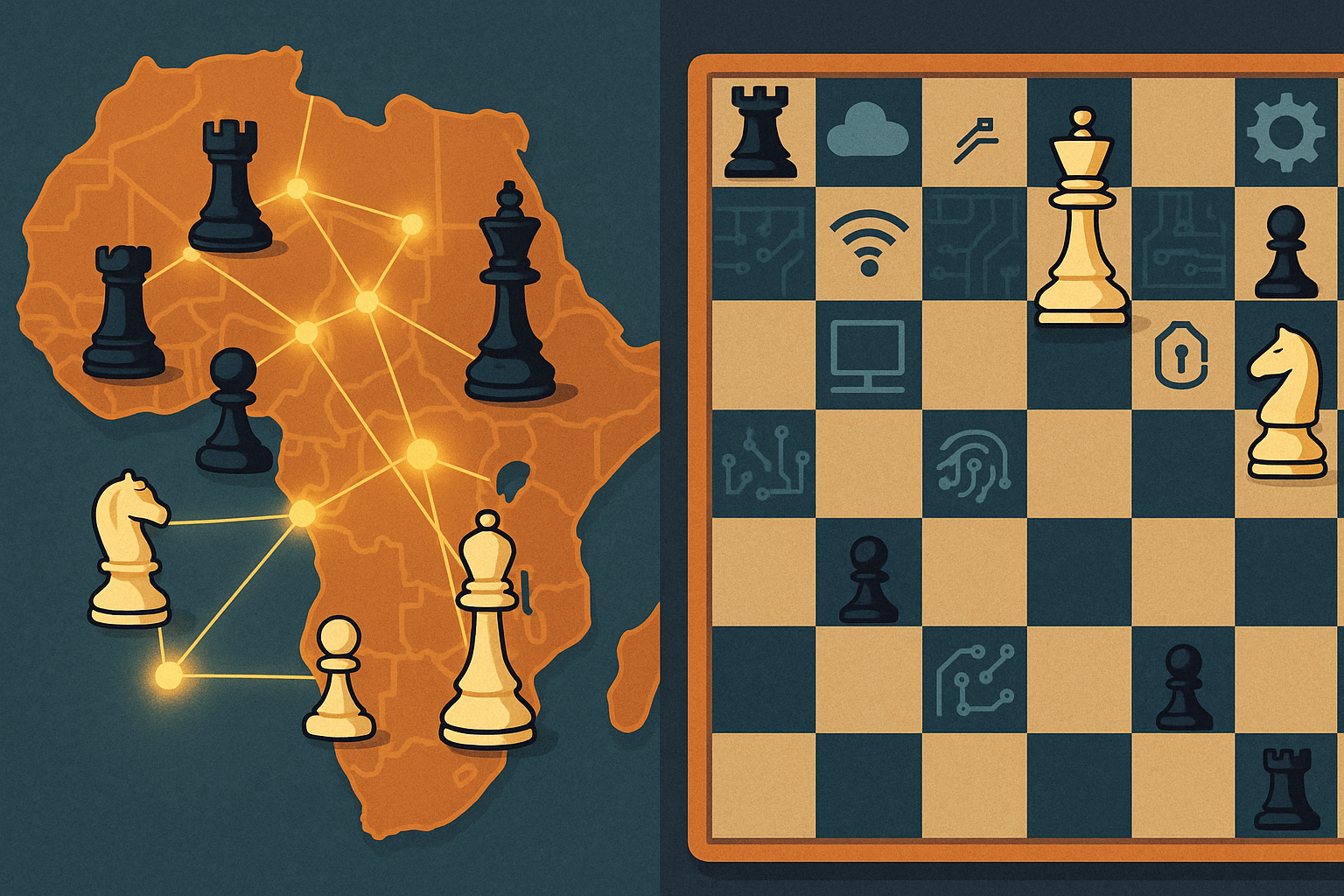
The World Schools Team Championship in Cape Town blends sports, tech, and culture, featuring AI pairings, global streaming, and a focus on African chess development.
This exciting new chess event, "New Chess Horizons," is a big deal! It's a huge chess competition for young players (10-17) from four different continents, kicking off in Cape Town in July 2026. Get ready for super cool tech, including holograms and live streaming, plus special learning programs. The goal is to make chess grow all over the world, especially in Africa, and inspire kids with amazing opportunities and lots of fun, high-tech chess action!
What is the "New Chess Horizons" event?
"New Chess Horizons" is a groundbreaking chess circuit spanning four continents, starting with a continental qualifier in Cape Town in July 2026. It features 800 young players aged 10-17, advanced technology, innovative educational initiatives, and aims to foster chess development globally, especially in Africa.
Get Cape Town news in your inbox
Stay updated with the latest stories from the Mother City.
1. Cape Town Lights the Fuse
Six July, 2026, will look nothing like the usual junior swiss. The Cape Town International Convention Centre becomes a living chess campus: holograms bloom on the belly of Table Mountain at the opening, super-fast fibre keeps every micro-move streaming live, and a whole floor is turned into a pop-up start-up alley where coaches drag-and-drop PGNs onto cloud shelves that instantly feed both the arbiters’ tablets and ChessBase HQ in Hamburg.
City selection was deliberate. South Africa already owns the continent’s fastest data spine; the tourism office gifts the venue unlimited bandwidth for the week; and the Western Cape Department of Education freezes provincial exams so that local boys and girls can either battle at the boards or guide visitors. No other African region matched this trinity of connectivity, policy and postcard scenery, which is why FIDE lobbied hard to place Africa’s first continental qualifier in Cape Town rather than Casablanca’s Morocco Mall or Nairobi’s Kenyatta Complex.
Eight hundred players, aged 10–17, will sit at tables hiding UV-sterilising pads that glow the moment a handshake ends; a stripped-down Leela floods the position to the cloud; a new notation file called “sgn” adds tiny emoji flags every time the engine calls a sudden blunder; and the whole show is geo-fenced on YouTube so that Amharic, Wolof or Setswana commentary follows viewers wherever they are on the continent.
2. Who Gets to Sit at the Table?
Entry paths are tangled. Federations may send either the outright winner of their national school league or the highest-placed government-run school - a polite tug-of-war between elite academies and the public system. Nigeria’s dual leagues expose the tension: Ilupeju Grammar, the public champion, topped the private table yet only ranked seventh overall; the federation chose the private winner, GreenSprings Lekki, whose Belgrade-imported coaches boast an average rapid rating five hundred points higher. Ghana flipped the coin the other way, nominating Accra Academy, whose only titled guide is home-grown IM Tawfik. GreenSprings parents cried foul, claiming Ghana’s lower-rated reps would distort pairing averages; ISCF shrugged and upheld federation autonomy, insisting the format is designed precisely to spotlight such imbalances.
Freedom Holding Corp., headline sponsor, wires 2.6 million US dollars. Four hundred thousand are ring-fenced for post-event hardware - routers, laptops, 3-D-printed pieces - to be boxed and delivered to surrounding townships the morning after the closing ceremony. Freedom’s purchase of ChessBase last year gifts every participant a six-month premium account pre-loaded with the first 100 000-game collection of elite African schoolboy and schoolgirl encounters. Smaller partners pile in: the Post Office prints collector stamps for all 42 federations; Pick n Pay supermarkets sell water flasks with QR codes that unlock an AR puzzle and hand winners meal vouchers for their teams.
Money alone cannot script the curriculum. The Kazakh Ministry of Education’s 126-page chess-in-schools white paper is hot off Johannesburg photocopiers, yet direct copy-and-paste fails: the Kazakh plan leaned on a 1:1 laptop roll-out that COVID already shot dead. South African NGOs Moves for Life and the Amy Foundation are rewriting the guide into WhatsApp voice-note lessons for data-stricken townships. Each evening after rounds, grandmasters will sprint through thirty-minute rapid clinics in Khayelitsha; tactics are zipped to pupils’ phones as emoji strings and six-move SAN bursts.
3. Data, Drones and Dirt Roads
Scouting is now venture-funded. Lagos outfit Chess-ID Africa runs a machine-learning engine that chews not only rating curves but also sleep data from wearable rings and the slope of a player’s “blunder-decay curve” when clocks tick down. Any child whose error rate collapses faster than peers is tagged a future GM; the fund offers two-thousand-dollar annual stipends in return for five per cent of future professional earnings, a deal ISCF refuses to police because signatures are exchanged beyond its borders.
Security learned from Almaty, where a twelve-year-old Uzbek rigged pairings in round four. Cape Town will test blockchain pairing hashes; an Ethereum side-chain stamps a new checksum every thirty seconds and texts an automatic alert to every captain and the chief arbiter if anything drifts. The code is open, and Moroccan devs have already cloned it into Arabic.
Winter storms love Cape Town; when fibre lines go dark, a rented Starlink dish on the roof and a film-lot diesel gen-set will keep the lights on for forty-eight off-grid hours - long enough to crown continental finalists. Hotels must stock FM radios and battery printers so pairings can still be read aloud if the internet dies.
Across the Atlantic, San José will run a “flipped classroom”: Chromebooks offline-load Lichess homework on the bus, then burst-sync results at the venue. Tallinn, the European stop, bets on AI dubbing that clones a player’s voice and translates post-game chats into seventeen tongues in real time.
4. Stories That Outlive the Trophy
Gender quotas stir debate. ISCF mandates at least two girls per six-player squad, but definitions blur: Uganda nominated a sixteen-year-old non-binary player who last competed in the girls’ section; ISCF’s equity board approved the choice. Kenya answered by naming 13-year-old WCM Maria Apondi, stitching “Queenside Advantage” in Swahili along the team sleeve to celebrate women entering STEM.
SuperSport’s nightly wrap will be voiced by rapper Cassper Nyovest - himself a former U-14 provincial rep - and a drone-shot segment called “Township Endgames” will replay critical moments on a human-size board at dusk. Showmax shoots a teen drama, Checks & Balances, weaving scripted locker-room tension with real tournament footage; hired coaches cameo as extras.
Logistics reach beyond the boards. Emirates and Turkish Airlines waived excess-baggage fees so each child can lug an extra suitcase filled with sets for donation; customs will ignore the import duties as long as the boards carry the event crest. After the last handshake, trucks will ferry those sets to Gugulethu, Philippi and Mitchells Plain for weekend clinics already scheduled.
The aftershock travels faster than the bulletins. Botswana extracted 2.5 million pula - its first-ever scholastic chess budget - from the Basic Education Ministry simply by waving the continental qualifier calendar. Tanzania painted a 737-800 in orange and black livery to hype the event; Dar es Salaam primaries now run “qualifier ladders” whose winners fly as mascots. Tiny São Tomé e Príncipe, population 220 000, fields four players thanks to second-hand DGT clocks flown in from Italy.
Every move will keep living sixty seconds after it is played, mirrored to ChessBase Cloud and piped to training rooms in Karachi, Quito and Reykjavik. In 2027 FIDE will publish a white paper mapping blunder rates against local internet speed, sleep logs and even the temperature in the hall.
When the crystal trophy - shaped like the African continent - lands in the winners’ arms, no closing speech will claim “mission complete.” Each participant pockets a SIM card pre-loaded with five gigs of data and a booklet, Next Moves, listing upcoming regional leagues and grandmaster simul dates. A QR code at the back syncs calendars continent-wide as soon as a new open is announced. The convoy rolls off to the Cape Flats, hashtags streak from Lagos to Lusaka, and the first continental circuit keeps humming long after the final flag falls.
What is "New Chess Horizons"?
"New Chess Horizons" is a groundbreaking international chess circuit for young players aged 10-17, encompassing four continents. It aims to foster chess development globally, particularly in Africa, through high-tech action, innovative educational programs, and inspiring opportunities. The inaugural continental qualifier kicks off in Cape Town, South Africa, in July 2026.
Where and when will the first event take place?
The first continental qualifier of "New Chess Horizons" will be held in Cape Town, South Africa, starting on July 6, 2026. The Cape Town International Convention Centre will be transformed into a dynamic chess campus, utilizing advanced technology and South Africa's robust data infrastructure.
What advanced technologies will be used at the event?
"New Chess Horizons" will leverage cutting-edge technology, including holograms for the opening ceremony, super-fast fiber for live streaming every move, and UV-sterilizing pads at the boards. Innovative data handling includes a new "sgn" notation file with emoji flags for blunders, geo-fenced YouTube streaming with localized commentary, blockchain pairing hashes for security, and AI dubbing for real-time translation at later events.
How are players selected for the event?
The entry process for "New Chess Horizons" allows federations to send either the winner of their national school league or the highest-placed government-run school team. This creates a fascinating dynamic between elite academies and public education systems, with instances like Nigeria and Ghana demonstrating different selection priorities. The event also mandates at least two girls per six-player squad, promoting gender diversity.
What educational and community initiatives are part of "New Chess Horizons"?
Beyond the competition, "New Chess Horizons" includes significant educational and community outreach. Freedom Holding Corp., a headline sponsor, is allocating $400,000 for post-event hardware donations to surrounding townships, and every participant receives a six-month premium ChessBase account with a collection of elite African school chess games. NGOs are adapting chess curricula for data-stricken townships using WhatsApp voice notes, and grandmasters will conduct rapid clinics in local communities. The event also facilitates chess set donations to local communities.
What is the long-term vision for "New Chess Horizons"?
The long-term vision for "New Chess Horizons" is to create a lasting impact on global chess development. This includes inspiring national governments to invest in scholastic chess, as seen with Botswana's new budget. The event aims to generate continuous engagement through post-event resources like pre-loaded SIM cards with data, a "Next Moves" booklet detailing upcoming regional leagues and grandmaster simuls, and a QR code to sync calendars, ensuring the circuit continues to hum long after the final flag falls.

Michael Jameson is a Cape Town-born journalist whose reporting on food culture traces the city’s flavours from Bo-Kaap kitchens to township braai spots. When he isn’t tracing spice routes for his weekly column, you’ll find him surfing the chilly Atlantic off Muizenberg with the same ease he navigates parliamentary press briefings.
View all articles →