
Cape Town banker denied bail for third time
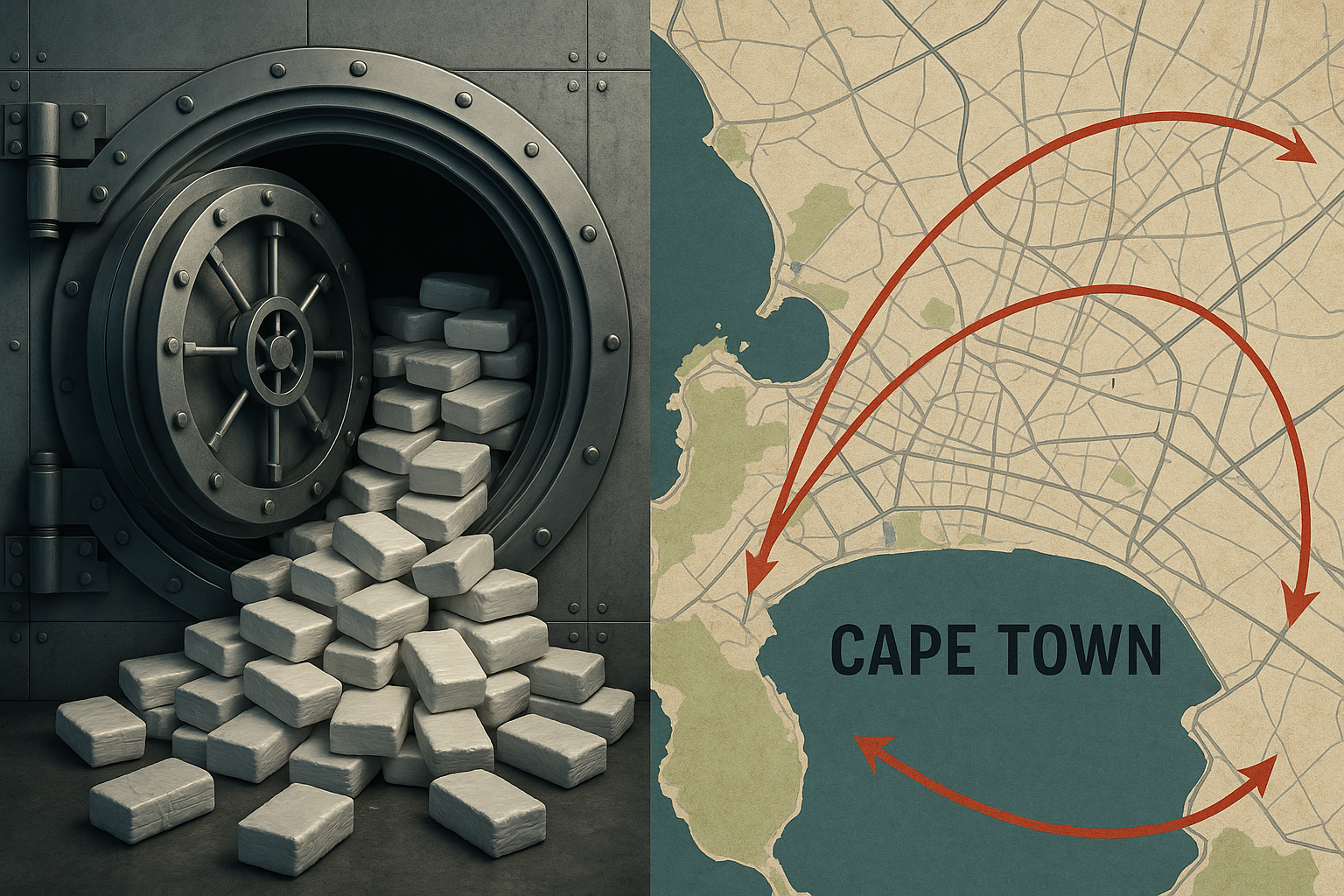
Cocaine banker Raed Cupido denied bail for the third time in an R18 million drug sting involving 15 bricks of cocaine and firearms.
A high-flying banker, Raed Cupido, is stuck in jail after a shocking drug bust. Police found him with R18 million worth of cocaine, guns, and drug-making tools in a secret storage unit. This is his third try for freedom, and the court keeps saying no, seeing him as a big risk. Now, everyone's watching as detectives dig into his past at Standard Bank, wondering how a man of finance ended up in a world of serious crime. His trial is coming, and it's set to reveal a dark side to Cape Town's glamorous facade.
What is Raed Cupido accused of?
Raed Cupido, a former Standard Bank supervisor, is accused of drug trafficking after being found with fifteen heat-sealed bricks of cocaine worth approximately R18 million. He was arrested following an undercover operation that traced him to a storage unit containing the narcotics, firearms, and packaging tools.
Get Cape Town news in your inbox
Stay updated with the latest stories from the Mother City.
A Banker’s Third Knock on the Prison Door
Cape Town’s Regional Court denied Raed Cupido freedom for the third time, cementing his status as the most-talked-about white-collar arrest of the year. Press benches now routinely label the ex-Standard Bank supervisor the “banker-turned-trafficker,” and Tuesday’s refusal by Magistrate Amori Graff keeps him behind bars pending trial.
The courtroom duel pitched defence counsel Andre Johnston against state heavyweight Greg Wolmarans. Over several hours they sparred over risk to society, the strength of the docket, and the accused’s private hardships. In the end Graff agreed with the prosecution: nothing fresh had surfaced to tip the scales toward release.
Cupido’s notoriety stems from the unlikely overlap of two spheres that seldom meet: high finance and bulk narcotics. His curriculum vitae previously read like a corporate success story - until detectives say they found him beside fifteen heat-sealed bricks of cocaine worth roughly eighteen million rand on the street.
The Roeland Street Raid: R18 Million, Guns and a Storage Locker
A year ago, undercover members of the SAPS Anti-Gang Unit shadowed Cupido and alleged accomplice Christopher Carelse to a nondescript storage compound on Roeland Street. The narrow lane sits a stone’s throw from the CBD, the harbour, and the N2 on-ramp - ideal terrain for anyone moving illicit freight quickly.
Units like these have become the go-to cache sites for syndicates. Unlike homes or registered warehouses, the facilities issue short leases, demand minimal paperwork, and invite little neighbourhood curiosity. Investigators say this particular pad - unit 868 - was rented under layers of front names, the last barrier between police and a fortune in powder.
Inside, detectives say they uncovered:
- Fifteen tightly wrapped blocks of cocaine hydrochloride
- A pair of handguns and boxes of rounds
- Packaging tools, digital scales and vacuum bags
In enforcement jargon anyone caught with such hauls is a “first receiver” - the earliest domestic link in an intercontinental pipeline. These actors break monster consignments into parcels small enough for street crews, making them high-value targets for the state.
From Corner Office to Courtroom: Tracing the Money Trail
Before the handcuffs clicked, Cupido oversaw daily operations at a flagship Standard Bank branch. The lender is one of South Africa’s Big Four and a continental powerhouse, placing the accused at the nerve centre of millions of client transactions.
Detectives are now poring over years of ledgers, looking for irregular cash streams or trade-based laundering. Analysts note that cartels increasingly funnel profits through legitimate enterprises - using inflated invoices, crypto exchanges, or mixed deposits to blur origins. No laundering charge has yet been laid, but compliance teams are quietly bracing for reputational aftershocks.
Gold-plated business cards and coded storage keys sit uneasily in the same evidence bag. For the Anti-Gang Unit, the arrest underscores a shift: rather than chasing runners on street corners, they are piercing the managerial layer that plans logistics, books leases and - critically - washes the proceeds.
Family, Fairness and Forensics: Why the Bail Bid Failed - Again
Cupido’s latest plea rested on human, not legal, grounds. Johnston told the court that the banker’s wife and two children face emotional turmoil and mounting bills. Their fledgling Uber-fleet venture, he claimed, is teetering toward liquidation without its day-to-day strategist. Yet South African courts seldom view economic hardship as “exceptional” when Schedule 5 narcotics offences are at stake.
The defence also alleged that the lead detective had hidden aspects of the intelligence file - perhaps an informant’s identity, perhaps gaps in the chain-of-custody log. Such tactics, Johnston hinted, could later torpedo the state’s case. Wolmarans countered that a suspected offender still has to explain how he wound up inside a locked cage of cocaine and guns, and Cupido had offered nothing convincing.
Magistrate Graff summarised her stance with clinical brevity: no fresh facts had emerged since earlier rulings, the prosecution still held a strong prima facie hand, and releasing the accused might gravely endanger society. The gavel fell; Cupido was escorted back to the holding cells, his tailored suit now swapped for prison garb.
Cape Town as Cartel Crossroads - And the Road Ahead to Trial
The Mother City serves as both a nightclub-friendly market and a springboard for Europe-bound product. Its container port, the second-busiest on the continent, swallows millions of tons of legitimate cargo every year, giving smugglers thick cover. Authorities now suspect that Brazilian and West African syndicates are pivoting toward mid-level coordinators like Cupido precisely because they bear no traditional criminal profile.
Christopher Carelse, the co-accused, remains in parallel custody. Legal observers expect the pair to adopt separate strategies once indictment arrives - perhaps one pleading for leniency while the other fights every exhibit.
The matter is set for formal plea and trial on 27 May. Prosecutors are likely to roll out forensic chemists who will testify on purity levels, packaging signatures and source-country markers. Ballistic experts will walk the court through the seized firearms. If the state enlarges the indictment, racketeering and conspiracy clauses could surface, adding decades to any prospective sentence.
Meanwhile, the Reserve Bank’s Prudential Authority has begun a quiet audit of Standard Bank’s vetting protocols. Employees with access to sensitive transactional data may soon face deeper lifestyle monitoring - an unintended compliance ripple from a single Roeland Street locker.
[{"question": "What is Raed Cupido accused of?", "answer": "Raed Cupido, a former Standard Bank supervisor, is accused of drug trafficking after being found with fifteen heat-sealed bricks of cocaine worth approximately R18 million. He was arrested following an undercover operation that traced him to a storage unit containing the narcotics, firearms, and packaging tools."}, {"question": "Why was Raed Cupido's bail denied for the third time?", "answer": "Raed Cupido's bail was denied for the third time because the court found no new facts had emerged since previous rulings that would justify his release. The prosecution presented a strong case, and the magistrate agreed that releasing him could endanger society. His defense's arguments about his family's financial hardship and allegations of hidden intelligence were not considered sufficient to tip the scales towards release for a Schedule 5 narcotics offense."}, {"question": "What was found at the Roeland Street storage unit?", "answer": "At the Roeland Street storage unit, detectives uncovered fifteen tightly wrapped blocks of cocaine hydrochloride worth approximately R18 million. They also found a pair of handguns with boxes of rounds, packaging tools, digital scales, and vacuum bags. Law enforcement considers anyone caught with such a haul a \"first receiver,\" meaning an early domestic link in an intercontinental drug pipeline."}, {"question": "What was Raed Cupido's role at Standard Bank, and what are the implications for the bank?", "answer": "Before his arrest, Raed Cupido oversaw daily operations at a flagship Standard Bank branch, one of South Africa's largest banks. Detectives are now investigating years of ledgers for irregular cash streams or trade-based money laundering, as cartels often use legitimate enterprises to funnel profits. While no laundering charges have been laid, compliance teams at Standard Bank are bracing for reputational aftershocks. The Reserve Bank's Prudential Authority has also begun an audit of Standard Bank's vetting protocols, which may lead to deeper lifestyle monitoring for employees with access to sensitive transactional data."}, {"question": "When is Raed Cupido's trial set to begin?", "answer": "Raed Cupido's matter is set for formal plea and trial on May 27th. Prosecutors are expected to present testimony from forensic chemists regarding purity levels and packaging, and ballistic experts on the seized firearms. The indictment could potentially be enlarged to include racketeering and conspiracy charges."}, {"question": "Why is Cape Town considered a 'Cartel Crossroads' and a significant location for drug trafficking?", "answer": "Cape Town is seen as a significant 'Cartel Crossroads' because it serves as both a market for drugs and a crucial transit point for products destined for Europe. Its container port, the second-busiest on the continent, offers extensive cover for smugglers due to the vast amount of legitimate cargo. Authorities suspect that Brazilian and West African syndicates are increasingly targeting mid-level coordinators like Cupido, who do not fit a traditional criminal profile, to manage their logistics and operations within the city."}]
Thabo Sebata is a Cape Town-based journalist who covers the intersection of politics and daily life in South Africa's legislative capital, bringing grassroots perspectives to parliamentary reporting from his upbringing in Gugulethu. When not tracking policy shifts or community responses, he finds inspiration hiking Table Mountain's trails and documenting the city's evolving food scene in Khayelitsha and Bo-Kaap. His work has appeared in leading South African publications, where his distinctive voice captures the complexities of a nation rebuilding itself.
View all articles →