
Cape Town-bound SAA flight diverted twice with critically low fuel
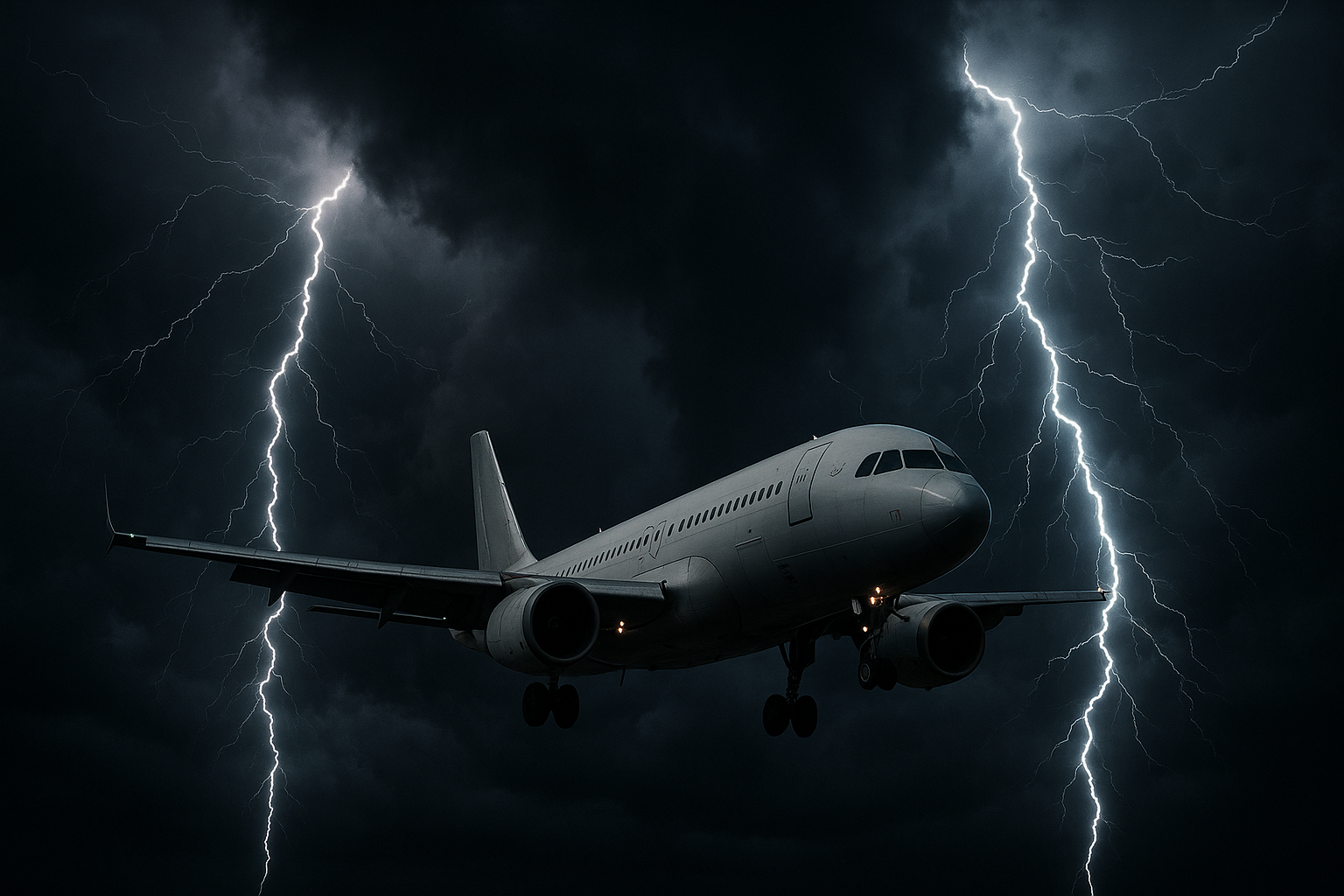
SA313's flight turned into a 550km detour due to extreme weather, leading to a nail-biting landing with minimal fuel.
A flight to Cape Town hit a severe storm, causing windshear and lightning, forcing it to try landing elsewhere. The storm followed the plane, making two more landing attempts impossible as fuel ran very low. The plane finally landed safely in another city with only nine minutes of fuel left, showing how quickly weather can change and cause big problems for flights.
What caused the SA313 flight to divert multiple times?
The SA313 flight diverted due to an unpredicted, rapidly deepening cut-off low pressure system that brought severe windshear and convective weather to Cape Town, its initial destination. Subsequent attempts to divert to George were thwarted as the same weather system quickly moved, eventually necessitating a landing in Port Elizabeth with critically low fuel.
Get Cape Town news in your inbox
Stay updated with the latest stories from the Mother City.
01 | When a Routine Sunset Departure Met a Mischievous Cut-Off Low
South African Airways’ dusk service to the Mother City lifted off Johannesburg’s runway 21R at 18:36 on 11 May.
The A320–232, tail ZS-SZA, was scheduled to touch down in Cape Town 1 h 45 m later with almost five tonnes of Jet-A to spare – ample for an evening hop down South Africa’s east coast. Pre-flight paperwork warned of a slow-moving upper low southwest of the continent, but guidance suggested the worst would arrive after last light. Forecasters offered a two-in-five chance of wind-shear warnings between 19:30 and 21:00 – enough to prompt an extra contingency splash, not enough to redraw the route.
For the first 200 nautical miles the ride stayed silky. The jet levelled at 37 000 ft and the flight-management computer predicted a 20:01 overhead with 4 800 kg in the tanks – numbers any captain would sign for. Then meteorology changed its mind. At 19:40 George Approach broadcast an urgent SIGMET: the cut-off low had deepened 13 hPa in six hours, double the climatological rate. Cape Town’s tower read surface gusts to 42 kt, a 70-kt low-level jet at 1 500 ft and a line of embedded cumulonimbus parked across the 01 approach axis.
02 | First Attempt: Lightning on the ILS and an 800-Foot Escape
Controllers vectored the Airbus onto the ILS anyway, hoping a gap would slide through. Instead, radar paint showed convective cells straddling the glide-path. At 1 200 ft above the deck the aircraft’s predictive wind-shear aural chimed; at 800 ft the reactive system barked “WINDSHEAR, WINDSHEAR” and the flight directors pitched up uncommanded. The crew snapped into the memory items: full TOGA, fifteen-degree pitch, wings level, follow the guidance bars. At 3 000 ft the jet cleaned up and climbed into a murky twilight hold. Fuel had slipped to 4 250 kg – still legal but trending the wrong way.
Met updates grew bleaker: ceiling stuck at 600 ft inside pounding showers, visibility two kilometres in rain, crosswind gusting 38. Cape Town promised no improvement for at least an hour, and George – the first alternate – was 190 nautical miles back along the coast. Dispatch uplinked new numbers: 2 600 kg needed to reach George, 3 400 kg shown on board. The captain conferred with the duty manager via ACARS and turned inland for a standard hold over the Faversham VOR to buy thinking time.
03 | Holding Maths, a Vanishing Alternate and a Second Diversion
Thirty racetrack circuits cost 420 kg before the decision clock struck amber. Crew and dispatcher agreed: George, not Cape Town, would be the destination. While the autopilot rolled out heading 110 toward the coast, the same cold front sprinted east. At 20:09 George tower logged a six-hectopascal pressure drop in twenty minutes, thunder overhead and sheared winds across runway 29. The alternate had evaporated before the aircraft could reach it.
The next fallback lay 160 nautical miles south-east: Port Elizabeth, now Gqeberha. ATIS painted workable numbers – 22-kt surface breeze, nine-kilometre visibility, cumulonimbus in the distance but nothing overhead. Required burn: 850 kg; anticipated arrival fuel: 2 550 kg. That figure carried a regulatory asterisk: it sat 130 kg below the statutory final reserve for domestic flights, but the numbers were locked; turning back to Johannesburg was geometrically impossible. Commitment point came at 20:31, the equal-time arc between George and Gqeberha. From here on, the fuel totaliser had to stay ahead of the red line.
04 | A Nine-Minute Margin and the Policy Rewrite That Followed
Runway 08 at Gqeberha offered only a CAT I ILS, but it was enough. Approach speed crept from 135 kt to 150 in the gusts, autothrust snapping between flight idle and 108 % N1. At 50 ft a 23-kt lull demanded quick side-stick correction; touchdown at 20:41 was firm yet within limits. Reverse and autobrake MED shed speed in 1 400 m, and the Airbus taxied in under strobing thunderclouds to the west.
Stick-dip readings told the bleak epilogue: 340 L + 30 C + 50 R = 420 kg usable, less than half the 1 100 kg regulatory floor and the equivalent of nine minutes at idle on one donk and the APU. The Mandatory Occurrence Report hit the regulator’s inbox at 22:15. Investigators found zero procedural lapses: crew cross-checked fuel after every configuration change, PM delegated to monitor, PF flew. The learning lay elsewhere – in the 24-hour forecast that misjudged the low’s translation speed by 15 km/h, enough to shift frontal passage by ninety minutes and strand an A320 between rock and storm.
Five days later SAA’s Fuel Steering Committee tabled four micro-amendments: compulsory 400-kg “tactical” uplift when a cut-off low lurks inside 200 NM; dynamic alternate re-every 45 min; mandatory requests for RNP-AR approaches at Gqeberha; and centre-tank isolation barred on legs longer than 1 h 45 m. Passengers reached Cape Town by bus at dawn, a new crew ferried in to position the jet, and meteorologists folded COSMIC-2 radio-occultation data into the next model run, striving to keep the next sunset departure from duplicating this 550-kilometre odyssey.
{
"faq": [
{
"question": "What caused the SA313 flight to divert multiple times?",
"answer": "The SA313 flight encountered an unpredicted, rapidly deepening cut-off low pressure system that brought severe windshear and convective weather to Cape Town, its initial destination. Subsequent attempts to divert to George were also thwarted as the same weather system quickly moved, eventually necessitating a landing in Port Elizabeth with critically low fuel."
},
{
"question": "What was the initial destination of the SA313 flight and when did it depart?",
"answer": "The SA313 flight, an A320–232 with tail ZS-SZA, was scheduled to fly to Cape Town from Johannesburg. It departed Johannesburg's runway 21R at 18:36 on May 11th."
},
{
"question": "How much fuel did the SA313 flight have upon landing at its final diversion airport?",
"answer": "The SA313 flight landed safely in Port Elizabeth (now Gqeberha) with only 420 kg of usable fuel, which is less than half of the 1,100 kg regulatory floor. This amount was equivalent to just nine minutes of flight time at idle on one engine and the APU."
},
{
"question": "What were the weather conditions like at Cape Town that prevented the initial landing?",
"answer": "Cape Town experienced severe windshear and convective weather due to a rapidly deepening cut-off low. Conditions included surface gusts up to 42 knots, a 70-knot low-level jet at 1,500 ft, a line of cumulonimbus clouds across the approach axis, a ceiling stuck at 600 ft, and visibility of only two kilometers in rain with crosswinds gusting to 38 knots."
},
{
"question": "Why couldn't the SA313 flight land at George, its first alternate airport?",
"answer": "The same fast-moving cold front that affected Cape Town quickly sprinted east and impacted George. At 20:09, George tower logged a six-hectopascal pressure drop in twenty minutes, thunder overhead, and sheared winds across runway 29, rendering it unsuitable for landing before the aircraft could reach it."
},
{
"question": "What changes were implemented by SAA following this incident?",
"answer": "Five days after the incident, SAA's Fuel Steering Committee implemented four micro-amendments: compulsory 400-kg 'tactical' fuel uplift when a cut-off low is within 200 NM; dynamic alternate recalculation every 45 minutes; mandatory requests for RNP-AR (Required Navigation Performance - Authorisation Required) approaches at Gqeberha; and centre-tank isolation being barred on legs longer than 1 hour 45 minutes."
}
]
}

Oliver Daniels is a Cape Town journalist who chronicles the intersection of food, migration and identity in South Africa's kitchens—from wood-fired Gugulethu braai spots to Constantia vineyards. Born and raised on the slopes of Devil’s Peak, he still starts each week with a dawn walk across Table Mountain to catch the first Atlantic light before filing copy.
View all articles →