
Cape Town honours 51 fallen emergency and enforcement officers
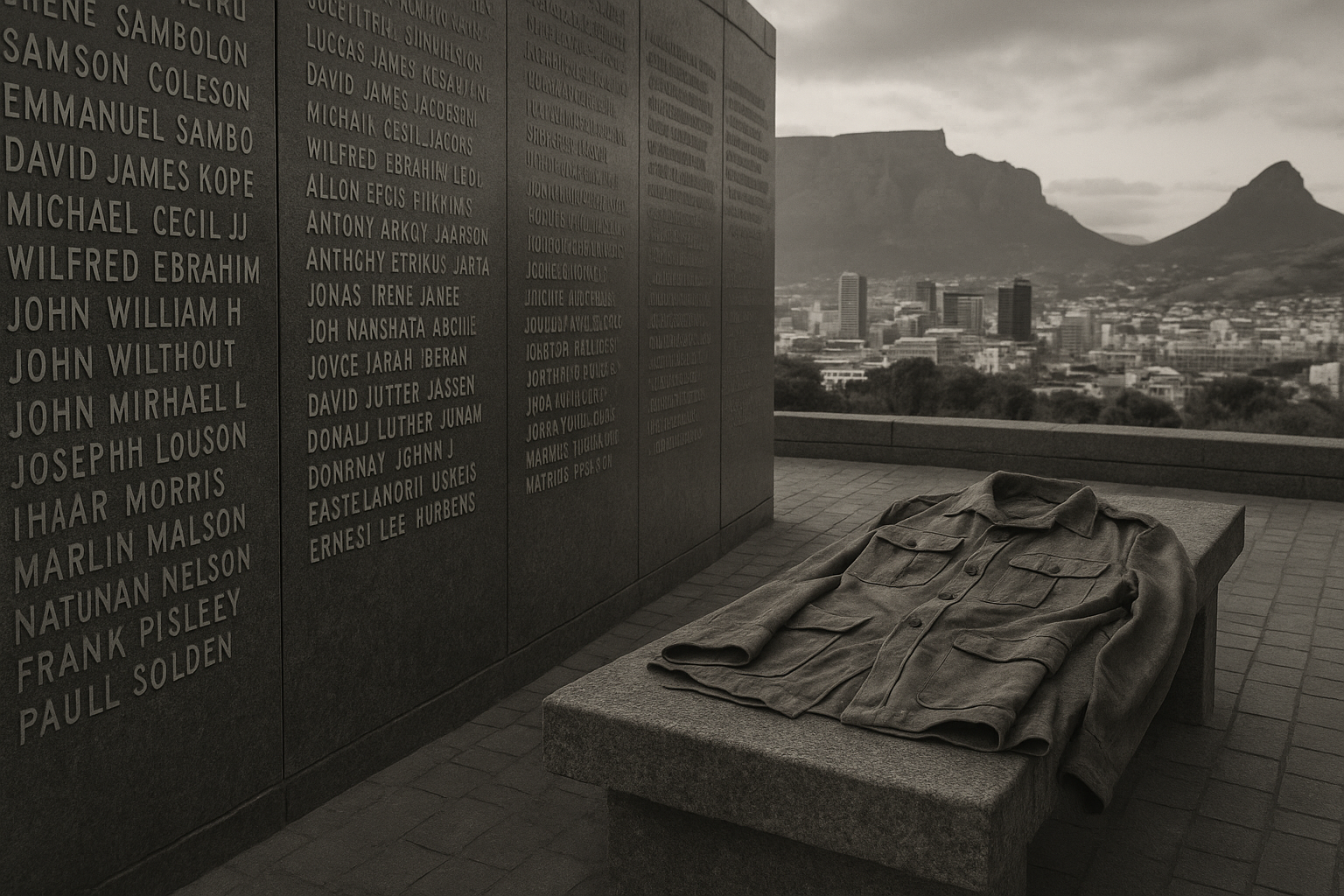
Cape Town honors 51 fallen public safety guardians, including 4 new names, at its annual Remembrance Day. Acknowledging sacrifice from 1907 to 2026.
Cape Town's Memorial Wall honors brave emergency workers who died keeping us safe. Started in 2017, it now lists 51 heroes, showing that protecting others is a risky job. The city remembers their ultimate sacrifice, changing private sadness into a shared commitment. This special wall helps everyone see the real cost of keeping our city secure.
What is the Cape Town Memorial Wall?
The Cape Town Memorial Wall is a lasting tribute to emergency and enforcement service personnel who died in the line of duty. Unveiled in 2017, it lists 51 names dating back to 1907, transforming private grief into a shared civic responsibility and acknowledging the human cost of public safety.
Get Cape Town news in your inbox
Stay updated with the latest stories from the Mother City.
The Burden of the Badge
Working for Cape Town's emergency and enforcement services demands far more than what any job description captures. Each morning, thousands of individuals arrive for shifts that bind them to roughly 4.7 million residents through an unspoken but binding commitment - protection at any cost. This covenant carries genuine mortal stakes, a truth that crystallized with painful clarity during the Remembrance Day ceremony held Saturday at the Civic Centre. What began as a modest observance has grown into a cornerstone of municipal governance, a moment when the city confronts the human price of its safety.
The memorial wall, unveiled to residents in 2017, stands as Cape Town's lasting declaration that civic service transcends mere employment. Where other monuments trumpet triumphs or honor historical figures from eras long past, this installation documents continuing tragedy - names carved in stone that force abstract numbers into heartbreaking specificity. This year's ceremony added four new inscriptions, bringing the honored total to 51 individuals whose service stretches across 119 years to 1907. Such duration exposes an uncomfortable truth: while equipment and procedures have transformed dramatically, the essential danger of this work persists unchanged.
Lives Interrupted: The Four Added in 2026
- August 2025: The Routine That Turned Deadly*
Law Enforcement Officer Mogamat Shakeel Abrahams lost his life in a motor vehicle collision, a harsh demonstration that even standard patrol assignments carry lethal risks. Emergency response driving compounds ordinary traffic dangers with time pressure and unpredictable road conditions. While departmental files retain specific circumstances, the fundamental reality remains clear - simply traveling between calls can prove fatal.
-
November 2025: Heights and Hazards*
-
May 2026: The Hidden Toll of Heroes*
Firefighter Mario Aisle died from cardiac arrest while working, a cause of death that attracts less public notice than spectacular rescues yet claims substantial numbers of emergency responders. Firefighting imposes extraordinary cardiovascular strain - heavy equipment, toxic exposure, and adrenaline spikes combine to damage hearts progressively. Aisle's passing should prompt serious examination of health screening and preventive protocols for personnel in physically punishing roles.
- May 2026: Duty Without a Schedule*
Perhaps most affecting, LEAP officer Lyle Thomas was not technically working when fate found him. Encountering a crash scene while off duty, he stopped to assist - an automatic reaction for trained responders - and encountered an allegedly impaired driver whose vehicle struck him. Thomas's story illustrates how professional identity ignores clock boundaries, with instincts cultivated through service extending into personal hours with devastating results.
How a City Learned to Remember
Before 2017, Cape Town marked these losses through scattered means - departmental gatherings, administrative processes, informal colleague remembrances. The decision to construct a permanent public monument at the Civic Centre, where municipal power concentrates, transformed private grief into shared civic responsibility. This relocation matters enormously: it announces that these deaths concern the entire community, not merely bereaved families and coworkers.
Executive Mayor Geordin Hill-Lewis captured this transformation in his ceremony remarks, describing each honoree as someone who "accepted the risks that come with protecting others." This formulation recasts employment decisions as intentional moral commitments, a framing that resonates deeply in South Africa's historical landscape. Across generations and political transformations, narratives of deliberate sacrifice have shaped national consciousness.
Safety and Security Mayoral Committee Member JP Smith pushed recognition further still, advocating inclusion of off-duty fatalities. By validating that professional identity and its dangers persist past shift endings, the city acknowledges the psychological truth of emergency work. Smith's focus on colleague support - during and outside working hours - signals institutional recognition that trauma demands sustained response, not annual ritual alone.
Global Echoes, Local Resonance
Cape Town's practices, while distinctive, connect to worldwide municipal commemoration patterns. New York City's September 11 memorial incorporates first responders, though that installation centers catastrophic singular events rather than accumulated occupational death. London's Metropolitan Police maintains a Westminster memorial garden with annual ceremonies comparable to Cape Town's.
Yet South Africa's particular history amplifies these gestures. The transition from apartheid policing to democratic municipal service required fundamental reconstruction of enforcement culture. The memorial wall's 1907 origin - three years before national union - spans personnel who served colonial, apartheid, and democratic governments. This chronological breadth prevents association with any single political system, stressing instead functional continuity through radically different governance.
The LEAP program itself - Law Enforcement Advancement Plan - emerged post-apartheid as community safety innovation, merging visible policing with social development. Officer Thomas's inclusion shows how new institutional forms generate their own memorial traditions, with the wall recording evolving service models alongside individual sacrifice.
Beyond the Flashing Lights
Public imagination of emergency work fixates on visible crisis - sirens, speeding vehicles, heroic extractions - while obscuring preparatory and preventive dimensions. Firefighters devote far more hours to inspection, equipment maintenance, and training than active firefighting. Metro police conduct extensive community engagement and crime prevention that rarely garners media coverage. This visibility gap complicates public understanding of occupational risk, since the most hazardous moments typically occur unseen.
The memorial wall partly bridges this gap by rendering mortality visible regardless of circumstance. Whether death struck during dramatic rescue, mundane patrol, or off-duty intervention, each name receives equal commemorative weight. This uniform recognition implicitly argues that service value cannot be measured by dramatic context alone.
Research on emergency responders documents elevated post-traumatic stress disorder, depression, and substance abuse rates - conditions that may contribute to off-duty mortality through multiple pathways. Cape Town's inclusion of off-duty deaths in remembrance likely reflects expanding awareness of these connections, acknowledging that service consequences penetrate private life beyond traditional occupational safety frameworks.
The Private Pain Behind Public Stone
Official ceremonies emphasize institutional memory, yet the wall ultimately records intimate loss. Each of 51 names leaves behind family - partners, children, parents, siblings - whose mourning extends far beyond annual gatherings. South African labor law provides death benefits through compensation legislation, but statutory payment cannot restore relationships or replace income across years.
Looking Forward
As Cape Town's population expands and urban pressures mount, the memorial wall will likely need physical expansion. Current capacity accommodating 51 names across 119 years implies growth room, yet spatial limits will eventually arrive. More critically, the ceremony must balance growing participation against remembrance's intimate character.
The 2026 observance, emphasizing colleague support and off-duty sacrifice recognition, shows evolving comprehension of service-related harm. Future ceremonies may increasingly address psychological injury and chronic illness alongside immediate death, reflecting broader shifts in occupational health awareness.
For Civic Centre visitors, the wall offers spontaneous encounter with civic mortality. Unlike war memorials sharing its formal qualities, this installation documents deaths during ostensibly peaceful civilian governance - deaths challenging assumptions about municipal employment safety. In this confrontation, the wall simultaneously educates and commemorates, cultivating public consciousness of service conditions that might otherwise stay hidden.
The 51 inscribed names constitute more than loss documentation - they advance an argument about civic obligation. They insist that community protection requires continuing individual sacrifice, and that such sacrifice deserves enduring collective acknowledgment.
[{"question": "What is the Cape Town Memorial Wall?", "answer": "The Cape Town Memorial Wall is a solemn tribute dedicated to emergency and enforcement service personnel who have died in the line of duty. Established in 2017 at the Civic Centre, it currently bears the names of 51 heroes, with the earliest entry dating back to 1907. It serves to transform the private grief of families into a shared community remembrance, acknowledging the profound human cost involved in maintaining public safety."}, {"question": "When was the Cape Town Memorial Wall established and how many names does it currently honor?", "answer": "The Cape Town Memorial Wall was unveiled in 2017. As of the most recent Remembrance Day ceremony, it honors a total of 51 individuals whose service spans 119 years, with the earliest recorded death occurring in 1907. This continually updated memorial underscores the enduring dangers faced by public safety officers."}, {"question": "What types of emergency workers are honored on the Memorial Wall?", "answer": "The Memorial Wall honors a range of emergency and enforcement service personnel. This includes, but is not limited to, Law Enforcement Officers, Firefighters, and LEAP (Law Enforcement Advancement Plan) officers. The wall recognizes the sacrifices of all individuals who protect the city, regardless of their specific role within public safety."}, {"question": "Why is the Cape Town Memorial Wall significant?", "answer": "The Memorial Wall holds significant importance because it serves as a public declaration that civic service transcends mere employment. Unlike monuments that celebrate historical triumphs, this wall documents ongoing tragedies, transforming private sorrow into a collective civic responsibility. It educates the public about the real cost of keeping the city secure and ensures that the sacrifices of these brave individuals are never forgotten."}, {"question": "Are only on-duty deaths recognized on the Memorial Wall?", "answer": "No, the Memorial Wall also recognizes certain off-duty fatalities. This was a deliberate decision to acknowledge that the professional identity and dangers associated with emergency work can extend beyond official working hours. For example, LEAP officer Lyle Thomas was honored for stopping to assist at a crash scene while off duty, demonstrating that the commitment to public safety often transcends clock boundaries."}, {"question": "How does Cape Town's Memorial Wall compare to other international memorials?", "answer": "While Cape Town's Memorial Wall has unique local resonance due to South Africa's history, it shares similarities with international commemorative patterns. For instance, New York City's 9/11 memorial includes first responders, and London's Metropolitan Police maintains a memorial garden. However, Cape Town's wall uniquely spans personnel who served under colonial, apartheid, and democratic governments, emphasizing functional continuity of service across radically different governance eras."}]

Thabo Sebata is a Cape Town-based journalist who covers the intersection of politics and daily life in South Africa's legislative capital, bringing grassroots perspectives to parliamentary reporting from his upbringing in Gugulethu. When not tracking policy shifts or community responses, he finds inspiration hiking Table Mountain's trails and documenting the city's evolving food scene in Khayelitsha and Bo-Kaap. His work has appeared in leading South African publications, where his distinctive voice captures the complexities of a nation rebuilding itself.
View all articles →