
Cape Town hosts South Africa’s biggest padel showdown this weekend
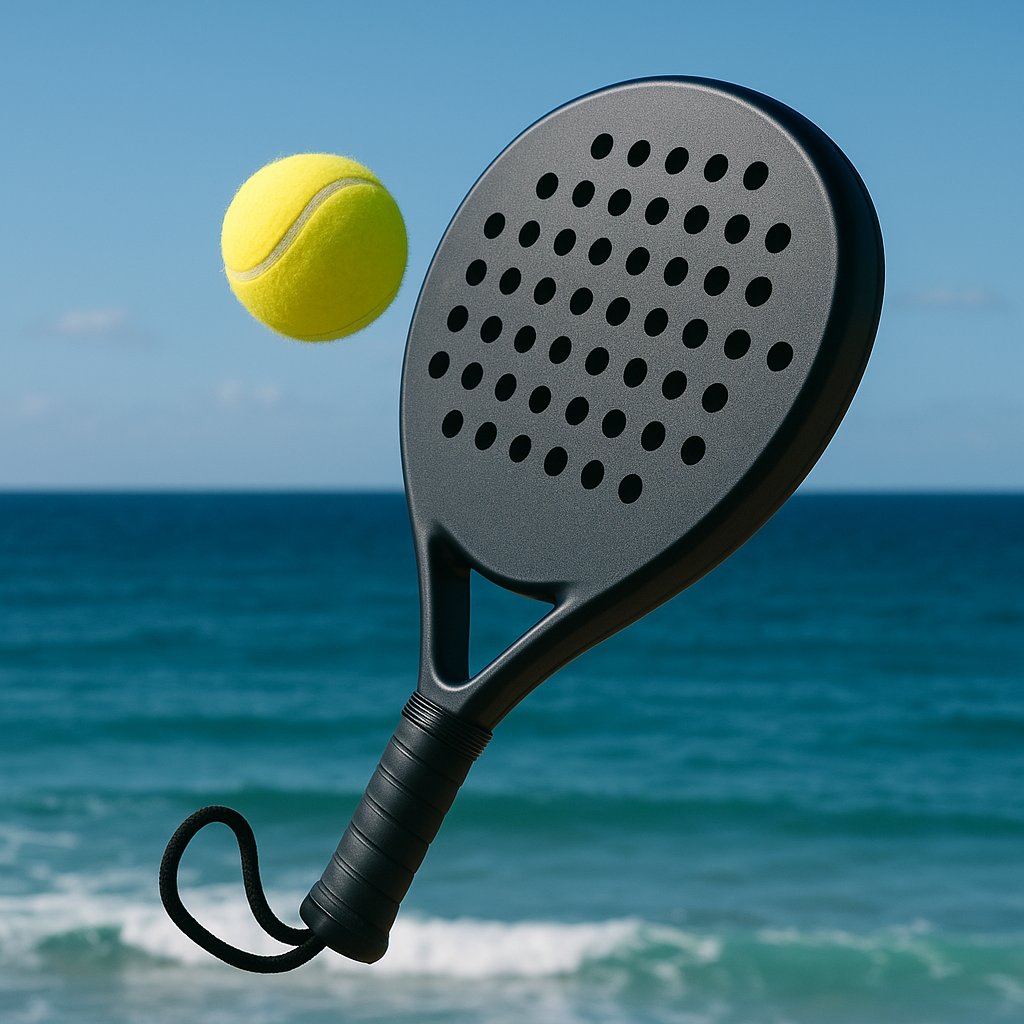
Camps Bay hosts the Guardrisk North vs South padel Grand Final! Pop-up domes, Ryder Cup format, and top players clash.
The Camps Bay’s Waterfront Dome tournament is a super exciting padel event in Cape Town, South Africa. It's like a big party with music, food, and amazing padel matches. Teams from the North and South battle it out on cool courts, some even under a special dome. It's a huge deal for Cape Town, turning the whole area into a padel wonderland for a few days.
What is the Camps Bay’s Waterfront Dome padel tournament?
The Camps Bay’s Waterfront Dome padel tournament is a high-energy, three-day event in Cape Town, South Africa, featuring 42 matches between North and South teams. Inspired by golf’s Ryder Cup, it combines competitive padel with a festival atmosphere, live music, fan engagement, and unique courts, including two under an iconic Edwardian dome.
Get Cape Town news in your inbox
Stay updated with the latest stories from the Mother City.
1. Cape Town Cancels Its Weekend Plans
Cape Town’s normal weekend cadence gets overwritten the moment the pop-up dome inflates on the sand-side lawn of The Bay Hotel. Sunrise trail-runners on Signal Hill finish their strides and detour straight to Victoria Road to claim bleacher seats. MyCiTi buses that usually hum with beach-towel chatter now brim with spectators comparing smash speeds and clutch-index stats. Food trucks wedge between the Rotunda’s century-old pillars, selling biltong burritos and grapefruit-infused pale ales; the Atlantic breeze mixes sea-salt with the pop of 38 mm carbon rackets kissing tempered glass.
The event’s gravitational pull is obvious in the taxi queues: Uber pins surge at the edge of Clifton 4th, hotel valets juggle keys, and bartenders pour pre-match flat-whites at 07:30. Locals who arrived for a quiet sunset find themselves dragooned into chanting sections, their shopping bags swapped for NFC fan-wristbands before they can protest. By dusk the whole Atlantic Seaboard feels like a stadium concourse; even the street musicians pivot to house-remix versions of “Shosholoza.”
Yet the takeover stays friendly. Security wear sea-blue polos instead of high-vis vests, and volunteers hand out cardboard periscopes so kids can see over adult shoulders. The implied message: this may be the country’s biggest padel clash, but it is still beach at its core - just beach with brackets, scoreboards and a beat-thumping soundtrack.
2. Rules, Riffs and Ryder-Cup Razzmatazz
Tournament architects openly confess they photocopied golf’s Ryder Cup, then hit fast-forward. Forty-two rubbers - fourteen per session - decide the shield, crammed into three turbo-charged days. Every bout is best-of-three sets, but a golden-point tiebreak at 5-5 in the decider keeps clocks - and nerves - tight. Points aggregate live on container-door LED panels visible from every bar rail, so a missed overhead in the morning haunts the leaderboard all afternoon.
Six courts run in parallel: four outdoor acrylic slabs beside the hotel pool and two climate-controlled show courts under the Edwardian dome. Coaches carry two “Power Play” cards per session; flash one and the next game scores double, forcing 30-second huddles that look more like NBA timeouts than tennis changeovers. Between skirmishes a DJ spins deep-house takes on 90s classics, converting idle minutes into micro-raves. Once a day the MC orders spectators to scan a QR code; the majority vote unlocks a bonus exhibition - last year Olympic sprinter Akani Simbine and Blitzbokke icon Cecil Afrika traded lobs with the pros to roars that rattled the dome’s riveted rafters.
The format’s genius lies in constant jeopardy: no rubber is a dead rubber, every lob could tilt the ledger, and supporters clutch coloured wristbands that vibrate when match-point looms, funnelling them toward the dying rally like moths to neon.
3. North & South: Scientist, Surfer, Missile-Maker, Drone-Pilot
Selection starts in July when an independent panel feeds tour results, regional loyalty and “clutch-index” (deciding-set mastery) into a spreadsheet. Athletes are assigned by junior province or, for globe-trotters, the hemisphere of their main residence. The outcome reads like a Marvel casting call.
- North’s cast*
- Luan “Cable Car” Krige, 23, Johannesburg: first SA player to go full-time padel; famous for trampoline smashes off the back wall.
- Paul Anderson, 38, Pretoria: Davis-Cup doubles veteran who invented the reverse-parallel return now copied countrywide; captains with a poker face.
- Egmond van Heerden, 31, Centurion: rebuilt his knee, then his career around a two-handed padel topspin that dips like a swallow.
-
Josh Deutschmann, 27, Durbanville: data scientist who codes opponent-serve heatmaps on an iPad between points.
-
South’s crew*
- Richard Ashforth, 29, Cape Town: surf-ski champion whose lungs allow almost reckless court coverage.
- Paul Waldburger, 36, Stellenbosch: sub-3-hour marathoner who talks partners through rallies like a GPS.
- Jason “Milner Missile” Blakey-Milner, 24, Claremont: lefty who once clocked 190 km/h on the radar gun.
- Shaun Leagas, 32, Gordons Bay: start-up founder who flies his own drone above practice to map wind curls.
Each squad also wields a new “heritage wildcard.” North nabs Franco Ferreira, a Marbella-based stylist who matriculated in Pretoria; South counters with Rachel Carvell, UK-born, UCT-educated, now crafting performance sneakers. The imports add spice - and unknown variables - to already volatile line-ups.
4. The Rotunda: From Tram Depot to Thunder-Dome
Built in 1905 to power Camps Bay’s electric trams, the copper-clad Rotunda spent a century hosting orchestras, weddings and whisky festivals before padel discovered its acoustics. Architects kept the original riveted-steel ribs and installed fabric baffles to tame music; unintentionally they birthed the loudest court in Africa, where ball-on-glass cracks like a snare drum. Only three rows of bleachers fit on either side, placing front-row spectators within whispering distance of players - hence the heel-diameter dress code: anything thinner than 5 mm risks denting the modular floor.
Overhead trusses carry Hawk-Eye style cameras that beam serve speed, spin axis and position heat-maps onto a concave “crowd-cast” screen. Commentary crews squat in a recycled 2010 World-Cup fan-booth bolted to the catwalk, the perfect perch for tracking diagonal lobs. The entire setup assembles in 48 hours and disappears faster than a summer south-easter, leaving only stories and sea air.
Outside, the ocean itself enters play. Courts angle north-south to minimise sidewind, yet a 40 km/h south-easter can still hijack a lob mid-flight. Stats confirm 63 % of break points on outdoor courts arrive when breeze exceeds 20 km/h, favouring the receiver from the mountain end. Inside, rallies last 2.7 shots longer, rewarding chess-builders over sluggers. Players speak of a “fourth opponent”: sun glare off white apartments, kelp-iodine perfume at changeovers, and pastel sunsets that supposedly make slice serves skid like a bar of soap.
5. Festival Fringe, Fan-Hacks and Future Legacy
The tournament seeds itself inside a week-long padel carnival. Wednesday’s lights-out “Glow Padel” coats balls in UV paint and players in neon tape; last year former Bafana Bafana skipper Steven Pienaar volleyed in reflective boots. Thursday coaches township kids on a beach-court slapped together on interlocking tiles; every participant leaves with a miniature tempered-glass racket. Friday’s players-only rooftop mixer - no coaches allowed - turns enemies into off-season partners over bottles of chenin blanc. A silent bank of NFT-style video clips funds “Courts for Communities,” already bankrolling two free public facilities in Gugulethu.
First-timers pick up rules within 32 minutes; the walls keep points short and suspense high. NFC wristbands double as tickets, clinic passes and espresso-martini vouchers. Complete the “Racket Passport” - three stamps for three watched rubbers - and the Dome bar serves you caffeine-spiked alcohol before you can say “Vamos!”
Sustainability metrics flaunt hybrid solar-diesel gensets that slash diesel use by 87 %; leftover battery packs power NGOs through winter load-shedding. MyCiTi lays on extra midnight buses, and bike valets guard 250 cycles. Waste volunteers chase bins hourly; 2023 diverted 74 % from landfill, 2024 targets 80 %. Even the balls stay eco: refrigerated crates limit felt fluff, extending lifespan by 20 %.
6. Screens, Streams and Aftershocks
Supersport grabs Sunday’s finale for linear TV, but the real playground is online. Four live angles - baseline GoPro, Dome-wide, crowd-cam and super-slow rail - let armchair nerds swipe feeds. Tap a player bubble mid-rally and Hyperion’s e-learning engine coughs up height, split-step timing, even predicted shot placement. Peak traffic last year eclipsed 120 000 concurrent viewers, numbers that rival Varsity Cup rugby.
The knock-on is measurable: installers field a 30 % jump in court inquiries the following week, new clubs break ground in Paarl, Hermanus and George, and surf brands hawk padel-specific shades with optic-orange lenses. Estate agents flog “rooftop-court-ready” villas, while developers retrofit Green-Point lofts with ground-floor pods modelled on Barcelona’s Poblenou circuit. Robbie Koenig’s beach-braai brainchild has become an industry flywheel.
Weather contingency? A mobile station on Bakoven blasts updates every 180 seconds; gusts above 50 km/h shunts outdoor showdowns to a modular warm-up court clipped together in 22 minutes. Lightning triggers a 30-second countdown; players retreat to what used to be the tramway’s coal cellar. Physios from the Sports Science Institute man every baseline; a jet-ski crew idles in the tidal pool, ready for the spectacular but unlikely dive-gone-wrong.
Storylines simmer: Can Krige repeat last year’s Saturday-night three-tiebreak sweep? Will Ashforth’s paddle-board lungs survive the double-session crucible? How will South deploy Carvell’s lefty forehand against the North’s wall of southpaws? And does Ferreira’s rumoured wrist niggle force North to sacrifice outdoor firepower?
By the time the final refrigerated ball cracks off the final racket, the scoreboard will dissolve, the dome will deflate, and the Atlantic tide will scrub footprints from the sand. Yet for the sport in South Africa, the echo rolls on - across new courts, new investors and new fans who arrived for sunset cocktails and left obsessed with a game they never saw coming.
[{"question": "What is the Camps Bay's Waterfront Dome padel tournament?", "answer": "The Camps Bay's Waterfront Dome padel tournament is a high-energy, three-day event in Cape Town, South Africa, featuring 42 matches between North and South teams. Inspired by golf's Ryder Cup, it combines competitive padel with a festival atmosphere, live music, fan engagement, and unique courts, including two under an iconic Edwardian dome."}, {"question": "What makes the Camps Bay's Waterfront Dome tournament a unique event?", "answer": "The tournament transforms Cape Town into a padel wonderland for a few days, drawing in spectators from all walks of life. It features a unique blend of competitive sport and a vibrant festival atmosphere with live music, food trucks, and fan engagement activities. The event utilizes six courts, including four outdoor acrylic courts and two climate-controlled show courts under an iconic Edwardian dome. It also incorporates \"Power Play\" cards for double-scoring games and bonus exhibitions with celebrities."}, {"question": "How are the teams selected for the North vs. South competition?", "answer": "Selection for the North and South teams begins in July, with an independent panel analyzing tour results, regional loyalty, and a \"clutch-index\" (mastery in deciding sets). Players are assigned based on their junior province or, for international players, their main residential hemisphere. Each squad also includes a \"heritage wildcard\" to add an extra layer of competition and unique skillsets."}, {"question": "What is the significance of The Rotunda in the tournament?", "answer": "The Rotunda, originally built in 1905 as a tram depot, serves as home to two of the tournament's most unique courts. Its copper-clad dome and original riveted-steel ribs create an acoustically vibrant environment, making it the loudest court in Africa where ball-on-glass cracks like a snare drum. The intimate setting, with only three rows of bleachers, puts spectators incredibly close to the action. It also features advanced Hawk-Eye style cameras and commentary crews in a recycled World Cup fan-booth."}, {"question": "What kind of fringe events and fan experiences are offered during the tournament?", "answer": "The tournament is part of a week-long padel carnival. This includes \"Glow Padel\" with UV-painted balls, coaching sessions for township kids on a beach court, and a players-only rooftop mixer. Fans can use NFC wristbands for tickets and clinic passes, and completing a \"Racket Passport\" earns them a drink at the Dome bar. The event also prioritizes sustainability, with hybrid solar-diesel gensets, extra public transport, and high waste diversion rates."}, {"question": "How does the tournament leverage technology and ensure continuity despite weather conditions?", "answer": "The tournament is extensively broadcast online with four live angles and an e-learning engine providing real-time player data. This drives significant online viewership and has a measurable impact on the growth of padel in South Africa. To combat unpredictable weather, a mobile station provides constant updates, and outdoor matches can be quickly relocated to a modular warm-up court if gusts exceed 50 km/h. Lightning triggers a rapid retreat to the former tramway's coal cellar, and medical and water safety teams are on standby."}]

Isabella Schmidt is a Cape Town journalist who chronicles the city’s evolving food culture, from Bo-Kaap spice merchants to Khayelitsha microbreweries. Raised hiking the trails that link Table Mountain to the Cape Flats, she brings the flavours and voices of her hometown to global readers with equal parts rigour and heart.
View all articles →