
Cape Town Observatory opens its doors for a month of stargazing
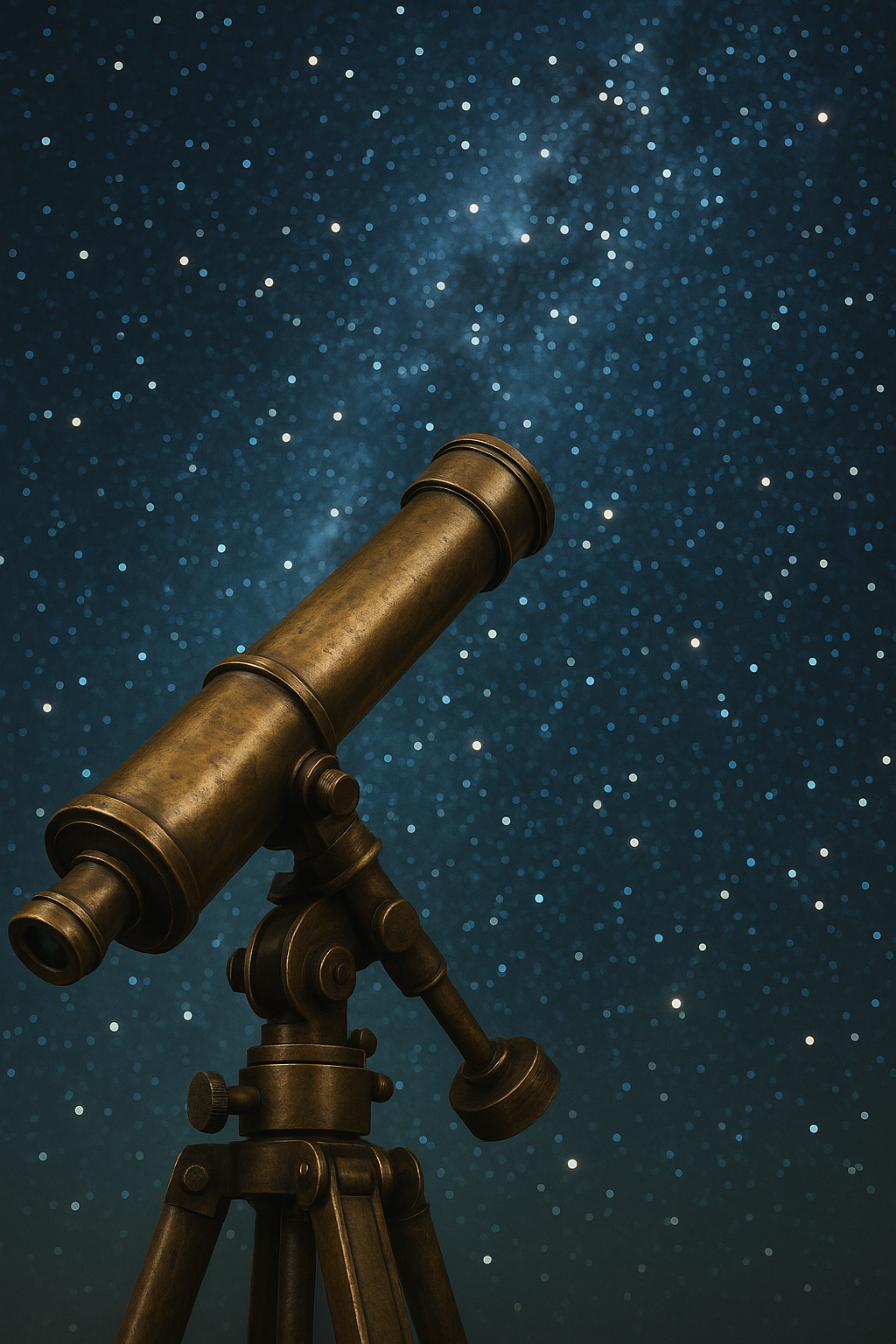
Explore South Africa's historic astronomical observatory this July! Discover stars, ancient instruments, and modern science.
Come to the South African Astronomical Observatory in July for an amazing stargazing adventure! You can look through big telescopes at Saturn's rings and sparkling star clusters. Go on night tours to see old scientific tools and learn about cool discoveries. You can even visit during the day to do fun activities and learn how astronomy helps Cape Town. It's a special time to see the stars and learn exciting stories!
What can visitors experience at the South African Astronomical Observatory's July stargazing event?
Visitors to the South African Astronomical Observatory's July event can enjoy Open Nights with telescope viewing, Night Tours exploring historical instruments and scientific discoveries, and daytime access for educational activities. Experiences range from casual stargazing of Saturn's rings to deep dives into astronomical history and contemporary research connections.
Get Cape Town news in your inbox
Stay updated with the latest stories from the Mother City.
The Magic of Winter Evenings on Devil's Peak
Darkness descends early across the slopes of Devil's Peak during July, and long before the final commuter trains rattle past the rose-hued walls of the historic observatory, the heavens have shifted to a profound African indigo. Beyond the entrance gates, astronomers in fleece jackets work to retract the copper dome of the 120-year-old McClean refractor, while volunteers arrange freshly printed star charts that carry the subtle scent of new ink. The temperature drops low enough to crystallize each breath, yet anticipation crackles through the gathering crowd: for the coming four weeks, the National Research Foundation's South African Astronomical Observatory (NRF-SAAO) welcomes all curious souls, converting its normally secluded campus into an immersive learning space for anyone who has gazed upward and questioned what celestial fires burn above.
South African astronomy has maintained deep roots in public engagement since its earliest days. The Royal Observatory's establishment in 1820 included immediate provision of complimentary noon-time signals for passing vessels - an early manifestation of what contemporary researchers now term "open data." That commitment to accessibility endures two centuries later, though the tools have evolved dramatically. The paired 0.5-metre instruments currently employed for public viewing originally served the international network that extended the pioneering Hipparcos mission's work on stellar distances. Meanwhile, the photoelectric photometer attached to the 1889 Victorian refractor emerged from student ingenuity in the 1970s, constructed from surplus radar components. These objects embody a legacy of resourcefulness that predates the observatory itself - an African characteristic of making extraordinary discoveries from whatever materials lie within reach.
Immersive Experiences: From Casual Observation to Deep Discovery
The July initiative unfolds across multiple tiers of engagement. Casual guests may simply appear for Open Nights - scheduled for 11 and 25 July - where crimson LED beams dance across manicured grounds and lines form at telescope eyepieces. Saturn's rings appear with the clarity of fine pencil work, reliably eliciting audible wonder, yet the true revelation awaits through the 18-inch reflector: the southern jewel-box cluster, its stars resembling crushed diamonds strewn across obsidian fabric. Docents maintain continuous narration, fluidly alternating among English, isiXhosa and Afrikaans - shifting linguistic gears with the same ease Cape Town drivers display when navigating the N2 highway. By nine in the evening, someone inevitably produces rooibos tea and homemade rusks, transforming the gathering into something resembling a winter picnic beneath the luminous band of the Milky Way.
Those seeking greater depth may join the Night Tours occurring on 7, 14, 16, 21 and 23 July. These experiences commence in the library, where first-edition copies of the Cape Photographic Durchmusterung rest beneath dust-jackets the shade of caramelized butter. Attendees inscribe their names in the leather-bound guest register that has welcomed visiting scientists since 1935 - positioning their signatures adjacent to the graphite marks left by Subrahmanyan Chandrasekhar and Jocelyn Bell Burnell. The path then winds past the solar telescope that once monitored sunspots for Apollo mission planners, descending into basement chambers where a 1940s spectrograph retains faint traces of ozone and heated mercury. Tour conductor Dr. Thembela Mantungira maintains a collection of glass plates capturing Halley's Comet during its 1910 apparition; when illuminated by bare bulb, the comet's tail materializes as an ethereal trail, suspended in silver halide crystals.
Mantungira reserves special enthusiasm for the "computer room" dating to 1962 - a hallway lined with cabinet-sized units that once contained the IBM 1620. "Twenty kilobytes of memory, and it required an entire city block of climate control," he remarks, stroking the metal housing as one might soothe a resting animal. "With this machine we generated the initial radial-velocity curve for a southern Cepheid, launching extragalactic distance measurement in the southern hemisphere." This narrative deliberately challenges conventional "great telescope" mythology: scientific advancement, he emphasizes, depends equally upon punched cards, perspiring technicians and incremental progress as upon photons striking polished mirrors.
Daytime Discoveries and Urban Connections
The complimentary daytime access period spanning 27–31 July presents a distinctly different atmosphere: domes gape open to winter sunlight, their mirrors securely capped, and focus transfers from electromagnetic radiation to human narratives. Yellow buses discharge school groups who construct cardboard planispheres, while retirees from Bellville arrive clutching well-worn Sky&Telescope periodicals, hoping to observe sunspots through appropriately filtered 8-cm finder instruments. Within the administrative structure, a temporary exhibition documents the observatory's contribution to establishing the first trustworthy stellar parallax measurement for Alpha Centauri during the 1840s, alongside its later involvement in the 1986 supernova survey that evolved into the international Assa variable-star network. Interactive displays permit visitors to explore the 1.9-m Radcliffe Telescope that formerly stood beside the Pretoria highway; this same instrument now operates 12 kilometres uphill at the contemporary Sutherland facility, collecting data on exoplanetary atmospheres using spectrographs chilled to minus 180 degrees Celsius.
Contemporary research maintains intimate connections with metropolitan life. Cape Town's population has doubled since 1990, and artificial illumination encroaches steadily along the peninsula. Rather than withdrawing, the observatory has negotiated "adaptive lighting" arrangements: municipal authorities replaced three thousand sodium fixtures with fully shielded LEDs calibrated to 3000 Kelvin, reducing sky-glow by 38 percent while saving 1.2 million rand in electrical costs - sufficient to endow an annual MSc bursary. Information panels reveal that the identical sensors tracking celestial brightness also contribute to the city's load-shedding management systems, a uncommon instance of astronomical science returning tangible benefits to its terrestrial community.
National Science Month functions as a flexible celebration coordinated by the South African Agency for Science and Technology Advancement (NRF-SAASTA). While Johannesburg's Sci-Bono centre impresses with industrial-scale displays and Durban's Science Centre emphasizes marine biology, Cape Town's observatory delivers something no commercial venue can manufacture: authentic darkness enriched by historical significance. The 2024 theme - "Science for Everyday Solutions" - receives literal interpretation: staff establish a temporary "spectroscopy kitchen" where participants employ compact discs to disperse streetlamp illumination into spectral rainbows, subsequently correlating observed lines with calcium present in their own skeletal structures. Nearby, a postgraduate researcher demonstrates how Fourier-transform methodology identical to that employed for exoplanet detection can identify peanut contamination in locally manufactured muesli bars. "Identical mathematics, different application," she observes, adjusting the laser pointer projecting a slender crimson line across the turf.
Practical Matters and Enduring Memories
Reservation procedures have become ritualized. Open Nights function on walk-in availability, though Night Tours limit attendance to twenty-five individuals; prospective participants queue online at ten o'clock on the final Monday of each month, and available positions disappear within seven minutes - more rapidly than Currie Cup rugby tickets. Those unsuccessful in securing spots find solace in the freely accessible "Cape Town Sky Guide" (developed alongside local design collective Makerspace), which superimposes isiXhosa stellar traditions upon Western constellation patterns. This resource explains why the Pleiades answer to "IsiLimela" - the digging stars whose dawn appearance once instructed amaXhosa agriculturalists to commence planting, while their disappearance signaled approaching frost. Such cultural integration is intentional: South African astronomy has never belonged exclusively to any single tradition, and July's programming insists upon multiple voices sounding together.
Weather remains the perpetual uninvited guest. Antarctic cold fronts surge northward, depositing forty-eight-hour blankets of solid cloud cover, prompting the observatory's backup "museum crawl" protocol. Guests seek refuge in the nineteenth-century Meridian Building, where a brass transit instrument still bears the indentation created by a British naval officer's sword during the 1914 Christmas celebration; they ascend the wrought-iron spiral staircase to the 6-inch Grubb telescope, whose optical components were commandeered for the 1874 Venus transit expedition to remote Île Saint-Paul. When conditions finally improve - typically near eleven at night - staff extend dome operations an additional hour, because, as veteran telescope operator Jerome Lewis observes, "wonder refuses to acknowledge schedules."
Essential information remains straightforward yet vital. Open Nights charge forty rand for adults, twenty for minors; Night Tours cost one hundred twenty rand, including hot chocolate and a commemorative star chart printed on waterproof stock capable of withstanding Cape winter conditions. Daytime visits during 27–31 July incur no charge, though parties exceeding ten members must reserve to prevent overwhelming guides. Adequate insulation is mandatory; though the facility sits merely fifteen metres above sea level, the southeaster wind can penetrate three layers of fleece. A modest bookshop offers locally crafted meteorite jewellery - iron-nickel fragments sectioned and etched with Widmanstätten patterns requiring four billion years of gradual cooling to develop - and the coffee cart sources beans from a township roaster directing proceeds toward STEM initiatives in Khayelitsha.
By mid-July, thousands of muddy footprints crisscross the lawns, and the resident Cape dwarf chameleon population has adapted to circumvent heavily trafficked routes. In the library, a fresh entry materializes in the visitor's book: "Observed the Sombrero Galaxy with my grandmother - her first excursion beyond Langa. She noted that these photons departed M104 before her own grandmother's birth. We wept together." The inscription lacks dating, yet the ink remains sufficiently fresh to reflect illumination from a desk lamp once belonging to Sir David Gill, the Scottish astronomer whose obsessive precision in mapping southern skies produced catalogues still consulted by satellite engineers today.
Between heritage and cutting-edge technology, the July programme discovers its cadence: planetarium applications projecting the Southern Cross onto Victorian dome interiors; three-dimensionally printed adapters mating 1910 eyepieces with Sony mirrorless cameras; adolescents posting thirty-second iPhone footage of Jupiter's satellites that accumulates forty thousand views before dawn. Each evening brings identical celestial rotation overhead, yet every departing observer carries personal constellations of memory - evidence that astronomy, like Cape Town itself, constitutes less a fixed location than an evolving collection of narratives awaiting their names.
[{"question": "What is the \"Under African Skies\" event at the South African Astronomical Observatory?", "answer": "\"Under African Skies\" is a month-long stargazing adventure held at the South African Astronomical Observatory (SAAO) in July. It offers a unique opportunity for the public to explore the cosmos through powerful telescopes, participate in historical night tours, and engage in educational daytime activities, combining both scientific discovery and cultural immersion.\"}, {"question": \"What are the key activities offered during the July stargazing event?", "answer": "Visitors can enjoy Open Nights with telescope viewing of celestial objects like Saturn's rings and star clusters (scheduled for July 11 and 25). Night Tours (on July 7, 14, 16, 21, and 23) delve into the observatory's rich history, showcasing old scientific instruments and significant discoveries. Additionally, there are complimentary daytime activities from July 27-31, focusing on educational experiences and the observatory's connection to Cape Town.\"}, {"question": \"How can one attend the Open Nights and Night Tours, and what are the costs involved?", "answer": "Open Nights operate on a walk-in basis and cost 40 rand for adults and 20 rand for minors. Night Tours, which include hot chocolate and a commemorative star chart, are limited to 25 individuals and cost 120 rand. Reservations for Night Tours are highly competitive and can be made online at 10 AM on the last Monday of each month, often selling out within minutes.\"}, {"question": \"What kind of historical and scientific insights can visitors gain during the Night Tours?", "answer": "Night Tours offer an immersive journey through the observatory's past. Participants can view first-edition scientific texts in the library, see a solar telescope used for Apollo missions, and explore basement chambers containing a 1940s spectrograph. Guides like Dr. Thembela Mantungira share stories of resourcefulness, showcasing artifacts like glass plates of Halley's Comet and a 1962 IBM computer that was pivotal in early extragalactic distance measurements.\"}, {"question": \"Are there any daytime activities, and how do they connect to the local community?", "answer": "Yes, complimentary daytime access is available from July 27-31. These sessions include educational activities for school groups, such as constructing cardboard planispheres. The observatory also highlights its contributions to Cape Town, such as negotiating 'adaptive lighting' arrangements that reduced sky-glow and saved the city money, and using astronomical sensors for urban load-shedding management systems. There are also interactive displays demonstrating how scientific methods apply to everyday solutions, like identifying food contaminants.\"}, {"question": \"What practical advice is given for visitors, especially regarding weather and preparations?", "answer": "Visitors are strongly advised to dress warmly with adequate insulation, as Antarctic cold fronts can bring significant chill, even though the observatory is near sea level. In case of bad weather, a 'museum crawl' protocol allows guests to explore indoor historical exhibits. A modest bookshop offers unique items like meteorite jewellery, and a coffee cart supports STEM initiatives in Khayelitsha. A free \"Cape Town Sky Guide\" is also available, integrating isiXhosa stellar traditions with Western constellation patterns.\"}]

A Russian-Spanish journalist and Cape Town native, channels his lifelong passion for South Africa into captivating stories for his local blog. With a diverse background and 50 years of rich experiences, Serjio's unique voice resonates with readers seeking to explore Cape Town's vibrant culture. His love for the city shines through in every piece, making Serjio the go-to source for the latest in South African adventures.
View all articles →