
Cape Town pony rescued after severe neglect case
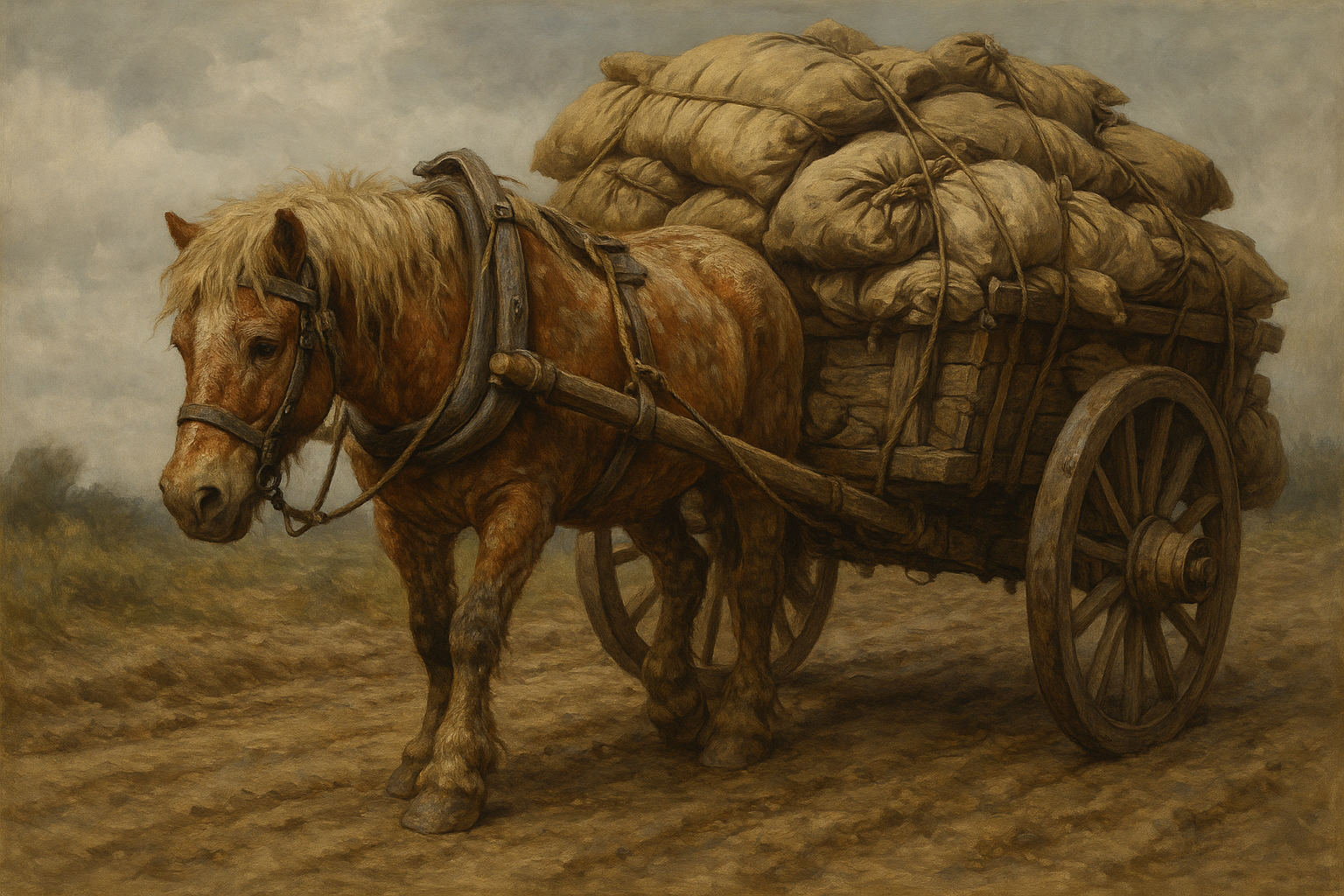
Follow the incredible journey of Boetie, a Cape Town pony, from severe neglect to a new life, highlighting the anatomy of a complex rescue.
Boetie, a cart horse, was found in a terrible state: very sick, lame, and starving. Animal Welfare Society saved him, giving him lots of care to heal. Now, Boetie lives a peaceful life, showing how strong animals can be and how important it is to protect them. His story touched many, bringing help to other horses and inspiring new ways to keep them safe.
What is Boetie's story?
Boetie is a cart horse rescued from severe neglect and abuse in Hanover Park, South Africa. Discovered with a raging fever, lameness, and extreme malnourishment, he was confiscated by the Animal Welfare Society. After intensive veterinary care and rehabilitation, Boetie recovered and now lives a life of peace, symbolizing resilience and the impact of animal protection efforts.
Get Cape Town news in your inbox
Stay updated with the latest stories from the Mother City.
I. Monday Dawn – A Fever in the Minibus Queue
The sun is barely over the Cape Flats when commuters at Hanover Park terminus notice a pony wedged between two overloaded taxis. His chestnut coat is dulled by dust, flanks pumping out visible puffs of vapour even though the mercury hovers at only 12 °C. Everyone who works with animals here knows that kind of “steam” signals a raging fever.
A thin man in a reflective vest holds a frayed fiberglass whip. When the robot flicks to green, he sends the lash across the pony’s back. The gelding staggers; the near-fore hoof buckles and rolls inward. A pedestrian films the stumble and, within 120 seconds, posts it to “Hanover Park Alerts” with the caption: “This horse is done, guys.”
The clip is short - fourteen seconds - but it contains everything senior inspectors look for: lameness, whip contact, cart overload and a single frozen frame that shows the animal’s ribs like shipwreck timbers against the dawn sky.
II. Eight Days of Warnings and a Highway Chase
By 08:11 the same morning, the Animal Welfare Society (AWS) has the footage on a desktop in Philippi. They sift through 67 complaints daily; most die in translation. This one arrives with six stills, GPS co-ordinates and a timestamp. Inspector N. Salie delegates it to a rookie-intern pair and gives them a three-hour window to verify the facts before the pony vanishes into Athlone’s backstreets.
They find him outside a bottle-return depot. Inspector M. Kriel records a body-condition score of 1.5/9, capillary refill at 4.5 seconds, and a temporal-artery temperature of 39.6 °C. The hooves are split in sagittal planes, and green baling twine - threaded through a rusted ring bit - has carved ulcers at the corners of the mouth. She issues a “Pink Slip,” a pink carbon-copy order that halts work and demands a vet visit within 24 hours. The owner signs, grumbling in isiXhosa that the pony eats fine and “works as hard as any man.”
Eight days later the same pony reappears on Klipfontein Road, this time hauling a three-metre stack of cardboard. A motorist’s dashcam shows the cart swaying like a metronome, each jerk wrenching the animal’s head sideways. AWS now has fresh evidence of “severe distress.” At 15:05 City law-enforcement and the Cart Horse Protection Association (CHPA) box in the cart at the M5 on-ramp. Twelve minutes later the CHPA vet, Dr L. Philander, slides an aluminium crush onto place and begins the exam that will change everything.
III. Triage, Tears and the First Gallon of Fluids
Boetie’s vitals declare a body in collapse: heart 84 beats per minute, breathing 48 shallow pulls per minute, temperature 40 °C. The microchip confirms the name and a file listing seven prior warnings since 2021 - overloading, whip marks, illegal shoeing. Dr Philander photographs the suppurating coronary band, the tongue ulcerated where the bit once sat, and signs a Confiscation Certificate under South Africa’s Animals Protection Act.
Nineteen kilometres later, at CHPA’s Epping yard, the pony steps off the truck into a storm of activity. A catheter lands in the jugular vein and the first litre of isotonic fluid with dextrose begins to drip. Ice boots encase all four legs; fans swivel until the thermometer reads 38.7 °C. Radiographs reveal rotation of the pedal bone - classic founder - while blood-work shows a PCV of 18 % and albumin so low the plasma looks like water.
For six weeks the rehab team walks a tightrope between refeeding syndrome and starvation’s last insult. Boetie starts on 0.5 % of body weight in soaked lucerne every four hours, topped up with phosphorus, thiamine and electrolytes. Farriers fit heart-bar shoes with impression pads; a waterproof whiteboard tracks his daily gain of exactly 0.4 kg. During week four he is allowed 20 minutes on irrigated pasture, ears forward, dragging a lead line like a memory of freedom.
IV. After the Seizure – Healing the Horse, Healing the System
Money rolls in almost as fast as the fluids. Facebook donations reach R23 000 in three hours - more than enough for Boetie’s projected bill of R26 350. AWS channels the overflow to its hay-bank, feeding 41 other urban workhorses. On Voice of the Cape radio, taxi owners argue the problem is “just poverty”; listeners phone in pledges of lucerne bales and second-hand harness.
Policy makers begin to move. A Dutch NGO funds 100 QR-code cart plates that open digital dossiers - microchip, owner ID, next farrier date - when scanned by any smartphone. City interns pilot titanium vented shoes that reduce solar gain by 4 °C, though costs remain steep. The court docket (2024/03/147B) bundles criminal charges with a civil claim for rehab costs, payable in 18 docked instalments.
By week six Boetie walks the sand arena for ten straight minutes without a stumble. A companion donkey - rescued from the Northern Cape and named Kleintjie - awaits his turnout. Together they will graze a field funded by the “Friends of Boetie” group, whose 4 800 global members still check the open-source map every sunrise, watching one green dot gain weight, grow muscle and, finally, shake off the memory of a fiberglass whip.
What is Boetie's story?
Boetie is a cart horse rescued from severe neglect and abuse in Hanover Park, South Africa. Discovered with a raging fever, lameness, and extreme malnourishment, he was confiscated by the Animal Welfare Society. After intensive veterinary care and rehabilitation, Boetie recovered and now lives a life of peace, symbolizing resilience and the impact of animal protection efforts.
How was Boetie discovered?
Boetie was first noticed by commuters at the Hanover Park terminus, wedged between overloaded taxis. A pedestrian filmed his distressed state, including his lameness and visible ribs, and posted it to "Hanover Park Alerts." This video quickly reached the Animal Welfare Society (AWS).
What were Boetie's initial health conditions upon rescue?
Upon confiscation, Boetie was suffering from a raging fever (40 °C), severe lameness due to founder (rotation of the pedal bone), and extreme malnourishment (body-condition score of 1.5/9). He also had ulcers from an ill-fitting bit, split hooves, and a very low packed cell volume (PCV of 18%) and albumin levels, indicating severe dehydration and protein deficiency.
What kind of treatment and rehabilitation did Boetie receive?
Boetie received intensive veterinary care, including intravenous fluids with dextrose, ice boots to reduce fever, and specialized feeding with small, frequent meals of soaked lucerne supplemented with phosphorus, thiamine, and electrolytes to prevent refeeding syndrome. Farriers fitted him with heart-bar shoes, and his progress was meticulously tracked daily.
How did the community contribute to Boetie's recovery?
The community's response was overwhelming. Facebook donations quickly surpassed Boetie's medical costs, with the overflow going to a hay-bank for other urban workhorses. Listeners of Voice of the Cape radio pledged lucerne bales and second-hand harness. A "Friends of Boetie" group, with 4,800 global members, now funds a field for him and his companion donkey, Kleintjie.
What broader impact did Boetie's story have on animal welfare?
Boetie's story brought significant attention to cart horse welfare. It spurred policy makers into action, leading to a Dutch NGO funding QR-code cart plates for digital animal dossiers and the piloting of titanium vented shoes to improve horse comfort. His case also led to criminal charges and a civil claim for rehabilitation costs against his former owner, highlighting the legal consequences of animal cruelty and strengthening animal protection efforts in the region.

Chloe de Kock is a Cape Town-born journalist who chronicles the city’s evolving food culture, from township braai joints to Constantia vineyards, for the Mail & Guardian and Eat Out. When she’s not interviewing grandmothers about secret bobotie recipes or tracking the impact of drought on winemakers, you’ll find her surfing the mellow breaks at Muizenberg—wetsuit zipped, notebook tucked into her backpack in case the next story floats by.
View all articles →