
Cape Town ramps up lifeguard hiring ahead of summer pool season
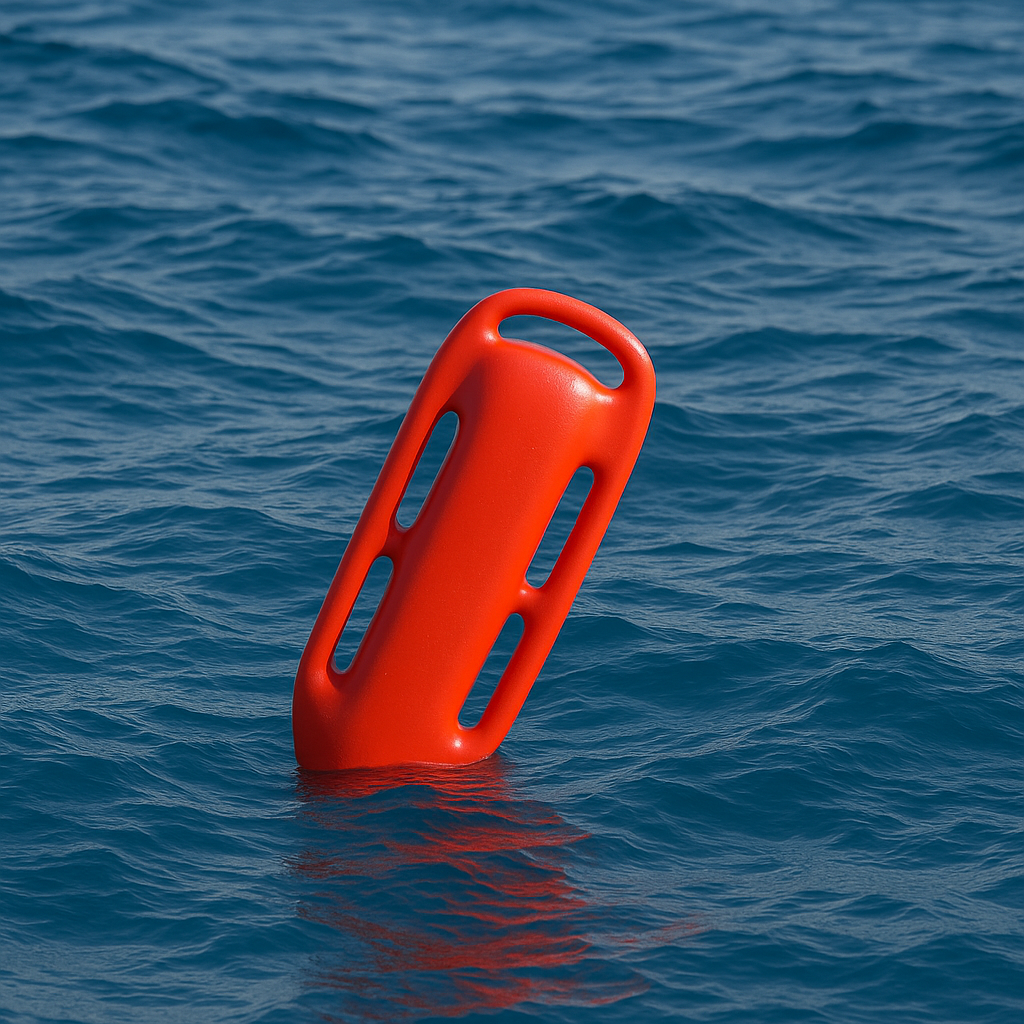
Uncover Cape Town's lifeguard program: beyond whistles, it's a hidden curriculum of career paths, community, and vital life skills.
Cape Town's lifeguard program is more than just summer jobs; it's a secret school for heroes. Young people train hard, learning fitness, first aid, and how to read the ocean. They become leaders, using new tech and smart strategies to keep beaches safe. This program helps them start amazing careers and makes their communities stronger, turning a summer gig into a life-changing adventure.
What is the application process for becoming a seasonal lifeguard in Cape Town?
To apply for a seasonal lifeguard position in Cape Town, candidates must submit a certified ID, proof of residence, a valid Level-1 First Aid certificate, a recognized lifeguard award, police clearance, a passport photo, and a drug-test receipt. Additional steps include a spatial-awareness mini-game and a selfie pitch video.
Get Cape Town news in your inbox
Stay updated with the latest stories from the Mother City.
1. The Clock Starts Before the First Storm
Winter’s first gale is still scraping the shutters of Sea Point coffee bars when the City’s Recreation and Parks Department quietly flips the switch. On 1 July the e-Recruitment portal for the 2024/25 seasonal lifeguard opens, setting off the biggest annual intake of entry-level emergency responders in the Western Cape. Public chatter focuses on the headline - roughly 600 posts - but the real machinery hums beneath the surface: supply chains, psychological profiling and twenty-five years of institutional memory that fold a two-month gig into a life-changing springboard for hundreds of young Capetonians.
The process feels routine only if you don’t look too closely. While Monday commuters queue for their lattes, server traffic spikes as 1 874 hopefuls hit “submit” in the first 48 hours. An algorithmic filter - new this year - cross-checks thrill-seeking behaviour markers. By lunchtime, 947 applicants remain, and not a single candidate has yet touched chlorinated water.
Beneath the numbers lies intention: turn short contracts into long futures. Each spreadsheet cell hides a family budget patched by summer wages, a future paramedic memorising CPR flowcharts at night or a first-year student who will learn that leadership on a beach can reroute an entire life.
2. The Gauntlet: Fitness, Brains and Grit
2.1 Fitness Trials in Plain Sight
The public knows the 400-metre surf swim must be cracked in eight minutes flat; what slips under the radar is the 200-metre soft-sand sprint that follows. Supervisors call the morning a “platoon workout” because the sand section separates swimmers from surf athletes. Pool applicants face a two-minute 100-metre dash plus a static press lifting a 35 kg manikin overhead before they even towel off.
2.2 The Oral Board in a Community Hall
Candidates who already hold NQF-aligned Level-1 first-aid tickets and recognised lifeguard awards step into a circle of experts: trauma surgeons from Groote Schuur, fire-service veterans and grey-haired elders from harbour villages. They grill applicants on packaging spinal injuries, calming gang flare-ups on the dunes and extracting swimmers from thick kelp beds - scenarios straight from December 2023’s logbooks.
2.3 The Paper Chase
Documents matter as much as muscles. A certified ID, proof of residence issued within the last three months and a police clearance certificate must upload without a hitch. A new pop-up invites a 45-second selfie video answering “why I want to serve.” Last season a teenager from Lavender Hill filmed himself stroking across Simon’s Town harbour at dusk, narrating in Afrikaans and isiXhosa. The clip hit 62 000 TikTok views before his contract was countersigned.
3. Concrete, Code and Community
3.1 Engineers Racing the Calendar
Civil contractors have until 30 June to hand over refurbished pools; July belongs to staff orientation and chemical balancing. Engineers joke they “build for October but finish by August,” knowing any slip steals training days from rookies still learning to read rip currents.
3.2 Greener Motors and Brighter Nights
Delft and Lentegeur now run variable-speed pumps cutting electricity consumption by nearly a quarter, financed through the City’s Green Bond. Over at Newlands, LED flood masts double as safety beacons for night-time rescue drills - an idea borrowed from Queensland clubs that patrol at dusk.
3.3 Viewing Decks and Wi-Fi Hotspots
Every rebuilt pool has a shaded deck with free Wi-Fi, a concession granted after single mothers asked for safe spots to watch toddlers while answering emails. At Langa the deck earned the nickname “the boardroom” because freelancers turn it into an open-air co-working hub on public holidays.
4. Career Ladders Hidden in Red Trunks
4.1 Bridging to the Big Red Trucks
Three consecutive seasons of glowing reports open the door to the City’s Fire and Rescue Learnership. In 2023, 54 learners entered the programme and 38 were former beach patrollers; their average on Hazmat modules beat the municipal mean by 21 percent.
4.2 Elite Water Operatives
Top swimmers slip into the Water Emergency Response Team (WERT), a unit that backs up police divers and tackles shark incidents after dark. Members receive stipends to study Advanced Life Support at UCT’s Medical School under a disaster-risk grant.
4.3 Women Redefining the Watchtower
Female intake climbed from 12 percent in 2019 to 31 percent in 2024, fuelled by bursaries earmarked for women from coastal townships. Clifton’s Christmas roster last year featured an all-female Alpha Squad for the first time in recorded history.
5. Classroom Without Walls: Lessons They Never Put in the Manual
5.1 Reading the Ocean Like a Newspaper
Recruits spend one morning weekly with Shark Spotters and ocean-current modellers from the Council for Scientific and Industrial Research. They pair wind graphs with sandbank shifts; the skill has cut preventative interventions by 17 percent at notorious rip bays.
5.2 Minds, Not Just Muscles
A 24-hour chaplaincy helpline launched last season offers support in isiXhosa, Afrikaans and South African Sign Language. Post-incident audits revealed that 62 percent of lifeguards battled intrusive memories within 72 hours of a fatal call-out.
5.3 Mediators in Boardshorts
Every squad partners with a neighbourhood patrol forum. At Strandfontein, guards brokered peace between clashing surf schools whose turf fights had spilled into the car park, proving that authority on the shoreline can ripple into wider civic calm.
6. Gadgets, Games and the New Prevention Playbook
6.1 Towers That Think
Five prototype watchtowers - loaded with thermal lenses and edge-computing chips - went live at Milnerton, Muizenberg and Blouberg last December. The rigs flag swimmers moving against the tide and swivel the nearest camera for human confirmation. After retraining on 120 000 anonymised bather frames, false positives dropped 30 percent.
6.2 Drones Over the Lineup
Stellenbosch engineering students bolt a 3-D-printed pod beneath DJI Matrice drones. Inside sit an AED and a QR code that launches a live feed to an ER doctor. First successful drop happened at Clifton 4th Beach in March, trimming four minutes off response for a cardiac arrest survivor.
6.3 Digital Badges for LinkedIn Glory
Guards who ace micro-courses in drone ops, AED deployment and surf-zone analytics earn verifiable digital badges plug-and-play ready for LinkedIn profiles. Cruise-ship security recruiters have already started head-hunting badge holders.
7. Summer Wages and Side Hustles
7.1 Hourly Reality
A Grade-1 beach guard earns R102 before tax, hitting R127 when moonlight shifts kick in. Modest, but in Masiphumelele surveys show the seasonal stipend covers 42 to 58 percent of younger siblings’ annual school fees.
7.2 Micro-Enterprises
Veterans monetise talent: surf lessons, sunrise photo shoots, cooler-box rentals. Car-guard associations now issue ID cards to lifeguards’ siblings, trusting that the red uniform carries enough social capital to deter petty theft.
7.3 Insurance Safety Net
For the first time the City bought a group personal-accident policy paying out up to R500 000 for permanent disability or death on duty. Premiums are co-funded by surf shops and the local restaurant guild - an unlikely alliance forged after social-media outrage over an injured guard’s R200 000 medical bills last year.
8. Culture Codes: Slang, Swag and Soundwaves
8.1 Language at the Waterline
Township kids waiting on the shoreline for tossed coins now mimic radio chatter: “full stop” for a rogue rip, “pancake set” for stacked swells. UCT linguists have already logged 47 hybrid isiXhosa-Afrikaans rescue terms.
8.2 Streetwear Inspired by the Watchtower
A Khayelitsha label prints “Baywatch Mzansi” hoodies, donating 5 percent to Lifesaving South Africa. Instagram’s #RedTruckChallenge recreates the iconic slow-motion beach run, shot at Camps Bay with drone reverse angles.
8.3 Gqom Meets the Megaphone
Beach announcements - “Attention in the water, please return to shore” - are sampled into township club tracks. DJ Ma-Seasides’ single “Hooter 5” mines a whistle loop over syncopated drums and has passed 1.2 million Spotify streams since January.
9. Toolkit: How to Throw Your Hat in the Ring
• Certified ID copy
• Proof of residence less than three months old
• Valid Level-1 First Aid certificate
• Recognised lifeguard award (LSA, SLSA or RLSS)
• Police clearance obtainable via SAPS e-CPC portal
• Colour passport photo on blue background
• Drug-test receipt from a City Health clinic - R50, waived in 2024 for unemployed youth with an affidavit
Bonus tracks: a five-minute spatial-awareness mini-game and a 45-second selfie pitch can fast-track mentorship in the drone unit.
10. Ripple Effects Beyond the Peninsula
Durban’s metro invited 14 senior Cape guards in February to teach shark-spotter tactics in exchange for jellyfish-sting protocols. A September swap with Walvis Bay (Namibia) is in the diary, funded by Germany’s Konrad-Adenauer-Stiftung. Meanwhile, expatriate South African lifeguards in Sydney and London run the WhatsApp group “Saffa Guards Global,” posting daily risk advisories that loop from Muizenberg to Bondi Beach.
11. The Ledger of a Season
• Drownings summer 2023/24: 9, the lowest since 2016/17 (18)
• Preventative interventions logged: 48 672
• First-aid treatments: 3 211
• AED deployments: 12 (return of spontaneous circulation in 8 cases)
• Second-season retention: 61 %
• Average age of a Grade-1 guard: 21.4 years
• Community programme attendance (under-12): 14 900 learners
• Carbon offset from retrofitted pools: 147 tCO₂e saved annually
12. Voices from the Towers
-
Ziyanda Mntambo, 24, Strandfontein*
“My first save was a toddler hunting a Mickey Mouse flip-flop. The sandal floated; the child didn’t. I keep the flip-flop in my locker to remind me that heroism is often tiny.” -
Jaco Booysen, 38, Camps Bay*
“I signed on in 2003 for pocket money. Today I lecture water safety in primary schools. The red AED case I helped design now lives in 34 schools around the province. A summer gig turned civic mission.” -
Aaliyah Davids, 19, Lentegeur*
“My mother swam in the old Lentegeur Pool before leaks closed it for two seasons. This December she’ll watch me patrol those same lane ropes - brand-new fibreglass, shiny and straight. Pride feels too small a word.”
What is the Cape Town lifeguard program?
The Cape Town lifeguard program is a comprehensive initiative that goes beyond typical summer employment. It's described as a "secret school for heroes" where young individuals undergo rigorous training in fitness, first aid, and ocean literacy. The program aims to develop leaders, utilizing new technologies and smart strategies to ensure beach safety. It serves as a life-changing springboard, helping participants launch successful careers and strengthen their communities.
What are the key phases of the lifeguard selection process?
The selection process for Cape Town lifeguards is multifaceted, starting with an e-Recruitment portal opening on July 1st. It involves an algorithmic filter to screen applicants, followed by intense physical trials like a 400-meter surf swim, a 200-meter soft-sand sprint, and a 100-meter pool dash with a 35 kg manikin lift for pool applicants. Candidates also face an oral board with experts, requiring knowledge of first aid, crisis management, and kelp extraction. Document submission, including a certified ID, proof of residence, and police clearance, is also crucial, alongside a 45-second selfie pitch video.
What facilities and technologies support the lifeguard program?
The program is supported by significant infrastructure and technological advancements. Refurbished swimming pools are handed over by civil contractors by June 30th, featuring greener motors with variable-speed pumps and LED flood masts for night-time rescue drills. New viewing decks with free Wi-Fi have been added to pools, serving as community hubs. The program also utilizes advanced watchtowers with thermal lenses and edge-computing chips, and drones equipped with AEDs and QR codes for live medical feeds, significantly enhancing rescue capabilities.
What career opportunities can arise from being a Cape Town lifeguard?
Becoming a Cape Town lifeguard can open doors to various career paths. Three consecutive seasons of positive performance can lead to the City’s Fire and Rescue Learnership. Top swimmers can join the Water Emergency Response Team (WERT), which supports police divers and handles shark incidents, with stipends for Advanced Life Support studies at UCT’s Medical School. The program also promotes gender diversity, with bursaries for women from coastal townships and an increasing female intake, leading to all-female Alpha Squads.
How does the program foster community engagement and personal development?
The program extends beyond direct rescue operations, actively engaging with the community and fostering personal growth among lifeguards. Recruits spend time with Shark Spotters and ocean-current modellers, learning to interpret ocean conditions. A 24-hour chaplaincy helpline offers psychological support for lifeguards dealing with traumatic incidents. Squads also partner with neighbourhood patrol forums, and lifeguards act as mediators in community disputes, demonstrating a broader civic role.
What new preventive strategies and gadgets are being used by Cape Town lifeguards?
Cape Town lifeguards are at the forefront of prevention and technology. They use prototype watchtowers equipped with thermal lenses and edge-computing chips that identify swimmers moving against the tide and alert human operators. Drones fitted with AEDs and live-feed capabilities enable rapid response to medical emergencies, significantly cutting down response times. Lifeguards can also earn verifiable digital badges for skills like drone operations, AED deployment, and surf-zone analytics, which are recognized by potential employers like cruise-ship security recruiters.

Sarah Kendricks is a Cape Town journalist who covers the city’s vibrant food scene, from township kitchens reinventing heritage dishes to sustainable fine-dining at the foot of Table Mountain. Raised between Bo-Kaap spice stalls and her grandmother’s kitchen in Khayelitsha, she brings a lived intimacy to every story, tracing how a plate of food carries the politics, migrations and memories of the Cape.
View all articles →