
Cape Town women gain green skills boost
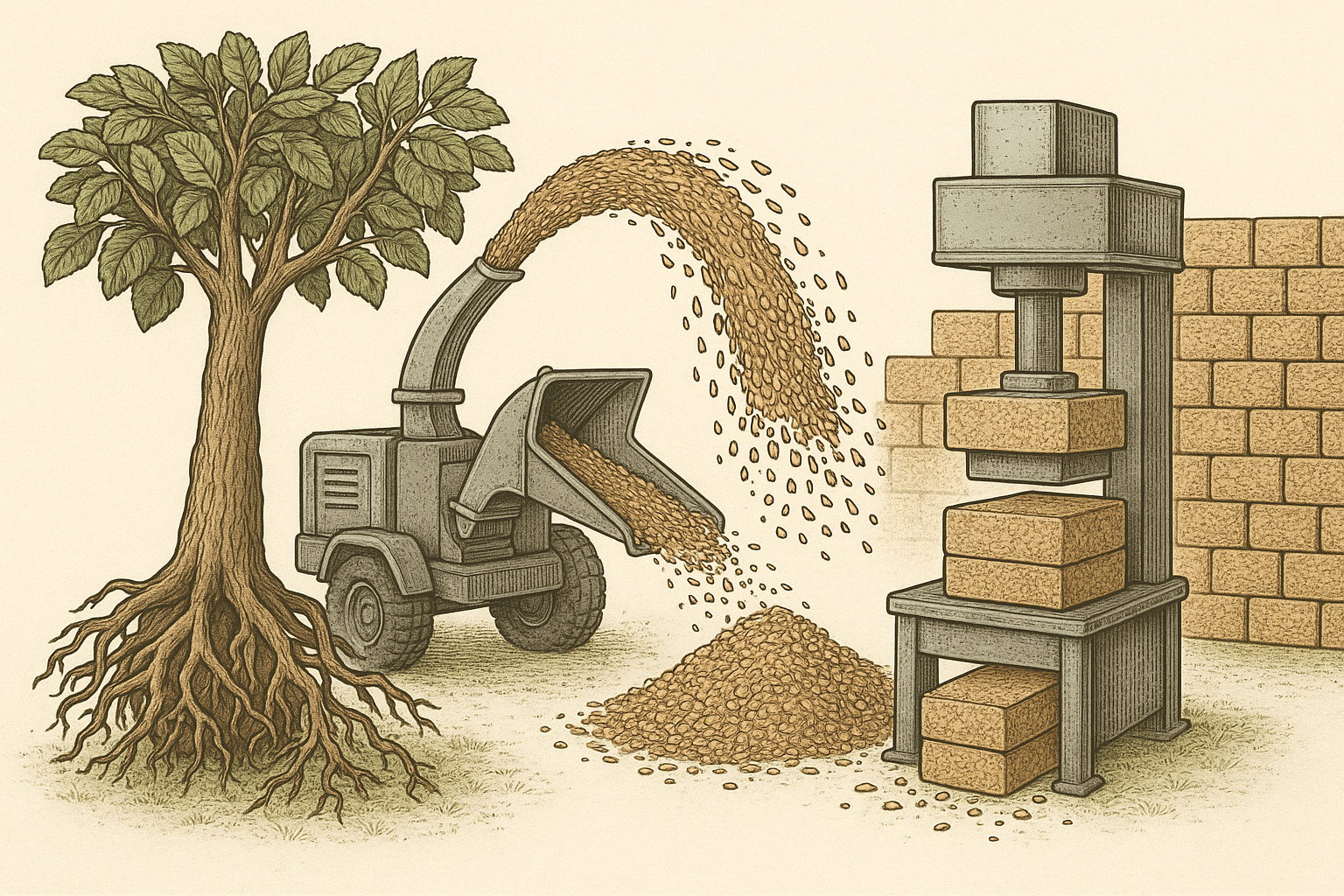
Cape Town's carbon-smart program turns invasive trees into green jobs & eco-friendly building materials, empowering women & cutting emissions.
Cape Town is doing something amazing! They're turning pesky invasive trees into super strong building blocks. These special blocks are like eco-heroes, helping the planet by trapping carbon and keeping homes cozy. Plus, this clever plan is creating jobs and new careers for women, showing how to build a brighter future, one block at a time!
How does Cape Town convert invasive trees into building materials?
Cape Town transforms invasive alien trees (Acacia, Eucalyptus, Pine) into eco-friendly building blocks. Felled trees are chipped, blended with builder's rubble and low-carbon binders, then hydraulically pressed into interlocking blocks. This process, called BRIC, not only removes invasive species but also creates sustainable construction materials and provides employment.
Get Cape Town news in your inbox
Stay updated with the latest stories from the Mother City.
1. The Database That Became a Springboard
Every dawn the Biodiversity Management Branch inbox balloons with pleas from mothers and daughters who have spent lifetimes stringing together odd-jobs, hawking fruit or waiting for calls that never arrived. One such application marked Gcobisa Ndabeni as “economically inactive” for over a decade. Today that same spreadsheet labels her a Level-3 craftswoman, licensed to sign off on the casting of next-generation wall panels and to coach newcomers.
The shift was intentional. Instead of treating carbon and poverty as separate headaches, Cape Town fused its climate duties with its poverty-mitigation budget. All declared alien Acacia, Eucalyptus and Pine felled along rivers, roads and mountain slopes now follow a plotted journey: chipped on-site, graded to 0–8 mm, blended with crushed builder’s rubble and low-carbon binders, then hydraulically pressed into interlocking blocks. One tonne of rescued biomass keeps 1.7 tonnes of CO₂e out of the sky and guarantees 15–21 paid shifts for women whose earlier résumés listed only “casual labourer”.
2. Building Better Blocks, One Alien at a Time
Thermal Armour
A 150 mm BRIC panel posts an R-value above 2.4 m²K/W, triple the insulation of a 220 mm clay brick. The payoff: shacks and houses need 40 % less electricity to stay comfortable.
Built-in Fire Safety
At the CSIR furnace, loaded BRIC slabs rode a full 90-minute ISO 834 burn curve without collapse, surpassing national fire-boundary rules.
Strength That Speaks
After 28 days in the mist room, test cubes averaged 9.8 MPa, comfortably above the 7 MPa benchmark for non-structural walls. Engineers even ran pilot lintels that shrugged off 1.2 kN/m² with barely a hairline crack.
3. From Alien Brush to Modular Bricks – The Low-Tech Recipe
A knock-down 300 kN manual press can pop out 450 blocks per shift using only:
- 0.3 m³ alien chips
- 120 kg cement
- 80 kg recycled glass or plastic fines
Cement is expensive, so City logisticians collect chipped biomass for R280 per tonne, five times cheaper than quarried sand. Township cooperatives can bolt the press together under a carport and begin production with less capital than a second-hand taxi.
4. Twelve Weeks That Redraw Futures
A. Eco-Entrepreneurship & Market Entry (Weeks 1–3)
Learners sketch a business-model canvas, open a Central Supplier Database profile, and leave with a valid tax number.
B. Green Site Management (Weeks 4–6)
Mornings are spent spotting invaders and running chainsaws; afternoons earn an OHS Level-1 badge and Android-based productivity drills.
C. From Beaker to Block (Weeks 7–9)
Mix-design lectures end with the infamous “coffee-cup test”: tiny blocks cured in takeaway cups are crushed under a hand-held press, driving home the impact of water-cement ratios.
D. Digital Toolkit & Soft Landing (Weeks 10–12)
Tablets become shop-windows as women craft WhatsApp Business catalogues and upload mock tenders to the City portal. Graduation demands a live casting demo plus a 20-slide pitch to architects and quantity surveyors.
5. Six Women, Six Journeys
- Gcobisa Ndabeni, 38 - once a seasonal holiday-home cleaner, now leads 12 crew members on a coastal housing site, earning R12 400 a month; her eldest is studying civil engineering at CPUT.
- Lynette Meyi, 42 - turned her neighbour’s backyard into a 120 m² tunnel, supplying spinach to canteens under the brand Meyi’s Green Plates.
- Faldiela Salie, 29 - coder-turned-craftswoman who scripts parametric tiles now selling for R65 a pop at a waterfront craft stall.
- Nosiphiwo Ntshona, 35 - after the 2017 Imizamo Yethu fire, she now manages a 24-hectare fuel break above Hout Bay.
- Ayesha Gool, 44 - ex-garment worker injecting marine plastic into mixes, cutting cement demand by 8 % and ocean waste by tonnes.
- Zintle Mboxela, 33 - franchised a second plant in Mfuleni with seed funding; her women-only crew stamps 1 500 pavers weekly for local hardware stores.
6. Measuring the Triple Win
| Metric | 2023 Result | Verification Method |
|---|---|---|
| CO₂e avoided | 1 020 t | Weigh-bridge slips + Monte-Carlo analysis |
| Stable jobs | 47 | UIF records, 14-month average tenure |
| Water regained | 2.1 million litres/yr | Flow-meters on cleared catchments |
Quarterly audits by *GreenCape * reconcile biomass tickets, cement delivery notes and strength-test QR codes before Treasury signs the cheques.
7. Next-Level Tech: Sun-Powered Curing
A solar-electric hybrid kiln piloted with Stellenbosch University trims energy from 0.9 kWh to 0.35 kWh per block. Evacuated tubes pre-heat water for gentle steam, cutting diesel burn by 72 %. Off-cut blocks themselves form a passive desiccant chamber, drying fresh bricks for 48 hours without grid power - perfect for fledgling township franchises.
8. Where BRIC Ends Up
- Crèches: 37 Early Childhood Development Centres spec BRIC for internal walls - quiet, cool, child-friendly.
- Transport hubs: 2 600 m² of BRIC pavers in herringbone weave now deck the Langa Station forecourt.
- Storm-water channels: Check-dams and revetments linings in Khayelitsha stop erosion with style.
- Tourism: Maker’s Mile at the V&A Waterfront will showcase BRIC planters and benches, turning visitors into customers.
9. Packing Up the Blueprint for Other Cities
Cape Town gifts the world an open-source Replication Toolkit:
- Plant layout that folds into a 12 m shipping container
- 76-page mix-design matrix for any alien species and cement brand
- Cloud dashboard spitting QR-coded strength certificates
eThekwini, Buffalo City and Nelson Mandela Bay are already poring over the manuals and requesting on-site audits.
10. Wages, Welfare and Well-Being
Workers are auto-enrolled in UIF, funeral cover and a provident fund. Fridays bring trauma-counselling circles on-site to tackle gender-based violence. Child-care vouchers valid at nearby day mothers are paid via WhatsApp bots, and an anonymous injury-messaging system feeds fatigue data into a predictive model that tweaks rosters before burnout strikes.
11. How the Money Stacks Up
- 70 % of costs ride on the EPWP wage grant.
- Gold Standard carbon credits fetch *US$12 * per tonne on the Johannesburg Climate Exchange.
- A green bond floated by the Development Bank of Southern Africa ties coupon hikes to 18-month job-retention metrics.
- Citizens can *“Buy-a-Block” * online, pre-paying for garden pavers that bankroll township micro-plants.
12. A Shift in Real Time
05:50 – Gcobisa’s kettle clicks off in Gugulethu.
06:20 – A green minibus scoops up nine coworkers; each thumbprint logs her shift.
07:00 – Athlone plant huddle reviews yesterday’s QA logs; two rejects traced to damp Port Jackson chips.
08:30 – Solar conveyor hums, spitting 72 alien-chip blocks each hour.
10:00 – Peer mentors run a Lean-In Circle on household budgeting; Faldiela unveils updated spinach spreadsheets.
12:30 – Lunch is spinach wraps subsidised by an internal social fund.
14:00 – UCT students swap greenhouse designs for 50 pavers.
15:45 – Gcobisa uploads production tallies via 4G, padlocks the gate, queues for the ride home.
16:30 – On the couch she FaceTimes Sinawo, live-streaming today’s casting bay as lecture footage for CPUT’s concrete technology class.
[{"question": "How is Cape Town transforming invasive trees into building materials?", "answer": "Cape Town is implementing an innovative process called BRIC to convert invasive alien trees like Acacia, Eucalyptus, and Pine into strong, eco-friendly building blocks. The process involves chipping the felled trees on-site, blending them with crushed builder's rubble and low-carbon binders, and then hydraulically pressing them into interlocking blocks. This not only helps remove invasive species but also creates sustainable construction materials and provides employment opportunities, particularly for women."}, {"question": "What are the environmental and social benefits of this initiative?", "answer": "This initiative offers a 'triple win' by avoiding CO2e emissions (1.7 tonnes per tonne of rescued biomass), creating stable jobs (47 in 2023 with a 14-month average tenure), and conserving water (2.1 million litres/year regained from cleared catchments). It also empowers women by providing training and career opportunities, moving them from 'economically inactive' to skilled craftswomen, and offers benefits like UIF, funeral cover, provident funds, trauma counseling, and childcare vouchers."}, {"question": "What are the unique properties of these BRIC building blocks?", "answer": "BRIC panels offer superior thermal insulation, with a 150 mm panel having an R-value above 2.4 m²K/W, which is triple the insulation of a 220 mm clay brick, leading to 40% less electricity needed for comfort. They also demonstrate excellent fire safety, withstanding a 90-minute ISO 834 burn curve without collapse, and impressive strength, averaging 9.8 MPa after 28 days, well above the 7 MPa benchmark for non-structural walls."}, {"question": "How is Cape Town fostering entrepreneurship and job creation through this project?", "answer": "Cape Town runs a 12-week training program covering eco-entrepreneurship, market entry, green site management (including chainsaw operation and OHS Level-1 certification), and mix-design for block production. The program equips participants with skills to run their own businesses, create WhatsApp Business catalogues, and pitch to architects, leading to success stories like Gcobisa Ndabeni, a Level-3 craftswoman earning R12,400 monthly, and Zintle Mboxela, who franchised a second plant in Mfuleni. The low-tech recipe for blocks using affordable materials and a manual press also allows township cooperatives to start production with minimal capital."}, {"question": "How is the project funded and made sustainable financially?", "answer": "The project's financial sustainability is multifaceted. 70% of costs are covered by the EPWP wage grant. It generates revenue from selling Gold Standard carbon credits at US$12 per tonne on the Johannesburg Climate Exchange. A green bond floated by the Development Bank of Southern Africa ties coupon hikes to job-retention metrics. Citizens can also 'Buy-a-Block' online, pre-paying for garden pavers that directly support township micro-plants."}, {"question": "Where are these BRIC blocks being used and what is the future outlook for the project?", "answer": "BRIC blocks are being utilized in various applications across Cape Town, including internal walls for 37 Early Childhood Development Centres due to their quiet, cool, and child-friendly properties, 2,600 m² of pavers at Langa Station forecourt, storm-water channels in Khayelitsha, and decorative planters and benches at the V&A Waterfront’s 'Maker’s Mile.' Cape Town is also sharing its open-source 'Replication Toolkit,' which includes plant layouts, mix-design matrices, and QR-coded strength certificates, with other cities like eThekwini, Buffalo City, and Nelson Mandela Bay, indicating a strong potential for wider adoption and impact."}]

Emma Botha is a Cape Town-based journalist who chronicles the city’s shifting social-justice landscape for the Mail & Guardian, tracing stories from Parliament floor to Khayelitsha kitchen tables. Born and raised on the slopes of Devil’s Peak, she still hikes Lion’s Head before deadline days to remind herself why the mountain and the Mother City will always be her compass.
View all articles →