
Cape Town’s clean audit streak comes to an end
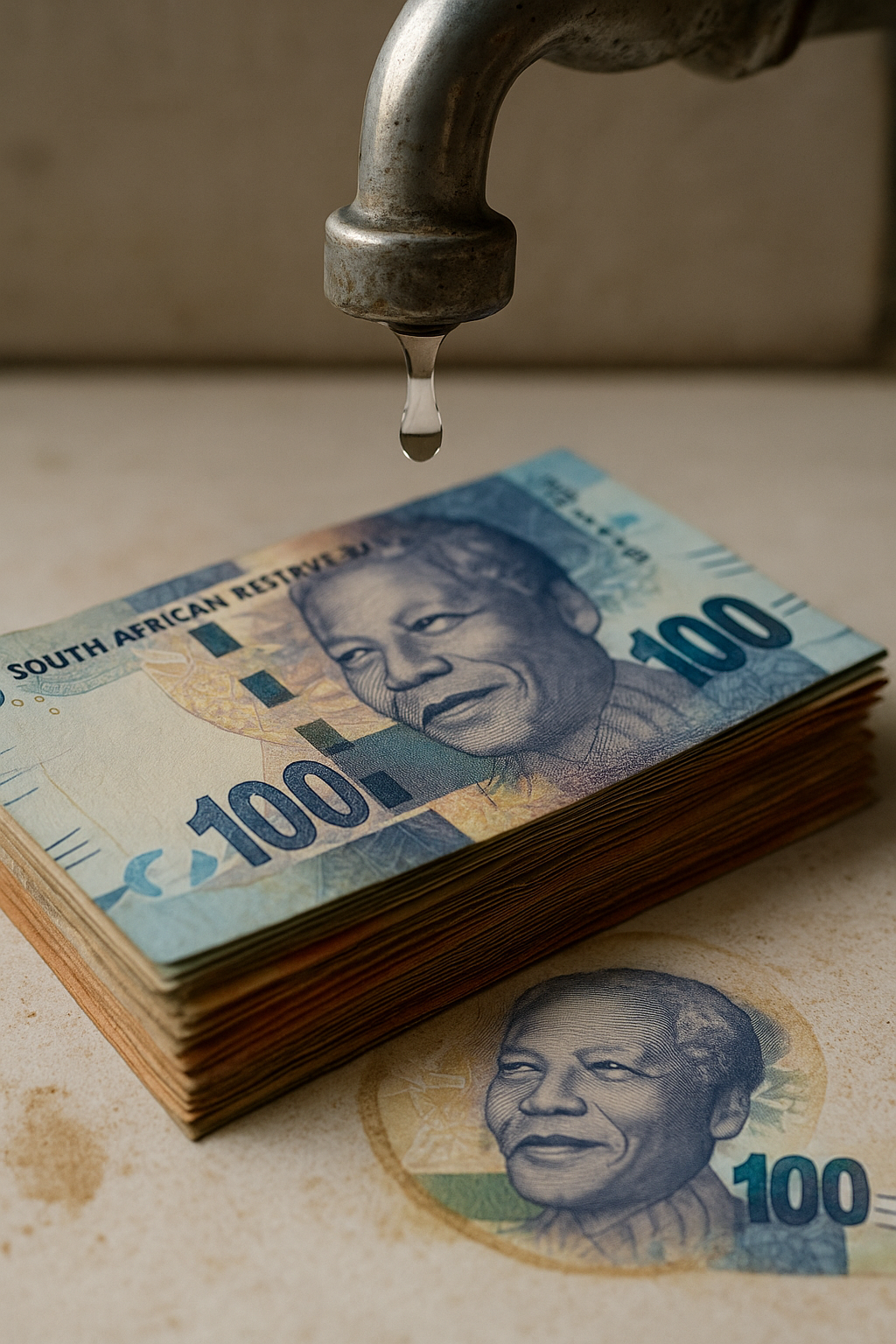
Cape Town loses its clean audit status. This deep dive reveals asset mismanagement, procurement flaws, and governance issues impacting service delivery.
Cape Town, once a shining example of financial health, has stumbled. Its latest audit isn't 'clean' anymore, meaning its money is okay, but there are some big problems. Things like missing laptops, shaky contracts, and reports that twist the truth are now a concern. This slip could make borrowing money more expensive and shows that the city's internal checks aren't as strong as they used to be. It's a wake-up call for residents that the city isn't as perfect as it seemed.
What does an "unqualified with findings" audit mean for Cape Town?
An "unqualified with findings" audit for Cape Town signifies that while its finances are credible, there are compliance or performance issues. This means the city has slipped from a "clean" audit, indicating internal control weaknesses, potential increases in borrowing costs, and concerns about the reliability of performance metrics, affecting its elite financial standing.
Get Cape Town news in your inbox
Stay updated with the latest stories from the Mother City.
The Morning the Streak Ended
Just after 09:00 on 14 October 2025, Mayor’s Committee members inside the Hertzog Boulevard precinct heard the bad news before the printers finished the press release: Cape Town’s run of three consecutive “clean” opinions had snapped. Phones vibrated, photo-ops were cancelled, and within minutes social media turned the city’s much-loved “white-tablecloth” image into a coffee-stained meme. In municipal South Africa an audit result is never a niche ledger entry; it is an instant political tremor.
The Auditor-General’s verdict for 2025/26 is “unqualified with findings.” Outsiders sometimes treat that phrase as a mere yellow card, yet it ejects the metro from an elite circle of only 39 councils - barely 15 % of the national list - still holding the prized unqualified-without-findings badge. Those few towns control just R52.6 billion of the ±R500 billion local-government purse, proof of how rare fiscal discipline remains.
Inside the Report Card: What Each Grade Signals
South African audits operate on a ladder, not a pass/fail switch:
- Clean : no material misstatements, full legislative compliance, trustworthy performance numbers.
- Unqualified with findings: finances credible, but either compliance or performance wobbles.
- Qualified : numbers carry material misstatements confined to specific line items.
- Adverse or Disclaimer: outright rejection or inability to form an opinion.
One rung down is not a constitutional crisis, yet it ends bragging rights, complicates borrowing costs and, crucially, warns citizens that internal controls are slipping.
Where the Findings Cluster
1. Missing Laptops and Vanishing Water Meters
Auditors allege R1.1 billion in “movable assets” cannot be traced. A random scan of 50 laptops in the transport department found 11 with erased serials. A deeper dive into a 2023 drought-batch of 3 000 smart water meters showed 680 no longer on the register because technicians “could not enter yards” and never verified removal. Depreciation lives for IT gear and vehicles were overstated, inflating the asset base by another R87 million.
2. Supply-Chain Stumbles
Regulations require every tender above R30 million to carry a valid B-BBEE certificate on National Treasury’s central database. Seventeen high-value contracts - storm-water upgrades in Khayelitsha, the Bellville taxi-interchange revamp, forensic cleaning of informal settlements - revealed six certificates either expired mid-bid or listing entities whose shareholding had shifted. The breaches are procedural, not graft, yet enough to dent the compliance score.
3. Targets That Move Mid-Race
Officials reported 94 % “basic sanitation” coverage in shantytowns, up from 89 %. Quietly the yardstick slid from “access to a working communal toilet within 200 m” to “within 250 m,” a definitional tweak that added 22 000 residents overnight. Refuse-collection and CCTV-uptime metrics followed a similar elastic path, denting the reliability label.
4. The R618 Million Irregular Spend
The jump - from R154 million to R618 million - stems mainly from two marquee builds: the R4.2 billion Roggebaai waste-water tunnel, where environmental exemptions were back-dated, and the R940 million Strandfontein desalination plant, restarted under emergency rules that sidestepped open tender. City lawyers insist the outlay is recoverable, but until a court agrees the sum stays on the irregular ledger.
The Revenue Vice
Cape Town’s coffers grew only 3.1 % in real terms, the slowest clip since 2014. Stagnant property valuations, shrinking electricity sales as rooftop solar hits 28 % of middle-income homes, and a new indigent policy that caps household bills collided with 7.4 % operating-cost spikes - wage settlements to avert strikes and 12.9 % pricier Eskom bulk power. The squeeze starved the maintenance pool, the very bucket now labelled “at risk” by auditors.
When Coalitions Meet Bureaucracy
Since 2021 the Democratic Alliance has run the metro seven seats short of an outright majority, forcing side-deals on budgets and committee chairs. Internal controls remain sturdier than in most towns, but coalition bargaining delayed the Fraud-and-Ethics blueprint for 14 months, nudging some discretionary buys into legal grey zones. Senior managers were pulled to electricity-and-water “war rooms,” leaving the audit-and-risk division in acting status the entire year.
Why Equity Trumps a Gold Star
Auditors devoted one slide to Cape Town yet stressed a neglected truth: clean opinions correlate with - but do not equal - equitable services. Mid-2025 dashboards showed backyard dwellers (320 000 people) receive 46 kℓ of water monthly, beneath the WHO 50 kℓ dignity threshold. In Langa, Gugulethu and Philippi 54 % of streetlights glow at night versus 91 % on the Atlantic seaboard. Manenberg tallies 41 sewer spills per 1 000 stands, Constantia six. Strong systems notwithstanding, spatial injustice endures behind a shiny audit façade.
National Ripples
Across the country only 13 % of municipalities improved, 50 % idled and 37 % slipped. Aggregate irregular spend hit R47 billion, nearly the size of the national housing budget. Thirty-seven per cent of CFO desks are filled in an acting capacity, 70 % of towns lack IT disaster-recovery plans, and disciplinary steps conclude in just 9 % of known fraud dossiers. Cape Town’s dip mirrors the slump, yet its relative out-performance shows how low the bar has fallen.
What does an "unqualified with findings" audit mean for Cape Town?
An "unqualified with findings" audit for Cape Town signifies that while its finances are credible, there are compliance or performance issues. This means the city has slipped from a "clean" audit, indicating internal control weaknesses, potential increases in borrowing costs, and concerns about the reliability of performance metrics, affecting its elite financial standing. It's like receiving a yellow card – the game isn't over, but there are serious warnings.
Why is Cape Town's audit result a "shockwave" if it's still unqualified?
Cape Town had a streak of three consecutive "clean" audits, placing it in an elite group of financially well-managed municipalities. The shift to "unqualified with findings" ends this bragging right and signals a significant slip in internal controls and financial discipline. While not a complete failure, it's a wake-up call that internal checks are weakening, which can lead to higher borrowing costs and reduced public trust, turning its "white-tablecloth" image into a "coffee-stained meme."
What specific problems led to Cape Town's audit findings?
The audit findings clustered around several key areas:
1. Missing Assets: R1.1 billion in movable assets, including laptops and water meters, could not be traced, and serial numbers were erased on some items.
2. Supply-Chain Stumbles: Seventeen high-value contracts had issues with B-BBEE certificates, either expired or with changed shareholdings, indicating procedural breaches.
3. Misleading Performance Targets: The city altered definitions for metrics like "basic sanitation" coverage, making improvements seem better than they were by changing the yardstick mid-race.
4. Irregular Expenditure: A significant jump to R618 million in irregular spending, largely due to back-dated environmental exemptions for the Roggebaai waste-water tunnel and sidestepping open tender for the Strandfontein desalination plant.
How will this audit impact Cape Town's financial future and borrowing costs?
The audit slip could make borrowing money more expensive for Cape Town. When a city's financial controls are perceived as weaker, lenders view it as a higher risk, potentially demanding higher interest rates on loans. This could strain the city's budget, diverting funds from essential services to debt repayment, and signaling a departure from its previously strong financial health.
How have political factors contributed to these audit findings?
Since 2021, Cape Town has been governed by a coalition, where the Democratic Alliance runs seven seats short of an outright majority. This political dynamic has led to side-deals and delays in crucial governance processes, such as the Fraud-and-Ethics blueprint, which was delayed for 14 months. Additionally, senior managers were diverted to urgent tasks, leaving critical departments like audit-and-risk in acting capacities, potentially contributing to oversight weaknesses.
Does a "clean" audit guarantee equitable service delivery in a municipality?
No, a "clean" audit does not automatically equate to equitable service delivery. Auditors noted that while strong systems are important, spatial injustice can persist even behind a shiny audit façade. For example, dashboards showed backyard dwellers receiving less water than the WHO dignity threshold, and significant disparities exist in streetlight functionality and sewer spills between affluent areas and informal settlements. This highlights that financial discipline, while crucial, doesn't always translate directly into fair and equal services for all residents.

Amanda Wilson is a Cape Town-born journalist who covers the city’s evolving food scene for national and international outlets, tracing stories from Bo-Kaap spice shops to Khayelitsha micro-breweries. Raised on her grandmother’s Karoo lamb potjie and weekend hikes up Lion’s Head, she brings equal parts palate and pride to every assignment. Colleagues know her for the quiet warmth that turns interviews into friendships and fact-checks into shared laughter.
View all articles →