
Cape Town’s dam levels slide as summer takes its toll
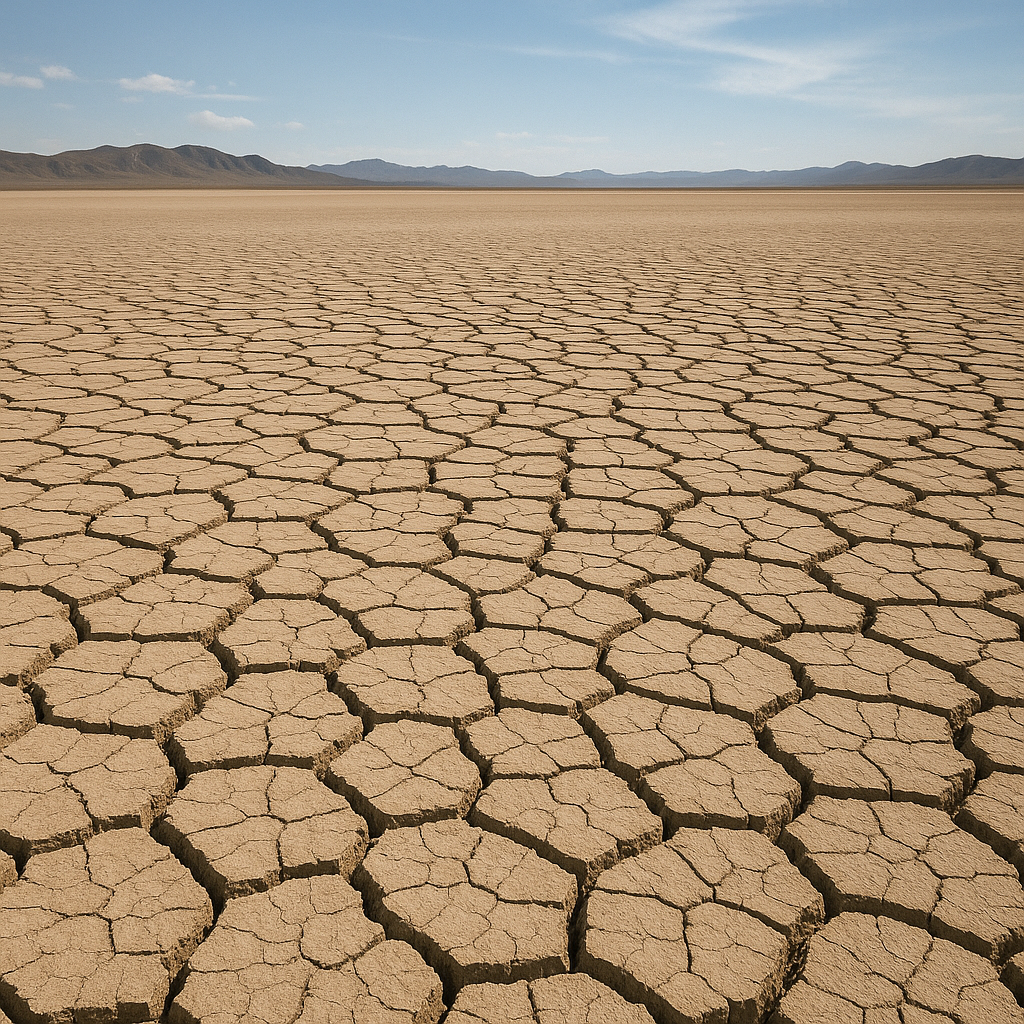
Cape Town's ongoing water crisis: a look into engineering solutions, policy changes, and community adaptations to conserve water.
Cape Town is learning to live with less water after a close call with 'Day Zero' in 2018. They are using clever tricks like floating shade-balls on dams to stop water from evaporating and making water more expensive for big users. The city also has a detailed plan for when water levels drop, and they are even using tech like QR codes for water in poorer areas. It's all about making sure they have enough water, even when it doesn't rain much.
How is Cape Town preparing for future droughts?
Cape Town is preparing for future droughts through various strategies, including implementing strict water tariffs, encouraging groundwater extraction, and utilizing innovative solutions like floating shade-balls on dams to reduce evaporation. The city also employs a 263-step contingency plan activated by dam levels and is developing community-led, tech-driven water management systems in townships.
Get Cape Town news in your inbox
Stay updated with the latest stories from the Mother City.
1. The Sky-High Lesson No One Forgot
From 1,000 metres above Somerset West the Steenbras Upper dam looks like a fossilised tree trunk. Pale stone rings, each six metres high, circle the bowl in perfect layers, every stripe a summer that simply refused to rain. Helicopter traffic here has almost stopped, yet Piet Rossouw, a water engineer with four decades behind him, can still feel the rotor blades. March 2018: he hung in the sky and stared at intake pipes that should have disappeared ten metres below the surface. Instead they gulped air. “That was the second we understood the taps could actually sputter nothing,” he says. The picture never left the city’s collective head.
Today the same lake sits 62% full, a figure any other manager would toast, but the 2018 low-water mark is engraved on every weekly spreadsheet. Tuesday’s bulletin shows the wider dam system at 57%, down another 1.3% in only seven days. The slope copies the historical average so neatly it feels smug, yet the year-on-year ledger is brutal: 170,000 megalitres have vanished in twelve months, enough to keep Johannesburg bubbling for half a year or to irrigate 25,000 hectares of export table-grapes. Drive the R44 and the numbers turn into geography: jetties stranded high and dry, new beaches of cracked mud, the sharp iodine smell of ground that used to be lake-bed.
Cape Town budgets in these vanishing increments. Every Tuesday at nine sharp the hydrology crew crowds the 14th-floor control room. A wall-sized screen paints the six-dam cascade in Disney shades of blue. Green means relax, amber means watch, red means restrict. This week the palette is mostly pastel, but Theewaterskloof, the monster dam that holds more water than the other five combined, already wears the nervous tint that comes just before amber. At 48% it is fifteen points below comfort and only four points above the trigger that activates the city’s 263-step contingency plan. The plan is no museum PDF; it lives, breathes and pays the salaries of 120 night-shift water inspectors who cruise suburbs at 4 a.m. hunting the hiss of outlaw sprinklers.
2. The Arithmetic That Refuses to Balance
Policing buys minutes, not years. Present demand sticks at 1.05 billion litres a day, roughly fifty million more than the Western Cape system can yield between rains. The gap sounds trivial - one extra glass per resident every hour - but it behaves like credit-card interest, nibbling 9,000 megalitres off reserves each week. If the pattern holds, by April the cushion separating Cape Town from tougher restrictions will shrink to the volume of a single thunderstorm, or to what Theewaterskloof evaporates on one malicious February afternoon.
Evaporation is the silent heist. CSIR satellites show the dams lose 35 mm off their surface every midsummer week, equal to 7,400 Olympic pools ascending as vapour. Climate models say that by 2035 the figure could climb another 15% as the region’s already warm air heats further. Engineers fight back with a biodegradable fatty-alcohol film one molecule thick; it spreads like invisible cling-wrap across Steenbras Lower and trims loss by 7%. The potion is cheap enough for a boutique reservoir yet too pricey for Theewaterskloof’s 3,000-hectare skin. Instead the city has scattered 180,000 black plastic shade-balls across the flagship dam. Borrowed from Los Angeles, each orange-sized sphere blocks sunlight and should save 1.3 billion litres over five years, enough to top up 20,000 homes for a month. Seagulls already surf them like tiny ice-floes, and anglers swear the bass no longer recognise the water.
While the physical surface is being tinkered with, the social geometry of use is twisting just as fast. Price remains City Hall’s sharpest screwdriver. July 2024 brought a tariff designed to sting: households glugging more than 35 kilolitres a month now pay R89.50 for every extra thousand litres, a 340% surcharge over the lifeline rate. Early returns show Bishopscourt and Constantia have trimmed consumption by 28%, but drill-rig companies report record demand. Satellite gravimetry confirms metro-wide groundwater extraction has doubled since 2019, nudging saline water landward as far as Philippi. If three in ten homes install boreholes, planners warn, the next Day Zero will arrive not from empty skies but from empty aquifers.
3. Fields, Jets and Township Hacks
Agriculture balances on the same knife-edge. The Berg River Dam, normally obliged to reserve 17% of its volume for irrigation, now wallows 20% below its decade average. Hex Valley growers have accepted a voluntary 30% haircut, betting that autumn breakers will arrive before pears and grapes colour-up. The wager wobbles overseas: Woolworths Australia will air-freight an extra 2,000 tonnes of SA grapes to plug a Chilean shortfall, burning roughly eight times more carbon per kilogram than sea freight. A city that sells itself as a green playground now risks exporting its water savings as aviation emissions.
Tourism pours another layer of demand into the equation. December delivered a record 2.1 million visitors; CBD hotels ran at 92% occupancy for three straight weeks. Each tourist unconsciously clocks 450 litres a day - triple a resident - through hotel laundry, infinity pools and the carefree haze of holiday. Cape Town’s response is “GreyStar,” a certification that awards stars for litres recycled or reused. The One&Only now sterilises shower water to refill its tidal pool; Winchester Mansions has fitted vacuum-flush loos that swallow only 0.8 litres. Exceed 180 litres per room and you meet a R450 “sustainability levy,” politely slipped beside the mini-bar bill.
Yet the most radical reinvention hides in plain sight. In Khayelitsha’s BM Section, 2,000-litre JoJo tanks stand daisy-chained by salvaged fire-hoses into a DIY grid nick-named Amandla-Mzi. Municipal tankers refill the tanks each night, but a blockchain-driven QR code meters every drop: 25 litres per person, scan, tap, shut. UCT coders hacked the app to run on 2G signal, slashing unaccounted losses from 38% to 9%. Clone projects bloom in Langa and Philippi, bank-rolled by a R120 million Green Climate Fund grant, and the provincial government is eyeing the template for sun-baked settlements up-country.
4. Forecasts, Plastic Balls and the Next 12%
The weekly briefing always ends the same way: a probability for meaningful rain inside the next sixteen days. This Tuesday the ensemble of 51 European models spits out 12%. The room exhales in unison - not despair, just the stoic exhale of accountants who treat clouds like fiscal policy. Outside, Table Mountain keeps its bronze summer coat, and somewhere on its lower slopes a spring still ticks into a gauge that has yet to twitch.
Between the mountain and the sea, 180,000 black plastic oranges bob against evaporation, seagulls perched like hood ornaments. Helicopters seldom come here any more, but Piet Rossouw keeps the 2018 image loaded on his phone. The city, forever 1.3 percentage points away from a headline, now measures salvation in QR codes, shade-balls and the hope that the next storm arrives before the next spreadsheet does.
[{"question": "
What innovative strategies is Cape Town employing to conserve water?
\nCape Town is utilizing several innovative strategies to conserve water, including floating shade-balls on dams to reduce evaporation, implementing a biodegradable fatty-alcohol film on smaller reservoirs for the same purpose, and developing blockchain-driven QR code systems for water distribution in poorer areas to manage consumption and reduce losses. They also encourage groundwater extraction as an alternative source.
\n","answer": ""},{"question": "How does Cape Town manage water consumption among its residents and businesses?
\nCape Town manages water consumption through a tiered tariff system that significantly increases costs for high-volume users, effectively incentivizing reduced consumption. For instance, households using more than 35 kilolitres a month face a 340% surcharge over the lifeline rate. The city also employs a 263-step contingency plan, activated when dam levels drop to specific triggers, which includes deploying water inspectors to enforce restrictions like those on outlaw sprinklers.
\n","answer": ""},{"question": "What was the 'Day Zero' scare and how has it impacted Cape Town's water management?
\n'Day Zero' was a projected date in 2018 when Cape Town's municipal water supply was expected to be shut off due to critically low dam levels. This close call profoundly impacted the city's water management, leading to a permanent shift in mindset and the implementation of robust long-term strategies. It instilled a collective understanding of water scarcity and spurred the adoption of advanced conservation methods, contingency planning, and behavioral changes among residents.
\n","answer": ""},{"question": "How is technology being used to improve water access and reduce waste in Cape Town's townships?
\nIn townships like Khayelitsha, Cape Town is deploying technology to improve water access and reduce waste. They use blockchain-driven QR code systems with 2,000-litre JoJo tanks (nicknamed Amandla-Mzi) that meter every drop of water, allotting 25 litres per person. These systems, designed to run on 2G signals, have dramatically cut unaccounted water losses from 38% to 9%, demonstrating a successful community-led, tech-driven approach.
\n","answer": ""},{"question": "What measures are in place to address water usage by tourism and agriculture?
\nCape Town is addressing water usage in tourism through its 'GreyStar' certification, which rewards hotels for recycling and reusing water, and levies a 'sustainability charge' for exceeding 180 litres per room. For agriculture, farmers have accepted voluntary cuts to water usage, such as a 30% reduction in the Hex Valley, to manage demand during dry periods, although this can have consequences for export and carbon emissions.
\n","answer": ""},{"question": "What is the current state of Cape Town's water reserves and future outlook?
\nAs of recent reports, Cape Town's dam system is at 57%, with the crucial Theewaterskloof dam at 48%, just above the trigger for activating the 263-step contingency plan. While present demand still exceeds the system's yield between rains, the city is actively budgeting in these 'vanishing increments' and continuously monitoring levels. Climate models predict increased evaporation by 2035, underscoring the ongoing need for vigilance and adaptation, with future water security relying on continued conservation, technological advancements, and efficient management.
\n","answer": ""}]
Lerato Mokena is a Cape Town-based journalist who covers the city’s vibrant arts and culture scene with a focus on emerging voices from Khayelitsha to the Bo-Kaap. Born and raised at the foot of Table Mountain, she brings an insider’s eye to how creativity shapes—and is shaped by—South Africa’s complex social landscape. When she’s not chasing stories, Lerato can be found surfing Muizenberg’s gentle waves or debating politics over rooibos in her grandmother’s Gugulethu kitchen.
View all articles →