
Cape Town’s elite suburbs are getting pricier – even as fewer homes change hands
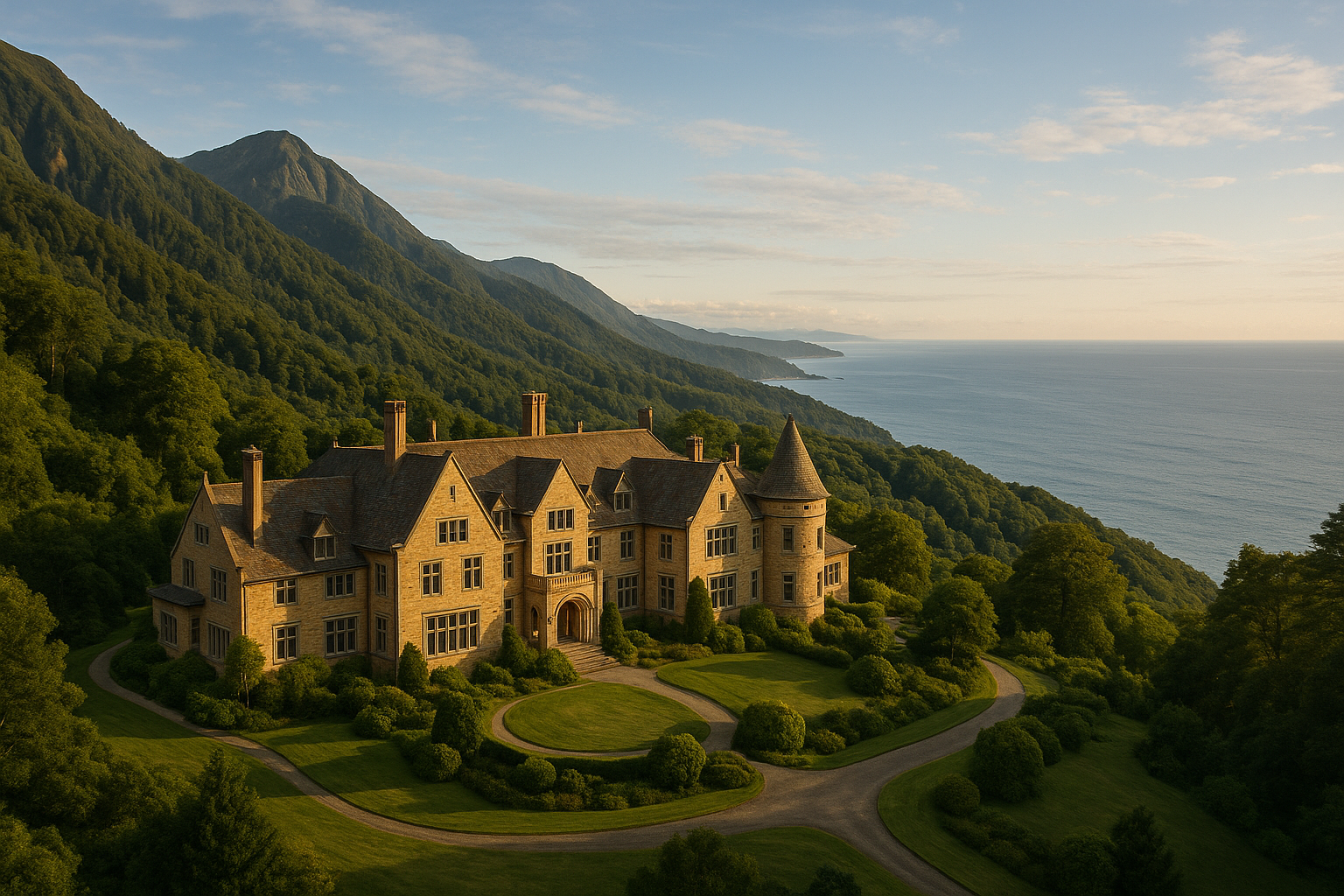
Cape Town's "The Uppers" property market is experiencing a price surge due to supply constraints, unique amenities, and high demand.
Cape Town's "The Uppers" are super fancy neighborhoods where rich people live. These places have big houses, amazing views, and great schools. Because there aren't many homes for sale, prices are going way up, making them very expensive. This area draws in wealthy buyers from all over, creating a special, high-end lifestyle.
What are "The Uppers" in Cape Town's Southern Suburbs?
"The Uppers" refers to five luxury suburbs in Cape Town: Constantia Upper, Bishopscourt, Newlands, Claremont, and Kenilworth Upper. These areas are characterized by large properties with mountain and ocean views, excellent schools, and premium utilities, making them highly desirable and expensive residential locations.
Get Cape Town news in your inbox
Stay updated with the latest stories from the Mother City.
1. Inside “The Uppers”: Geography, Zoning & the Golden Recipe
Cape Town’s estate fraternity now abbreviates five contiguous suburbs as “The Uppers” - an arc that climbs the eastern shoulder of Table Mountain from Constantia Upper down south to the ridge above Claremont up north. Each enclave carries its own mood board: sun-splashed vineyards in Constantia Upper, centuries-old oaks shading Bishopscourt streets, match-day fever drifting out of Newlands. Under the surface, four attributes remain constant regardless of street address:
- Every property stands high enough to frame both the mountain chain and a sliver of Atlantic horizon.
- City zoning enforces stands of at least 1 800 m², with many plots stretching well beyond.
- The schools map reads like a Who’s Who - Westerford, SACS, Bishops, Herschel and Rustenburg - earning an A+ rating in provincial league tables.
- Bullet-proof utilities - fibre at gigabit speed, unbroken water pressure and rubbish removal that never skips a week - are bank-rolled by the best-resourced ratepayers’ associations in the metro.
These elements have co-existed for decades, yet post-pandemic spatial re-rating and dwindling stock have turned steady appreciation into a vertigo-inducing spike.
2. The Data Speaks: How Thin Stock Super-Charged Prices
Across the past four quarters, transaction counts in The Uppers plunged roughly 40–45 %, yet rand turnover stayed flat. That paradox can only exist if price-per-square-metre is rocketing.
Bishopscourt offers the clearest signal. Only 11 homes changed hands during the latest 12-month window, yet the arithmetic is startling:
• Average selling price: R29.8 million.
• Typical marketing period: 27 days.
• Nine out of ten sellers accepted offers within 5 % of their asking tags.
• Median plot size: 3 050 m², implying raw land now trades at ±R9 770 per m² - more than double the 2019 benchmark of R4 200.
Constantia Upper tells the same story from a smaller sample. One whisper-quiet, off-market transfer of a 1940s Cape Dutch homestead on 6 500 m² closed at R46 million, hoisting the suburb’s rolling annual average north of R26 million on the back of just eight deals.
Kenilworth Upper records the most dramatic leap. Five years ago anything above R7 million made headlines. In early-2024 a Wedderburn Road residence, re-imagined by architect Stefan Antoni, sold for R23.75 million. Industry insiders peg reconstruction costs at ±R12 million, highlighting that dirt - not bricks - now drives valuations.
3. Why Owners Refuse to Sell
The driving force behind sky-high prices is not frenzied buying but a desperate drought of listings. Between 2019 and 2023 the number of freehold show-day listings across the five suburbs dropped by almost a third. Several overlapping factors explain the vanishing act:
- Generational handcuffs: parents gift equity on the strict condition that heirs keep the family compound intact.
- Municipal sweeteners: rates rebates for residents over 60 make ageing-in-place cheaper than downsizing.
- Heritage red tape: sectional-title conversions are outlawed in core heritage belts, choking the usual safety valve of densification.
- Tax arithmetic: owners with ultra-low historic base costs face punishing capital-gains levies on exit, prompting them to refinance and draw equity instead of ringing the agent.
The upshot is a shelf emptier than any previous record, forcing buyers into bidding wars the moment a door sign appears.
4. New Money, New Maps: Who Is Buying Now
Four buyer tribes now dominate the market.
-
Gauteng executives in flight*
Mid-career professionals from Sandton and Pretoria test-drive the “work-from-anywhere” promise. They offload primary residences at metro-level premiums, then arrive cash-flush, largely unruffled by 11.75 % prime. -
Pound, euro and dollar diasporeans
A rand that has slid 35 % against major currencies since 2018 hands UK, Dutch and Swiss passport holders an exchange-rate gift. One London flat easily bankrolls a Bishopscourt manor and* a Camps Bay lock-up-and-go. -
Cape Town tech liquidity*
Home-grown fintech founders cashing out pre-IPO secondary share sales have formed an under-40 ultra-high-net-worth cohort. They prize walkability to top schools and a Pilates-cold-plunge-espresso circuit that has mushroomed around Newlands Village. -
Legacy families schooling the next generation*
Clifton and Bantry Bay stalwarts secure Southern Suburb bolt-holes for the single purpose of “school years”, guaranteeing continuity at Bishops or Herschel without uprooting the broader family trust structure.
5. Beyond Bricks: Security, Fibre & The Dinner-Club Economy
Buyers no longer inventory bedrooms and boreholes alone. Invisible soft infrastructure tips many decisions.
- Armed-response subscriptions exceed 95 % of households. ADT and Marshall Security run drone patrols and canine units that cost more per month than many people’s car repayments.
- Fibre lines from Octotel and Openserve routinely clock above 500 Mbps, a lifeline for traders exploiting GMT+2 time-zone arbitrage.
- Medical care has gone white-glove: private GP rooms, concierge paediatricians and on-demand physiotherapists cluster in Constantia Village and Newlands Medical Centre.
- An invite-only dinner circuit sees Michelin-trained chefs pop up in Bishopscourt wine cellars, serving twelve-seat tasting menus at R2 500 a head - booked through WhatsApp, naturally.
6. Cape Contemporary: A New Architectural Vernacular
Tuscan fever dreams - yellow face-brick and green shutters - have yielded to “Cape Contemporary”. Expect low-pitched grey slate roofs tucked behind parapets, off-shutter concrete fin walls softened by indigenous fynbos courtyards, and full-height smart-glass sliders that peel back entire façades to north-facing pools ringed by ancient oaks.
Every new build above R20 million arrives solar-ready: 10 kW rooftop array, 30 kWh lithium bank and grey-water recycling as standard. Stefan Antoni, SAOTA and Malan Vorster now book projects 18–24 months out, and construction budgets regularly breach R50 000 per square metre excluding VAT. These replacement-cost tallies feed directly into the replacement valuations banks use to sanction ever-larger loans.
7. The Hidden Rental Pipeline
Despite dwindling sales stock, rental supply has quietly ballooned - yet never appears on public portals. Owners list furnished six-bedroom mansions in encrypted school-parent WhatsApp groups. A Bishopscourt showpiece now fetches R180 000–R220 000 per month on a 12-month corporate lease. Tenants - mining honchos or Big Tech regional leads - often convert to buyers once their initial contract expires, turning short leases into long-term pipelines rather than substitutes for ownership.
8. How Deals Get Bank-Rolled When Prime Hits 11.75 %
Few purchases above R15 million involve vanilla mortgages. Three instruments dominate:
1. Share-portfolio lending at 60 % LTV: JSE blue chips stay untouched while Investec or Absa Wealth extends rand liquidity.
2. Cross-collateral offshore structures: GBP 4 million parked at Coutts London secures a local rand facility at a fixed 8 %.
3. Zero-coupon seller finance: a 65-year-old vendor funds 60 % of the price at 6 % simple interest, payable in a single bullet after five years - deferring CGT and gifting heirs a neat estate-planning tool.
9. Spill-Over and Skyline Futures
When even the merely wealthy capitulate, demand seeps into neighbouring nodes. Bergvliet’s Dreyersdal and Southern Right farms have tripled raw land values since 2020. Rondebosch’s disused Old Mill precinct is morphing into cluster estates priced at R8–R10 million each. Meanwhile height-restriction relaxations along Claremont’s Main Road corridor hint at mixed-use towers where penthouses could list at ±R35 000 per m² - still a steep discount to Claremont Upper freehold at R60 000.
10. Tax, Climate and Insurance Curveballs
South African Revenue Service recalibrated transfer duty tables in 2024: a R30 million purchase now triggers R2.7 million in upfront duty. To skirt the pain, deals increasingly route through shelf companies whose shares, rather than the land, change hands - economics that only stack up above ±R20 million.
Climate risk remains muted: Constantia and Bishopscourt sit high enough to have dodged Day Zero bullet points, and insurers have not loaded premiums for drought. Storm-damage from rogue winter fronts has instead pushed building-insurance costs up 25 % since 2021; buyers now allow R12 000–R15 000 in annual premiums for every R10 million of insured value.
11. The Micro-Economy You Won’t Find on Google Maps
A hyper-local service guild has taken root: art curators rotating museum-grade canvases through entrance halls on six-month leases, private-client wine brokers stacking pallets of Hamilton Russell and Klein Constantia Vin de Constance, and bespoke uniform tailors kitting out Bishops and Rustenburg learners at R20 000 per term. These referrals move through dinner-party chatter, leaving no searchable trace.
12. Catalysts on the Drawing Board
Two potential game-changers lurk in council corridors.
- The long-dormant “Constantia Green Belt” land swap could free 60 hectares of municipal pine plantation for low-impact cluster homes - effectively the largest single supply injection since the 1970s.
- A private proposal to overlay sectional-title retirement units onto the King David campus in Claremont Upper faces stiff heritage opposition, but 150 luxury flats could still materialise.
Even if both projects proceed, the current depth of buyer liquidity suggests absorption without price dilution.
13. Global Yardsticks: Still a Bargain
Against global peers - Aspen’s West End, Sydney’s Double Bay or Vancouver’s Shaughnessy - The Uppers trade at roughly half the per-square-foot price when denominated in US dollars. Knight Frank strategists note that a slide in the rand to 21:1 could nudge nominal price parity without any domestic inflation, purely via currency translation.
14. The Saturday Matinée: How the 1 % Views Property
Open-house culture has become theatre. Agents plant an A5 perspex sign at the gate, demand pre-qualification letters and admit only six concurrent groups. Champagne bars, oyster shuckers and barista rigs replace the old thermos-and-scone script. A Constantia Upper showhouse in April 2024 drew 14 offers within 72 hours; the winning bidder, a Seattle e-commerce magnate, closed after an encrypted WhatsApp video tour.
15. The Broker Elite: When 15 Agents Move 60 % of the Market
As volumes thin, power concentrates. Roughly fifteen individuals - alumni of Seeff, Lew Geffen Sotheby’s and Procter & Paul - control six out of every ten mandates above R20 million. Their Instagram feeds act as unlisted MLS platforms, each with north of 40 000 followers. Commission remains 5 %, yet competitive tension routinely adds 15 % to the final price.
[{"question": "What are 'The Uppers' in Cape Town's Southern Suburbs?", "answer": "'The Uppers' refers to five luxurious suburbs in Cape Town: Constantia Upper, Bishopscourt, Newlands, Claremont, and Kenilworth Upper. These areas are known for their large properties, often boasting mountain and ocean views, proximity to excellent schools, and top-tier utilities. This combination makes them highly desirable and, consequently, very expensive residential locations, attracting wealthy buyers globally."}, {"question": "What makes properties in 'The Uppers' so expensive?", "answer": "The soaring prices in 'The Uppers' are primarily driven by a severe shortage of available housing coupled with high demand from affluent buyers. Properties typically feature large stands (at least 1,800 m\u00b2), stunning views, and access to premium services like gigabit fibre internet and robust security. Data shows a significant drop in transaction counts, yet rand turnover remains flat, indicating a sharp increase in price-per-square-metre. For example, in Bishopscourt, the average selling price is R29.8 million, and properties sell within an average of 27 days, often close to the asking price."}, {"question": "Why are homeowners in 'The Uppers' reluctant to sell their properties?", "answer": "Several factors contribute to the low inventory in 'The Uppers.' These include generational transfers where families wish to keep properties intact, municipal rates rebates for residents over 60 which make aging in place more affordable, and heritage restrictions that prevent densification through sectional-title conversions. Additionally, owners with low historic base costs face substantial capital gains tax on exit, often opting to refinance and draw equity rather than sell."}, {"question": "Who are the primary buyers in 'The Uppers' market?", "answer": "Four main buyer groups dominate the market in 'The Uppers': \n\n Gauteng executives: Mid-career professionals from Johannesburg and Pretoria who are cash-flush after selling their primary residences and seeking a 'work-from-anywhere' lifestyle.\n International diaspora: UK, Dutch, and Swiss passport holders benefit from a weaker rand, allowing them to purchase substantial properties in Cape Town with funds from overseas assets.\n Cape Town tech founders: Young, ultra-high-net-worth individuals from the local fintech sector who have cashed out pre-IPO share sales and value proximity to top schools and a high-end lifestyle.\n Legacy families: Wealthy families from areas like Clifton and Bantry Bay who acquire properties in 'The Uppers' specifically for their children's school years, ensuring continuity at prestigious institutions like Bishops or Herschel."}, {"question": "What 'soft infrastructure' do buyers consider in 'The Uppers'?", "answer": "Beyond physical attributes, buyers in 'The Uppers' prioritize 'soft infrastructure' that enhances their lifestyle and security. This includes high-level armed response security services with drone patrols and canine units, ultra-fast fibre internet (over 500 Mbps) for business and leisure, and white-glove medical care such as private GPs and concierge pediatricians. A bespoke, invite-only dinner club scene with Michelin-trained chefs also adds to the exclusive social fabric."}, {"question": "How are deals for high-value properties bank-rolled in 'The Uppers' given high interest rates?", "answer": "Purchases above R15 million rarely rely on traditional mortgages. Instead, three sophisticated financial instruments are commonly used:\n\n Share-portfolio lending: Banks like Investec or Absa Wealth extend rand liquidity against JSE blue-chip share portfolios, allowing owners to keep their investments intact.\n Cross-collateral offshore structures: Funds parked offshore (e.g., GBP 4 million in London) secure local rand facilities at fixed, often lower, interest rates.\n Zero-coupon seller finance:* Sellers, particularly older individuals, finance a significant portion (e.g., 60%) of the price at simple interest, with a single bullet payment due after several years. This defers capital gains tax for the seller and offers a tailored estate-planning tool."}]

Sarah Kendricks is a Cape Town journalist who covers the city’s vibrant food scene, from township kitchens reinventing heritage dishes to sustainable fine-dining at the foot of Table Mountain. Raised between Bo-Kaap spice stalls and her grandmother’s kitchen in Khayelitsha, she brings a lived intimacy to every story, tracing how a plate of food carries the politics, migrations and memories of the Cape.
View all articles →