
CHELSEA GOLD MEDAL CELEBRATES LIFE AFTER FIRE
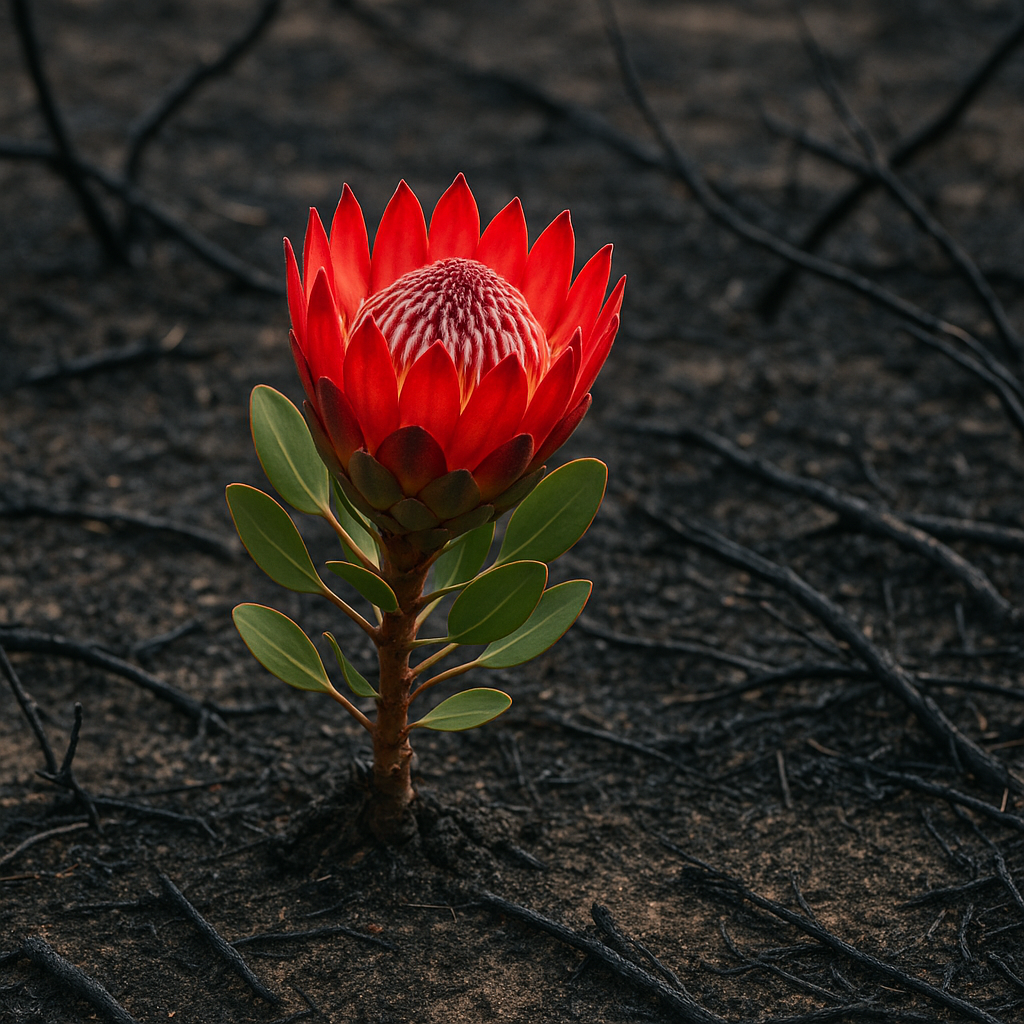
Discover how South Africa secured its 40th Chelsea Flower Show gold medal, transforming fire, freight, and frost into a triumph.
South Africa blazed a trail at the Chelsea Flower Show, snatching their 40th gold medal with a breathtaking exhibit named "Life After Fire." They turned wildfire ashes into a vibrant display of fynbos flowers, showing nature's incredible bounce-back. Despite epic struggles like crazy weather and delayed flights, their team worked magic, even getting rare flowers past strict rules. This fiery, unforgettable garden scored the highest ever for a southern-hemisphere country, inspiring everyone and helping local communities thrive.
How did South Africa achieve its 40th gold medal at the Chelsea Flower Show?
South Africa secured its 40th gold medal at the Chelsea Flower Show with the "Life After Fire" exhibit, showcasing fynbos rebirth post-wildfire. Despite logistical nightmares, including extreme weather and flight delays, the team meticulously recreated a charred landscape bursting with specific fynbos species, earning the highest score ever for a southern-hemisphere exhibit.
Get Cape Town news in your inbox
Stay updated with the latest stories from the Mother City.
1. The Freight Gamble: When Lightning, Strikes and Hail Nearly Stole the Show
The fortieth time South Africa would claim gold at the Chelsea Flower Show was never going to arrive unannounced. In the final weekend of April, the first air-freight pallets rose from Cape Town carrying a cargo stranger than most: a lightning-scarred weather station, a charcoal carving of Table Mountain no larger than a laptop, and a risk file thick enough to prop a door - thirty-four pages warning of everything from radiation fog above Heathrow to fugitive queen bees in the hold.
Twenty hours later the consignment was still fighting the sky. Two flights were scratched, baggage handlers walked off the job, and a fist-sized hailstorm pelted the runway with twenty-two millimetres of ice. Yet when the last blossom - an apricot-tinted Protea neriifolia clipped on the upper Groenlandberg - was tucked into a refrigerated lorry at three-twelve a.m., every passport for every cut flower still read clean. The shipment reached Gatwick eighteen hours behind schedule, customs agents opened nine random crates, and not one label failed.
That gauntlet of near-disasters set the tone for the week ahead. What followed was a story of flame, freight and frost compressed into twenty-two square metres beneath the Great Pavilion’s glass roof - and it would become the most talked-about plot of ground at the 2026 show.
2. Designing With Fire: How a Charcoal Landscape Detonated Into Colour
The exhibit’s title, Life After Fire, sounded poetic, yet the team resisted any hint of comfort. The Western Cape’s most recent burn season - tracked minute-by-minute from orbit - torched 112,000 hectares of fynbos in forty-two days, emptied three towns twice, and sent a smoke banner wide enough to glimpse from the International Space Station. Designer Leon Kluge, artist Tristan Woudberg and fourteen soil-smudged collaborators spent February pushing a bakkie through ash drifts so deep they bolted plywood planks to the front like makeshift snowploughs. They scooped up seed pods still ticking with heat, photographed charcoal graffiti on sandstone walls and bagged forty kilos of scorched Pinus radiata cones that would later be freeze-dried and exhibited as “found sculpture.”
The creative brief sounded almost simple: let a London visitor sense the first six months of fynbos rebirth. Delivering that sensation demanded three vertical tonnes of material and concert-grade lighting. A four-metre carbon-fibre “boulder” - a hollow shell coated with photocatalytic concrete - anchored the stand. Inside, a silent battery fogger released a thirty-second burst of ionised steam every seven minutes, carrying a whiff of petrichor cooked in a Stellenbosch lab from geosmin and charred Erica bark. Overhead LEDs set to a fiery 1,900 Kelvin tricked noses into believing rain had just kissed a scorched slope. A spiral path, barely sixty centimetres wide, herded visitors shoulder-to-shoulder so that blackened Restio stems brushed sleeves and left a soot ghost on light cotton - a deliberate keepsake.
Colour arrived as a controlled explosion. For six feet you saw nothing darker than espresso: charred Leucadendron frames, matte-black vineyard gravel and pools of water dyed with food-grade carbon. Then the palette ignited. Babiana rubrocyanea punched through the gravel, its scarlet and electric-blue blooms timed to open on press morning after ten days of cold-storage trickery in Surrey. Watsonia borbonica “Tresco” hurled up coral spears lifted from a recent burn site near Caledon and flown in organ-transplant hydration capsules. Higher still, the crimson disa clung to a cliff of mossy tufa, bathed in recycled mist that mixed deionised water with Table Mountain spring water couriered in five-litre vacuum flasks. Getting the disa past inspectors was a quiet coup: the species sits on CITES Appendix II, its export permit missed the original flight and a horticulturist volunteered to stretch her Doha layover so she could hand-carry the paperwork.
3. The Hidden Ledger: 20,000 Stems, 147 Species and One Bureaucratic Torah
Headline numbers only hint at the choreography behind the stand. Twenty thousand stems represented 147 different species, thirty-eight of them edging toward extinction on the Red List. Every collection permit was glued to a hemp-paper roll that unfurled like a Torah at the rear wall, signatures and government stamps overlapping in a mosaic of legalese. Meanwhile, 600 kilograms of charcoal arrived in ten-kilo sacks; the black chunks were not props but biochar made from invasive Acacia cleared on Grootbos Nature Reserve, destined after the show for Thames-side community plots struggling with heavy clay. Even the gravel masked a manifesto: the substrate blended seventy per cent fynbos compost with thirty per cent crushed brick salvaged from Cape Town’s 2023 informal-settlement fires, heat-sterilised to meet British biosecurity yet still sparkling with flecks of charred quartz that flashed like embers under halogen beams.
Nature tried one more ambush. A low-pressure cell dumped twenty-eight millimetres of rain on preview night, turning the Royal Hospital’s lanes into a slog. Inside the Pavilion the crew had expected the humidity spike. Silica-gel sacks the size of pillows were wedged beneath the platform, and near-silent dehumidifiers coaxed the air down to fifty-eight per cent - perfect for proteas that bruise in moist drafts. At dawn a lightning strike knocked out power to half the marquee for forty-three minutes; battery packs kept the fogger cycling and the LEDs glowing, so when judges stepped in at seven-thirty the display looked eerily self-sufficient, as though it had already learned to live off the grid.
Chelsea judging is equal parts forensic audit and theatre review. Three horticultural referees, two moderators and one fire-ecology professor from Edinburgh spend twenty-three minutes per stand, clipboards and jeweller’s loupes in hand, scoring twenty-five criteria down to outlaw orchid roots. South Africa dropped a single point because a Lachenalia leaf showed incipient oedema - moisture blisters almost invisible to the naked eye. They earned two bonus points for narrative depth when Kluge unrolled a 1951 forestry chart proving the scorched pine cones on display came from the very belt that launched the invasive nightmare. Final tally: ninety-six out of one hundred, the highest mark ever given to a southern-hemisphere exhibit, nudging past Western Australia’s 2019 banksia tour de force and Japan’s moss utopia of 2024.
4. Aftershocks: From Viral Proteas to a Sustainable-Fashion Runway
The reverberations crossed oceans within minutes. Cape Flora SA’s phones lit up with export enquiries for Serruria florida, the bridal protea once limited to wedding aisles but now coveted by European supermarkets after Instagram photos of its ivory pincushions against charred wood went viral. Hazendal Wine Estate clocked a three-fold jump in online sales for its fynbos-infused gin, the botanicals picked from post-fire renosterveld on the Bottelary Hills. In Hermanus schoolchildren filed into the hall to watch Grootbos Foundation’s live-stream of the medal ceremony; by Wednesday afternoon 1,400 pupils had crashed the district server uploading sketches of fire-lilies and disas to a shared Padlet. Even the national lottery shifted gears, fast-tracking a twelve-million-rand grant to expand the Flower Valley Conservation Trust’s sustainable-harvesting scheme, a programme that trains landless workers to cut fynbos bouquets without stripping seedbanks.
London’s curiosity kept spilling over. On members’ day a woman in a navy trench presented Kluge with a wilting Protea cynaroides she had bought at New Covent Garden that morning. He dipped a pH strip into her vase, revealed a rock-hard 8.1 and scribbled a citric-acid remedy on her show guide. Within hours the tweeted strip earned four thousand retweets under #HardWaterSoftProtea. BBC Two’s Gardeners’ World devoted a segment to recreating a pocket of fynbos on a Solihull sill; within a day garden centres from Devon to Durham were stripped of coarse river sand and perlite.
Eventually the plants faced the return voyage. British Airways donated a climate-controlled container usually reserved for thoroughbreds; every species was swaddled in micro-perforated film engineered for human organs. British rules forbid re-import of soil, so compost-bound specimens had to be forfeited. Instead of trashing them, the team joined forces with Kew’s Edible Garden Project. Across two evenings volunteers boiled 3,000 bulbs in copper kettles until biologically inert, then handed the still-brilliant carcasses to Central Saint Martins students who will transform them into natural dyes for a sustainable-fashion catwalk in September. The charcoal boulder was sliced into twenty-centimetre slabs, reassembled in the Temperate House as Pyrophyte Monolith, destined to weather under glass for a decade while interpretive boards explain how fire jump-starts Mediterranean ecosystems.
Statistics rewrite themselves. Forty golds in fifty years give South Africa an eighty per cent medal rate at Chelsea - better than Brazil’s football World Cup strike rate. Yet the quieter number making the rounds among growers is smaller: 1,847. That is how many individual pickers - mostly women - now earn a living wage because Chelsea buzz has kept export demand alive through three global recessions and a pandemic. Each picker’s name is logged in an open database run by Cape Flora SA; when a sleeve of Leucospermum “High Gold” sells in a Stockholm supermarket, the barcode traces back to the exact hectare, ensuring royalties reach both landowner and harvester. The lattice is delicate, but for now it holds - bound together by cargo holds, barcode readers and the stubborn scent of geosmin that clings to a visitor’s coat long after the last medal is engraved.
[{"question": "
How did South Africa earn its 40th gold medal at the Chelsea Flower Show?
", "answer": "South Africa clinched its 40th gold medal at the Chelsea Flower Show with the 'Life After Fire' exhibit. This display masterfully depicted the fynbos biome's remarkable regeneration after wildfires, transforming ash into a vibrant testament to nature's resilience. The team overcame significant challenges, including extreme weather and flight delays, to create a display that not only captivated judges but also achieved the highest score ever awarded to a southern-hemisphere country."}, {"question": "What challenges did the South African team face in bringing their exhibit to the Chelsea Flower Show?
", "answer": "The South African team encountered numerous obstacles, starting with a perilous air freight journey that involved scratched flights, baggage handler strikes, and a hailstorm. They also had to navigate strict customs regulations for rare fynbos species, with one CITES Appendix II species requiring a horticulturist to hand-carry paperwork during a layover. Weather also posed a threat during setup, with a low-pressure cell causing heavy rain and a lightning strike momentarily knocking out power."}, {"question": "What was the inspiration behind the 'Life After Fire' exhibit?
", "answer": "The 'Life After Fire' exhibit was inspired by the Western Cape's recent intense wildfire season, which scorched 112,000 hectares of fynbos. The design aimed to convey the first six months of fynbos rebirth to a London audience, transforming a charred landscape into a vibrant burst of color. The team meticulously collected materials from burn sites, including ash, charcoal, and seed pods, to accurately represent the post-fire environment."}, {"question": "How did the exhibit engage multiple senses and create an immersive experience for visitors?
", "answer": "The exhibit was designed to be highly immersive. A four-meter carbon-fibre boulder released ionized steam with a petrichor scent, mimicking rain on scorched earth. Overhead LEDs replicated the fiery light of a post-fire landscape. A narrow spiral path ensured visitors brushed against blackened Restio stems, leaving a deliberate soot ghost on their clothes. The display gradually transitioned from an espresso-dark charcoal landscape to a controlled explosion of fynbos colors, like the scarlet and electric-blue Babiana rubrocyanea."}, {"question": "What unique elements and sustainable practices were incorporated into the 'Life After Fire' exhibit?
", "answer": "The exhibit featured 20,000 stems from 147 species, including 38 Red List species. Sustainable practices were evident in the use of biochar made from invasive Acacia for the 600 kilograms of charcoal. The gravel substrate included 30% crushed brick salvaged from Cape Town's informal settlement fires. After the show, many plants that couldn't be re-imported were repurposed; for example, 3,000 bulbs were boiled and transformed into natural dyes for a sustainable fashion show, and the charcoal boulder became a permanent installation at Kew Gardens."}, {"question": "What was the impact of South Africa's 40th gold medal win beyond the Chelsea Flower Show?
", "answer": "The win had a far-reaching impact. It led to a surge in international demand for South African fynbos, with Bridal Proteas trending on Instagram. Local businesses, like Hazendal Wine Estate, saw a jump in sales for fynbos-infused gin. The triumph also inspired school children, boosted a national lottery grant for sustainable fynbos harvesting, and even spurred British garden centers to stock fynbos-friendly materials due to heightened public interest. Crucially, it supported a vital economy of 1,847 fynbos pickers, mostly women, by sustaining export demand."}]
Michael Jameson is a Cape Town-born journalist whose reporting on food culture traces the city’s flavours from Bo-Kaap kitchens to township braai spots. When he isn’t tracing spice routes for his weekly column, you’ll find him surfing the chilly Atlantic off Muizenberg with the same ease he navigates parliamentary press briefings.
View all articles →