
Christel House SA documentary highlights fight against poverty through education
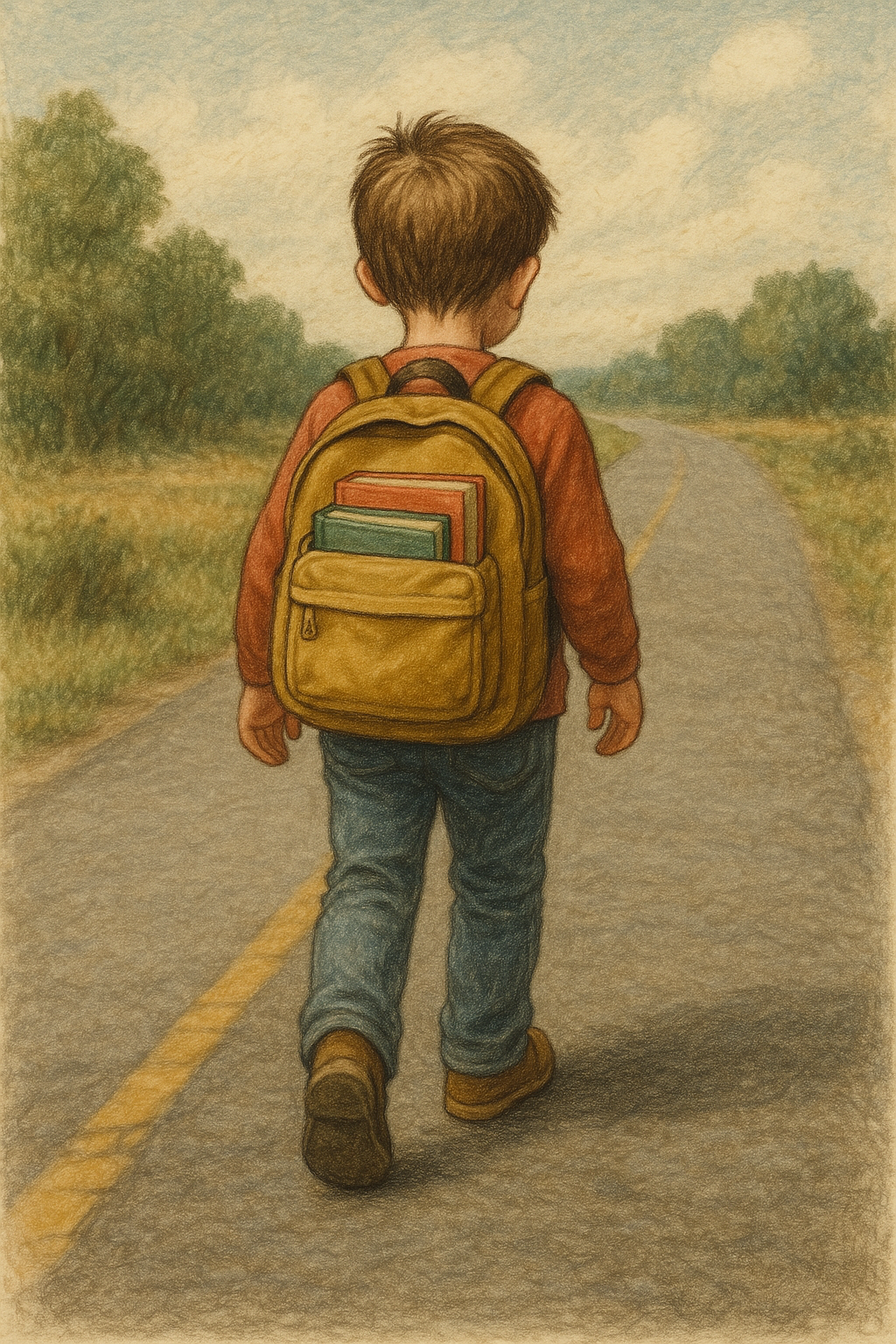
A documentary reveals how a Cape Flats school rewrites futures, offering hope and breaking cycles of poverty through education and holistic support.
Christel House in Cape Flats is a special school that helps vulnerable children. It gives them a great education, food, and health care, aiming for almost perfect pass rates. The school started small but now streams hope right to your phone through a powerful documentary. It's all about breaking the cycle of poverty and helping kids dream big, even teaching them about saving and avoiding gangs.
What is the Christel House school in Cape Flats?
Christel House in Cape Flats is a no-fee school offering comprehensive support to vulnerable children. It provides rigorous education, meals, healthcare, and social services, aiming for 98% matric pass rates and significant tertiary education enrollment. Founded in an abandoned workshop, it focuses on breaking cycles of poverty through "institutionalized hope" for its students.
Get Cape Town news in your inbox
Stay updated with the latest stories from the Mother City.
- How a 25-year experiment in a former panel-beater’s shop rewrote the future – and why it’s now travelling by WhatsApp*
I. Waking Up on the Flats: Geography That Writes the First Chapter
Dawn over the Flats smells of wood smoke, paraffin and the sea salt that rides the southeaster all the way from False Bay. The wetlands that once soaked up that breeze were drained in the sixties so that apartheid’s trucks could dump families it no longer wanted near the mountain. Today the same 150 km² cradle is home to 1.7 million people; more than four in every ten are still waiting to turn twenty, and 137 of the country’s 155 police-listed gangs operate on these streets.
A morning walk to a public primary school here is a hopscotch over invisible borders: four turf lines, four colour-coded bandannas, four chances to step on a bullet casing before you reach the gate. The recommended taxi fare is R14 – breakfast, if you’re lucky, is a single hard-boiled egg. By the last Friday of the month the egg is gone; grant money has been converted into rent, data and the blue flame of a Primus stove. When textbooks do arrive, they often come without covers – the delivery truck was relieved of its tyres at the third traffic light.
And yet, when Statistics South Africa asked caregivers what they would bet on if they could place only one wager, ninety-four percent wrote the same word on the form: “education.” Hope, it seems, survives even when arithmetic doesn’t add up.
II. 1998–2023: The Quarter-Century Behind a Beige Wall
Back when Bill Clinton was denying extra-marital affairs and South Africa was sizing up its second democratic election, Christel DeHaan, a German-American hotel tycoon who had never heard the word skollie , parked her rental at an abandoned panel-beater’s workshop in Ottery. Sixteen grade-eights turned up for the first assembly. There were two teachers, one pot of beans and a Primus. DeHaan opened the meeting with a sentence that still echoes in staff debates: “This is not charity; this is a pilot run for another country.”
The rules were simple: no parent ever pays a cent, no child ever sits an entrance test, no learner ever ages out of support before twenty-three. Selection happens only by household income – back then R1 500 a month, now R2 800. The day starts at seven and ends at half-past five because, as current CEO Adri Marais puts it, “our competition never locks its doors – the street is open 24/7.” Breakfast and lunch are engineered by Stellenbosch dietitians; annual eye and dental checks are compulsory; social workers arrive in a red Kangoo nicknamed the “trauma taxi” to collect any child who heard shots the night before.
Academically the school follows the national CAPS curriculum, but every timetable hides an extra period called Life Ethics. Pupils dissect gang recruitment scripts, rehearse anti-loan-shark comebacks and practise micro-finance maths. Grade ten learners must clock forty hours of community service; alumni routinely return as Saturday chess coaches or Arduino-club mentors. Since 2008 the matric pass-rate has hovered at ninety-eight percent, yet the staffroom poster that matters tracks “years of tertiary enrolment per hundred grade-ones.” Today that counter sits at 312 – meaning the average Ottery child amasses three full years of college or university study after leaving the gates.
III. A Movie Camera in One Hand, a QR Code in the Other
When filmmaker Paul Burger arrived with a duffel bag of cheap action cams, he told pupils: “Record the world you think I’m blind to.” Twelve-year-old Aphiwe responded by walking viewers past a shebeen, a stoep still blotched with yesterday’s blood and a mango tree until she reached a corrugated-iron room where she slept on a flour sack. Her whispered line opens the 42-minute documentary: “This is where I live, not where I land.”
Burger spliced these grainy diaries with drone sweeps of the same streets at sunrise – crimson mountains floating above a rust-coloured sprawl – a trick he calls “making the audience guilty of forgetting.” Four narratives glue the film together: Asiphe, cigarette-seller’s kid turned cum-laude actuary; Chad, library mouse whose final matric paper was written in a police safe house; Chanté, once illiterate in every language, later head-girl at a Bangkok debating stage; and Ethan, five years old, who still thinks the puddle shows “the other Ethan.”
On 16 June 2023, while radio hosts debated the national matric statistics, “From Classrooms to Life” dropped straight to WhatsApp, YouTube and a website so bare it carries nothing except a donate button. Forty-eight hours later the counter stood at 73 000 views – from Delhi call-centres to a Jamaican fishing village that sells data by the shot-glass. The price of admission? Two hundred megabytes – the cost of two loaves of brown bread.
IV. Expansion, Algorithms and Ethan’s Moon
A R420 million second campus – on a former municipal nursery in Strandfontein – has already secured R180 million from corporate naming rights. The lease is R1 per year; the catch is that every brick must be crowdfunded. An internal economic impact brief projects that each graduating class will pump R1.3 billion into lifetime GDP by earning more and claiming less. The building itself will sport 600 rooftop solar panels and will hire 1 200 artisans, 60 percent of them women.
Inside the original campus the loudest sound at break is still the clack of hockey sticks. Corridors are named after Thuli Madonsela, Trevor Noah, Zanele Muholi; eleven-year-olds rattle off constitutional clauses because researching their classroom’s namesake is mandatory. Neuroscientists at the University of Cape Town recently found that grade-six Christel House brains light up 38 percent more in executive-function tests; the paper coined the phrase “institutionalised hope.” Every child from grade four receives a R3 500 dream fund that can only be spent on a career-linked adventure – from cockpit lessons to shark-tagging weekends.
The epilogue not shown on screen feels like prophecy. During a cut sequence, Ethan and his classmates were asked to shut their eyes and describe the moon. Ethan murmured: “I think it’s the school where stars train at night.” The editors cut the line for sounding too sentimental, yet it lingers as the movie’s quiet thesis – the universe scatters talent evenly; we just need a steady telescope. On the Cape Flats that telescope is a no-fee school that feeds first and tests later, keeping the lens steady until a child glances back at the sky and recognises a future classmate in every twinkle.
[{"question": "What is Christel House in Cape Flats?", "answer": "Christel House in Cape Flats is a no-fee school in South Africa that provides comprehensive education, meals, healthcare, and social services to vulnerable children. It aims to break the cycle of poverty by fostering 'institutionalized hope' and consistently achieves high matric pass rates, with a significant number of its graduates pursuing tertiary education."}, {"question": "What challenges do children in Cape Flats face daily?", "answer": "Children in Cape Flats navigate a challenging environment marked by poverty, high crime rates, and gang activity. Daily life can involve walking through dangerous territories, facing food insecurity, and living in conditions where basic necessities like covered textbooks are a luxury. Despite these hardships, there is a strong community belief in the power of education as a path to a better future."}, {"question": "How did Christel House begin and what are its core principles?", "answer": "Christel House was founded in 1998 by German-American hotel tycoon Christel DeHaan in an abandoned panel-beater's workshop. Its core principles include providing free education, not requiring entrance tests for children, selecting students based solely on household income (currently R2,800 a month), and offering continuous support until students are 23. The school operates long hours, from 7 AM to 5:30 PM, providing meals, health checks, and social worker support to counter the constant challenges of the street."}, {"question": "What special programs does Christel House offer beyond the standard curriculum?", "answer": "Beyond the national CAPS curriculum, Christel House incorporates an extra period called 'Life Ethics,' where students learn about gang recruitment, anti-loan shark strategies, and micro-finance. They also participate in mandatory community service and can benefit from a R3,500 'dream fund' for career-linked adventures. Alumni often return as mentors, reinforcing a strong community and support system."}, {"question": "What is the \"From Classrooms to Life\" documentary about?", "answer": "\"From Classrooms to Life\" is a powerful 42-minute documentary filmed by Paul Burger, using cheap action cams given to Christel House pupils to record their daily lives. It combines these 'grainy diaries' with drone footage to highlight the children's realities and their resilience. The film features narratives of students like Asiphe, Chad, Chanté, and Ethan, showcasing their journeys from challenging backgrounds to remarkable achievements, and it was released for free on platforms like WhatsApp and YouTube."}, {"question": "What are Christel House's future plans for expansion and impact?", "answer": "Christel House is planning a R420 million second campus in Strandfontein, largely crowdfunded and designed to be environmentally sustainable with 600 rooftop solar panels. This expansion is projected to generate R1.3 billion in lifetime GDP per graduating class. The school continues to foster 'institutionalized hope,' with studies showing enhanced executive function in its students' brains, and aims to provide a 'telescope' for children to recognize their potential and future.", "tags": ["education", "poverty", "South Africa", "documentary", "social impact"]}]
Oliver Daniels is a Cape Town journalist who chronicles the intersection of food, migration and identity in South Africa's kitchens—from wood-fired Gugulethu braai spots to Constantia vineyards. Born and raised on the slopes of Devil’s Peak, he still starts each week with a dawn walk across Table Mountain to catch the first Atlantic light before filing copy.
View all articles →