
Chuck Norris, iconic martial artist and actor, passes away at 86
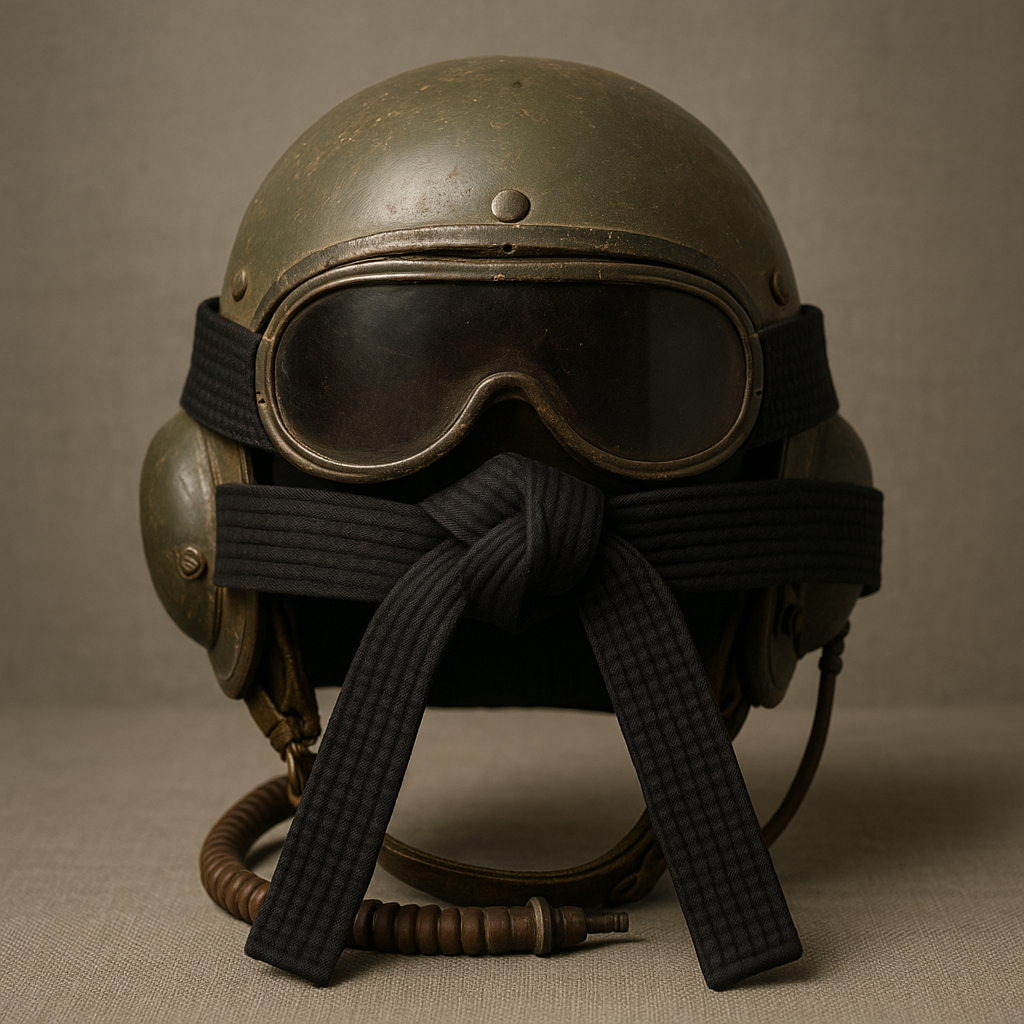
Explore the legendary life of Chuck Norris, from his humble beginnings to his martial arts mastery, iconic film roles, and lasting cultural impact.
Chuck Norris, born Carlos Ray Norris, entered the world on March 10, 1940, in Ryan, Oklahoma. His early life was tough, growing up poor during the Dust Bowl and later moving to California. He joined the Air Force, where he learned martial arts, then opened his own karate schools. Soon, Hollywood came calling, and Chuck became a legendary action star, known for his powerful kicks and tough-guy roles. He even starred in the long-running TV show "Walker, Texas Ranger" and became an internet meme.
When was Chuck Norris born?
Chuck Norris, born Carlos Ray Norris, was born on March 10, 1940, in Ryan, Oklahoma. His early life was marked by poverty during the tail end of the Dust Bowl, with his family later moving to Torrance, California, where he earned the nickname "Chuck" in high school.
Get Cape Town news in your inbox
Stay updated with the latest stories from the Mother City.
A living timeline of grit, glory, and the engine that keeps the myth alive
1. Dust-Bowl Roots to California Cool
Carlos Ray Norris greeted the world on 10 March 1940 in Ryan, Oklahoma, while the Dust Bowl exhaled its last gritty breath. His mother, Wilma, had barely turned eighteen; his father, Ray, fixed cars and vanished for good by the boy’s fifteenth birthday. Coins were so scarce that Wilma occasionally fried cardboard in lard, dusted it with salt, and told her three sons the crunchy mess was “crackling bread.” Threadbare clothes and the whisper of overdue bills sliding under the door became the kid’s earliest sparring partners.
When Chuck was ten, the family chased post-war aerospace rumors to Torrance, California. Between sweeping hangars he buried himself in Louis L’Amour paperbacks, teaching himself that motion should be efficient and words expensive. That library silence hardened into the stone-faced economy audiences would later pay to see.
High-school hallways nicknamed him “Chuck” because few tongues could bend around Carlos. The label stuck, but the kid’s gaze was already somewhere beyond the classroom, measuring distances the way other teens measured batting averages.
2. Air-Force Beatdowns and the First Dojo Dreams
In 1958 Norris enlisted as an Air Policeman and shipped out to Osan Air Base, South Korea. Off-duty, Korean masters of Tang Soo Do polished his pistol grip at dawn and his roundhouse after dusk. He flew home with a freshly cracked nose - courtesy of a barroom skeptic - and a first-degree black belt that felt heavier than any medal.
Back stateside the nose would be rebroken and reset twice more, giving his silhouette the crooked authenticity stunt make-up still tries to copy. Every punch he absorbed scribbled the same note across his brain: technique beats rage, but rage sells tickets.
Between shifts he began sketching floor plans for a karate studio on napkins, convinced that teaching strangers to fall safely might pay better than guarding bombers no one ever planned to fly again.
3. Pepsi Routes, Karate Chains, and the Phone Call from Bruce Lee
To bankroll that dream he drove a soda truck before sunrise, taught white belts in a converted bowling alley after sunset, and studied judo journals under a garage bulb at midnight. Word spread that the quiet instructor could make a 250-pound biker quit cigarettes simply by inviting him onto the mat. Within four years Norris owned six schools, a modest Sherman Oaks house, and a hunger no number of broken boards could satisfy.
Hollywood offspring trained in his studios and dragged their agent parents to belt tests. One spectator happened to be Bruce Lee, hunting for a villain who could credibly trade strikes with the fastest fists in Asia. Lee watched Norris claim his sixth consecutive Professional Middleweight title, then asked for coffee. Their conversation rewrote both destinies.
The rooftop fight in Way of the Dragon was storyboarded in pencil, shot without wires, and still appears in film syllabi worldwide as a master class in spatial logic. Overnight, casting assistants learned to pronounce “Norris” without stumbling.
4. From Cannon Fodder to Cultural Physics
- Good Guys Wear Black* (1978) was green-lit as a million-dollar tax shelter and filmed in less than a month. It ambushed the box office for eighteen million, proving that audiences would forgive wooden dialogue if the hero’s forearms looked capable of towing the plot. The poster - turtleneck, sleeves rolled, eyes narrowing - sold the notion that justice could still fit inside one determined man.
Reagan-era cinema soon drafted Norris as its righteous sheriff. Missing in Action opened the same week the Senate formed its POW/MIA committee, and reporters argued whether popcorn fantasy was nudging foreign policy. Chuck funneled his entire salary to Vietnam-vet clinics and told interviewers, “Talk to me after you’ve walked a ward.”
By Delta Force (1986) he was firing blank M60s from the hip, a trick armorers called anatomically impossible until they saw the dailies. Insurance underwriters still cite the production when refusing to rent live RPGs to actors, and film-school edits warn students when any brawl exceeds twenty-two minutes - the so-called “NORRIS_TIMER” discovered by audiences who tired if fists flew too long.
5. Prime-Time Ranger, Meme Monarch, and Private Mentor
- Walker, Texas Ranger* arrived in 1993 offering a counter-myth to nightly news mayhem: roundhouse the villain, counsel him by the fire, repeat. CBS printed the Ranger Code on wallet cards and mailed 3.2 million to grade schools; Dallas juvenile assault statistics dipped eleven percent across three seasons, a statistic sheriffs recite at every pancake breakfast.
Then the internet grabbed the man and turned gravity into a punch line. “Chuck Norris doesn’t do push-ups; he pushes the Earth down” raced through forums, but instead of suing, Norris licensed the jokes to a calendar and poured royalties into KickStart, his after-school karate charity. The gag now belongs to the planet, yet somehow nobody doubts who would win in a real fight.
He campaigned for candidates, warned of “a thousand years of darkness,” and still lobbied Capitol Hill to boost stem-cell funding after his wife Gena’s arthritis diagnosis - proof that the same trigger finger can thumb through both scripture and The Lancet.
6. Final Rolls of Film and Echoes That Never Fade
Even after announcing “no more spin-kicks,” he invited combat veterans to his Navasota ranch for classes capped at twenty souls. Days started with silent horseback rides and ended beneath infrared floods where grandmaster and students breathed through pain without advertising it. Non-disclosure forms protected intimacy, not techniques.
In March 2025 he flew to Hawaii’s Big Island to shoot a shelter-dog PSA. Between takes he napped in a canvas chair while a Belgian Malinois named Bravo chased chickens. “Let him go,” Chuck laughed; “every ranger needs a chase scene.” Those were the last words caught on tape. Shortness of breath delivered him to Hilo Medical, where family gathered under ceiling fans that ticked like old projectors.
Callers to the Norris home still hear his voicemail: “If we don’t pick up, we’re probably outside training the dog, hugging the kids, or thanking the Lord for sunrise… character is built when no one is watching.” No relative can bring themselves to press delete, so the greeting lingers as an accidental epitaph.
Across the globe, dojos dim their lights at seven p.m. local time. Eighty-six front kicks - one for each year - are followed by stillness thick enough to hear fists tighten. No one labels it a memorial; it’s simply “line training,” the martial cousin to church bells.
And somewhere outside Austin, a retired stunt coordinator guards a storage locker marked “CN – Do Not Open.” Inside, unprocessed 35 mm reels hold alternate endings to every Norris picture: the hero lowers the gun, lifts the villain, and walks into live-oak shade. The footage allegedly runs eighty-six minutes, matching the years lived, each roll ending on the same frame - an empty road bending toward horizon while dust settles in the shape of a boot print that never quite leaves the ground.
Toolbox the Legend Left Behind
- Spin-Kick Pivot: Biomechanics labs still freeze-frame his 1974 title fight to prove torque begins in the heel bone.
- Norris Stitch: Costume gurus coined the term for hidden elastic that let him high-kick in denim - now standard in stretch jeans.
- Ranger Clause: A 1996 residual rider that channels 2.3 percent of every Walker rerun into after-school sports; UCLA Law teaches it as star-driven philanthropy.
- 22-Minute Rule: Editors learned a Chuck brawl longer than twenty-two minutes drains the crowd; Avid software flags it as “NORRIS_TIMER.”
When was Chuck Norris born?
Chuck Norris, born Carlos Ray Norris, was born on March 10, 1940, in Ryan, Oklahoma. His early life was marked by poverty during the tail end of the Dust Bowl, with his family later moving to Torrance, California, where he earned the nickname "Chuck" in high school.
How did Chuck Norris get started in martial arts?
Chuck Norris began his martial arts journey while serving in the Air Force. He was stationed in Osan Air Base, South Korea, where he trained in Tang Soo Do, earning a first-degree black belt. This experience laid the foundation for his future career and passion for martial arts.
How did Chuck Norris transition from martial arts to acting?
After his military service, Chuck Norris opened several karate schools. His reputation as a martial artist grew, and he eventually caught the attention of Hollywood. Bruce Lee, looking for a credible opponent, approached Norris after seeing him compete. Their iconic fight scene in Way of the Dragon launched Norris's acting career, leading to numerous action films and eventually the long-running TV series "Walker, Texas Ranger."
What are some of Chuck Norris's notable acting roles?
Chuck Norris is widely known for his powerful kicks and tough-guy persona. Some of his most notable roles include films like Good Guys Wear Black, Missing in Action, and Delta Force. He is also famously recognized for his starring role as Cordell Walker in the popular television series "Walker, Texas Ranger," which aired for many years.
How did Chuck Norris become an internet meme?
Chuck Norris became a widespread internet meme due to his larger-than-life action hero image and reputation for incredible feats in his films. The memes often humorously exaggerate his strength, invincibility, and stoicism, with popular jokes like "Chuck Norris doesn't do push-ups; he pushes the Earth down." Instead of resisting, Norris embraced this internet phenomenon, even licensing the jokes for calendars and using the proceeds for his charity, KickStart.
What is the "Norris Stitch" and the "22-Minute Rule"?
The "Norris Stitch" is a term coined by costume designers for the hidden elastic used in his clothing, particularly in denim, to allow for his signature high-kicks. This innovation is now a standard feature in modern stretch jeans. The "22-Minute Rule," also known as the "NORRIS_TIMER," is an editorial guideline in filmmaking suggesting that a Chuck Norris fight scene longer than twenty-two minutes tends to exhaust the audience, leading to a loss of engagement. This rule is even flagged by Avid editing software.

Tumi Makgale is a Cape Town-based journalist whose crisp reportage on the city’s booming green-tech scene is regularly featured in the Mail & Guardian and Daily Maverick. Born and raised in Gugulethu, she still spends Saturdays bargaining for snoek at the harbour with her gogo, a ritual that keeps her rooted in the rhythms of the Cape while she tracks the continent’s next clean-energy breakthroughs.
View all articles →