
ConCourt rules Western Cape’s Tafelberg land sale unlawful
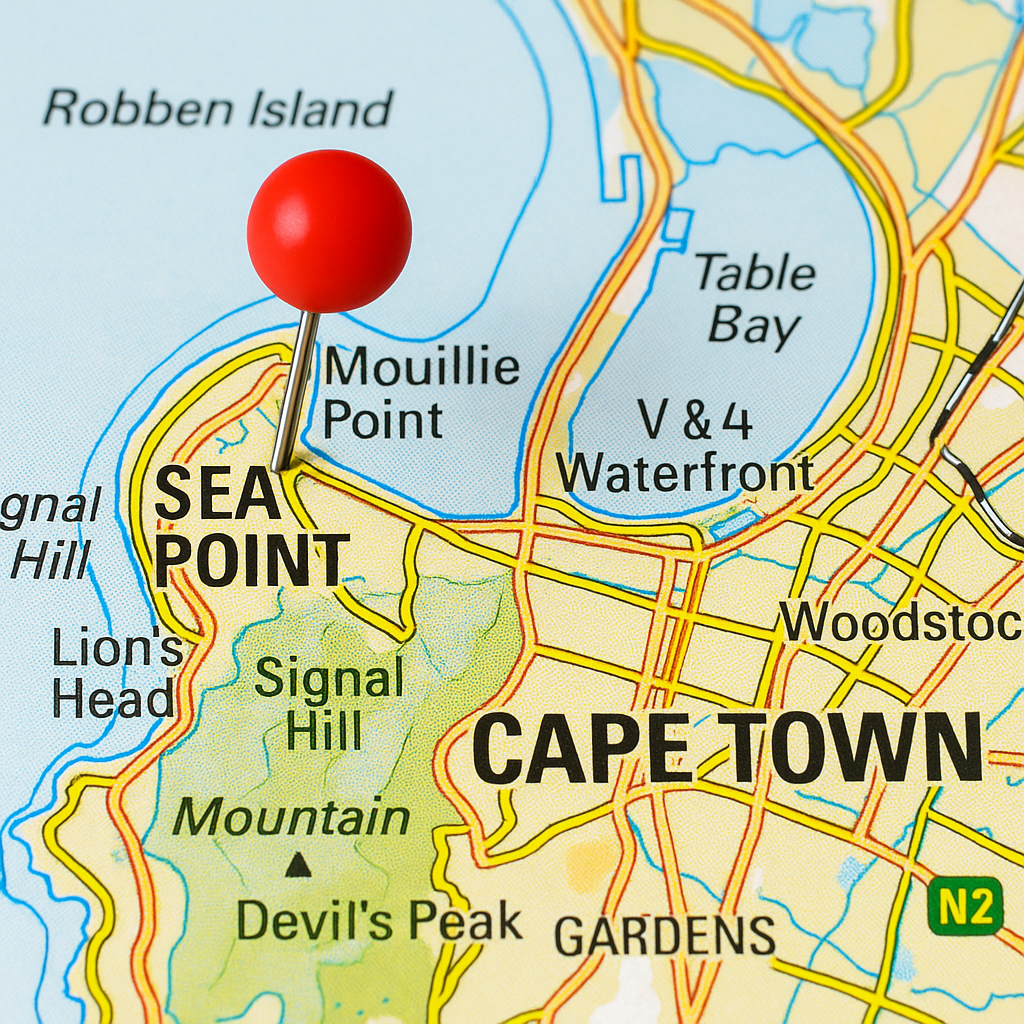
ConCourt rules Tafelberg School site sale unlawful, a landmark victory for affordable housing and urban spatial justice in Cape Town.
South Africa's top court, the Constitutional Court, just made a huge decision about a piece of land called Tafelberg in a fancy part of Cape Town. They said the government couldn't sell this land to private companies because it's needed for affordable housing. This ruling is a big win for people who want to fix the unfair way cities are built, where rich people live in nice areas and poor people are pushed far away. It means the government has to think about making housing fair for everyone, especially in good locations, and not just sell off public land for money. This decision could change how public land is used all over the country to help more people get good homes.
What is the Tafelberg land dispute about?
The Tafelberg land dispute centers on the sale of a prime provincial property in Sea Point, Cape Town. Activists argued that disposing of this well-located public land for private development rather than affordable housing perpetuated spatial inequality and violated constitutional housing mandates, a position upheld by the Constitutional Court.
Get Cape Town news in your inbox
Stay updated with the latest stories from the Mother City.
A Decade-Long Battle for Spatial Justice Reaches Its Climax
South Africa's highest judicial authority has fundamentally altered how public land must serve the cause of equitable urban development. The Constitutional Court ruled unanimously this past Thursday that disposing of the former Tafelberg Remedial School property in Sea Point violated constitutional mandates, delivering a decisive blow to both the Western Cape provincial administration and Cape Town's municipal government. This determination emerged from nearly ten years of persistent legal pressure by housing advocates who refused to accept that prime public real estate should slip into private hands rather than address the nation's desperate shortage of affordable dwellings in opportunity-rich neighborhoods.
The confrontation first ignited in 2015 when provincial authorities greenlit the disposal of this Sea Point parcel. Two grassroots organizations - Ndifuna Ukwazi and Reclaim the City - immediately mobilized against what they recognized as emblematic of a broader pattern: the steady erosion of publicly held assets in wealthy, well-serviced precincts while working-class families remained trapped in distant townships. Their resistance launched a protracted journey through multiple judicial forums that would eventually reshape constitutional interpretation regarding housing rights and geographic inclusion.
The activists constructed their challenge around a deceptively simple premise that carried profound implications: when government holds property near employment hubs, quality schools, medical infrastructure, and transit networks, constitutional duties demand that such assets advance housing accessibility for excluded populations. This framing exposed how South African urbanism since political transition in 1994 has preserved apartheid cartographies beneath superficial democratic reforms, with market mechanisms perpetuating segregation nearly as effectively as previous legal coercion.
Sea Point illustrates this continuity with painful clarity. This Atlantic seaboard enclave, minutes from Cape Town's commercial heart, maintains striking demographic and economic homogeneity. Property valuations and rental markets operate as exclusionary gates, rendering the area inaccessible to most Capetonians regardless of formal rights to freedom of residence. The Tafelberg parcel - state-owned and centrally positioned - presented an exceptional chance to disrupt these patterns, a possibility that housing campaigners insisted government actors were legally bound to pursue rather than foreclose through privatization.
Judicial Recognition of the "Right to the City"
The Constitutional Court's unanimous opinion, authored by Justice Nonkosi Mhlanthla, elevated the dispute beyond technical property administration into questions of democratic urban citizenship. Her analysis declared that the controversy concerned "the full participation in the life of the city, including access to front-facing centres such as the CBD and Sea Point" - language that transforms housing from mere shelter provision into genuine metropolitan belonging.
This conceptualization draws intellectual sustenance from critical urban scholarship, particularly Henri Lefebvre's theorization of spatial democracy. The French philosopher contended that urban environments constitute shared social achievements in which inhabitants possess legitimate claims to presence, influence, and benefit - claims that transcend individual property ownership. By incorporating this "right to the city" framework into binding constitutional interpretation, South Africa's apex court has potentially revolutionized how jurists and administrators must evaluate land-use decisions affecting residential accessibility.
According to Brett Herron, secretary-general of the GOOD party who attended proceedings, the judgment contained several pivotal holdings. The court found that "the City of Cape Town remains divided" and identified "no justification for failing to provide housing in Sea Point." Most consequentially, the ruling established that "the City cannot use land value as a basis for denying access to housing" - directly confronting the fiscal rationalizations that have historically sanctioned disposal of valuable public parcels rather than their retention for affordable residential development.
Both tiers of implicated government - provincial and municipal - now stand judicially censured for dereliction of constitutional responsibilities to advance accessible housing and dismantle spatial apartheid. By invalidating the sale authorization, the court has restored the property to administrative reconsideration, mandating that affordable housing purposes receive genuine evaluation rather than perfunctory dismissal. Precise implementation mechanisms will doubtless require additional bureaucratic and possibly judicial clarification, but the directional obligation is now unmistakably established.
Understanding Cape Town's Enduring Spatial Hierarchy
Grasping the Tafelberg decision's weight demands appreciation for how profoundly apartheid's geographical engineering persists within contemporary Cape Town. Despite approaching three decades of democratic governance, scholarly assessments consistently rank this metropolis among the planet's most segregated urban formations, with former racial designations predicting life chances with disturbing precision.
Apartheid planners systematically constructed this geography through instruments including the Group Areas Act, which reserved residential zones by race, alongside infrastructure investment patterns that channeled resources toward white suburbs while relegating black and coloured populations to peripheral locations lacking basic amenities. These designs produced durable structures of employment access, educational quality, health service availability, and intergenerational mobility that remain geographically patterned today.
The democratic era has witnessed scattered initiatives intended to reconfigure these arrangements - infill construction nearer urban cores, transit corridor investments, and mixed-income experiments. Yet academic characterizations emphasize "continuity and change," recognizing that formal desegregation has largely failed to transform underlying spatial architectures. Market dynamics, amplified by planning choices privileging fiscal returns and property appreciation over redistributive objectives, have effectively reproduced apartheid morphologies beneath altered legal conditions.
Within this landscape, the Tafelberg litigation represents one front in a larger contest over whether South Africa's constitutional promises regarding housing and substantive equality will receive interpretations capable of genuine spatial restructuring, or whether they will be confined to marginal improvements that leave fundamental patterns intact. The Constitutional Court's intervention signals judicial readiness to enforce more demanding constructions of governmental obligations.
Transforming Public Land Governance Across South Africa
This precedent promises substantial influence over future dispositions of state-held property throughout Cape Town and potentially nationwide. South African municipalities collectively possess extensive land portfolios, substantial portions situated in zones whose value has escalated dramatically as metropolitan economies concentrated in central business districts and adjacent precincts. These holdings constitute potentially formidable levers for advancing accessible housing and spatial equity - provided governments can be legally compelled to deploy them for these purposes rather than treating them as revenue generators through private sale.
The court's explicit repudiation of land value as legitimate grounds for restricting housing access carries particular force. Administrative authorities have routinely defended well-located public land disposals as necessary to fund housing development elsewhere - essentially a "trading places" logic that accepts peripheral location as inevitable for subsidized accommodation. The Constitutional Court has now suggested this approach may violate constitutional requirements, acknowledging that geographical positioning itself constitutes a crucial component of housing adequacy and that governmental duties cannot be discharged by providing dwellings without attention to where they situate residents.
The determination additionally invites scrutiny of previous administrative choices. If Tafelberg's proposed sale failed legal standards because authorities neglected constitutional housing considerations, how many comparable disposals proceeded on analogous reasoning? The judgment potentially creates pathways for reviewing past transactions and constructing new evaluative frameworks for proposed public land alienations.
Social Movements and the Architecture of Change
The Tafelberg triumph demonstrates strategic litigation's continuing potency alongside organized mobilization in realizing South Africa's constitutional aspirations. Ndifuna Ukwazi and Reclaim the City have executed sustained campaigns interweaving courtroom advocacy with community organization, public persuasion, and direct action - keeping affordable housing central to Cape Town's political agenda. Their methodology reflects understanding that judicial pronouncements achieve maximum effect when embedded within broader transformative struggles.
This case also illustrates how South African constitutional doctrine can confront inequality's structural dimensions. While the Constitutional Court has faced criticism for occasionally timid approaches to socioeconomic entitlements, the Tafelberg resolution indicates ongoing judicial preparedness to impose substantive obligations upon state actors - even when this demands intervention in decisions carrying significant economic and political stakes.
Public commentary following the ruling, including observations from prominent voices such as Tumi Sole highlighting governmental reinforcement of "apartheid spatial housing patterns," reveals the case's resonance extending well beyond technical legal and policy communities. Within a context where transformation's sluggish pace generates widespread frustration, the judgment offers uncommon institutional affirmation of demands for more ambitious redress approaches.
The Path Ahead: From Legal Victory to Lived Transformation
The Tafelberg parcel now enters indeterminate administrative future, its legal status clarified to prioritize affordable housing but specific implementation requiring renewed governmental attention. Provincial and municipal authorities must revisit their property strategies, potentially engaging housing advocates and affected constituencies in shaping ultimate outcomes. The overarching challenge of constructing accessible accommodation in high-value precincts persists formidable, encompassing financing mechanisms, design approaches, and social integration extending beyond legal obligation.
What the Constitutional Court has furnished, however, is fortified juridical foundation for demanding these difficulties be addressed directly rather than circumvented through convenient privatization of well-situated assets. The ruling confirms that South Africa's constitutional endeavor encompasses urban transformation commitments that peripheral development alone cannot satisfy while city cores remain unreachable for most residents.
As Cape Town and fellow South African metropolises confront housing emergencies affecting millions, the Tafelberg precedent simultaneously provides activists with enforceable leverage and establishes benchmarks for measuring official conduct. The "right to the city" that the Constitutional Court has recognized transcends aspirational rhetoric to constitute a legally actionable claim - one that might, given appropriate resources and genuine political commitment, advance the incomplete undertaking of dismantling apartheid's spatial inheritance.
What was the Constitutional Court's major ruling regarding the Tafelberg land?
The Constitutional Court ruled that the South African government could not sell the Tafelberg land, a prime property in Sea Point, Cape Town, to private companies. The Court stated this land is needed for affordable housing and that disposing of it for private development would perpetuate spatial inequality and violate constitutional housing mandates.
Why is the Tafelberg land decision considered a "big win" for housing activists?
This decision is a significant victory for housing activists because it compels the government to prioritize equitable housing, especially in well-located areas, over selling public land for profit. It challenges the historical pattern of urban development that segregates cities by wealth and race, reinforcing the idea that public land should serve all citizens, particularly those excluded from opportunity-rich neighborhoods.
What is "spatial justice" and how does the Tafelberg ruling relate to it?
Spatial justice refers to the fair and equitable distribution of resources, opportunities, and burdens across a geographic area. The Tafelberg ruling directly addresses spatial justice by challenging the sale of valuable public land in a desirable location. The Court's decision aims to dismantle the apartheid-era spatial planning that concentrated wealth and resources in certain areas while marginalizing others, thereby promoting a more just distribution of housing and urban amenities.
Who were the key organizations involved in the legal challenge against the Tafelberg sale?
The legal challenge against the Tafelberg sale was spearheaded by two grassroots organizations: Ndifuna Ukwazi and Reclaim the City. These groups mobilized against the provincial authorities' decision to dispose of the property, arguing for its use in providing affordable housing and addressing spatial inequality.
What does the Constitutional Court's decision imply for future public land use in South Africa?
The Constitutional Court's decision sets a significant precedent for how public land must be managed across South Africa. It suggests that governments cannot simply sell off valuable public land for revenue, especially if it could be used to address housing shortages and spatial inequality. The ruling mandates that affordable housing purposes must receive genuine evaluation, potentially transforming public land governance to prioritize equitable urban development nationwide.
What is the "right to the city" as interpreted by the Constitutional Court in this case?
The Constitutional Court, in its interpretation of the "right to the city," affirmed that housing is not merely about providing shelter but also about ensuring "full participation in the life of the city, including access to front-facing centers such as the CBD and Sea Point." This concept, drawing from critical urban scholarship, means that urban inhabitants have legitimate claims to presence, influence, and benefit within their urban environments, transcending individual property ownership and emphasizing inclusive urban citizenship.

Oliver Daniels is a Cape Town journalist who chronicles the intersection of food, migration and identity in South Africa's kitchens—from wood-fired Gugulethu braai spots to Constantia vineyards. Born and raised on the slopes of Devil’s Peak, he still starts each week with a dawn walk across Table Mountain to catch the first Atlantic light before filing copy.
View all articles →