
De Doorns farm workers’ homes destroyed in floods
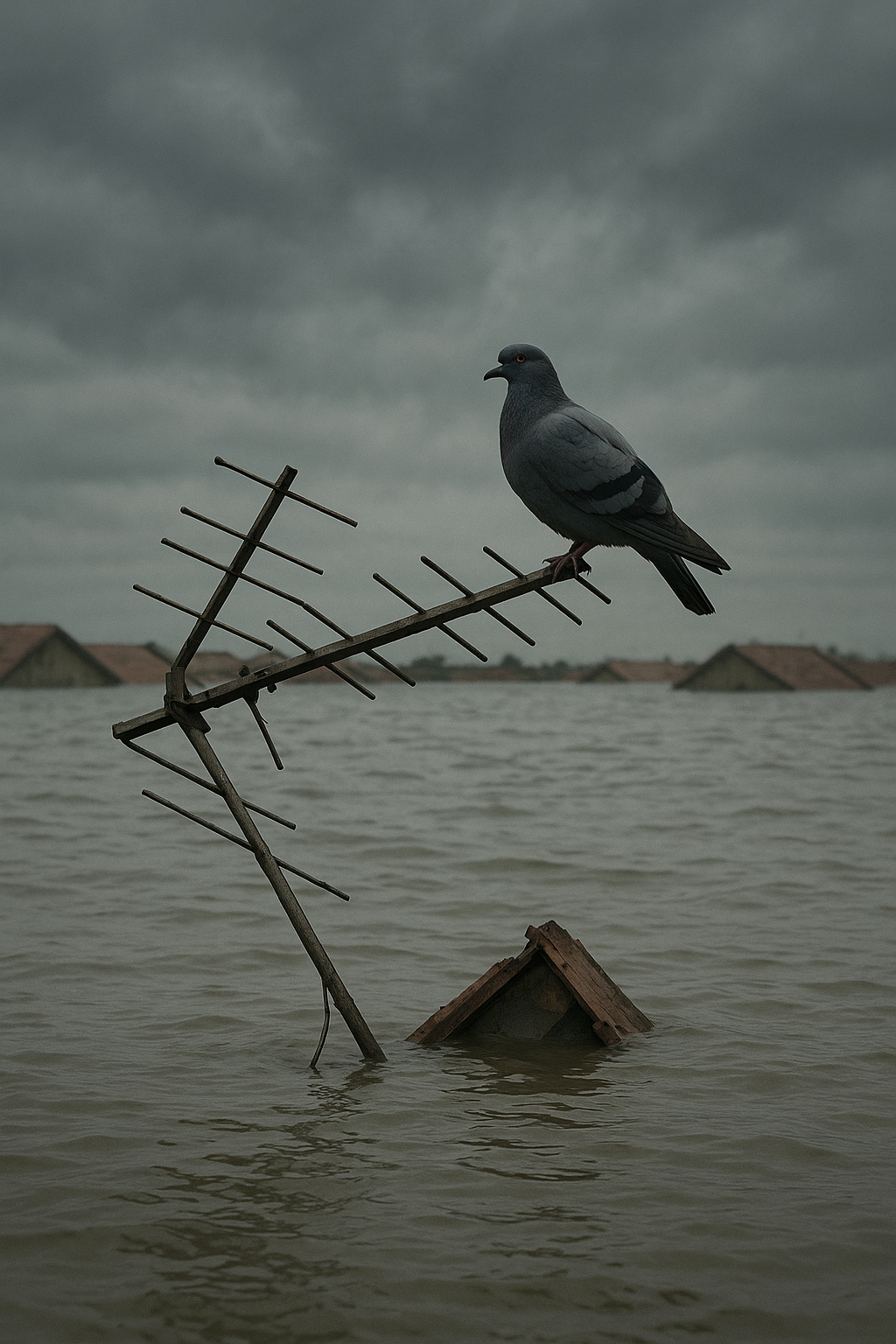
A minute-by-minute account of a flash flood that devastated Kleinberg Farm, revealing the human and environmental costs.
A killer flood roared through Kleinberg Farm, born from a dry gully turned wild by a storm. Years of drought had baked the earth hard, making it repel water instead of soaking it up. Then, a huge Atlantic cold front slammed into the valley, bringing massive rain. Clogged drains and the mountain's shape funneled all that water, creating a deadly wave that tore through the farm.
What caused the devastating flood on Kleinberg Farm?
The devastating flood was caused by a combination of a severe Atlantic cold front bringing torrential rain and years of drought that baked the earth hard, preventing water absorption. Clogged vineyard drains and a mountain landscape that repelled rather than absorbed water exacerbated the flash flood, turning a dry gully into a killer wave.
Get Cape Town news in your inbox
Stay updated with the latest stories from the Mother City.
- Minute-by-minute chronicle of the flood that rewrote life on Kleinberg Farm*
Ridge of Tinder: How Years of Drought Set the Trap
De Doorns sits cupped inside the Hex River Valley like a saucer waiting to spill. Behind the vines, the Kleinberg spur shoves every winter storm downward, turning harmless drizzle into a fist. Locals baptised the trickling veins die slange - snakes that sleep for half the year, then bite without hiss or rattle. On 11 May, satellite eyes watched the first Atlantic cold front stack gun-metal clouds off Saldanha; forecasters hoisted a level-4 alert for torrents and flash-runoff. The catch: the last puddle worth measuring here vanished in September 2022. Earth had baked to pottery; vineyard drains were flossed with cane off-cuts and plastic fertiliser sleeves, ready to shed, not sip, any gift from the sky. The mountain stood like a slate roof above a matchstick village - primed to repel every drop rather than invite it in.
Residents felt safe in that brittle dryness. Children played in dusty lanes, kicking stones where winter streams should have murmured. Farm managers postponed clearing drains; budgets were tight, and the sky had mocked them for months. A single match, they joked, could ignite the entire valley floor - yet no one imagined water as the match. By sunset, barometric pressure plunged 6 hPa in two hours, but televisions stayed dark; few labourers can afford satellite weather channels. The ridge waited, patient and lethal, while frogs sang their usual chorus, unaware their silence would soon become the valley’s first alarm bell.
03:12 – When the Frogs Stopped Advertising the Rain
Abraham Douglas, 63, rises every dawn at 03:00 to scatter corn for 47 racing pigeons housed in a crate once meant for apples. He listens for the metallic shuffle of wings when the coop bulb ignites; it is his daily reassurance that time still works. On 12 May, what he noticed first was absence: no frog percussion from the irrigation dam, no throaty baritone from the reeds. “In forty years I never heard them quit,” he says. He stepped barefoot onto compacted soil, torch cone slicing the lane. Drops arrived fat, warm and sideways - odd for winter - thudding like cotton balls against tin. Then the mountain growled, a bass note without visible source, the way lions in Karoo parks answer each other through darkness. The valley itself seemed to inhale.
Seconds later the lane turned silver, as if someone had spilled liquid mercury. Douglas’s torch beam caught the first runnels knitting together, racing for the lowest furrow. He felt, rather than heard, the soil resist and then surrender. Behind him, the coop door swung; pigeons jostled but refused to exit, heads cocked toward the ridge. He considered rousing neighbours, yet language felt too slow; instead he clicked his tongue - short, long - the same pattern he uses to call birds home, hoping humans would decode the urgency. Somewhere downslope a dog began a hysterical yodel. Still, the frogs stayed silent, the valley holding breath for what would come next.
03:27 – A Black Blade of Water Carves the Farm Apart
Elton, 11-year-old grandson of overseer Garnet Erasmus, was first to see the black blade. A chest-high wall of debris rounded the packing shed, snapped the forty-year-old pepper-tree like celery, and kept coming. Elton’s ritual during storms was to hammer an old John-Deere disc blade - farm code for “get out of bed.” He whacked it so hard a crescent of iron flew off; the clang echoed against corrugated sheds. Adults shoved toddlers onto tables, then cupboards; ceilings sagged under climbing weight. Douglas’s grandson Keenan, six, thought the rumble was helicopter rotors. “Has the army come for us?” he asked, still half-dreaming. Outside, moon-lit water turned to chocolate pudding thick enough to carry away tractors.
Within three minutes, water lapped Douglas’s window sill. Door jambs swelled; hinges popped nails. He kicked away the gutter, hoisted Keenan, and crawled onto the only real estate left - the roof. “We’ll play monkeys,” he lied, referencing the cable-way at Table Mountain. Around them, twelve roofs filled with silhouettes clutching blankets and Bibles. A strand of leftover Christmas lights shorted, strobing the valley white-blue-white, turning terror into stop-motion frames. Someone began singing a hymn, voice cracking between notes. Douglas felt tiles quiver; nails started to sigh out of purlins like reluctant teeth.
At 03:41 the roof began to un-zip. Engineers call it buoyancy failure - when walls float and roofs lift like pot lids. Douglas straddled the ridge, threaded Keenan’s arms around the TV antenna, and whispered coordinates the way pilots do. Thirty metres away, neighbour Alida Fonk saw the adjoining roof tear free; it spun twice, surfed the torrent with two teenagers glued to the chimney brick like rodeo riders. The antenna snapped; Douglas coiled the loose stay-wire, gauged the gap to Fonk’s brick house, and leapt mid-stride, child clamped to his back. He landed on hot corrugated iron, skin sizzling from residual sun-heat, but upright. Behind him, his own roof folded like cardboard, vanishing into the dark.
Dawn’s Arithmetic: What the Water Took and What It Left
By first light the Hex River had slunk back to its banks, but every gulley still braided with coffee-brown water. Sofas bobbed like parade balloons; a freezer lay wedged across a peach tree, sausages inside still aligned like pink soldiers. Four of twenty-two cottages had simply vaporised; seven others imploded, roofs resting on kitchen tables like awkward dinner guests. The farm’s ledger, dating from 1903, turned up two kilometres away wrapped around a fence post; rainfall entries for 1918 - another disastrous year - still legible through smeared ink. Douglas recovered six pigeons alive; a chequer hen named Valentyne limped home that evening, coated in mud, prompting the farm’s first smile in twenty hours.
The yellow prefab crèche on the knoll declared itself an improvised republic. Eighty-four refugees slept head-to-toe on jigsaw-puzzle mattresses. A whiteboard tracked: “BABIES 9, GRANNIES 5, DIABETES 3, INSULIN FRIDGE NONE.” Owner Pieter Human arrived with a 5 kVA generator able to power either lights or fridge, not both. They voted for the fridge; nights turned into a black tunnel pricked only by phone torches glinting off crayon suns. Volunteers mixed Epsom salt with bottled water to soak elders’ feet, raw from standing in mud. Each dusk someone read all eighty-four names aloud, making sure grief had not lured anyone into solitary wandering.
Two weeks later the yard still smelled of sweet rot and diesel. Scientists counted faecal bacteria at 9,800 colonies per 100 ml - fourteen times the safe limit - causing “valley rash,” a fiery eczema among kids. The sole borehole tap ran brown; the chlorine drum lid had cracked, poisoning its own cure. Douglas now houses pigeons inside the crède kitchen; he frets over salmonella, yet the birds refuse to revisit their river-side loft. “They catalogue what we prefer to forget,” he says. Ornithologists from the University of Cape Town want to digitise his logbooks; pigeon return times have, for decades, mirrored barometric dips too subtle for instruments. Abraham jokes he will seek government compensation for “research equipment disguised as poultry,” but the grin is hollow. Rebuild here or relocate? The question drifts overhead like a storm that has not decided where to break.
What caused the devastating flood on Kleinberg Farm?
The devastating flood on Kleinberg Farm was a catastrophic event triggered by a perfect storm of environmental factors. Years of severe drought had baked the earth hard, turning it hydrophobic and unable to absorb water. This was immediately followed by a massive Atlantic cold front that brought torrential rain. The natural topography of the Hex River Valley, specifically the Kleinberg spur, funneled this immense amount of water. Furthermore, clogged vineyard drains, filled with cane off-cuts and plastic, prevented any natural drainage, leading to an unprecedented flash flood that transformed a dry gully into a destructive wave.
How did years of drought contribute to the severity of the flood?
Years of drought, specifically since September 2022, played a crucial role in amplifying the flood's destructive power. The prolonged dryness had baked the soil to a pottery-like consistency, making it impermeable. Instead of soaking up rainfall, the hardened earth repelled it, causing water to accumulate rapidly on the surface and flow with increased velocity. This created a scenario where the valley was primed to shed water rather than absorb it, turning even moderate rainfall into a dangerous deluge.
What was the significance of the frogs' silence before the flood?
The silence of the frogs on May 12th was an eerie and significant indicator of the impending disaster. Abraham Douglas, a long-time resident, noted the absence of their usual nocturnal chorus from the irrigation dam and reeds. For him, in forty years, they had never been silent. This sudden quietude, described as the valley's first alarm bell, suggested an unusual and profound atmospheric change, possibly related to a sudden drop in barometric pressure, which often precedes severe weather events. The frogs' absence was a natural warning sign, unheeded by human residents who lacked access to modern weather forecasts.
How did residents attempt to survive the immediate impact of the floodwaters?
As the black blade of water surged through Kleinberg Farm, residents reacted quickly to survive. Children were hoisted onto tables and then cupboards as water levels rose rapidly inside homes. Abraham Douglas and his grandson Keenan climbed onto their roof for safety, a strategy replicated by many others. When Douglas's roof began to fail due to buoyancy, he demonstrated incredible bravery by straddling the ridge, securing his grandson to a TV antenna, and then leaping to a neighboring, more stable brick house. Others clung to chimney bricks as their roofs detached and floated away, highlighting the desperate measures taken to escape the killer wave.
What was the aftermath and immediate impact on the farm's infrastructure and community?
The aftermath of the flood revealed widespread devastation. Four of the twenty-two cottages were completely vaporized, and seven others imploded. Sofas and a freezer were found miles away, indicating the force of the water. The farm's ledger from 1903, which survived, symbolized the historical impact. The community faced a severe humanitarian crisis; an improvised crèche became a refugee center, housing 84 people, including babies and the elderly, with critical needs like insulin refrigeration. The lack of clean water due to contaminated boreholes led to health issues like “valley rash,” and the lingering smell of rot and diesel underscored the scale of the destruction.
How did the flood impact Abraham Douglas and the pigeons?
Abraham Douglas, a central figure in the narrative, experienced profound loss. His home was destroyed, and he narrowly escaped death with his grandson. Although he recovered six of his 47 racing pigeons, including a resilient hen named Valentyne, the event deeply affected him and his birds. The pigeons now refuse to return to their riverside loft, choosing instead to stay within the crèche kitchen, reflecting a deep-seated trauma. Douglas, who meticulously logged pigeon return times, now faces the daunting question of whether to rebuild his life on the farm or relocate, a decision that underscores the lingering uncertainty for many residents.

Sizwe Dlamini is a Cape Town-based journalist who chronicles the city’s evolving food scene, from boeka picnics in the Bo-Kaap to seafood braais in Khayelitsha. Raised on the slopes of Table Mountain, he still starts every morning with a walk to the kramat in Constantia before heading out to discover whose grandmother is dishing up the best smoorsnoek that day.
View all articles →