
Deadline for SAPS to stock child rape kits at Western Cape police stations
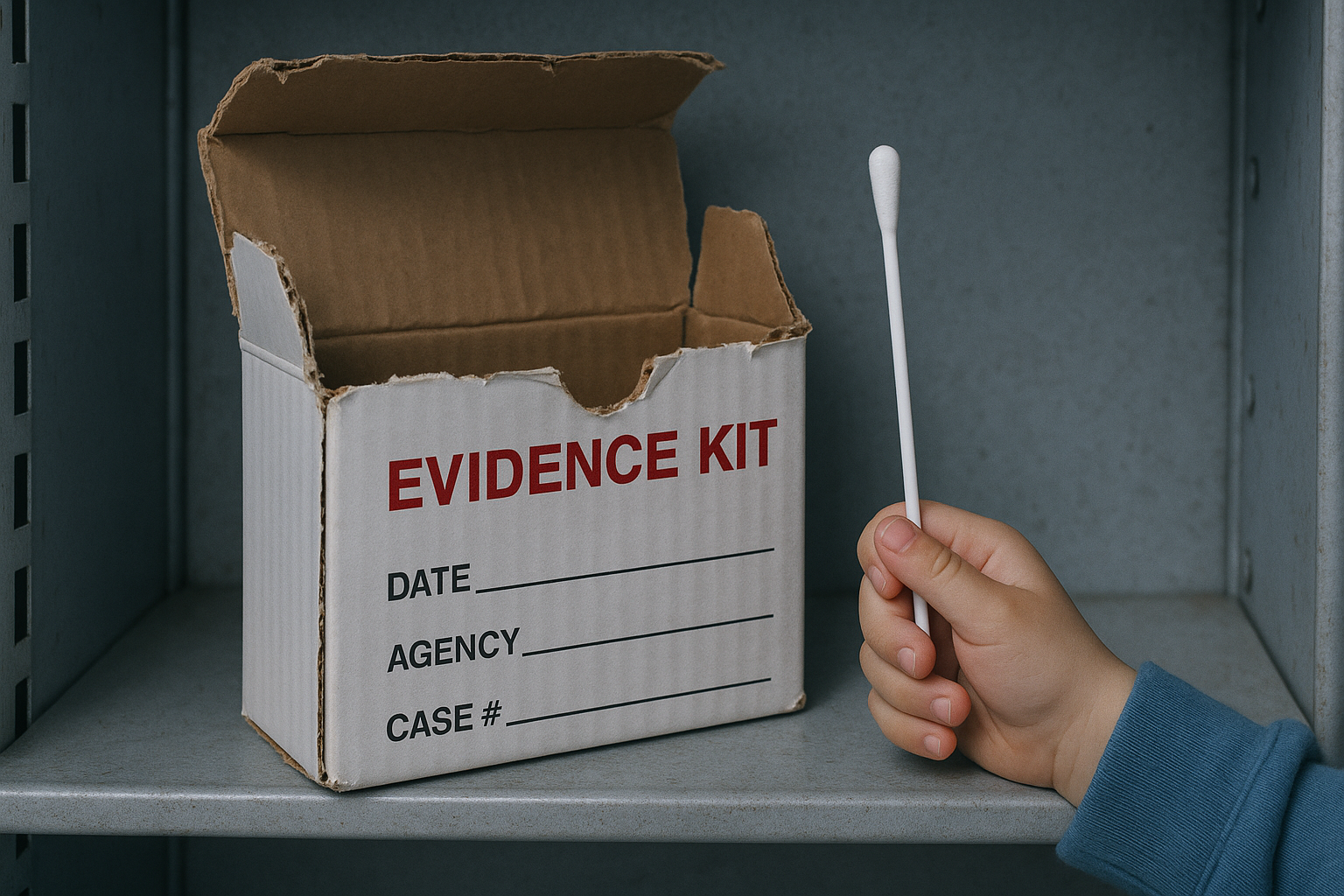
South Africa faces a child-rape-kit shortage due to procurement issues, supply chain failures, and bureaucracy, hindering justice for child survivors.
South Africa is facing a huge problem with child rape kits. These special kits are super important to catch bad guys who hurt kids, but there aren't enough of them, especially the right size ones for children. Because of this shortage, it's really hard to get DNA evidence, which means many criminals might get away. The government put in place a tough rule that if all kits aren't ready by a certain date, a lot of money will be lost, making the problem even worse. This whole mess shows how broken the system is, leaving many child victims without justice.
What is a forensic rape kit?
A forensic rape kit is a specialized collection of tamper-evident envelopes, swabs, slides, and documentation protocols used to gather crucial evidence in sexual assault cases. These kits come in age-appropriate versions, like the D7 for children, which are specifically designed to maximize the chances of obtaining usable DNA evidence. Using an adult kit for a child can significantly reduce the probability of identifying a perpetrator.
Get Cape Town news in your inbox
Stay updated with the latest stories from the Mother City.
The Zero-Stocks-Zero-Cash Clause
National Treasury circulars rarely capture public imagination, yet buried within the February 2026 Adjustments Appropriation Act sits a provision that has ignited fierce debate: "R1,6-billion to be transferred to the SAPS Family Violence, Child Protection and Sexual Offences (FCS) sub-programme, conditional upon 100 % availability of age-appropriate rape kits at every station by 30 June 2026."
The phrasing demands absolute perfection. It also carries devastating consequences: fail to meet the deadline and the entire allocation vanishes, reverting to the National Revenue Fund at the stroke of midnight. Portfolio committee insiders have coined their own name for this mechanism - "the zero-stocks-zero-cash clause." Their oversight teams spent five months traversing the Western Cape, lifting evidence-room refrigerator doors and documenting barren shelves. These field observations, combined with leaked provincial supply-chain minutes, trace how an ordinary procurement obstacle spiraled into province-wide forensic paralysis.
This approach to public funding reveals a particular philosophy of governance. Rather than supporting gradual improvement, the clause creates an all-or-nothing cliff. Provinces must achieve impossible precision or forfeit resources that could have addressed the very shortage preventing compliance.
Why Size Matters: The Anatomy of Forensic Evidence Collection
Understanding this crisis requires grasping why one cardboard box cannot simply substitute for another. A forensic rape kit comprises numerous tamper-evident envelopes, collection swabs, microscopic slides, blood collection tubes, urine specimen containers, documentation protocols, and chain-of-custody packaging.
Adult kits designated D1 contain eighteen swab varieties, including four engineered specifically for mapping ano-genital trauma. Pediatric versions marked D7 carry twenty-four distinct swab types, proportioned for the mucosal surface area of children who have not reached puberty. Crucially, D7 kits incorporate two chemically treated paper strips that stabilize Y-chromosomal material for low-copy DNA analysis - essential when biological material is scarce.
The Forensic Science Service has quantified what substitution costs. Deploying an adult kit for a child survivor drops the probability of obtaining usable genetic profiles from ninety-two percent to thirty-eight percent. This falls beneath the threshold many laboratories require before attempting amplification at all. National Instructions 22 of 2022 therefore mandate: "Where the survivor is under 13, the use of an adult kit constitutes an irreparable chain-of-custody break."
The distinction is not bureaucratic pedantry. It represents the difference between identifying a perpetrator and leaving a crime permanently unsolved.
How the System Fractured
Western Cape SAPS operates through a bifurcated procurement architecture. Medical supplies flow through the provincial health department, while forensic materials remain under SAPS Supply Chain Management. These databases synchronize merely once per quarter - a vulnerability repeatedly highlighted in exploitation audits yet never remedied.
Between December 2025 and May 2026, eight stations experienced an identical collapse sequence. First came unexpected consumption: January's school holidays produced a surge in reported child sexual assaults - thirty-four percent year-on-year in Nyanga, forty-one percent in Delft. Detectives burned through D7 stocks faster than provincial models predicted.
Then the freeze descended. A National Treasury cost-containment directive issued February 19 locked six percent of non-critical commodity budgets for ninety days. SCM officers reclassified D7 kits as "non-critical," releasing remaining inventory only upon written request from station commanders. Many commanders, unaware of this reclassification, continued submitting standard paper requisitions into administrative oblivion.
March brought expiration. A pallet manufactured in March 2023 and delivered that July reached its use-by date. Coinciding with financial year-end pressures, depot staff quietly shifted 1,300 expired kits to "quarantine" status in inventory systems without marking them unavailable. Oversight teams photographed visible mold growth on kits still listed as "available" in April records.
May promised relief that never materialized. SAPS headquarters released a national tender for 9,000 D7 kits, with 1,850 allocated to Western Cape delivery by May 30. Harbor labor strikes at Cape Town's container terminal delayed the contractor. By June 2, not one new pediatric kit had entered the province.
The Hidden Geography of Denied Justice
Parliamentary oversight reached only Cape Town's metropolitan cluster and larger rural towns connected by paved roads. Yet satellite imagery from the Department of Forestry, Fisheries and the Environment reveals a starker reality: thirty-six percent of Western Cape residents - over 400,000 people - inhabit settlements accessible solely via gravel routes that dissolve into impassability after heavy rains.
Here, FCS coverage operates differently. Two detectives share one vehicle and transport their own supply trunk. A single D7 box containing twenty units must serve an official policing area spanning 7,000 square kilometers. When depleted, the vehicle must return to depot - a round trip consuming an entire workday.
Victims in remote agricultural areas therefore confront compounded barriers. No kit accompanies the absent detective. Local organizations describe a recurring pattern: cases open administratively, survivors travel to regional hospitals, and by the time anyone locates a usable kit, the seventy-two-hour DNA viability window has expired. Evidence degrades. Perpetrators escape identification. The machinery of justice rusts in place.
Laboratories Frozen in Backlog
Collection represents merely the first hurdle. Western Cape's sole forensic biology facility at Plattekloof currently processes 120 sexual offense cases monthly against designed capacity of 280. Another 1,800 cases languish in storage freezers, the oldest dating to August 2025.
This congestion stems from twin failures. Generator malfunction in November 2025 silenced automated extraction robots for nineteen days. Simultaneously, a staffing vacancy freeze left seven positions unoccupied. DNA analysis turnaround has stretched to 194 working days, more than double the 76-day average of 2024.
Detectives report courts adjourning matters five, six, occasionally seven times awaiting profiles. Each delay erodes survivor willingness to participate. Each delay reinforces public perception that reporting serves little purpose. The backlog generates its own causes, discouraging new reports that would only extend waiting lists further.
Three Futures: The Grant's Uncertain Fate
The conditional grant requires provinces to upload photographic verification of complete stock availability to a National Treasury portal by 23:59 on June 30. Non-compliance triggers withholding rather than permanent loss, but inaccessible funds function identically to disappeared money during crisis conditions.
Provincial treasuries now navigate a strategic quandary: divert scarce discretionary resources to emergency kit purchases now, or risk losing the grant and funding replacements later from depleted own revenues. Treasury officials anticipate three trajectories:
-
Immediate Compliance Scenario:* Disaster management services charter emergency courier flights; 9,000 D7 kits arrive by June 27; documentation uploads at 23:57; grant releases July 1.
-
Partial Compliance Scenario:* Metro clusters achieve full availability; Treasury releases sixty percent, holding remainder until rural stations catch up - likely September.
-
Total Non-Compliance Scenario:* Deadline passes unmet; Treasury withholds full amount; SAPS must finance kits from baseline budget, forcing twenty-three percent cuts to detective training allowances and vehicle maintenance through fiscal year-end.
Civil Society's Emergency Intervention
Rape Crisis, the Women's Legal Centre, and Triangle Project have combined resources to air-freight 500 D7 kits from a private Gauteng medical supplier, circumventing state distribution entirely. Secured through donor funding at R670,000, this shipment rests in climate-controlled NGO facilities in Observatory.
Survivors may access these kits without police case numbers, receiving both evidence collection materials and counseling support, with kits subsequently hand-delivered to appropriate FCS units. The initiative carries the name "evidence dignity in motion." SAPS characterizes it differently: "chain-of-custody compromise."
This tension exposes deepening institutional rupture. Non-governmental organizations no longer trust state logistics to function. State actors fear evidentiary contamination that could destroy prosecutions. Both positions contain validity; neither resolves the underlying dysfunction.
Global Lessons, Local Hesitation
Other nations have confronted similar collapses with instructive responses:
Kenya's 2013 national pediatric kit shortage prompted Nairobi Women's Hospital to negotiate memorandum status as parallel distribution hub, later integrated into official systems once stability returned.
Colombia's Constitutional Court ruled in 2021 that chronic kit absence violated women's constitutional rights, establishing mandatory emergency procurement outside standard budget cycles.
South Africa's draft regulations currently circulating within the Department of Police borrow Colombian language but omit constitutional entrenchment, keeping the matter in administrative rather than rights-based territory.
Innovation Waiting on Bureaucracy
Two research collectives - Stellenbosch University's biochemistry department and the CSIR - have piloted dry-storage swabs extending DNA viability to fourteen days without refrigeration. Their prototype reduces component count forty percent, weighs 600 grams versus 1.8 kilograms, and costs R98 in raw materials - roughly one-third current state contract pricing.
Yet 2024 intellectual property agreements between CSIR and SAPS mandate Forensic Science Laboratory validation before adoption. The same staffing freeze crippling DNA analysis now delays this verification. Researchers privately acknowledge their innovation will likely receive approval only after the June deadline, too late to address immediate crisis conditions.
The Daily Toll: Nyanga's Reality
Consider an ordinary June 2026 weekday at Nyanga FCS unit:
The refrigerator stands empty of D7 kits at 9:00 AM opening. Before noon, three new child sexual assault cases arrive. Two survivors travel to neighboring clinics where one remaining kit awaits. The third enters a waiting list. Five depot phone calls yield automated responses: requisitions "under review." At 4:45 PM, a detective signs acknowledgment-of-shortage documentation - paper that will reach oversight committees but cannot itself collect evidence.
Replicated across thirty-two FCS units, this single day approaches ninety children denied kit access. This figure compounds daily, ultimately appearing as abstract backlog in quarterly crime statistics, stripped of individual tragedy.
Ministerial Absence, Information Vacuum
Acting Minister of Police Firoz Cachalia has not responded to DA MP Nicholas Gotsell's May inquiry, nor to civil society leadership's June 6 follow-up. Parliamentary procedure permits select committee ministerial summons within ten days of House resolution; chairperson Jane Mananiso indicates she will schedule this after June plenary recess, pushing any potential hearing to late July.
Provincial SAPS spokespeople decline media engagement, citing "ongoing procurement matter sub judice." This information vacuum breeds speculation that national depot conditions may actually exceed Western Cape severity - a claim impossible to verify or dismiss without public data disclosure.
The silence itself becomes evidence: of institutional priorities, of accountability mechanisms, of how quickly machinery designed for protection can transform into machinery of delay.
[{"question": "What is a child rape kit and why is it important?", "answer": "A child rape kit, specifically the D7 version, is a specialized forensic kit containing various swabs, slides, and collection tools designed to gather DNA evidence from child sexual assault victims. It's crucial because it's tailored to the anatomy of children, maximizing the chances of obtaining usable DNA, which is vital for identifying perpetrators and securing convictions. Using an adult kit (D1) on a child significantly reduces the probability of getting usable genetic profiles, dropping from 92% to 38%."}, {"question": "What is the \"zero-stocks-zero-cash clause\" and its implications?", "answer": "The \"zero-stocks-zero-cash clause\" is a provision in South Africa's February 2026 Adjustments Appropriation Act. It stipulates that a R1.6 billion allocation to the SAPS Family Violence, Child Protection and Sexual Offences (FCS) sub-programme is conditional upon 100% availability of age-appropriate rape kits at every station by June 30, 2026. If this deadline isn't met, the entire allocation vanishes and reverts to the National Revenue Fund. This creates an all-or-nothing situation, potentially depriving the very systems that need funding to address the shortage of critical resources."}, {"question": "Why is using an age-appropriate kit so crucial for evidence collection?", "answer": "Age-appropriate kits are crucial because they are specifically designed to match the mucosal surface area of children who have not reached puberty. For instance, pediatric D7 kits contain twenty-four distinct swab types and incorporate chemically treated paper strips to stabilize Y-chromosomal material for low-copy DNA analysis, which is essential when biological material is scarce. National Instructions 22 of 2022 mandate that using an adult kit for a child under 13 constitutes an irreparable chain-of-custody break, making it nearly impossible to secure a conviction."}, {"question": "How did the shortage of child rape kits unfold in the Western Cape?", "answer": "The shortage in the Western Cape unfolded due to several factors: a surge in reported child sexual assaults during January school holidays, leading to unexpected kit consumption; a National Treasury cost-containment directive reclassifying D7 kits as \"non-critical\" and locking budgets; the expiration of 1,300 kits that were moved to \"quarantine\" without being marked unavailable; and delays in a national tender for new kits due to harbor labor strikes. These issues, combined with a bifurcated procurement architecture, led to widespread forensic paralysis."}, {"question": "What is the impact of the forensic laboratory backlog on justice?", "answer": "The backlog at forensic laboratories, such as the one in Plattekloof, significantly delays justice. With thousands of cases languishing in storage and DNA analysis turnaround times stretching to 194 working days, courts adjourn matters multiple times awaiting profiles. This prolonged waiting erodes survivors' willingness to participate, reinforces public perception that reporting is futile, and ultimately allows perpetrators to escape identification and prosecution. The backlog also discourages new reports, exacerbating the problem."}, {"question": "What are civil society organizations doing to address the crisis?", "answer": "Civil society organizations like Rape Crisis, the Women's Legal Centre, and Triangle Project have stepped in to provide emergency intervention. They have combined resources to air-freight 500 D7 kits from a private supplier, bypassing state distribution entirely. These kits, secured through donor funding, are stored in climate-controlled NGO facilities. Survivors can access these kits even without police case numbers, receiving both evidence collection materials and counseling support, with the kits subsequently being hand-delivered to appropriate FCS units. This initiative, while addressing an immediate need, highlights a \"chain-of-custody compromise\" from the SAPS perspective, exposing a deepening institutional rupture."}]

Liam Fortuin is a Cape Town journalist whose reporting on the city’s evolving food culture—from township kitchens to wine-land farms—captures the flavours and stories of South Africa’s many kitchens. Raised in Bo-Kaap, he still starts Saturday mornings hunting koesisters at family stalls on Wale Street, a ritual that feeds both his palate and his notebook.
View all articles →