
Eco Warriors remove 400kg of litter from Bottelary River
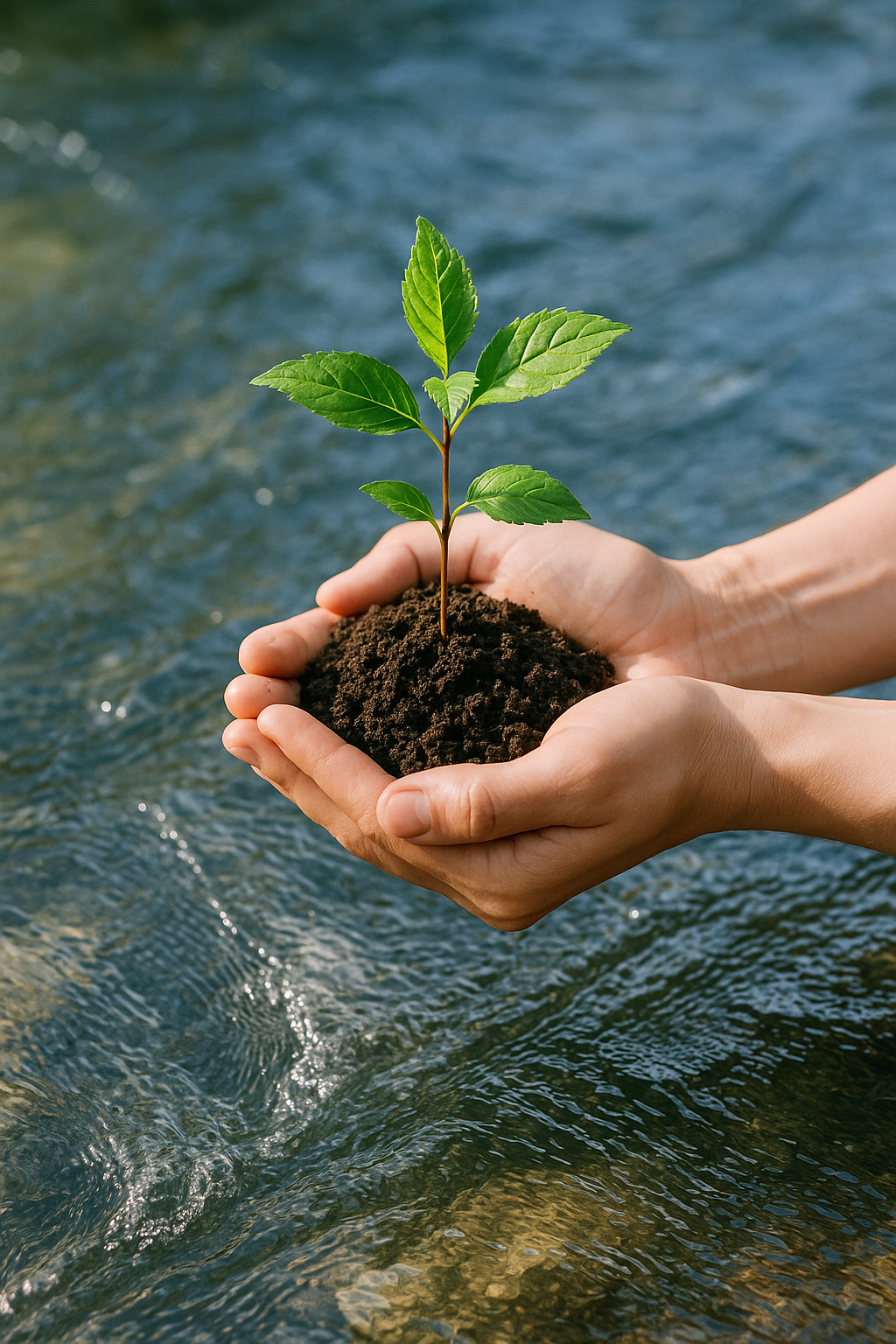
Reviving the Bottelary River: A community transforms a polluted suburban waterway through eco-warrior cleanups, tech, and nature-based solutions.
The Bottelary River was once a stinky, polluted mess, but now it's making an amazing comeback! Local students, called "Eco Warriors," started cleaning up trash, even finding old car doors and dentist chairs. They used cool tech like microcontrollers to check water quality and even turned collected plastic into benches. This awesome community effort shows how people, smart ideas, and a little technology can bring a river back to life!
How did the Bottelary River recover from severe pollution?
The Bottelary River recovered through a multi-faceted community effort. Local students, known as "Eco Warriors," initiated clean-ups, removing hundreds of kilograms of waste. Technology, like microcontrollers monitoring water quality, and citizen surveillance helped identify polluters. The project also implemented circular economy principles by transforming collected plastics into public furniture and used blockchain for funding, creating a sustainable model for environmental restoration.
Get Cape Town news in your inbox
Stay updated with the latest stories from the Mother City.
The Hidden Artery Between Driveways
Behind the Tygerberg ridge a thin line of moisture seeps from the soil, slips unnoticed through a stormwater pipe beneath Brackenfell’s busiest intersection and emerges, almost apologetically, as the Bottelary River. From there it meanders south-east, collecting whatever the neighbouring 7 000 hectares - vineyards, light factories, cul-de-sacs, petrol stations - choose to discard. Drivers on the M25 see the water only in passing, framed by security fencing and the blur of daily commutes.
In 2023 field crews from the Eerste Kuils River Catchment Management Forum dipped sample bottles into the murky ribbon. Laboratory results showed faecal coliform counts of 70 000 organisms per 100 ml; the World Health Organization deems water unsafe for human contact once counts rise above 70. The river had become an accidental sewer, clogged and feverish.
The bleak numbers might have ended the story, but the opposite happened. Grade-9 learners from Soneike High traded Saturday lie-ins for neon-yellow vests, branded themselves “Eco Warriors,” and hauled 417 kg of rubbish from the waterline in one school term. Their early finds included fourteen shopping trolleys, three car doors and one retired dentist chair. By week ten they had recruited three adult residents willing to serve as permanent River Wardens, forming the first home-grown enforcement line against illegal dumping.
Turning One Clean-up into a Living Curriculum
The Three-Cycle Engine that Powers Continuity
The Eco Warrior challenge runs on a set of nested loops designed to outlive any single burst of enthusiasm.
First loop – the “Litter Cycle”: on the first Saturday of every month participants form expanding arcs outward from the riverbank. Street by street they scan gutters, parks and verge-grass, logging every cigarette butt and tyre fragment on the Litterati app. The app generates heat-maps that feed straight into the City’s open-data portal, turning Saturday sweat into evidence that planners cannot ignore.
Second loop – the “Learning Cycle”: in church halls and school quadrangles facilitators unroll 3-D printed topographic tiles. A dropped sweet wrapper outside Bellville Library is tracked through miniature culverts and stormwater grids until, seventy-two wet hours later, it snags on reeds behind Zevenwacht Mall. The visual punch lands harder than any lecture slide, and students walk away able to narrate their suburb’s hidden hydrology from memory.
Third loop – the “Legacy Cycle”: this is where hand-sized seedlings enter the picture. Learners who once dragged tyres now plant wild olives, restios and watsonia bulbs timed to the first winter rain pulses. They clear invasive wattles with pruning saws and record canopy cover the way accountants track profit margins. Every cohort graduates knowing that next year’s newcomers will inherit both the tools and the story they leave behind.
Circuit Boards Among the Reeds: Tech that Talks
Cape Town’s Smart City team donated twenty palm-sized ESP32 microcontrollers. After dunking the boards in epoxy and cable-tying them to bridge pylons, volunteers began receiving turbidity and electrical-conductivity snapshots every thirty minutes. A free MQTT broker funnels the numbers to a public Grafana dashboard where Grade-10 maths classes watch winter storm spikes and the subtler blips that hint at midnight car-wash effluent.
Micro-crimes still surface. At 02:13 on an April morning a truck idled on a service road, dumping builder’s rubble under cover of load-shedding darkness. River Wardens photographed the licence plate; SAPS traced the vehicle to a Kraaifontein landscaping firm. The case is still winding through court, yet the offender has already removed 2.4 tonnes of illegally dumped rock - evidence that citizen surveillance, backed by law, can make polluters pay long before a judge slams the gavel.
Financing, Fermentation and the Final Camp-Out
From Coins to Crypto, from Waste to Wonder
Plastic collected by hand becomes public furniture. Each bench beside the future Fynbos Life Circle uses roughly 1 200 shredded milk bottles, injection-moulded into weather-resistant slats. Solar cat-eyes are embedded flush with the path; instead of lamp posts that invite vandalism, the trail glows gently beneath a runner’s foot. QR plaques summon augmented-reality overlays that let visitors watch the river’s 1910 incarnation - clear and tree-lined - slide across the current view.
Money arrives in layers. Tier One, R180 000, covers fifteen additional River Wardens and their community-law-enforcement accreditation. Tier Two, R600 000, funds a small tracked machine that will rip out 11 hectares of Acacia saligna choking the middle reach, followed by spot-spraying only where regrowth resurfaces. Tier Three, R1.5 million, turns the figure-of-eight Fynbos Life Circle from dream to dirt, including 800 metres of raised boardwalk over a seasonal wetland that doubles as both recreation zone and ecological corridor.
To reach Tier Three the Forum has minted 1 000 “River Tiles” on the Polygon blockchain. Each NFT is pegged to a real-world 10 m² grid that donors can inspect through quarterly drone fly-overs. Local wineries chip in CSI budgets eager to advertise “estuary-to-estate” stewardship, while international donors enjoy a digital asset with measurable on-the-ground impact.
The year’s signature event, a 24-hour BioBlitz & Camp on 27–28 June, transforms the manicured lawn below Door De Kraal Dam into a pop-up research station. Entomologist Dr Lize Joubert sets UV light traps for caddisflies; birder Johan de Villiers counts African black duck pairs at dawn; every photograph uploads to the iNaturalist “Bottelary to Ocean” project. Since 2022 the venture has logged 2 300 verified species records, including two firsts for the urban core - the Cape sand frog and the elusive water mongoose.
Health, Hope and How You Can Run Your Own River
Stellenbosch University psychologists tracked residents who attended at least four clean-ups and logged a 31 % drop in self-reported stress. The researchers attribute the improvement to “attention restoration” - the brain’s gentle recovery when exposed to moving water, birdsong and the loamy aroma of freshly turned soil.
Soneike’s teaching staff are weaving the river into every subject. Life Sciences pupils prototype greywater filters from brick chips, sawdust and biochar; Technical Drawing students redesign pedestrian bridges to withstand 1-in-50-year floods, and the winning concept will be built from recycled-plastic decking next spring.
Anyone with a shoreline and a printer can replicate the process. The Forum’s Google Drive hosts an open-source toolkit in three languages: a Canva pamphlet template, a twelve-minute sensor-calibration video and a spreadsheet that converts Litterati dumps into City portals. Already the Kuilsdrift Neighbourhood Association has forked the code for its own stretch, while Strand’s Lourens River mouth congregation nudges the idea seaward.
At Majik Forest car park an ever-shifting sculpture, “Current Conditions,” glints between poplars. Artist Georgina Maxim re-threads fresh plastic waste into a translucent eel every season, its palette shifting from Valentine’s reds to Easter yellows. Scan it with Instagram and the serpent appears to swim upstream against a 1910 photograph of the Bottelary - tree-lined and crystalline. The GIF is short, the message longer: every tossed wrapper, every blockchain donation, every Saturday spent in yellow vests writes the next frame in an unending animation.
{"faq": [{"question": "### What was the initial state of the Bottelary River before the cleanup effort?", "answer": "Before the cleanup, the Bottelary River was severely polluted, described as a \"stinky, polluted mess.\" Field crews found alarming faecal coliform counts of 70,000 organisms per 100 ml, far exceeding the World Health Organization's safe limit of 70 organisms per 100 ml for human contact. It had become an \"accidental sewer,\" clogged and feverish, collecting discarded items from surrounding vineyards, factories, and residential areas."}, {"question": "### Who are the 'Eco Warriors' and what role did they play in the river's recovery?", "answer": "The 'Eco Warriors' are Grade-9 students from Soneike High who initiated the cleanup efforts. They voluntarily traded their Saturday lie-ins for neon-yellow vests and began hauling significant amounts of rubbish from the river. Their early finds included unusual items like fourteen shopping trolleys, three car doors, and a retired dentist chair. Their dedication sparked the wider community involvement and formed the initial \"enforcement line\" against illegal dumping."}, {"question": "### How did technology contribute to the Bottelary River's restoration?", "answer": "Technology played a crucial role. Microcontrollers (ESP32) donated by Cape Town's Smart City team were used to monitor water quality parameters like turbidity and electrical conductivity, providing data every thirty minutes. This data was funneled to a public Grafana dashboard, allowing even Grade-10 maths classes to observe environmental changes. Additionally, the Litterati app was used to log trash, generating heat-maps that provided actionable evidence for city planners. Blockchain technology, specifically \"River Tiles\" minted on the Polygon blockchain, was also used for funding, allowing donors to track the real-world impact of their contributions."}, {"question": "### What are the 'Three-Cycle Engine' loops that power the Eco Warrior challenge?", "answer": "The Eco Warrior challenge operates on three nested loops designed for continuity: \n1. The Litter Cycle: Participants expand outward from the riverbank monthly, logging litter on the Litterati app to generate heat-maps for city planners.\n2. The Learning Cycle: Using 3-D printed topographic tiles, facilitators visually demonstrate how litter travels through the suburb's hidden hydrology, enhancing students' understanding.\n3. The Legacy Cycle: Learners plant indigenous seedlings, clear invasive species, and record canopy cover, ensuring that future cohorts inherit both the tools and the story of the river's restoration."}, {"question": "### How is the project financed and what circular economy principles are implemented?", "answer": "The project employs a multi-layered financing strategy. Tier One and Two funding cover River Wardens and invasive species removal, while Tier Three aims to create the Fynbos Life Circle. To achieve Tier Three, 1,000 \"River Tiles\" (NFTs) are minted on the Polygon blockchain, allowing local wineries and international donors to contribute. The project also implements circular economy principles by transforming collected plastic waste into public furniture, such as benches made from shredded milk bottles, and embedding solar cat-eyes into paths."}, {"question": "### What are the broader impacts of the Bottelary River project on the community and environment?", "answer": "The project has had significant positive impacts beyond river cleanup. Psychologists from Stellenbosch University observed a 31% drop in self-reported stress among residents participating in clean-ups, attributing it to \"attention restoration.\" Soneike's teaching staff are integrating the river into various subjects, fostering environmental awareness and practical skills among students. The project also serves as an open-source model, with a toolkit available online for other communities to replicate. Environmentally, it has led to improved water quality, removal of invasive species, and a BioBlitz event that has logged over 2,300 verified species records, including new discoveries for the urban core."}]}

Aiden Abrahams is a Cape Town-based journalist who chronicles the city’s shifting political landscape for the Weekend Argus and Daily Maverick. Whether tracking parliamentary debates or tracing the legacy of District Six through his family’s own displacement, he roots every story in the voices that braid the Peninsula’s many cultures. Off deadline you’ll find him pacing the Sea Point promenade, debating Kaapse klopse rhythms with anyone who’ll listen.
View all articles →