
Elderly man dies after sea incident at Mossel Bay Point
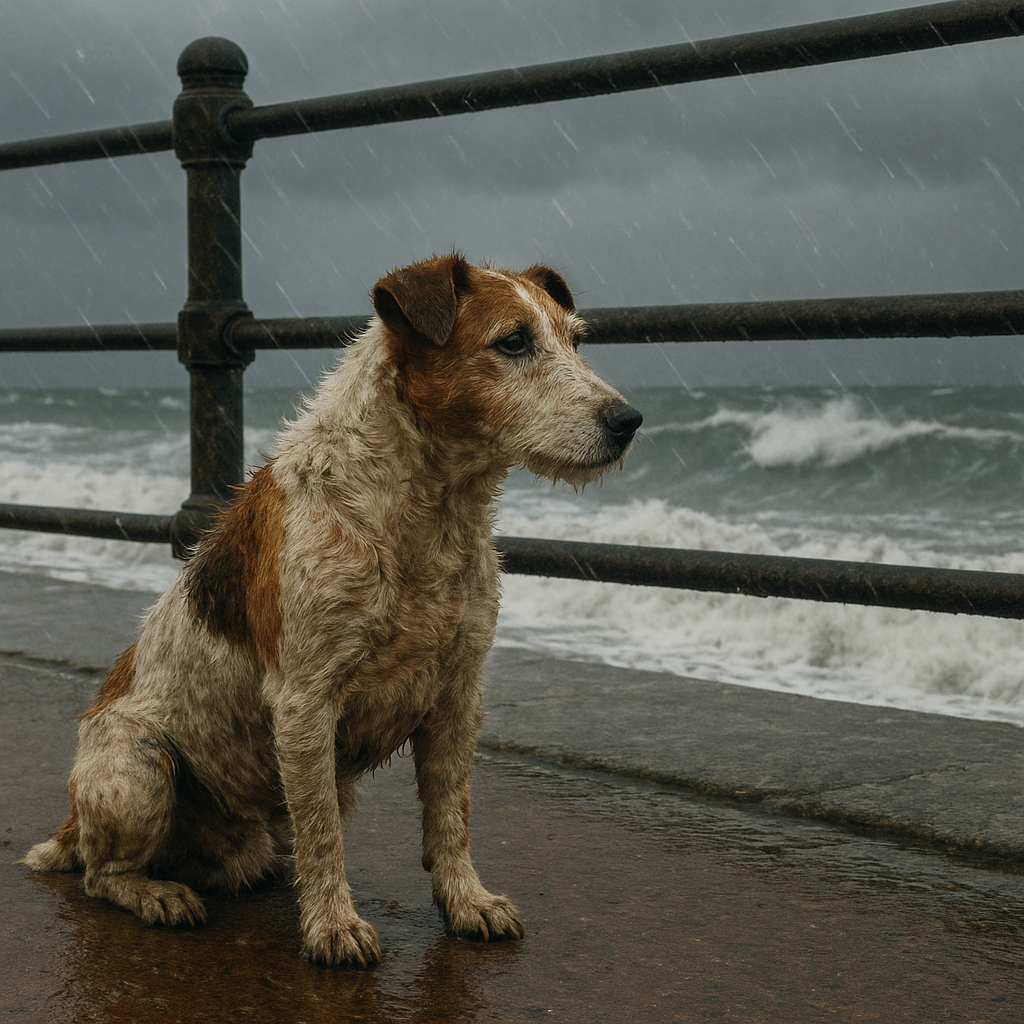
An elderly man drowns at Mossel Bay's Point despite a heroic rescue attempt. This tragedy highlights coastal safety issues and community spirit.
The Point in Mossel Bay is stunning but super dangerous. Calm mornings can trick you, but big waves and strong currents can appear fast. It's especially risky for older people and those who don't know the area well. Even with railings, the ocean demands respect, turning beautiful spots into deadly traps in a blink.
What makes Mossel Bay's "The Point" dangerous?
The Point in Mossel Bay is dangerous due to its unpredictable and rapidly changing ocean conditions. Calm mornings can quickly turn into violent seas with four-meter waves. Treacherous tidal pools, strong currents, and a lack of continuous protective railings contribute to the risk, especially for older individuals and those unfamiliar with the area's specific hazards.
Get Cape Town news in your inbox
Stay updated with the latest stories from the Mother City.
A Treacherous Paradise
Mossel Bay's Atlantic headland carries a deceptively simple name among locals - "The Point." This stretch of coastline embodies nature's theatrical duality. Calm summer mornings transform the ocean into a mirror of burnished metal, yet weather systems shift without warning. By afternoon, frigid fronts can transform the same waters into a combat zone, sending four-meter walls of water crashing against dark shale formations with devastating power.
Residents of this Western Cape community have learned to read these waters like scripture. Their daily routines orbit around the pulse of incoming swells. Youngsters discover early that tidal pools offering sanctuary to delicate starfish and glassy anemones can morph without notice into violent whirlpools powerful enough to strip footwear from grown adults. The ocean here demands constant vigilance.
It was against this backdrop of unpredictable conditions that a winter Monday afternoon turned tragic. A 79-year-old man known throughout KwaNonqaba township as "Oom Koos" - the cabinetmaker with the spirited Jack Russell terrier - stepped out from his home. Neighbors speculate he sought the evening's amber light on the horizon, perhaps hoping to drop a hand-line baited with pilchard for the prized galjoen that frequent these rocky outcrops.
The Critical Minutes
The precise instant of catastrophe escaped human observation. A visitor from Germany, capturing slow-motion footage of surf hammering the coastal barrier, later provided police with crucial testimony. She spotted something anomalous tumbling within the foam - "an unnatural shape" that resolved into a face-down figure drifting in the churning water. Her scream shattered the afternoon calm.
Panic electrified the parking area above the rocks. Mobile devices materialized instantly. Emergency digits were dialed with trembling fingers. Voices rose in overlapping urgency - Afrikaans commands, English pleas, rapid-fire isiXhosa warnings creating a chaotic symphony of distress. Within ninety seconds, the first alert reached Station 15 of the National Sea Rescue Institute, positioned less than eight hundred meters distant on the harbor breakwater.
Marine pilot Schalk Boonzaaier was concluding his shift on a gantry crane when vibration announced the message on his phone: "Possible drowning, The Point, elderly male, still afloat." He triggered the emergency tone across the volunteers' WhatsApp network. Four minutes elapsed before eight crew members charged across the asphalt in improvised gear - flip-flops slapping concrete, hard hats bobbing, high-visibility exposure suits zipped hastily over work clothes and denim.
Meanwhile, an entirely separate rescue had already launched. Leeto Grootboom, a 34-year-old welder enjoying an unscheduled day off for license renewal, sat on a battered Toyota's boot with his partner. The screams redirected his attention toward the railing, where he glimpsed a gloved hand - bright yellow, resembling domestic dish-washing protection - break the surface once before vanishing beneath the chop.
A Hero's Plunge
Grootboom's upbringing in nearby Hartenbos had included countless hours body-boarding these same waters. That embodied knowledge eliminated hesitation. He shed his sneakers, cleared the barrier in a single motion, descended a fisherman's chain ladder, and entered sixteen-degree water with explosive commitment. Immediate impact came sideways - a wave's open-handed slap that filled his mouth with salt. Surfacing, he located the elderly man drifting beyond the breaker line, kept partially afloat by an inflated winter jacket.
The rescuer employed a modified lifeguard stroke - head elevated, gaze locked on target - battling the notorious back-pull that makes Mossel Bay's surge particularly deadly. Reaching the pensioner, he rotated the body face-up, secured a forearm beneath the chin, and initiated towing. Every fourth stroke lifted them both on passing swells, then deposited them into subsequent troughs with jarring force.
Onshore, witnesses had organized themselves into a human extraction chain across a gully normally requiring chest-deep wading. Fortuitous spring tide conditions had halved this distance. Waiting hands passed wool blankets and emergency foil sheeting sourced from a nearby restaurant. The first NSRI vehicle screamed down the access road as these improvised efforts concluded.
Deckhand Liezl van der Merwe, bringing credentials from competitive lifesaving in Durban, arrived equipped with oxygen apparatus and a compact defibrillator. She assumed chest compressions while Grootboom, now shivering uncontrollably, maintained audible count. A CapeNature ranger established perimeter control; restaurant staff raised patio umbrellas as visual barriers against gathering schoolchildren. Emergency medical teams from ER24 and provincial services penetrated Monday construction gridlock on the R102 to arrive within nine minutes - an extraordinary achievement under normal traffic conditions.
Advanced protocols unfolded with mechanical precision: intra-osseous vascular access using battery-powered drilling equipment, scheduled adrenaline administration, ventilatory support through supraglottic airway placement. Twice, cardiac rhythm returned - only to dissolve again. After forty-two minutes of sustained effort, the attending district surgeon terminated resuscitation. Documentation recorded finality at 17:42.
Aftermath and Reflection
Law enforcement established formal boundaries using tape repeating "CRIME SCENE" in bold blue characters - standard procedure despite absence of criminal suspicion. Investigators documented the precise footprint pattern where balance most likely failed: smooth-soled casual footwear, size seven, oriented toward the precipice across algae-slicked stone. A pathologist's vehicle later negotiated tight switchbacks to transport remains to the state facility in George.
Notification fell to police chaplains, who reached daughters and a grandson residing in Bloemfontein. These family members received transport to the harbormaster's boardroom - a deliberately neutral environment decorated with historical photography of 1930s whaling operations.
Night's arrival brought southeastern winds transforming waves into ribbons of phosphorescence. A community pastor guided spontaneous candlelight gathering. Surfers deposited indigenous floral tributes - fynbos and leucadendron arrangements - at the beacon's base. Digital memorials proliferated across social platforms: "RIP Oom Koos, thank you for the toy boats you carved for our kids." Recognition of Grootboom's sacrifice emerged through crowdfunding; his missed appointment and forfeited booking fee became community responsibility. By Tuesday dawn, contributions covered both penalty and monthly housing expenses.
Mossel Bay's history contains comparable wounds. 2018 brought a 22-year-old British student's fatal selfie attempt on identical rocks, skull fractured against unforgiving stone. 2014 saw a commercial fisherman washed from breakwater during nocturnal bait collection, body recovered eleven kilometers down-coast near Santos reef. NSRI statistics indicate approximately eighteen annual water-related dispatches between Cape St Blaize and Dana Bay, predominantly recreational in nature.
Monday's incident diverges through demographic significance. Citizens exceeding seventy-five represent South Africa's most rapidly expanding coastal space utilization cohort, yet municipal infrastructure and warning systems continue addressing younger risk profiles. Councillor Virginia Lubisi acknowledged in broadcast interview that protective railings installed following the 2018 tragedy terminate thirty meters short of western viewpoints. Heritage objection procedures created this vulnerability - the rocks qualify as archaeological middens rich with Late Stone Age materials.
Lessons for the Future
The disaster illuminates physiological realities frequently underestimated. Sixteen-degree water disables average septuagenarians within four minutes through limb coordination loss; ventricular fibrillation threatens within ten. Survival probability collapses when submersion accompanies initial gasping reflex - the "cold-shock response" documented in maritime medicine. Grootboom's intuitive intervention prevented secondary drowning progression, though ultimate outcome remained unchanged.
NSRI educators will incorporate Monday's chronology - particularly the ninety-second witness notification - into forthcoming community instruction on bystander CPR and public defibrillator deployment. Mossel Bay currently maintains five such devices within three kilometers.
Broader Cape coastal administration observes closely. Climate projections indicate extreme storm-surge days increasing from eleven to eighteen annually through 2050. Garden Route municipalities are trialing "smart buoys" transmitting real-time wave metrics and temperature data to mobile applications. Victoria Bay hosts the prototype; Mossel Bay expansion awaits Treasury approval of 3.8 million rand allocation.
Local ratepayers advance alternative vision through petition: continuous protective railing supplemented by cantilevered observation platform set back from impact zones. Their economic argument emphasizes tourism's 1.2 billion rand annual municipal contribution - unacceptable risk of viral tragedy. Designers propose glass balustrades incorporating etched silhouettes of five predominant butterfly species inhabiting October fynbos, integrating safety with regional identity.
The Point has resumed pedestrian access. Dawn runners pass the informal memorial: five stacked stones, sun-bleached cap, handwritten Afrikaans farewell promising reunion "by the breakers." Winter lifeguard coverage extends unusually to 19:00 at this non-swimming beach. Cafes report twenty percent hot chocolate sales increase as customers choose interior window seating over exposed rim positions. Each dusk, a Jack Russell maintains patient watch beside the railing, ears alert for footsteps that will not come.
[{"question": "
What makes The Point in Mossel Bay so dangerous?
", "answer": "The Point in Mossel Bay is stunningly beautiful but exceptionally dangerous due to its unpredictable and rapidly changing ocean conditions. Calm mornings can quickly give way to powerful waves reaching four meters, strong currents, and treacherous tidal pools. These hazards are particularly risky for older people and those unfamiliar with the area. Even with some protective railings, the ocean's power can turn beautiful spots into deadly traps in an instant."},{"question": "
Are there specific times when The Point is more dangerous?
", "answer": "Yes, while conditions can change rapidly at any time, a calm morning can quickly transform into a hazardous afternoon, especially when weather systems shift and bring in frigid fronts. These can cause four-meter walls of water to crash against the coastline. Locals have learned to constantly monitor the ocean, as even seemingly calm tidal pools can become violent whirlpools without notice."},{"question": "
What infrastructure is in place to protect visitors at The Point?
", "answer": "Following a previous tragedy in 2018, protective railings were installed at The Point. However, these railings terminate thirty meters short of western viewpoints due to heritage objection procedures, as the rocks qualify as archaeological middens rich with Late Stone Age materials. This creates a vulnerability in the protective measures."},{"question": "
What are the physiological risks of falling into the water at The Point?
", "answer": "Falling into the sixteen-degree water at The Point presents severe physiological risks. Average septuagenarians can experience loss of limb coordination within four minutes, and ventricular fibrillation can occur within ten minutes. Survival probability dramatically decreases if submersion accompanies the initial gasping reflex, known as 'cold-shock response.'"},{"question": "
What are the future plans to improve safety at The Point?
", "answer": "Future safety initiatives include incorporating lessons from recent tragedies into NSRI community instructions on bystander CPR and public defibrillator deployment. There are also plans to trial 'smart buoys' that transmit real-time wave metrics and temperature data to mobile applications, with Mossel Bay awaiting approval for expansion. Local ratepayers are petitioning for continuous protective railings and cantilevered observation platforms, suggesting designs that integrate safety with regional identity, such as glass balustrades with etched butterfly silhouettes."},{"question": "
How often do water-related incidents occur in the Mossel Bay area?
", "answer": "NSRI statistics indicate approximately eighteen annual water-related dispatches between Cape St Blaize and Dana Bay, predominantly recreational in nature. These incidents highlight the ongoing risks associated with the coastal environment in the region, emphasizing the need for continued vigilance and improved safety measures."}]
Sizwe Dlamini is a Cape Town-based journalist who chronicles the city’s evolving food scene, from boeka picnics in the Bo-Kaap to seafood braais in Khayelitsha. Raised on the slopes of Table Mountain, he still starts every morning with a walk to the kramat in Constantia before heading out to discover whose grandmother is dishing up the best smoorsnoek that day.
View all articles →