
Fatboy Slim set to ignite South Africa with electrifying December shows
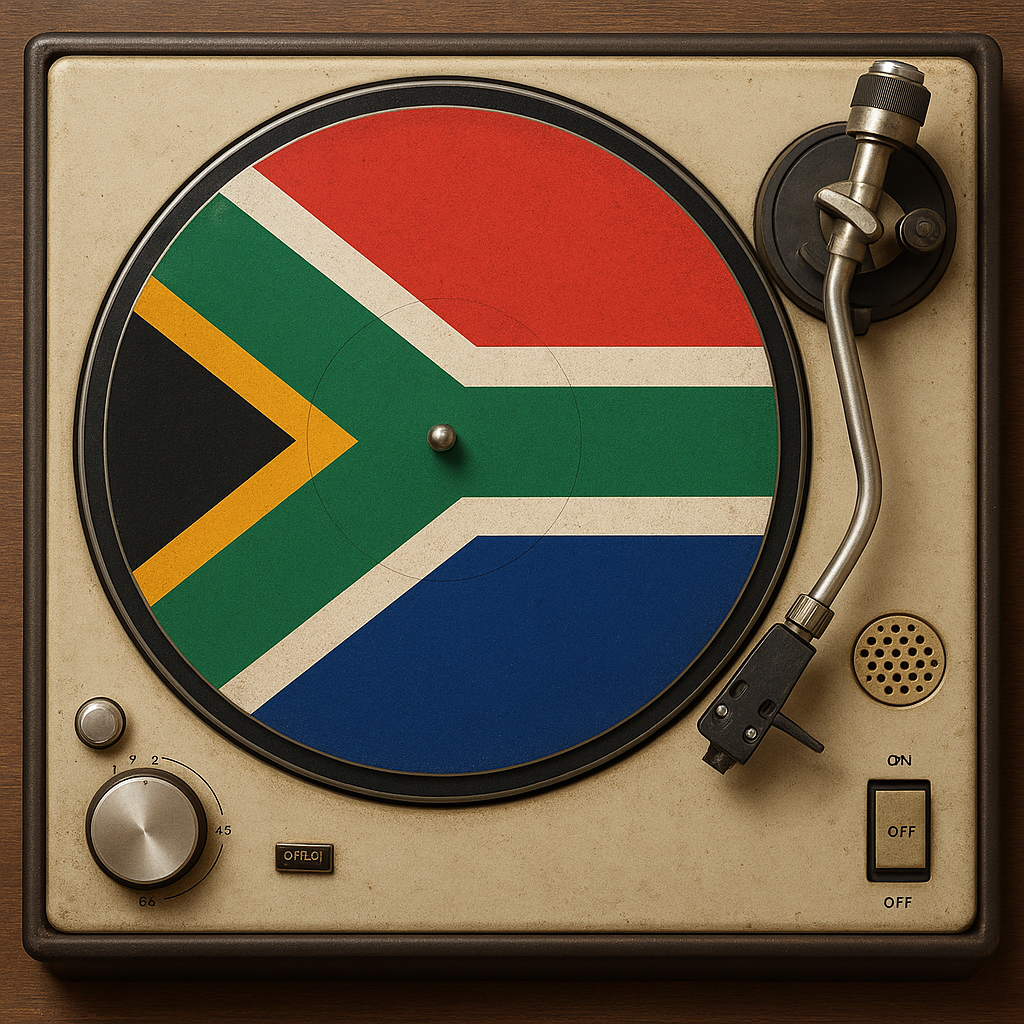
Experience Fatboy Slim's big-beat alchemy live in South Africa! Two nights of electrifying DJ sets, stunning visuals, and a journey through music history.
Fatboy Slim, also known as Norman Cook, was a music wizard long before his solo fame. He started as the bassist for The Housemartins, even getting a Christmas number one! After that, he formed Beats International, creating hits by cleverly using samples and breakbeats. This set the stage for his iconic Fatboy Slim sound, which exploded with "The Rockafeller Skank." He became a superstar DJ, turning dance floors into huge parties, and his music, especially "Praise You," traveled around the world.
What is Fatboy Slim's background before his solo career?
Norman Cook, known as Fatboy Slim, was initially the bassist for The Housemartins, achieving a UK Christmas number one with "Caravan of Love" in 1986. After the group disbanded, he formed Beats International, scoring a hit with "Dub Be Good to Me" in 1990, showcasing his early mastery of sampling and breakbeat influences.
Get Cape Town news in your inbox
Stay updated with the latest stories from the Mother City.
From Housemartins to Headliner: Norman Cook Rewinds Fast-Forward Style
Before the giant smileys, before the Technicolor shirts, Norman Cook was already a chart-topper. In the late eighties he anchored the jangly bass of Hull indie outfit The Housemartins, whose a cappella “Caravan of Love” stole the U.K. Christmas crown in 1986. When that group split, Cook immediately created Beats International, welding soulful hooks to dub-wise grooves. Their 1990 smash “Dub Be Good to Me” became Britain’s first chart-dominating single constructed almost entirely from borrowed fragments, a sneak preview of the break-beat boom that followed.
Six years later the Fatboy Slim alias hatched inside a cramped Brighton bedroom stacked with scratched vinyl, a battle-worn E-mu and an Atari that had seen better days. Twelve months on, “The Rockafeller Skank” detonated across pirate airwaves. The surf riff and the shouted vocal hook turned into an instant passport for students, skaters and clubbers worldwide. One million copies shifted, but the real victory was subtler: DJs in every hemisphere now felt licensed to ram rock attitude straight into four-four house scaffolding.
By 1998 the blueprint crystallised on “You’ve Come a Long Way, Baby”: seven singles, four of them global juggernauts, wrapped in Las Vegas-chapel artwork. Cook became the first pure DJ to headline arenas, armed with nothing but two turntables, a mixer and a box of custom acetates. The modern notion of the superstar selector was born in that moment.
The Big-Beat Boom: How Cartoon Energy Rode the Turn of the Century
Jungle, trance and drum-&-base tunnelled ever deeper while big-beat went horizontal, sucking in hip-hop breaks, acid-house sub weight and comic-book drops designed for the widest grin possible. Brighton labels Skint and Wall of Sound churned out the sound like amphetamine candy; The Chemical Brothers, Propellerheads and Groove Armada all buzzed around the same hyper-colour hive.
Where other genres chased darkness, big-beat chased daylight. Riffs were distorted until they felt like Saturday-morning theme songs, drums were sharpened into weaponised hand-claps, and every breakdown came stamped with a whoopee-cushion wink. Fatboy Slim distilled that sugar rush to its purest form, turning dance floors into playgrounds for grown-ups who refused to grow up.
The millennium approached, and with it came a generation that wanted its rebellion served sunny-side-up. Big-beat became the soundtrack for a new century daring the world to laugh louder, dance dumber and hug stranger. Even when the hype ebbed, the grin lingered.
“Praise You” Goes Global: One Loop, a Thousand Lives
Among all Cook’s creations, “Praise You” has travelled furthest from its bedroom origin. Built around a sneaky snippet of Camille Yarborough’s soul gem “Take Yo’ Praise,” the track gained wings thanks to Spike Jonze’s guerrilla promo clip shot outside a Westwood cinema. The lo-fi dance troupe won three MTV Moonmen and pushed U.S. alternative radio toward electronic rhythms for the first time.
Since then the four-bar loop has been flipped by Duke Dumont, interpolated by Eminem, strummed on ukulele in a Korean mobile-phone ad and enlisted by UNHCR for a refugee-awareness campaign. In South Africa alone it filled 2010 World Cup fan zones and popped up again five years later when kwaito pioneer Spikiri sampled it on township banger “Ntshwarele.” Few hooks have lived so many parallel cultural lives while staying instantly recognisable.
Jozi & Cape Town: Two Arenas, One Sonic Road-Trip
Cook lands with a refreshed arsenal. Both nights will run the classic 90-minute open-to-close Fatboy journey, but 2026 brings new toys: a time-code rig that strips any track to bare stems on the fly. Expect warped a cappellas of “Right Here, Right Now” drifting over 2026 amapiano log-drums, or snippets of Soweto gospel sewn into the breakdown of “Star 69.”
Visual wizard Michael Christian, who sculpted Coachella’s Antarctic Dome, has engineered a 270-degree LED wave that ripples in real time to every 132 BPM kick. No stock clips, no loops - everything breathes with the room.
Johannesburg: The Sheds at 1 Fox
A resurrected 1920s foundry in gritty-cool Ferreirasdorp can take 5,000 bodies on the floor plus 300 loungers on a mezzanine. Marble Restaurant and township street-food collective Bafethu run the rooftop kitchen, dishing out gourmet everything on biodegradable trays.
Cape Town: Castle of Good Hope, Moat Edition
For one night only the 17th-century fortress swaps cannons for kick drums. A strict midnight curfew means Cook climbs on at 9:15 p.m. - sunset house before dinner becomes a genuine option for parents and backpackers. Stellenbosch wineries curate table-service pairings while the moat glitters under LED shimmer.
Tickets, Hype and Nostalgia Economics
Tier 1 Early Bird vanished in four hours; Tier 2 General Access clings to R650. “Golden Circle” pit wristbands demand R1,200. Tongue-in-cheek VIP booths - “Weapon of Gin & Tonic,” “Rocka-Fella-VIP” - start at R12,000 for six guests and include a meet-and-greet Polaroid with tour manager “Big” Tony. Blockchain QR codes issued via Howler aim to neuter scalpers already circling Facebook groups.
Memory Lane: 2002 Flashbacks & 2026 Forecasts
Cook’s last South African pass-by was a rowdy 2002 double-header: an unlicensed Full Moon Dance on Clifton 4th Beach shut down by police at 3 a.m., and a boxing-ring DJ set inside Ellis Park two nights later. Ticket stubs from those gigs now swap hands on Gumtree for nostalgic bragging rights. Rumour says he’ll open the Cape Town show with 30 seconds of the original 2002 DAT tape just to watch the old-timers cry.
Crew Call: The Invisible Army Behind the Madness
While Anything Go handles headlines, three smaller collectives make the magic real. Music People haul in 32 L-Acoustics KS28 subs - the same chest-rattlers that powered Beyoncé’s Renaissance tour - to keep the Castle’s stone walls from muddying the bass. Love Music issues recyclable LED wristbands that double as motion sensors; after the show a phone app will reveal who danced hardest and where. Jet Black, the luxury concierge, choppers in Winelands VIPs and lands gourmet sushi at 2 a.m. for anyone allergic to sweat.
Support Line-Up: A Localised Love-Letter
No flown-in warm-up acts; promoters drafted a mini-history of South Africa’s current underground.
In Johannesburg BLFR kicks things off with 45 minutes of gritty broken-beat, Shortstraw guitar-dance follows, and DBN Gogo caps the pre-show with exclusive amapiano edits of Fatboy classics.
Cape Town tilts coastal: Christian Tiger School levitates minds with spaced-out synth-rap, Floyd Lavine soundtracks the golden hour, and queer collective Pussy Party mash hyper-pop at the final stretch.
After-Hours, Hidden Gems & Eco Moves
District in Maboneng hosts an official Joburg after-party featuring Skint comrade Midfield General spinning impossibly rare 1997 white labels. In Cape Town, Silo 5 - a disused grain elevator - opens for a password-protected sunrise session. Entry codes are beamed to retro pagers handed out inside the Castle, a wink to Cook’s pirate-radio roots.
Single-use plastics are banned; draft beer arrives in RFID-tagged aluminium cups that refund R10 on return. South-to-south carbon credits fund regenerative farming in rural KwaZulu-Natal rather than distant European tree-planting schemes.
Merch, Streams & Digital Easter Eggs
Alongside smiley-face bucket hats, a 500-copy vinyl box set titled “Cook’s Tour: South Africa ’98–’02–’26” bundles a remastered 2002 set rescued from DAT plus two fresh 2026 edits cut in Brighton. Sleeves are stitched from fabric off-cuts by Cape Town label Young & Lazy.
Missed the drop? Channel O airs a 30-minute highlight reel the following weekend. TikTok’s official “Big Beat Challenge” filter drops users onto a CGI stage floating above Cape Town Stadium; the most viral duet earns Glastonbury 2027 VIP passes.
Sound Prep & Travel Hacks
Set your ears with five deep cuts rarely wheeled out: “Everybody Loves a Carnival,” “Ya Mama,” “Song for Shelter (Chem Bros Remix),” B-side “Badder Badder Schwing,” and a freshly pressed 2025 white-label “The Weekend” refix.
Fly Qatar Airways via Doha for cheaper Cape-Jozi hops; December temps hover at 28 °C by day, 18 °C after midnight. Vegans rejoice: seitan bunny chow in Joburg, gourmet gatsby rolls in Cape Town.
Decoder Ring: Lingo, Dates & Secret Discs
Lanyard artwork by NFT legend Beeple morphs a glitching Norman Cook portrait into the Castle under UV light; ribbons are woven from recycled Durban fishing nets. Key calendar dates: 22 September drops the final Cape VIPs, 11 November opens add-ons like township vinyl swaps, 10 and 14 December are the main events.
Word is Cook arrives with 40 hand-stamped dubplates including a half-time amapiano remix of “Right Here, Right Now,” Nia Archives’ drum-&-bass flip of “The Rockafeller Skank,” and an Afro-tech “Praise You” fronted by Nobulumko Mngxekeza. Each acetate will melt once the stylus lifts - an analogue postcard that will never stream.
The circle keeps widening. When Cook cues the first kick on whichever December night the calendar shows, he won’t just rewind nostalgia - he’ll pass the headphones to a new generation already turbo-charging big-beat’s DNA from Durban’s gqom alleyways to Pretoria’s 150 BPM Bacardi house labs. Two nights, two cities, and one colossal grin stitched across a southern-sky horizon.
What was Fatboy Slim's musical journey before becoming a solo artist?
Norman Cook, famously known as Fatboy Slim, began his musical career as the bassist for the British indie band The Housemartins, achieving a UK Christmas number one hit. Following this, he formed Beats International, which gained success by pioneering tracks heavily influenced by samples and breakbeats, setting the stage for his unique sound.
Which of Fatboy Slim's songs gained global recognition and how?
"Praise You" is one of Fatboy Slim's most globally recognized tracks. Its widespread fame was significantly boosted by an iconic, guerrilla-style music video directed by Spike Jonze. The song, built around a sample from Camille Yarborough's "Take Yo' Praise," has since been reinterpreted and used in various contexts, from other artists' tracks to advertising campaigns and even humanitarian efforts.
What can attendees expect from the upcoming Fatboy Slim shows in Johannesburg and Cape Town?
Attendees can anticipate a classic 90-minute Fatboy Slim set, featuring a refreshed arsenal of sounds due to new time-code technology that allows for on-the-fly manipulation of tracks. Visuals will be handled by Michael Christian, known for his work at Coachella, with a 270-degree LED wave that reacts in real-time to the music. The Johannesburg show will be at The Sheds at 1 Fox, and the Cape Town event will take place at the historic Castle of Good Hope.
What are the ticketing options and special experiences available for the shows?
Ticketing includes various tiers from General Access to "Golden Circle" pit wristbands. For a more premium experience, "tongue-in-cheek VIP booths" are available, offering perks like a meet-and-greet Polaroid with the tour manager. Blockchain QR codes will be used to combat scalping, and a 500-copy vinyl box set will also be available.
What is the history of Fatboy Slim's performances in South Africa?
Fatboy Slim has a notable history of performances in South Africa, including a memorable, albeit unlicensed, Full Moon Dance on Clifton 4th Beach in 2002 that was shut down by police, followed by a boxing-ring DJ set at Ellis Park. These past events are now part of his South African legacy, with nostalgic fans even trading old ticket stubs.
What are some unique aspects of the production and local support for these events?
The production features state-of-the-art sound systems, including L-Acoustics KS28 subs, and recyclable LED wristbands that track dance activity. The events prioritize sustainability, banning single-use plastics and funding regenerative farming through carbon credits. Local South African artists will provide support, with a lineup that reflects the country's vibrant underground music scene, including broken-beat, guitar-dance, amapiano, synth-rap, and hyper-pop.
Liam Fortuin is a Cape Town journalist whose reporting on the city’s evolving food culture—from township kitchens to wine-land farms—captures the flavours and stories of South Africa’s many kitchens. Raised in Bo-Kaap, he still starts Saturday mornings hunting koesisters at family stalls on Wale Street, a ritual that feeds both his palate and his notebook.
View all articles →