
FlySafair faces penalties over alleged overbooking practices
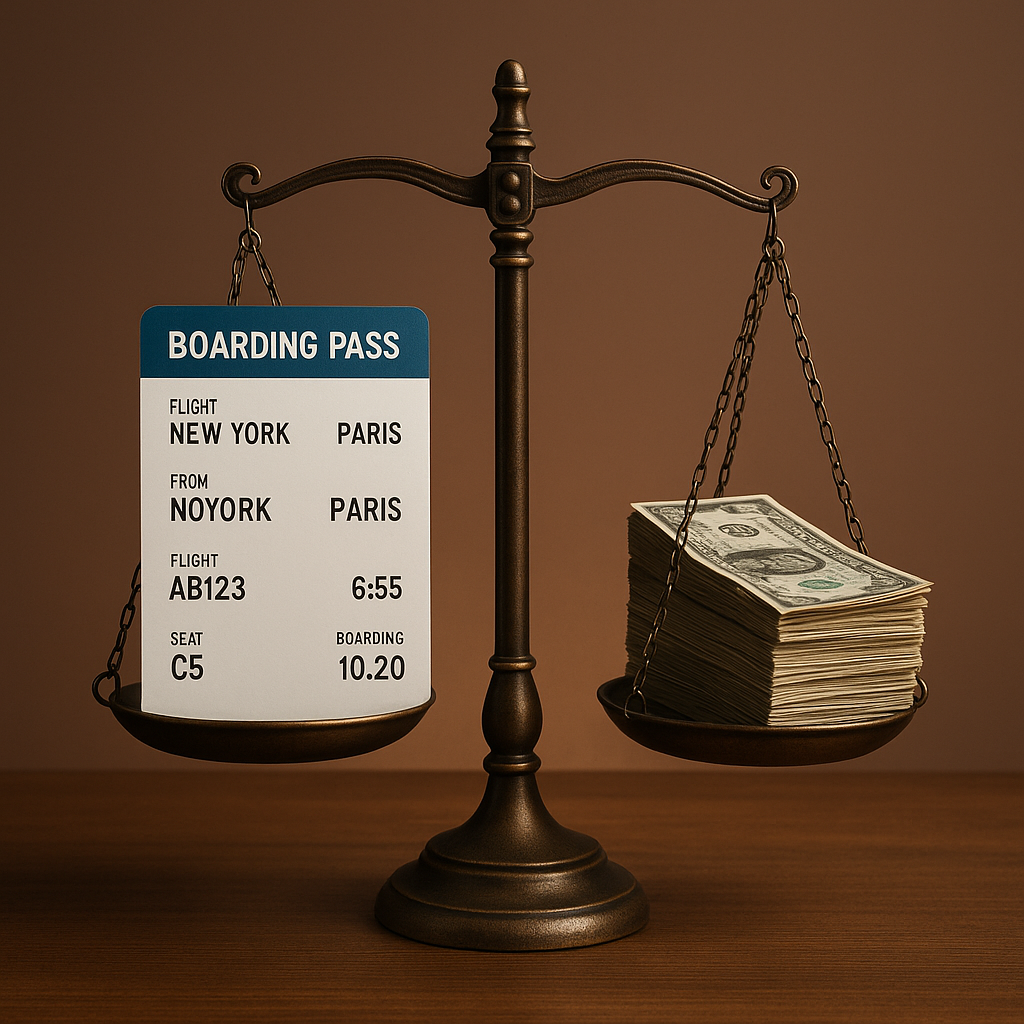
FlySafair's overbooking algorithm sparks South Africa's biggest consumer showdown. A tribunal case could cost the airline 10% of turnover.
FlySafair, a South African airline, is facing a major lawsuit over its policy of overbooking flights. This practice, designed to maximize profits, has left thousands of passengers stranded, sparking outrage and a viral social media storm. The National Consumer Commission is seeking a hefty fine that could significantly impact the airline's earnings. This case could change how airlines operate in South Africa, forcing them to prioritize passenger rights over profit, as the legal battle heats up.
What is FlySafair's overbooking policy?
FlySafair's overbooking model, codenamed "Project Hadeda," is tuned to oversell trunk routes by four percent and regional routes by eight percent, which is lower than the industry's typical 10% ceiling. This strategy banks on a measured no-show rate of 2.3 percent to maximize revenue, despite leading to denied boarding for some passengers.
Get Cape Town news in your inbox
Stay updated with the latest stories from the Mother City.
The Tweet That Shook the Runway
At 04:47 on a Sunday in early November, Nontando Mbali tucked her printed boarding pass into her handbag and entered the FlySafair queue at OR Tambo Domestic Terminal. By 05:19 she was led away from the counter and told that the seat she had secured the night before - 14F - had vanished: the flight was now “weight-restricted and oversold.” Mbali sat on her suitcase, filmed herself nibbling on a R42 bag of Nik-Naks, and launched a Twitter thread that exploded. Within minutes it had gone viral, and before the aircraft left the gate she had 11 000 retweets and a growing army of sympathisers.
The National Consumer Commission (NCC) opened its inbox to 47 almost identical stories that same week. By mid-January the pile topped 5 000 submissions. The Commission reached for its sharpest tool - section 71(2) of the Consumer Protection Act 68 of 2008 - which empowers it to ask the National Consumer Tribunal for an administrative penalty of up to ten percent of annual turnover. If the Tribunal agrees, the fine could swallow FlySafair’s entire 2023 net profit and still leave room for more.
The Science (and Gamble) Behind the Empty Seat
Carriers have padded their passenger lists since the 1950s, when Boeing 707s crossed the Atlantic half-full because corporate travellers booked several departures and simply failed to show. The practice remains legal worldwide as long as airlines follow tariff rules, cough up denied-boarding compensation and find alternative travel for anyone left behind. Yet the mathematics have mutated. Modern revenue engines drink in 1.2–1.8 million data points for every departure - school-exam timetables, storm forecasts, historical no-show curves - before releasing an “authorisation to board” figure that can overshoot the actual seat count by three to fifteen percent.
Inside FlySafair the model answers to the code-name “Project Hadeda.” Two staffers, speaking anonymously, say the machine is tuned to oversell trunk routes by four percent and thinner regional hops by eight percent - lower than the industry’s hush-hush ceiling of ten percent for narrow-bodies, but still above the airline’s measured no-show rate of 2.3 percent. The program wagers that for every 100 passengers booked, roughly two will not reach the gate, freeing two extra seats to sell. Between November and January the wager failed 5 000 times. FlySafair calls that a 0.02 percent denial rate and therefore “statistically insignificant.” The NCC counters that what matters is the human standing beside a locked aircraft door.
Where the R900 Fare Disappears
Ever wondered why every seat counts? Split a typical R900 all-in FlySafair sale: R313 pays for jet fuel, R206 covers airport charges, R138 goes to VAT, R78 buys navigation and safety levies, R50 settles the credit-card fee, R40 covers the aircraft lease, R35 feeds the maintenance reserve, R25 buys insurance, R19 feeds passengers, R14 pays crew overtime and R13 covers distribution. Only R69 is left to chip away at headquarters rent, interest and profit.
If an extra four passengers are crammed onto a 165-seat Boeing 737-800, the airline pockets roughly R2 760 in pure contribution - enough to fund a junior cabin-crew member’s monthly salary. Multiply by 600 departures a day and a conservative one percent revenue bump can keep the doors open when Brent crude hovers above $90. Executives argue that forfeiting these marginal gains will force fares up and betray the low-cost promise that has carried 4.2 million South Africans into the sky each year.
When the Law Says “A Seat Is A Seat”
South Africa’s Consumer Protection Act has teeth sharper than both European EC261 and the US DOT rulebook. Any clause that pushes a traveller to waive rights or accept “unrealistic conditions” is presumed unfair. Section 48(2)(d) forbids a supplier from “requiring a consumer to pay for a service that the supplier does not intend to supply.” The NCC believes the moment FlySafair issues a confirmed seat and swipes the credit card, that seat must exist; offering a later flight four hours away is, in law, no different from selling one bottle of milk twice.
FlySafair’s 42-page defence leans on clause 6.3 of its general conditions of carriage: “Flight times do not form part of the contract of carriage and the schedule may be altered without notice.” The statute, however, nullifies any term that “misleads consumers as to their statutory rights,” pitting century-old contract law against 21st-century consumer rights.
Inside the Call-Centre Trenches
Denied-boarding events unfold like choreography. First, the departure-control screen flashes “LB” in angry red. Duty managers flick to the “volunteer script,” offering R3 000 in vouchers plus a seat on the next departure. If no hands rise, the bid climbs in R500 steps until the algorithm forecasts enough takers. On Christmas Eve the auction for Flight FA112 from Durban to Cape Town reached R7 500 plus a hotel voucher before three backpackers caved.
Anyone who declines the voucher receives a “DB” letter and an e-mail address that, during peak December, sat behind a 19-day backlog. Agents must wrap each case within seven minutes or watch their bonus evaporate. As one operator confessed, “We’re told to make them whole, but when the voucher pot is empty you’re negotiating with your own paycheck.”
How the World Polices the Empty Seat
Brazil’s Resolution 619 of 2022 demands cash equal to the full ticket price plus a 30 percent penalty for involuntary bumps. Mexico gives airlines two hours to reroute or face fines totalling five percent of annual Mexican revenue. The European Court of Justice ruled in 2021 that pandemic vouchers must convert to cash on demand. Against that backdrop, the NCC’s proposal of ten percent of turnover ranks among the most aggressive anywhere, topped only by India’s 2019 rule that can hit repeat offenders for ten percent of global revenue.
Because roughly 85 percent of Safair Holdings’ takings come from South Africa, a maximum fine would erase three years of declared dividends.
Could Software End Denied Boarding Altogether?
Montreal start-up Volant markets “continuous re-accommodation” software that swaps the binary over-sell model for live rebooking. Instead of tossing passengers off the aircraft, the platform constantly scans partner airlines, rail operators or even long-distance rideshare apps and pushes alternate itineraries to the travellers’ phones as they queue. FlySafair trialled the tool in 2023, then shelved it after cost projections added R28 per traveller in distribution fees. Yet the NCC investigation has already burned R4.2 million in external legal fees - enough cash to fund dynamic re-accommodation for five years across the entire network.
The Hidden Cost of Voucher Compensation
FlySafair does not run a loyalty programme, yet 38 percent of its tickets flow through bank-card travel portals that award “velocity-style” cashback. When a traveller accepts a R3 000 voucher instead of a refund, the bank still credits the original cashback, forcing a double payout. Analysts warn that if the Tribunal bans voucher compensation, banks may slash reward earn rates on FlySafair inventory, choking a major customer-acquisition artery.
Eighteen August 2025 - Judgement Day
The Tribunal has pencilled in 18 August 2025 for a preliminary hearing under the gavel of former Labour Appeal Judge Mohamed Navsa. FlySafair has hired heavyweights Wim Trengove SC and aviation attorney Vernon Naidoo. Observers see three plausible endings:
- a negotiated consent order with a lighter fine and a tight compliance plan;
- a landmark decision upholding the ten percent maximum and inviting copy-cat prosecutions;
- a ruling that international aviation law trumps the CPA, neutering the Commission’s reach.
Whatever the outcome, rivals Mango, Airlink and Lift have already trimmed over-sale limits by up to half, according to revenue managers at two competing carriers.
Travel Smarter: How to Duck the Bump List
Data scraped from FlySafair’s own site between January and March 2025 offers a playbook for passengers:
- Departures between 06h00 and 07h30 on Mondays are 3.7-times more likely to bump travellers than the daily average.
- Tickets bought through third-party “travel-club” aggregators carry a 40 percent higher bump risk, because those bookings sit at the bottom of the re-accommodation ladder.
- Travellers who check in via the mobile app more than 24 hours before departure are bumped in only 0.008 percent of cases - far below the 0.05 percent risk faced by airport-kiosk check-ins.
Frequent flyers now choose seats in the rear third of the jet (released last to stand-by passengers), avoid the first Monday after school holidays, and split group bookings into individual reservations so at least one traveller keeps the original itinerary.
The Carbon Paradox
Overbooking software that strands passengers also keeps carbon in check. A 737-800 that lifts off with four unnecessary empty seats burns roughly 100 kg of jet-A, releasing 315 kg of CO₂. FlySafair’s 99.98 percent load-factor streak prevented an estimated 1 580 tonnes of emissions between November and January - equal to removing 344 cars from the road for a year. If the Tribunal pushes load factors down, South Africa could collide with its ICAO CORSIA pledge to cap net aviation CO₂ at 2020 levels.
The Class-Action Cloud
While the NCC drama unfolds, Richard Spoor Inc. is canvassing passengers for a class-action under the revised Section 22 of the Superior Courts Act. A draft summons claims each traveller issued a confirmed seat but then denied boarding is entitled to statutory damages of R10 000 plus costs. Should the court certify the action, roughly 45 000 travellers from the past three years could qualify, exposing FlySafair to a contingent liability of R450 million - double its 2024 insurance reserve. Inside company boardrooms the matter is code-named “Project Black Swan.”
What is FlySafair's overbooking policy?
FlySafair's overbooking model, codenamed "Project Hadeda," is designed to oversell flights on trunk routes by four percent and regional routes by eight percent. This is lower than the industry's typical 10% ceiling. The strategy relies on an expected no-show rate of 2.3 percent to maximize revenue, despite the risk of denying boarding to some passengers. The airline defends this practice by stating it allows them to offer lower fares by optimizing seat utilization.
Why is FlySafair facing a lawsuit?
FlySafair is facing a major lawsuit from the National Consumer Commission (NCC) due to its overbooking policy, which has led to thousands of passengers being denied boarding and stranded. The NCC received over 5,000 complaints from November to mid-January, prompting them to invoke Section 71(2) of the Consumer Protection Act 68 of 2008. The NCC argues that issuing a confirmed seat and taking payment implies a commitment to supply that seat, and denying boarding is a breach of this. The Commission is seeking an administrative penalty of up to ten percent of FlySafair's annual turnover.
How does FlySafair's overbooking compare to international standards?
While overbooking is a common practice globally and generally legal as long as airlines adhere to tariff rules, offer compensation, and arrange alternative travel, South Africa's Consumer Protection Act (CPA) is considered more stringent. The CPA prohibits suppliers from requiring consumers to pay for services they do not intend to supply. In comparison, countries like Brazil impose significant penalties (full ticket price plus 30% penalty) for involuntary bumps, and Mexico can fine airlines up to five percent of their annual Mexican revenue. The NCC's proposed penalty of ten percent of turnover ranks among the most aggressive globally, topped only by India's rule for repeat offenders.
What are the potential financial implications for FlySafair?
If the National Consumer Tribunal upholds the NCC's request for a fine of up to ten percent of FlySafair's annual turnover, it could significantly impact the airline's earnings. Given that approximately 85 percent of Safair Holdings’ revenue comes from South Africa, a maximum fine could erase three years of declared dividends. Additionally, a potential class-action lawsuit under Section 22 of the Superior Courts Act could expose FlySafair to a contingent liability of R450 million for an estimated 45,000 affected travelers, which is double its 2024 insurance reserve.
What is FlySafair's process for dealing with denied boarding passengers?
When a flight is overbooked, duty managers first seek volunteers by offering vouchers, starting at R3,000 and increasing in R500 increments until enough passengers accept. If no volunteers come forward, passengers are involuntarily denied boarding, receive a formal "DB" letter, and an email address for resolution. However, the email resolution process can experience significant backlogs, as seen with a 19-day delay during peak December. Call-center agents are incentivized to resolve cases quickly, with bonuses tied to wrapping each case within seven minutes.
What can passengers do to reduce their risk of being denied boarding?
Based on data from FlySafair's own site, passengers can take several steps to minimize their risk of being bumped: avoid early morning Monday flights (06h00 to 07h30) as they are 3.7 times more likely to result in denied boarding; avoid booking through third-party "travel-club" aggregators, which carry a 40 percent higher bump risk; and check in via the mobile app more than 24 hours before departure, as this reduces the risk to 0.008 percent compared to 0.05 percent for airport-kiosk check-ins. Frequent flyers also suggest choosing seats in the rear third of the aircraft, avoiding the first Monday after school holidays, and splitting group bookings into individual reservations.

Amanda Wilson is a Cape Town-born journalist who covers the city’s evolving food scene for national and international outlets, tracing stories from Bo-Kaap spice shops to Khayelitsha micro-breweries. Raised on her grandmother’s Karoo lamb potjie and weekend hikes up Lion’s Head, she brings equal parts palate and pride to every assignment. Colleagues know her for the quiet warmth that turns interviews into friendships and fact-checks into shared laughter.
View all articles →