
Former Bafana Bafana coach Carlos Alberto Parreira hospitalised
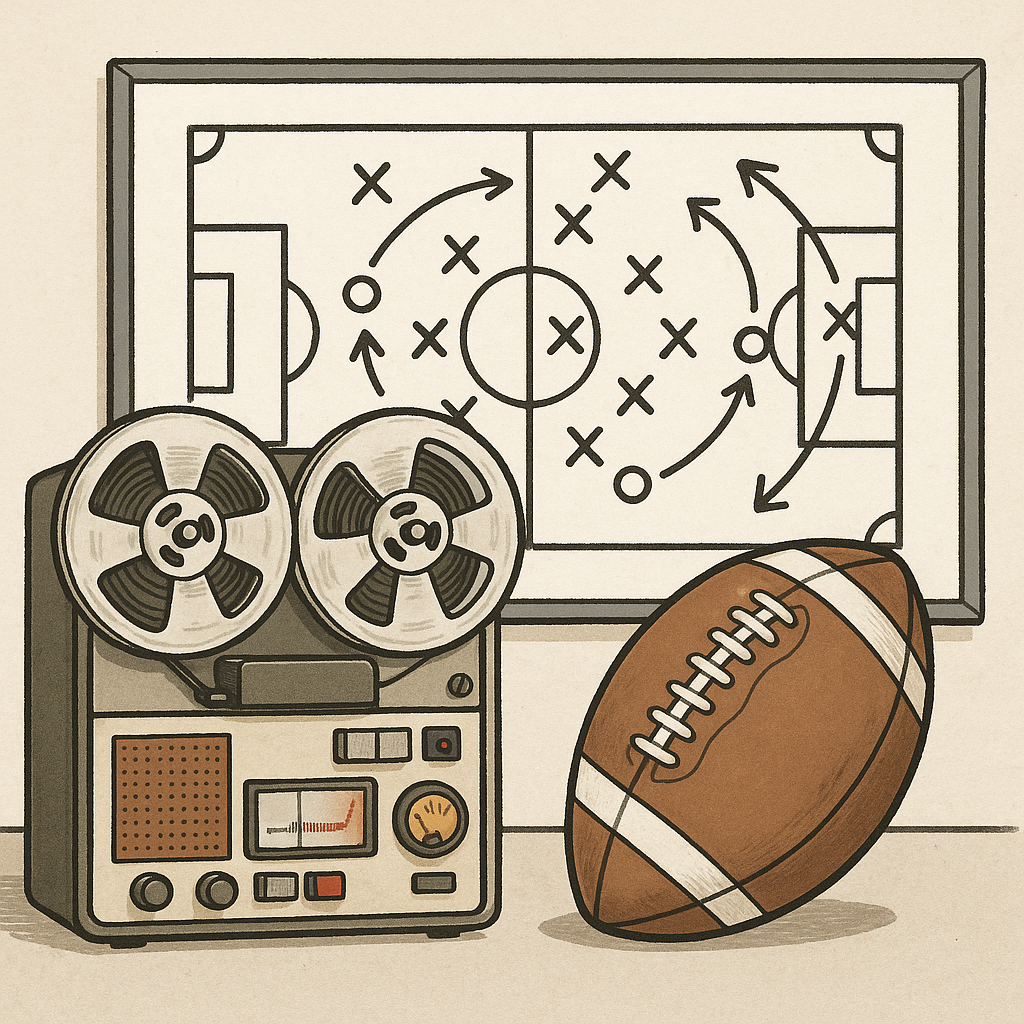
Carlos Alberto Parreira: The quiet revolutionary who re-wrote global coaching. Discover his innovative tactics and lasting legacy.
Carlos Alberto Parreira was a quiet Brazilian coach who changed football forever. He used science and smart plans to win the 1994 World Cup with Brazil. He was the first to track players' health and fitness with special gadgets. From a small town in Rio, he became a global legend, proving that hard work and smart thinking can beat pure talent.
Who is Carlos Alberto Parreira?
Carlos Alberto Parreira is a renowned Brazilian football manager, known for his tactical prowess and scientific approach to the sport. He famously led Brazil to victory in the 1994 FIFA World Cup and has managed numerous national teams, pioneering innovations like player tracking and advanced physical conditioning.
Get Cape Town news in your inbox
Stay updated with the latest stories from the Mother City.
1. Sidewalk Formations and the Warehouse Laboratory
Quintino, a working-class slice of Rio, witnessed the birth of Carlos Alberto Gomes Parreira on 27 February 1943. His parents, Portuguese immigrants who ran a pint-sized print shop a stone’s throw from the Maracanã, never imagined their son would redraw world-football blueprints. As a boy he spent Sundays studying ferocious amateur games in the neighbourhood square, sketching player arrangements on the backs of flyers his father had just inked. A tidy but unremarkable centre-back at Botafogo’s academy, Parreira abandoned playing at 21 after a knee injury and enrolled at the Federal University to pursue a degree in physical education. His first pay cheque from football came in 1966 when Olaria, a modest Rio side, hired him as fitness trainer. Co-workers remember a shy perfectionist who lugged a reel-to-reel recorder to every session so he could synchronise stopwatches and whistles down to the second.
Brazil’s military regime wanted a national athletics department inside the sports council, and in 1970 they tapped the 27-year-old to run it. The task was deceptively simple: import Soviet professor Yuri Verkhoshansky’s brutal periodisation model and prove it could survive tropical heat. While Europe romanticises cutting-edge science, Parreira’s first data sets came from a humid warehouse on Avenida Brasil. There he strapped army recruits to heart-rate telemetry, measured lactate spikes after repeated sprints and improvised altitude tents from scavenged plastic sheeting. Those rudimentary experiments forged a creed he still preaches: football deserves Olympic-grade precision.
2. Kuwait 1982 – The Unknown Strategist Turns Heads
At 38, Parreira had never run a top-tier senior side when Sheikh Fahad Al-Ahmed Al-Jaber Al-Sabah dialled his number. Kuwait’s football president needed a Brazilian who could tame prodigious yet undisciplined talents for Spain ’82. Parreira packed a Portuguese–Arabic phrasebook, a suitcase stuffed with photocopied micro-cycles and boarded a midnight flight to the Gulf. Inside the camp he outlawed marathon card sessions, mandated four litres of water a day served in numbered paper cups and dragged defenders through zone-marking drills at dawn, a concept then alien to Gulf football.
The results startled Europe: a 1–1 stand-off with Czechoslovakia and a 3–1 defeat of eventual finalists France that could have been a draw had the woodwork not intervened. Newspapers across the continent printed the previously unknown coach’s image: tie crooked, eyebrows knitted, diagramming passing lanes on a miniature whiteboard inside the Mestalla dug-out. Overnight, the phrase “compact lines over carnival flair” entered scouting lexicon.
3. 1994 Brazil – Anatomy of a Calculated Uprising
Three underwhelming post-Italia ’90 years convinced CBF president Ricardo Teixeira that the Seleção needed a reboot. The call reached Parreira in Jeddah, where he was fine-tuning Al-Ahli. His mandate: re-establish Brazilian credibility and pacify a dressing room fractured by sponsor squabbles and state rivalries. He immediately recruited physical trainer Gílson Coutinho and medic Dr José Luiz Runco, and together they imposed the “laboratory regime”: VO2-max treadmill tests, fingertip-lactate checks after double sessions, nightly urine strips left outside hotel room doors. Romário quipped that signing up felt like enrolling in medical school.
Tactically, Parreira shredded the sacred 4-3-3 on three fronts. He anchored a 4-4-2 around Dunga and Mauro Silva, tasked full-backs Jorginho and Branco with progression, and invented the “ponto de equilíbrio,” a pivot zone 35 metres from goal where responsibility rotated with ball location. Psychology mattered too; Rio psychiatrist Dr Regina Brandão ran the squad through mock shoot-outs complete with crowd noise and strobe lights. The payoff – five Romário strikes and a Rose-Bowl shoot-out win over Italy – stemmed less from samba genius than from months of engineered preparation.
Few fans know about the “blue folder” Parreira clutched throughout the finals. Inside sat colour-coded index cards for every Italy set-piece and concise Portuguese cues: “Desce pelos corredores” if Maldini stepped inside, “Vira a marcação” when Donadoni drifted. Corners were rehearsed until Bebeto could recite Roberto Baggio’s run blindfolded. After Baggio ballooned the decisive penalty, Parreira allowed himself a three-second fist-clench, then strode onto the grass to embrace Baresi, revealing compassion behind the clipboard.
4. Globetrotting Passport, Nation-Building Mission
Between 1994 and 2010 Parreira’s boarding passes spanned continents. He became the first coach to take two different Asian confederation teams – Kuwait 1982 and Saudi Arabia 1998 – to World Cup finals. Yet the 2010 cycle with South Africa best displays the mentor as social architect. When he landed in Johannesburg in late 2007, Bafana Bafana languished at 85th in the FIFA list, training facilities lacked ice baths, and bonuses arrived in cash-stuffed envelopes.
He negotiated performance-linked contracts, persuaded SAFA to create a pension fund for players and drilled a 4-2-3-1 mirroring his 2006 Brazil model, with Steven Pienaar floating as an inverted playmaker. Parreira also founded the clandestine “FIFA Insider” unit: former captain Lucas Radebe toured Europe incognito, dictating encrypted dossiers on each group-stage rival. South Africa’s 2–1 upset of France in Bloemfontein did not alter the table, but it remains a landmark for African hosts, and the rehearsed pressing triggers are still copied in Cape Town coaching clinics.
5. Heart-Rate Straps, GPS Vests and the Birth of Player Tracking
Years before GPS manufacturers courted elite clubs, Parreira sewed Polar heart-rate belts beneath Kuwait’s 1982 match shirts, discovering that wide men spiked at 189 bpm near the 72nd minute. His archived data sheets show he replaced both wingers immediately, a precursor to modern rotation models. Fast-forward to 2004: back with Brazil ahead of the Copa América, he partnered with ActiGraph to trial 10-Hz GPS units weighing 70 grams. Bulging jerseys irked the media department, so he commissioned compression tops with hidden spinal pockets. FIFA later barred live transmission on match days, yet those prototypes shaped the tracking protocols European leagues adopted within five seasons.
6. The Ever-Growing Coaching Tree
Parreira’s fingerprints appear on benches he never occupied. Luiz Felipe Scolari lifted the “double pivot versus lone striker” framework for Portugal’s Euro 2004 surge. Teenage Porto analyst André Villas-Boas studied the 1994 Brazil DVD frame by frame, citing it as his tactical awakening. Closer to home, Pitso Mosimane assisted Parreira in 2010 and imported the science-first mantra to Mamelodi Sundowns, even signing the altitude-chamber blueprints “Parreira methodology” when construction began in 2012. Rumour persists that Tite still carries the 27-page notebook given to him during the 1994 victory parade; its laminated pages reportedly survived the 2019 Copa América festivities in Rio.
7. Health Battles, Hospital Corridors and Unbreakable Spirit
The first major alarm sounded in 2009, when angioplasty was required after chest pains during South Africa’s Confederations Cup. Surgeon Dr Kevin O’Kane remembers scheduling the procedure at dawn so Parreira could still supervise a 10 a.m. training. In April 2023, Hodgkin lymphoma forced eight cycles of ABVD chemotherapy. He re-emerged in November, scarf-draped and smiling despite a gaunter frame. A recent lung infection, believed to be post-viral rather than lymphoma relapse, returned him to Hospital Copa D’Or’s ICU. Staff have pinned get-well cards from Kuwait City, Johannesburg and Los Angeles on a nearby whiteboard. One, scribbled in Romário’s unmistakable hand, reads: “Doctor, the lactate tests were worth it.”
[{"question": "Who is Carlos Alberto Parreira and what is he known for?", "answer": "Carlos Alberto Parreira is a celebrated Brazilian football manager renowned for his innovative and scientific approach to the sport. He is most famous for leading the Brazilian national team to victory in the 1994 FIFA World Cup. Beyond that iconic win, he's recognized for pioneering the integration of sports science into football, including player tracking, advanced physical conditioning, and meticulous tactical preparation."}, {"question": "What was Parreira's early life and background like?", "answer": "Born on February 27, 1943, in Quintino, a working-class neighborhood of Rio de Janeiro, Brazil, Carlos Alberto Parreira's parents were Portuguese immigrants who ran a small print shop. He initially played as a center-back at Botafogo's academy but retired at 21 due to a knee injury. He then pursued a degree in physical education at the Federal University, laying the groundwork for his future in sports science."}, {"question": "How did Carlos Alberto Parreira incorporate science into football coaching?", "answer": "Parreira was a pioneer in applying scientific principles to football. His early works included lugging a reel-to-reel recorder to fitness sessions to synchronize stopwatches and whistles, and later, during the military regime, he ran a national athletics department, experimenting with Soviet professor Yuri Verkhoshansky's periodization model in a warehouse. He used basic heart-rate telemetry, measured lactate spikes, and improvised altitude tents. For the 1994 World Cup, he implemented a 'laboratory regime' with VO2-max tests, fingertip-lactate checks, and nightly urine strips. He also innovated with early player tracking by sewing Polar heart-rate belts into Kuwait's 1982 match shirts and later trialing 10-Hz GPS units with Brazil in 2004."}, {"question": "What were some of Carlos Alberto Parreira's significant coaching achievements?", "answer": "His most significant achievement was leading Brazil to win the 1994 FIFA World Cup, breaking a 24-year drought for the Seleção. He also notably managed Kuwait in the 1982 World Cup, achieving a surprising 1-1 draw with Czechoslovakia, and later took Saudi Arabia to the 1998 World Cup. In 2010, he coached South Africa, the host nation, in the World Cup, where they achieved a memorable 2-1 upset over France."}, {"question": "How did Parreira's methods influence other coaches and the sport in general?", "answer": "Carlos Alberto Parreira's influence extends far beyond his direct coaching roles. Many coaches, such as Luiz Felipe Scolari, adopted his tactical frameworks. André Villas-Boas studied his 1994 Brazil DVD as a tactical awakening. Pitso Mosimane, who assisted Parreira in 2010, brought his science-first mantra to Mamelodi Sundowns, even using his altitude-chamber blueprints. His innovations in player tracking, physical conditioning, and meticulous preparation became foundational elements that were later adopted by major European leagues and continue to shape modern football coaching."}, {"question": "What health challenges has Carlos Alberto Parreira faced?", "answer": "Carlos Alberto Parreira has faced significant health challenges throughout his later years. In 2009, he underwent angioplasty after experiencing chest pains during the Confederations Cup. More recently, in April 2023, he was diagnosed with Hodgkin lymphoma, requiring eight cycles of chemotherapy. After recovering, he unfortunately experienced a lung infection in early 2024, leading to his hospitalization."} ]

Amanda Wilson is a Cape Town-born journalist who covers the city’s evolving food scene for national and international outlets, tracing stories from Bo-Kaap spice shops to Khayelitsha micro-breweries. Raised on her grandmother’s Karoo lamb potjie and weekend hikes up Lion’s Head, she brings equal parts palate and pride to every assignment. Colleagues know her for the quiet warmth that turns interviews into friendships and fact-checks into shared laughter.
View all articles →