
Free entry to Kirstenbosch this national gardens week
Explore South Africa's 2026 National Gardens Week: a living lab where tech meets nature, from barcode-scanned leaves to haptic concerts.
South African botanical gardens are transforming into living tech hubs! They use smart gates and AI to track visitors and protect rare plants like the Erica verticillata. Walkways now listen to your footsteps, turning them into music, and special sensors guard the lonely Encephalartos woodii from thieves. Even dancing visitors power LED lights, making everyone a co-creator of these amazing green spaces.
How are South African botanical gardens using technology to enhance visitor experience and conservation?
South African botanical gardens are integrating technology like AI cartographers, fiber-optic sensors, NFC coins, and piezoelectric tiles to monitor visitor movement, gather plant data, and generate power. This creates an interactive experience, improves conservation efforts for endangered species like Erica verticillata and Encephalartos woodii, and allows visitors to participate in ecological stewardship.
Get Cape Town news in your inbox
Stay updated with the latest stories from the Mother City.
1. The Turnstile Renaissance
Monday 9 March dawns gold-green above Table Mountain. At eight SANBI gardens the click-clack of waist-high gates becomes a heartbeat: no coin needed, only an ID and curiosity. Behind the courtesy lies a silent laboratory. Every magnetic latch fires a datapoint to Pretoria where an AI cartographer watches colour pools swell and fade across virtual lawns. In 2025 the pools merged 126 431 times; the model expects 152 000 this year, clustering like galaxies around Kirstenbosch’s sun-dappled boardwalk between coffee time and lunch.
To keep sneakers off the throat of Erica verticillata - last of its lineage - horticulturists have rolled out 34 wheeled planter roadblocks. The hedges look decorative, yet they are stealth algorithms made of chlorophyll, nudging selfie-seekers left while framing the perfect shot.
You, the walker, feel only the invite of shade and perfume; the garden feels your mass, your stride-length, the pause when you gasp at a sugarbird. By the time you leave, you will have become a line of code in the mountain’s diary.
2. When Trees Learn to Dance with Humans
Eleven metres up, the Boomslang walkway no longer simply carries people; it eavesdrops on them. Engineers wove hair-thin glass threads through the pine handrails last winter; the fibre listens for the tremor signature of every heel. Each footfall etches a sine wave that a GPU in the service hut reads like sheet music.
At sunset the day’s accumulated rhythm is handed to a drum machine. On 12 March gqom bass will lock to the average cadence of 14 702 hikers, turning the canopy into a colossal sub-woofer. Wristbands given out at the gate stream pulse rates; if the crowd’s collective ticker climbs above 128 bpm the walkway’s LED skin flares magma-orange, a polite reminder to sync breath with branch.
Thus the forest and the city swap heartbeats for an hour, proving that wild places can still absorb nightlife without selling their soul.
3. Fortress for a Lonely Dinosaur
In a stone amphitheatre east of the main lawn lives the world’s most solitary bachelor: Encephalartos woodii, a cycad with no hope of a mate. Last year thieves tried to hacksaw a 1,4 m stem; the scar is now a scab you can circle with a thumb.
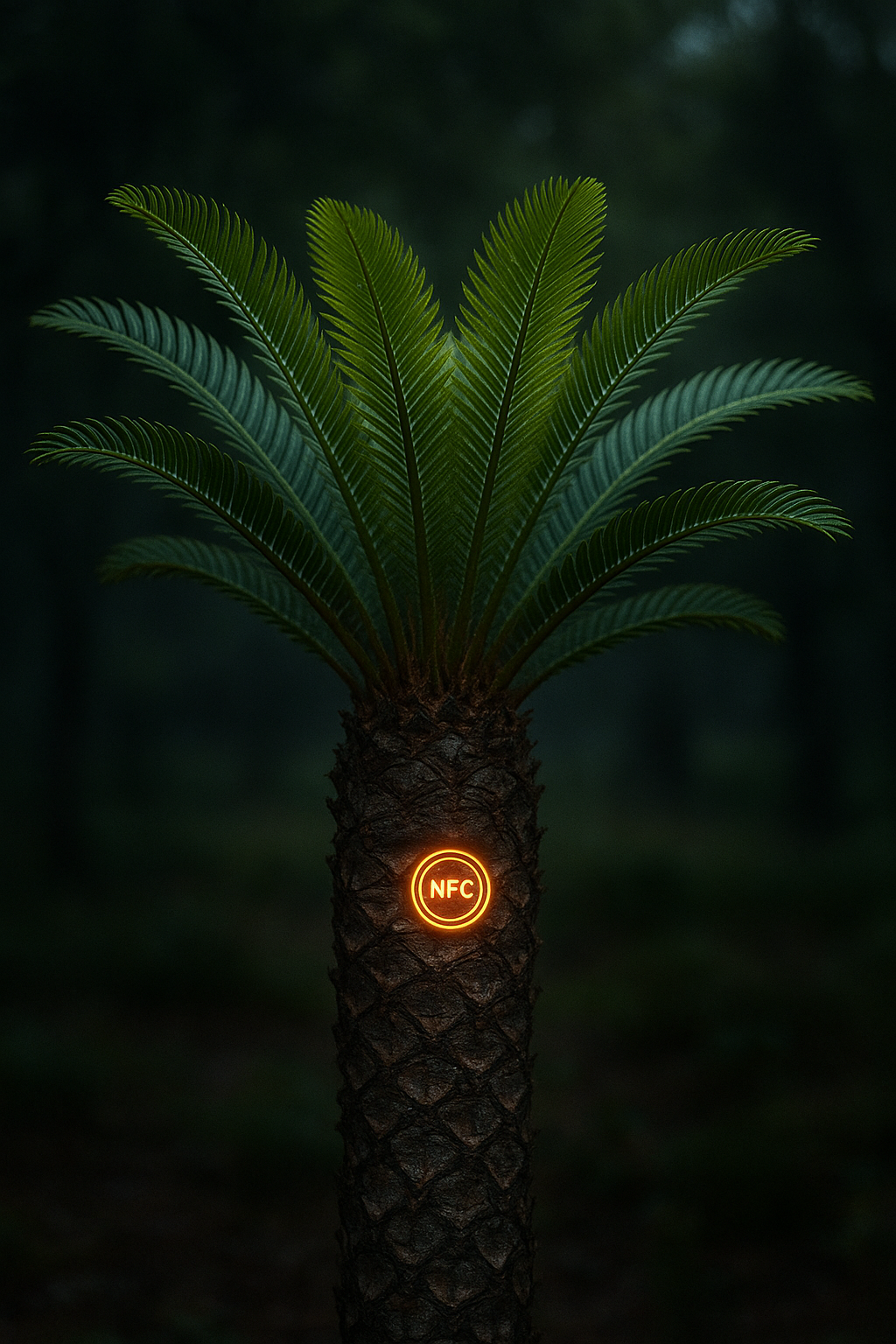
Since October each trunk wears a nail-sized NFC coin sewn into its growing tip. Tip more than seven degrees and a radio pulse sprints across the valley to the security hut in half a second. Guards view the plant through a phone camera and see its life story hover in neon: accession year, risk score, price on the black market.
During the festival the same overlay is open to civilians. Download SANbiGuard, scan a cycad, file a report, pocket loyalty points you can trade for packets of real sunshine-daisy seed. In this way a lonely male gains 50 000 vigilant matchmakers armed only with curiosity and megabytes.
4. Cloud-Farming the Rainbow Nation
South Africa ships seven of every ten protea bouquets on Earth, yet warming nights have stolen more than three weeks from the pollen calendar. To fight the clock SANBI rigged three six-metre mist nets that inhale golden dust at dawn.
Guests receive micropipettes and watch the grains germinate under UV scopes while their smartphones hoover dimensions into Zooniverse. The resulting open-source model will let farmers test batch fertility without freight costs or guesswork.
Down on the Dell lawn, 5 000 dancers compress piezoelectric tiles. The human engine produces 8,5 kWh per concert - every joule fed straight into the LED backdrop. Opera, indie rock or jazz, the mountain stays off the municipal tap while the crowd feels bass lines through their soles.
Even Pretoria’s giraffes clock in: thermoelectric pads glued to their barn walls harvest body heat, letting commuters trickle-charge handsets while learning that rhino range expansion used to be funded by stamps, not tokens.
1. How are South African botanical gardens leveraging technology for visitor tracking and plant protection?
South African botanical gardens are employing smart gates that fire data points to an AI cartographer in Pretoria, monitoring visitor movement and patterns. To protect rare plants like the Erica verticillata, they use wheeled planter roadblocks equipped with stealth algorithms that subtly guide selfie-seekers away while still framing good photo opportunities. For endangered species like the Encephalartos woodii, nail-sized NFC coins are sewn into the growing tips, triggering a radio pulse to security if the plant is disturbed beyond a certain angle. Visitors can also download the SANbiGuard app to scan cycads, report issues, and earn loyalty points.
2. How do the walkways in the gardens create an interactive and musical experience for visitors?
The Boomslang walkway, located eleven metres up, has been integrated with hair-thin glass threads that act as fibre-optic sensors. These sensors

Liam Fortuin is a Cape Town journalist whose reporting on the city’s evolving food culture—from township kitchens to wine-land farms—captures the flavours and stories of South Africa’s many kitchens. Raised in Bo-Kaap, he still starts Saturday mornings hunting koesisters at family stalls on Wale Street, a ritual that feeds both his palate and his notebook.
View all articles →