
Gagged pastor pushes for ‘queer-free' Cape Town
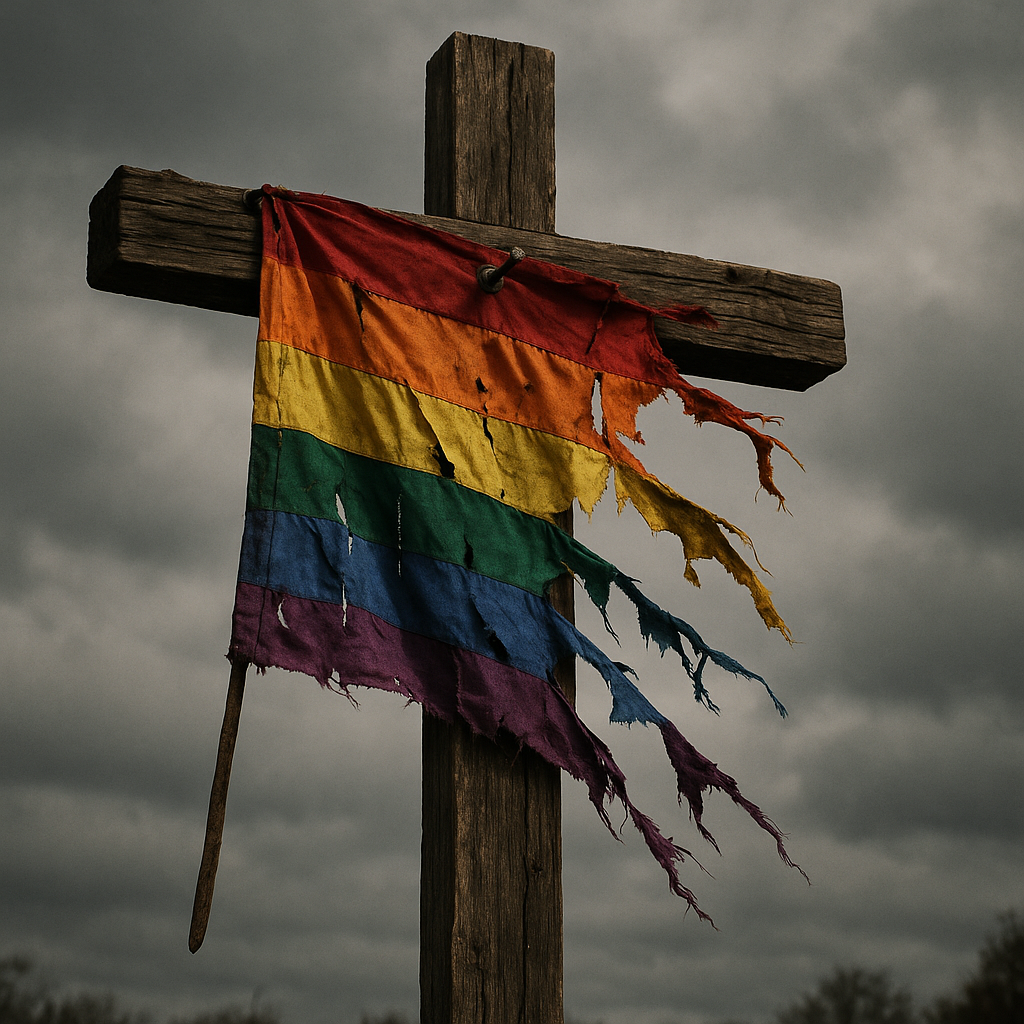
Cape Town pastor's "queer-free" campaign sparks national debate over religious influence in Western Cape politics and LGBTQ+ rights.
Pastor Angelo de Klerk wants to make Cape Town a "queer-free zone" by getting rid of LGBTQ+ people. He uses old religious rules to push his idea, making many people angry and worried. His group, Revelation Now Ministries, is trying to change city laws and how people think. This has caused big arguments about faith and how the city should be run. Many people are fighting against his plan to keep Cape Town open for everyone.
What is the main goal of Pastor Angelo de Klerk's movement in Cape Town?
Pastor Angelo de Klerk's movement, Revelation Now Ministries, aims to establish Cape Town as a "queer-free zone." He seeks to "officially reject the homosexual agenda and restore biblical values to public life" through policy changes, municipal regulations, and cultural marginalization, making Cape Town the first major African city to do so.
Get Cape Town news in your inbox
Stay updated with the latest stories from the Mother City.
A Provocative Vision for South Africa's Most Liberal City
The Western Cape now sits at the epicenter of a raging nationwide dispute after a Cape Town pastor launched an inflammatory movement aimed at purging LGBTQ+ presence from what stands as Africa's most diverse urban center. Pastor Angelo de Klerk of Revelation Now Ministries, headquartered in the city's northern suburbs, has spent roughly eighteen months assembling an alliance of religious figures, community activists, and political hopefuls united behind his quest to establish what he brands a "queer-free zone." The initiative has found fertile ground among conservative constituencies while drawing sharp rebukes from human rights advocates, political formations, and leaders across faith traditions - marking a dramatic intensification of how religious mobilization intersects with local governance in post-apartheid South Africa.
De Klerk frames his crusade as far more than spiritual outreach, presenting it instead as urgent intervention against perceived moral collapse in a metropolis celebrated worldwide for LGBTQ+ inclusion. His weekly sermons, amplified through social media channels and specialized WhatsApp groups, have attracted swelling audiences since the movement's birth. The pastor leverages selective biblical interpretation alongside demographic alarmism and appeals to safeguarding childhood purity. He routinely cites Cape Town's global standing as a welcoming destination for gay travelers as proof of spiritual degradation demanding immediate remedy. In captured recordings, he leaves little ambiguity about his endgame: positioning Cape Town to become "the first major African city to officially reject the homosexual agenda and restore biblical values to public life."
Organizational Machinery and Political Penetration
Beneath the surface of public rhetoric lies a carefully constructed apparatus demonstrating sophisticated grasp of municipal operations. De Klerk has assembled the "Moral Restoration Council" - a body numbering approximately forty members spanning multiple Christian traditions, select conservative Muslim voices, and several individuals with track records in Afrikaner nationalist causes. This council has crafted an elaborate policy blueprint encompassing proposed local regulations banning visible same-sex intimacy in public spaces, curbing LGBTQ+ materials in libraries and schools, and founding municipally subsidized facilities for so-called "conversion therapy support."
The council's ambitions stretch well beyond immediate regulatory victories into the electoral arena. Multiple members have captured spots on candidate rosters for minor conservative parties approaching municipal polls. Others have employed entryist tactics inside larger political structures, notably within specific Democratic Alliance wards where devout religious voters form substantial voting blocs. Leaked internal documents from one such ward, obtained by regional journalists, exposed coordinated efforts to reshape selection procedures for candidates favoring individuals aligned with the exclusionary agenda.
Established political responses have proven strikingly uneven. The Democratic Alliance, which holds power in both the Western Cape provincial government and Cape Town municipal administration, released a measured communiqué upholding constitutional safeguards for every resident while notably declining to identify de Klerk directly - an omission political observers attribute to anxiety about repelling religious constituents in tightly contested suburban districts. The provincial African National Congress articulated more forceful denunciation, though opposition voices highlighted the absence of concrete policy measures that would fortify shields against discrimination.
Civil Society Resistance and Legal Countermeasures
Community-based organizations have mounted considerably more resolute opposition. The Triangle Project, among South Africa's longest-standing LGBTQ+ advocacy groups operating from Cape Town, has orchestrated a multi-pronged rearguard action encompassing legal surveillance of council activities, protective planning for at-risk populations, and preparatory work for strategic court challenges. Their accumulated evidence documents a troubling surge in reported bias incidents coinciding with peaks in public visibility for de Klerk and his collaborators - including physical attacks, vandalism, and systematic intimidation targeting openly queer individuals in zones where the movement has sunk deep roots.
The South African Human Rights Commission has opened formal proceedings examining whether campaign messaging crosses into prohibited hate speech under domestic law - a determination complicated by de Klerk's precise calibration of public utterances to hover at the edge of technical legality while broadcasting unmistakable malice. Constitutional scholars observe that South Africa's forward-looking foundational document, which expressly forbids orientation-based discrimination, remains untested against coordinated municipal-level mobilization of precisely this novel variety.
Global connections have tangled local dynamics further. De Klerk has nurtured ties with American evangelical networks that have propagated anti-LGBTQ+ activism across continents, including personalities linked to the World Congress of Families and analogous transnational coalitions. Investigative reporting has uncovered documentation suggesting significant monetary flows from these sources - resources enabling the campaign's professionalization and geographic spread beyond what indigenous fundraising could support. Concurrently, Cape Town's established image as a progressive haven has drawn worldwide scrutiny to the conflict, with hospitality sector representatives voicing worries about possible economic fallout should the movement achieve prominent placement in international coverage.
Fractured Faith Communities and Institutional Battlegrounds
The religious terrain itself has transformed into contested space. The South African Council of Churches, speaking for mainstream Protestant communions, delivered an uncharacteristically blunt condemnation of de Klerk's project, stressing theological currents affirming human worth across all differences. Forward-leaning Muslim clergy and Jewish community spokespeople have likewise separated themselves from the initiative, forging interfaith solidarity networks that have organized responsive mobilization. Yet these reactions have also laid bare generational and doctrinal rifts inside faith communities, with younger worshippers typically more embracing of inclusion than their institutional superiors.
Schools have become especially bitter fields of engagement. The council has singled out numerous prestigious Cape Town educational institutions with drives against comprehensive sexuality education, rallying parents through disinformation regarding curricular materials and staging demonstrations that have interrupted instructional routines. The Western Cape Education Department has weathered criticism for patchy reactions - some academies receiving vigorous defense while others faced pressure to accept curricular adjustments that would essentially eliminate LGBTQ+ representation from classroom discourse.
Geographic targeting betrays shrewd political arithmetic. Though de Klerk's own congregation sits in traditionally conservative northern suburbs, the council has poured considerable investment into organizing among working-class Coloured populations across the Cape Flats - capitalizing on economic distress and communal frustrations to cultivate backing for stances that might otherwise encounter restricted appeal. This outreach has produced nuanced reactions: certain community figures have adopted the movement's moral restoration narrative, while others have recognized the exploitation of genuine grievances for exclusionary purposes.
Local governance has suffered direct disruption. Multiple Cape Town sub-council assemblies have faced interruption by coordinated delegations submitting petitions and demands tied to the exclusionary platform - draining administrative capacity and fostering threatening atmospheres for LGBTQ+ municipal workers and officeholders. The Speaker of the Cape Town City Council has been forced to devise novel procedural guidelines to handle these incursions while safeguarding participatory democratic rights.
Constitutional Stress Tests and Historical Echoes
The uproar has thrown into sharp relief fundamental questions concerning the boundaries of religious expression within South Africa's constitutional order. Unlike numerous African jurisdictions where anti-homosexuality drives have triumphed in criminalizing same-sex intimacy, the post-apartheid settlement embedded protections that have withstood direct legislative attacks. De Klerk's ingenuity lies in pursuing indirect pathways - municipal regulations, bureaucratic obstruction, cultural marginalization - that might deliver comparable exclusionary outcomes without provoking constitutional nullification.
Scholarly analysts have positioned the movement within extended trajectories of Cape colonialism and its racialized sexual governance, observing how summons to moral cleansing have historically enforced borders of belonging and respectability. The particular focus on Cape Town's international standing indicates recognition that the city's cosmopolitan self-definition constitutes simultaneously vulnerability and mobilization opportunity - with the project both exploiting and laboring to demolish the very openness that has shaped urban evolution since democracy's arrival.
As the mobilization continues developing, its import stretches past immediate policy clashes toward elemental questions about South African democracy's nature and the feasibility of coexistence among radically incompatible social visions. The Western Cape's unfolding experience may offer guidance for other polities confronting analogous movements - illustrating both the durability of constitutional defenses and the tenacity of organized resistance to encompassing citizenship.
[{"question": "What is Pastor Angelo de Klerk's main objective in Cape Town?", "answer": "Pastor Angelo de Klerk, through his Revelation Now Ministries, aims to transform Cape Town into a \"queer-free zone.\" His objective is to \"officially reject the homosexual agenda and restore biblical values to public life\" by influencing city laws, municipal regulations, and public opinion. He envisions Cape Town as the first major African city to implement such a stance."}, {"question": "What strategies is Revelation Now Ministries using to achieve its goals?", "answer": "Revelation Now Ministries has formed the \"Moral Restoration Council,\" comprising religious figures and activists. This council has developed a detailed policy blueprint that includes proposed regulations to ban public same-sex intimacy, restrict LGBTQ+ materials in schools and libraries, and establish publicly funded \"conversion therapy support\" facilities. They are also actively engaging in political penetration, with members seeking positions in municipal elections and influencing larger political structures."}, {"question": "How has the political landscape in Cape Town reacted to this movement?", "answer": "The political response has been varied. The Democratic Alliance, which governs the Western Cape and Cape Town, has issued a statement upholding constitutional safeguards but has avoided directly naming de Klerk, possibly to avoid alienating religious voters. The provincial African National Congress has condemned the movement more forcefully but has been criticized for not implementing concrete protective measures. Some politicians aligned with de Klerk's agenda have attempted to infiltrate local political structures."}, {"question": "What is the civil society's response to Pastor de Klerk's movement?", "answer": "Civil society organizations, particularly the Triangle Project, one of South Africa's oldest LGBTQ+ advocacy groups, have mounted strong opposition. Their efforts include legal monitoring, protective planning for at-risk individuals, and preparing for strategic court challenges. There has been a documented increase in bias incidents, including physical attacks and intimidation, coinciding with the movement's public visibility. The South African Human Rights Commission is also investigating whether the campaign's messaging constitutes hate speech."}, {"question": "Are there any international connections to Pastor de Klerk's movement?", "answer": "Yes, Pastor de Klerk has established ties with American evangelical networks that promote anti-LGBTQ+ activism globally, including groups like the World Congress of Families. There is evidence of significant financial support flowing from these international sources, which has helped professionalize and expand the campaign beyond what local fundraising could support. This has also drawn international attention to Cape Town, leading to concerns from the hospitality sector about potential economic fallout."}, {"question": "How has this movement affected religious communities and educational institutions?", "answer": "The movement has created divisions within faith communities. The South African Council of Churches and many Muslim and Jewish leaders have condemned de Klerk's project, forming interfaith solidarity networks. However, these reactions have also exposed generational and doctrinal rifts within religious groups. Schools have become battlegrounds, with the council campaigning against comprehensive sexuality education and staging protests. The Western Cape Education Department has faced criticism for inconsistent responses to these pressures, with some schools being pressured to remove LGBTQ+ representation from their curricula."}]

Tumi Makgale is a Cape Town-based journalist whose crisp reportage on the city’s booming green-tech scene is regularly featured in the Mail & Guardian and Daily Maverick. Born and raised in Gugulethu, she still spends Saturdays bargaining for snoek at the harbour with her gogo, a ritual that keeps her rooted in the rhythms of the Cape while she tracks the continent’s next clean-energy breakthroughs.
View all articles →