
Global survey highlights need for greater ocean education and awareness, with sustainable fishing playing its part in safeguarding fish for the future
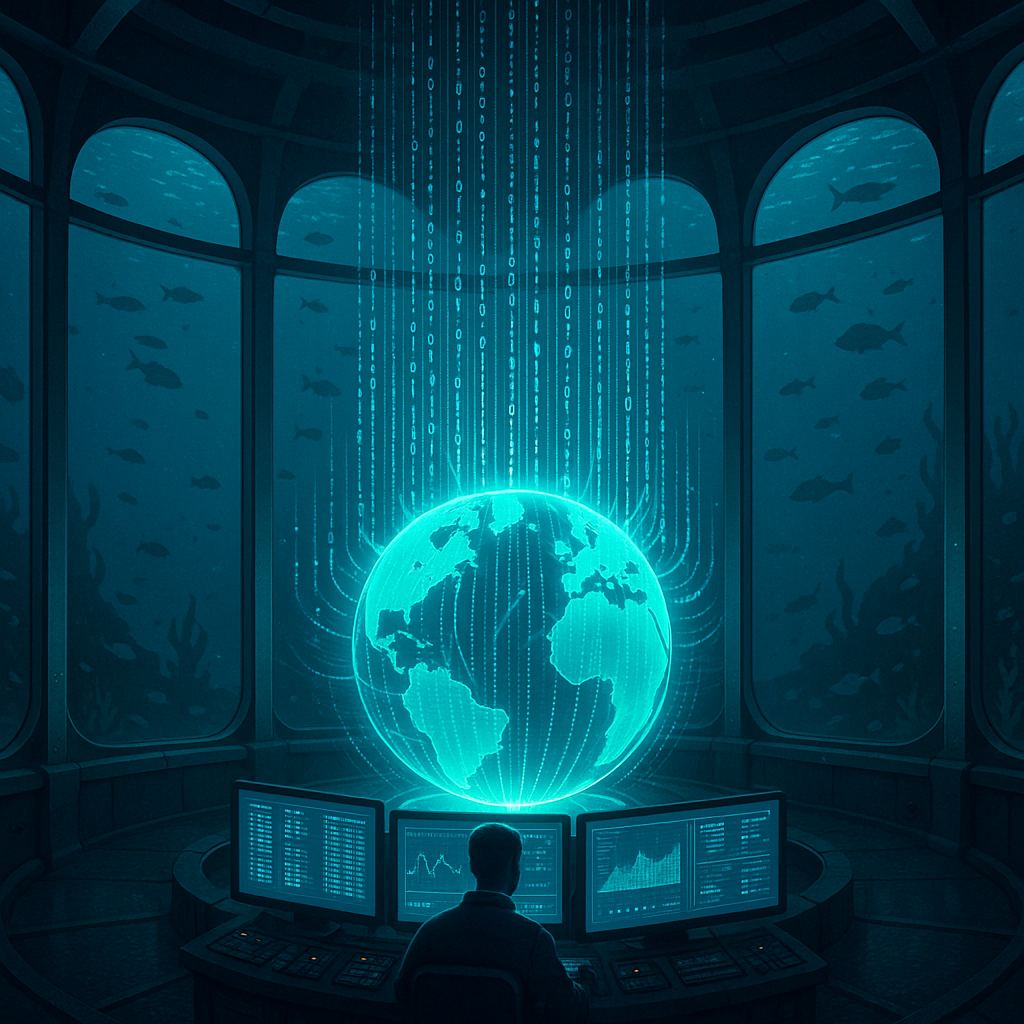
Explore how knowledge, hope, and action are transforming ocean conservation, from scientific leaps to global policies and local efforts.
The ocean is like a hidden world that covers most of our Earth, making half of the air we breathe and keeping our planet's climate in check. It's super important for our food and all living things. If we don't take care of it, we're in big trouble. So, the ocean is a battleground we need to protect, and a beacon of hope for our future.
Why is the ocean considered a crucial battleground and beacon in the 21st century?
The ocean is vital because it's a vast, underexplored realm covering most of Earth, producing 50% of our oxygen, and acting as a massive climate regulator. Its health directly impacts global climate, food security, and biodiversity, making its sustainable management critical for the planet's future.
Get Cape Town news in your inbox
Stay updated with the latest stories from the Mother City.
The Hidden Realm We Still Cannot Measure in Our Heads
The Geography Gap
Roughly one-third of today’s adults think - or aren’t sure - whether the tallest Himalayan peak rises higher than the deepest ocean trench. The gulf between Everest’s 8 848 m summit and Challenger Deep’s 10 929 m pit is wider than many city skyscrapers stacked end-to-end. When that mental image flips, the sea stops being “big water” and becomes a planet within a planet, carved by abyssal plains, submerged mountain chains, and hydrothermal chimneys venting water hot enough to soften lead.
The same survey reveals that almost one in five people does not grasp that saltwater covers more of Earth than dry land. A shift in this single data point reframes every other conversation: if the ocean is the dominant surface, the rules of carbon, climate, and food originate there, not on continents.
Oxygen’s Quiet Origin
Fifty percent of the oxygen entering human lungs is brewed not by trees but by drifting microscopic plants in the open sea. Mis-attribute that contribution to forests and the ocean’s value drops off the cognitive map. In reality, every second breath owes its existence to seasonal blooms stretching across the South Pacific and the Arabian Sea - vast, floating fields visible from orbit.
Risk Perception
Knowing the ocean’s scale rewires how societies rank danger. Sea-level rise, acidification, and fishery collapse feel abstract only if the sea is imagined as an edge to walk beside. Once the sea is understood as the planet’s largest living system, the risks move from the horizon to the bloodstream of everyday life.
Depths, Currents, and Creatures Most People Will Never See
A Journey to the Floor
Anchor an imaginary rope at Challenger Deep, let it dangle upward, and Mount Everest could hook itself on the line yet still dangle 1 500 m below the surface. At 2 500 m, black smokers spew mineral-rich water that cools into cobalt-laden chimneys - the very metals that drive wind-turbine magnets and smartphone batteries. Tube worms up to two metres long colonise these vents, thriving on sulphide instead of sunlight.
The Twilight Zone at Dinner Time
Every nightfall, trillions of thumb-length bristlemouth fish rise from a midwater realm 200 m to 1 000 m down. They feed near the surface before descending at dawn, ferrying carbon in their tiny guts. Satellites detect the dip in surface reflectance caused by this nightly migration; the carbon downpour equals the annual emissions of several industrialised nations. Without this conveyor belt, atmospheric CO₂ levels would be measurably higher.
Invisible Giants
Blue whales diving to 300 m off Sri Lanka’s coast gulp krill swarms so dense they register on sonar like false seafloors. These giants are not relics; population rebounds off the West Coast have followed international shipping-lane shifts that halved lethal collisions.
The Collapse That Wasn’t: How Stocks Claw Back When Rules Align
Atlantic Mackerel’s Second Coming
In the 1970s, mackerel in the northeast Atlantic crashed under relentless foreign fleets. Quotas slashed to mirror scientific catch advice allowed the spawning biomass to rebuild within one and a half decades, proving collapse is not destiny.
Namibia’s Hake Rebound
After independence in 1990, Namibia expelled foreign trawlers and auctioned fishing rights to domestic firms under strict observer coverage. Licence fees funded research; catches fell by 40 % but export value quadrupled as fish size and quality rose. By 2019, biomass had doubled.
U.S. Scallop Fields
Rotational closures mapped with centimetre-scale sonar turned parts of the Georges Bank seafloor into underwater crop rotations. The resulting scallop harvest is now worth US $570 million a year - proof that ecological rest can pay compound interest.
The Ocean as Living Climate Machine - and Policy Lever
Heat Sink of Civilization
Since 1970 the ocean has swallowed heat equal to every coal, gas, and oil plant on Earth operating flat-out for four centuries. Waters near Greenland now store so much warmth that sea-ice formation is delayed by weeks each autumn.
Weather Forks
The Indian Ocean Dipole - a pattern of warm and cool patches - can spark wildfires in Australia while unleashing floods in Kenya. Because these temperature seesaws are driven partly by greenhouse-gas-forced ocean warming, what happens in one hemisphere ricochets across the globe.
Reefs Given Breathing Room
When herbivorous fish are protected from nets, they graze algae that otherwise smother heat-stressed corals. Managed fisheries thus act as both food producer and climate buffer, a win-win rarely recognised in climate accords.
Pollution That Does Not Float on the Surface
Plastic’s Chemical Entourage
Eleven million tonnes of plastic enter the sea each year, but nurdles and bags are only the visible tip. Antifouling paint leaches tributyltin, distorting snail sex ratios and collapsing populations. Antidepressants flushed downstream change fish behaviour: minnows dosed with Prozac abandon shelter and boost predator success rates.
Acoustic Smog
Container ships radiate chronic noise at 190 dB, louder than a jet at take-off. The din overlaps the low-frequency love songs of right whales, severing contact between mates. With fewer than four hundred North Atlantic right whales left, every decibel matters.
Microscopic Trespassers
Microfibres shed by synthetic clothing ride ocean currents to Antarctic krill bellies. The plastics act like Velcro, binding toxic flame retardants that magnify up the food web onto dinner plates in Tokyo and Toronto.
Robots, Satellites, and the Data Deluge
The Float Armada
More than 4 000 autonomous Argo robots cycle from surface to 2 000 m, phoning home temperature and salinity every ten days. Add Saildrone wind-powered craft skirting Antarctic storms, and models now predict mackerel location days ahead, slashing fuel burn and by-catch.
Genetic Barcodes in a Bucket
A litre of seawater filtered through a coffee-mug-sized cartridge can reveal every species that swam by in the last 24 hours via trace DNA. Port inspectors in Chile use the method to detect illegal toothfish shipments disguised as cod.
AI Meets Net Burns
In Norway, algorithms digest sonar schools, weather forecasts, and historical catch to guide purse seiners. Crews haul nets with 30 % less fuel and nearly zero juvenile herring in the hold.
Farming Low on the Food Web, High in Value
Kelp as Carbon and Cash Crop
Maine seaweed farmers grow ribbon-like sugar kelp that locks away 1.5 tonnes of CO₂ per hectare yearly. After harvest the same seaweed becomes restaurant salad, cattle feed additive (reducing methane burps), and compostable bioplastic.
Mussels that Filter Cities
A single rope-grown mussel scrubs five litres of seawater every hour, stripping out excess nitrogen. In Sweden, mussel farms sit downstream from fertilised farmland, acting as living water-treatment plants and earning farmers nutrient credits.
Stackable Ocean Agriculture
Fish cages suspended beneath kelp rafts create vertical farms where salmon waste feeds kelp, kelp feeds abalone, and abalone shells become high-grade calcium - an oceanic circular economy in one water column.
Feeding the World Without Running Out
Blue Protein’s Share Today
Fish already deliver 17 % of humanity’s animal protein. In the Maldives, Kiribati, and Seychelles, the figure tops 70 %. Growing global demand cannot be met by wild catch alone; the deficit must come from aquaculture.
The Stanford Projection
The Blue Food Assessment calculates that sustainable expansion of fish and shellfish farms could nourish an extra 200 million people by mid-century without adding pressure to croplands or freshwater reserves.
Feed from Fermenters
Algae-derived omega-3 oils now replace wild fish in tilapia feed. A single steel bioreactor the size of a shipping container can supply the essential fatty acids once taken from a million wild anchovies.
Old Wisdom, New Satellites
Bul and Ra’ui
For centuries, chiefs in Palau and Rapa Nui declared seasonal reef closures called bul and ra’ui. Satellite counts now show biomass inside these traditional no-take zones is 2.5 times higher than just outside the lines. The secret is not fences but social trust.
Micronesian Drones
Elders on Pohnpei receive drone footage of illegal trawlers on WhatsApp within minutes of detection. Village councils impose fines and revoke licences, cutting poaching by 90 % over three years. Technology becomes useful only when woven into ancestral law.
Blue Bonds and Fish-Flavoured Finance
Seychelles Pioneers
In 2018 the Seychelles swapped part of its national debt for the world’s first blue bond. US $15 million refinanced at lower rates freed cash to expand marine parks covering 30 % of the exclusive economic zone. Moody's noted the healthier reefs improved storm resilience - credit upgraded.
Skipjack-Linked Loans
Pacific tuna debt swaps hit the market in 2024: if skipjack biomass stays above 40 % of unfished levels, interest falls; dip below and investors earn higher yields. Conservation becomes a market signal.
Impact Funds Dive In
BlackRock and pension funds now run dedicated “ocean restoration” portfolios seeded with mussel-farm loans, kelp-credit futures, and satellite-verified mangrove replanting credits that can be sold on voluntary carbon markets.
Classrooms, Apps, and the Next Generation of Stewards
Ocean Literacy for Eight-Year-Olds
Maldives schoolchildren strap on snorkels in Grade 3, then don VR headsets to descend virtually into the twilight zone. Data they log on tablet apps feed real-time reef-health dashboards. Programme graduates identify 40 % more local species than peers in neighbouring countries.
The Ocean Heroes Wall
On World Ocean Day 2024, the MSC launched an audio gallery featuring Ghanaian octopus gleaners, Mozambican clam farmers, and Seychellois chefs explaining how night-spear bans tripled daytime catches. Messages air in Kiswahili, French, Portuguese, and Afrikaans via national radio.
Citizen Snapshots
Apps like OpenFins let weekend divers upload geotagged photos. AI trained on 10 million images recognises 400 species with 92 % accuracy. Costa Rican authorities expanded a no-take hammerhead refuge by half after flood of user uploads exposed illegal gillnet lines.
Labels, Storytelling, and the Power of the Checkout Lane
From Logo to Narrative
A little blue eco-label boosts sales 5 %. Add a shelf card telling how the Alia Vaka fleet employs 200 Samoans and sets aside 30 % of grounds as no-take refuge, and sales jump 19 %. Details turn ethics into impulse.
Blockchain on Ice
Each Patagonian toothfish is tagged at sea with a QR code that travels intact to the plate. Diners in Manhattan scan to confirm legal catch; customs in Hong Kong cross-check quotas against the same ledger in real time. Fraud evaporates.
Diplomacy, Genes, and the Borderless Ocean
The High Seas Treaty
Finalised in 2023, the UN pact allows protected zones in the 64 % of ocean lying outside national jurisdiction. The first candidate is the Sargasso Sea, whose floating algae cradle both American and European eels. Gear restrictions and live-monitored observers will phase in rather than blanket bans.
Bluefin’s Genetic Passport
Tagging shows a juvenile tuna tagged in North Carolina reaches Norway in 28 days, crossing five exclusive economic zones. DNA confirms a single pan-Atlantic stock, making national quotas arbitrary. ICCAT now pegs catch limits to dockside genetic sampling - a global first.
Why is the ocean considered a crucial battleground and beacon in the 21st century?
The ocean is vital because it's a vast, underexplored realm covering most of Earth, producing 50% of our oxygen, and acting as a massive climate regulator. Its health directly impacts global climate, food security, and biodiversity, making its sustainable management critical for the planet's future. It's a 'battleground' due to threats like pollution, climate change, and overfishing, and a 'beacon' because of its potential for sustainable solutions, new resources, and innovative technologies.
How does the ocean contribute to the air we breathe and global climate regulation?
Remarkably, 50% of the oxygen we breathe is generated by microscopic marine plants (phytoplankton) drifting in the open sea, not by forests on land. Furthermore, the ocean acts as the planet's largest heat sink, absorbing heat equivalent to four centuries of continuous operation from all coal, gas, and oil plants since 1970. It also influences global weather patterns, with phenomena like the Indian Ocean Dipole impacting climates worldwide.
What are some surprising facts about the ocean's scale and hidden life?
Many people underestimate the ocean's vastness; for instance, the Challenger Deep is 10,929 meters deep, which is significantly deeper than Mount Everest is tall (8,848 meters). The ocean covers more of Earth than dry land. It also hosts unique ecosystems like hydrothermal vents at 2,500 meters, supporting life forms like two-meter-long tube worms that thrive on sulfur. Billions of bristlemouth fish undertake daily migrations, ferrying carbon from the surface to the deep sea, a process crucial for regulating atmospheric CO₂.
Can damaged ocean ecosystems recover, and how?
Yes, ocean ecosystems can recover when effective management and conservation efforts are implemented. Examples include the Atlantic Mackerel, which rebounded after strict quotas were enforced, and Namibia's hake stocks, which doubled after the expulsion of foreign trawlers and the implementation of domestic fishing rights. Rotational closures for U.S. scallop fields on Georges Bank also led to a significant increase in harvests, demonstrating that ecological rest can yield substantial benefits.
What are some lesser-known forms of ocean pollution?
Beyond visible plastic waste, the ocean suffers from 'chemical entourage' pollution, where substances like antifouling paint chemicals (tributyltin) distort marine life and pharmaceuticals alter fish behavior. 'Acoustic smog' from shipping vessels, louder than a jet engine, disrupts marine communication, especially for endangered species like right whales. Microscopic plastic fibers from synthetic clothing also travel globally, carrying toxins that accumulate up the food web.
How are technology and innovation being used to protect and understand the ocean?
Advanced technologies like autonomous Argo robots and Saildrone wind-powered craft collect vast amounts of data on ocean temperature and salinity, improving climate and marine life predictions. Environmental DNA (eDNA) analysis allows for rapid species identification in seawater samples, aiding in the detection of illegal fishing. AI algorithms are optimizing fishing practices, reducing fuel consumption and by-catch. Additionally, sustainable aquaculture methods, like kelp farming and mussel cultivation, offer solutions for food security and carbon capture.

Amanda Wilson is a Cape Town-born journalist who covers the city’s evolving food scene for national and international outlets, tracing stories from Bo-Kaap spice shops to Khayelitsha micro-breweries. Raised on her grandmother’s Karoo lamb potjie and weekend hikes up Lion’s Head, she brings equal parts palate and pride to every assignment. Colleagues know her for the quiet warmth that turns interviews into friendships and fact-checks into shared laughter.
View all articles →