
Grade 12 saxophonist joins Cape Town youth orchestra ranks
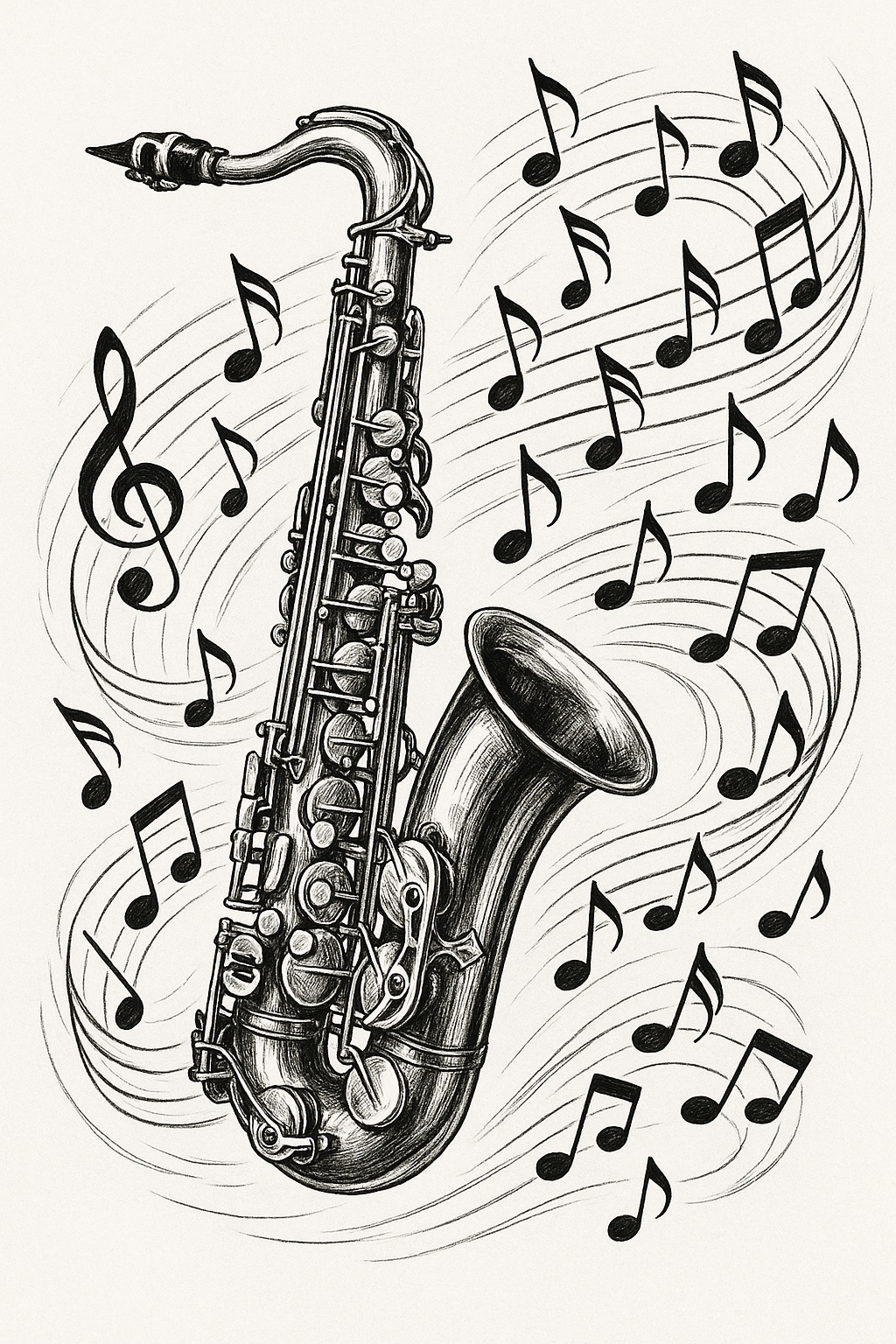
Teen saxophonist Alexander "Sasha" Cohen joins the Cape Town Philharmonic Youth Wind Orchestra, balancing music with academics.
Sasha Cohen, a young saxophonist, started his musical journey on the clarinet but found his true passion with the saxophone after seeing a jazz quartet. He practiced hard, even during lockdown, which made him super good. Now, he's one of the youngest members of a fancy youth orchestra, playing awesome music and even helping scientists understand brainwaves with his saxophone sounds. He's a true music whiz, making beautiful tunes and exploring new sonic adventures!
What is Sasha Cohen's musical journey?
Sasha Cohen's musical journey began with the clarinet but truly ignited with the saxophone in Grade 8 after a jazz quartet performance. Despite a lockdown sabbatical, he honed his skills, leading to his selection as one of the youngest second-saxophonists for the Cape Town Philharmonic Youth Wind Orchestra, where he continues to excel and innovate.
Get Cape Town news in your inbox
Stay updated with the latest stories from the Mother City.
First Notes: From Clarinet Curiosity to Saxophone Obsession
Seventeen-year-old Alexander “Sasha” Cohen, a Grade 12 student at Reddam House Atlantic Seaboard, recently became one of the youngest second-saxophonists ever admitted to the Cape Town Philharmonic Youth Wind Orchestra. The ensemble’s average performer is twenty-two, and the same critics who review the professional Cape Town Philharmonic Orchestra file reports on its youth counterpart. While classmates drilled trial papers during the autumn of 2026, Cohen locked himself in late-night run-throughs of Bartók, Maslanka and a freshly minted score by South African composer Neo Muyanga. Eight months separate his first tentative scales in a school practice room from sharing a stage with the graduate musicians he once watched from the City Hall balcony.
Cohen began on clarinet at eight, the traditional gateway for reed players, yet the instrument always sounded borrowed. The turning point arrived in Grade 8 when a touring jazz quartet visited for an assembly. One tenor saxophone snarled a blues-drenched phrase, and Cohen felt “a gravity I couldn’t ignore.” The school’s storeroom yielded a battered 1970s Yamaha 62 tenor - lacquer chipped, low C-sharp keyguard missing. Within three weeks the clarinet was history; the brass tube became an extra limb.
Private tutor Cara Pearce - Royal Academy graduate and member of the shape-shifting band The Kinsmen - taught Cohen that tone is a moral choice.every decibel carries biography and intent. She forbids the words “good enough,” demands a narrative before any exercise, and ends lessons with the command “play for the love, never for the ledger.” Cohen mutters this line whenever matric exams threaten to hijack rehearsal focus.
Silence and Return: The Lockdown Sabbatical That Doubled His Range
South Africa’s second hard lockdown swallowed Cohen’s Grade 10 year: schools shut, bands dispersed, and his sax collected dust for eighteen weeks. Instead of scales, he walked Camps Bay at dusk, tracing gull-call echoes and Atlantic breakers. One evening a busker breathed Bach’s Sarabande into an alto sax. The melody felt like a memory and a dare. That night Cohen cleaned his tenor and began long-tone meditations against a drone app. Within days dormant embouchure muscles re-ignited; within weeks he had copied the busker’s entire playlist by ear, a feat Cara Pearce later called “borderline savant.” The forced pause doubled his daily practice and widened his expressive palette. Cohen calls the stretch “an internship with my own silence.”
When the orchestra opened auditions late in 2025, candidates had to upload a Mozart exposition, a contemporary African piece and a Ferling or Mule étude. Cohen selected David Earl’s 2018 “Sundowner Sketches” for its marriage of chacarera groove and Cape jazz harmony - fiendishly difficult yet homesick in mood. To dodge air-conditioning rattle, he tracked the piece at 2 a.m. in Reddam’s drama theatre, shaping a one-take acoustic and a kiss of reverb to mirror the City Hall bloom. A terse email - “Congratulations. Report to Baxter Rehearsal Complex 4 Feb, 18:00 sharp.” - arrived two weeks later.
Inside the Machine: Rehearsals, Routines and Rogue Coffee Roasters
Rehearsals resemble hyper-intensive tutorials. Director Brandon Phillips - also associate conductor of the professional CPO - expects parts memorized by week three, articulations color-coded and breaths penciled down to the semiquaver. Cohen remembers his first night drowning in a seventy-five-player monolith until he learned to surf the chord instead of dodging it. The feeling, he says, is like stepping inside VR: borders stretch, time stretches further, fingers vanish, only overtones remain.
Phillips drills a counter-mantra: “practice doesn’t chase perfect - practice locks in permanence.” Players train for reproducibility under siege. Cohen now logs practice like laboratory work - objective, timed, iterative. Each line is recorded, spectrogram-scrutinized, re-launched. The same discipline migrated to physics titrations and biology enzymes; Reddam’s head of academics recently asked him to give a TEDx-style talk titled “Resonance in Retort Stands: What Chemistry Taught Me About Vibrato.”
Within the ensemble, labels replace names: “second clarinets,” “that E-flat contrabassoon,” “the piccolo who nailed altissimo D-flat.” Cohen savors the anonymity - “a gear that must mesh flawlessly.” Offstage, personalities spill out. The principal flute trades Berio Sequenzas for case histories in med school. The tubist roasts single-origin beans on weekends. The percussion crew once built a marimba from fallen Jacaranda. Cohen and friends moonlight in side projects: a minimalist trio with loops and electric bass, plus an audiovisual duo that turns sax multiphonics into generative light storms.
Glimpse of the Future: Heritage Day, EEGs and Midnight Beats
The season peaked on Heritage Day when the youth orchestra shared a program with the full CPO - Barber’s “School for Scandal” and Shostakovich’s “Festive Overture.” Players were seated inter-leaved with professionals. Cohen found himself elbow-to-elbow with section leader Mike Rossi, whose warm, woody timbre he once copied off shaky YouTube videos. At the final fermata Rossi leaned in - “Nice sub-tone on that low B; relax the throat more.” Cohen calls the four-second whisper “a knighthood in miniature.”
Rehearsals have become empathy boot camps. Speech is banned beyond surgical musical cues; communication rides on eye contact, shoulder taps, fractional posture shifts. Cohen recalls a piccolo miscount: two bars early, the conductor froze, seventy-five heads swivelled, and the orchestra pivoted into key without a syllable. The wordless correction rewired his grasp of human synchrony more than any textbook diagram. The episode now feeds his new fascination with neuropsychology and “musical entrainment” - how brainwaves lock to shared rhythm and weld strangers into one organism.
Reddam House accommodates the double life. Labs postponed? Recording booths stand ready. Grade 12 music portfolio? Cohen is writing it on wind-band psychoacoustics, using Youth Wind spectrograms as data. Head of music Stephen Deck also sends him to Groote Schuur Hospital, where he demonstrates how saxophone multiphonics resemble seizure spikes on EEG traces for wide-eyed interns.
Cohen’s blog, Reed Between the Lines, distills practice hacks, local gig reviews and playlists sliding from McCoy Mrubata to Japanese noise-jazz crew Mouse on the Keys. Cape Town beat-maker Maramza spotted the site and invited Cohen to graft tenor improvisations onto a gqom-trap EP. Tracks swap back and forth after midnight; the result sounds, in Cohen’s words, “like whales gossiping in Morse.”
Next season promises Richard Strauss’s Suite in B-flat and an Abdullah Ibrahim “Mannenberg” transcription. Rehearsals resume in fourteen days. Cohen’s tenor waits on its stand, mouthpiece cloaked in chamois, reeds floating in distilled water like specimens under invisible microscopes. Next door, his physics textbook lies open to wave interference, margin annotated with a sine wave crest labelled “first overtone = soul.”
What is Sasha Cohen's musical journey?
Sasha Cohen's musical journey began on the clarinet at the age of eight. However, his true passion ignited in Grade 8 when he saw a jazz quartet, leading him to switch to the saxophone. He honed his skills diligently, even during a strict lockdown period, which significantly improved his playing. This dedication led to his selection as one of the youngest second-saxophonists for the prestigious Cape Town Philharmonic Youth Wind Orchestra.
How old is Sasha Cohen and what school does he attend?
Sasha Cohen is seventeen years old and is currently a Grade 12 student at Reddam House Atlantic Seaboard. He was admitted to the Cape Town Philharmonic Youth Wind Orchestra while still in school, a notable achievement given the average age of the ensemble is twenty-two.
Who is Sasha Cohen's saxophone tutor and what is her teaching philosophy?
Sasha Cohen's private saxophone tutor is Cara Pearce, a Royal Academy graduate and member of the band The Kinsmen. Her teaching philosophy emphasizes that "tone is a moral choice" and demands a narrative before any exercise. She forbids the words "good enough" and ends lessons with the command, "play for the love, never for the ledger."
How did the lockdown period impact Sasha Cohen's musical development?
South Africa's second hard lockdown, which occurred during Cohen's Grade 10 year, initially led to a pause in his saxophone practice. However, inspired by a busker playing Bach, he resumed practice with renewed vigor. This forced pause doubled his daily practice time and significantly widened his expressive palette, which he refers to as an "internship with my own silence."
What is Sasha Cohen's role in the Cape Town Philharmonic Youth Wind Orchestra?
Sasha Cohen is one of the youngest second-saxophonists in the Cape Town Philharmonic Youth Wind Orchestra. He describes the experience as immersing himself in a "seventy-five-player monolith," where he has learned to "surf the chord instead of dodging it." He values the anonymity within the ensemble, seeing himself as "a gear that must mesh flawlessly."
How is Sasha Cohen connecting music with other fields?
Sasha Cohen is actively exploring the intersection of music with various fields. He is writing his Grade 12 music portfolio on wind-band psychoacoustics, using Youth Wind spectrograms as data. He also assists at Groote Schuur Hospital, demonstrating how saxophone multiphonics resemble seizure spikes on EEG traces for interns, linking music to neuropsychology and "musical entrainment." Additionally, he collaborates with beat-makers and uses his blog, Reed Between the Lines, to share practice hacks and playlists.

Sizwe Dlamini is a Cape Town-based journalist who chronicles the city’s evolving food scene, from boeka picnics in the Bo-Kaap to seafood braais in Khayelitsha. Raised on the slopes of Table Mountain, he still starts every morning with a walk to the kramat in Constantia before heading out to discover whose grandmother is dishing up the best smoorsnoek that day.
View all articles →