
Grade R girl too scared for school after alleged bullying ordeal
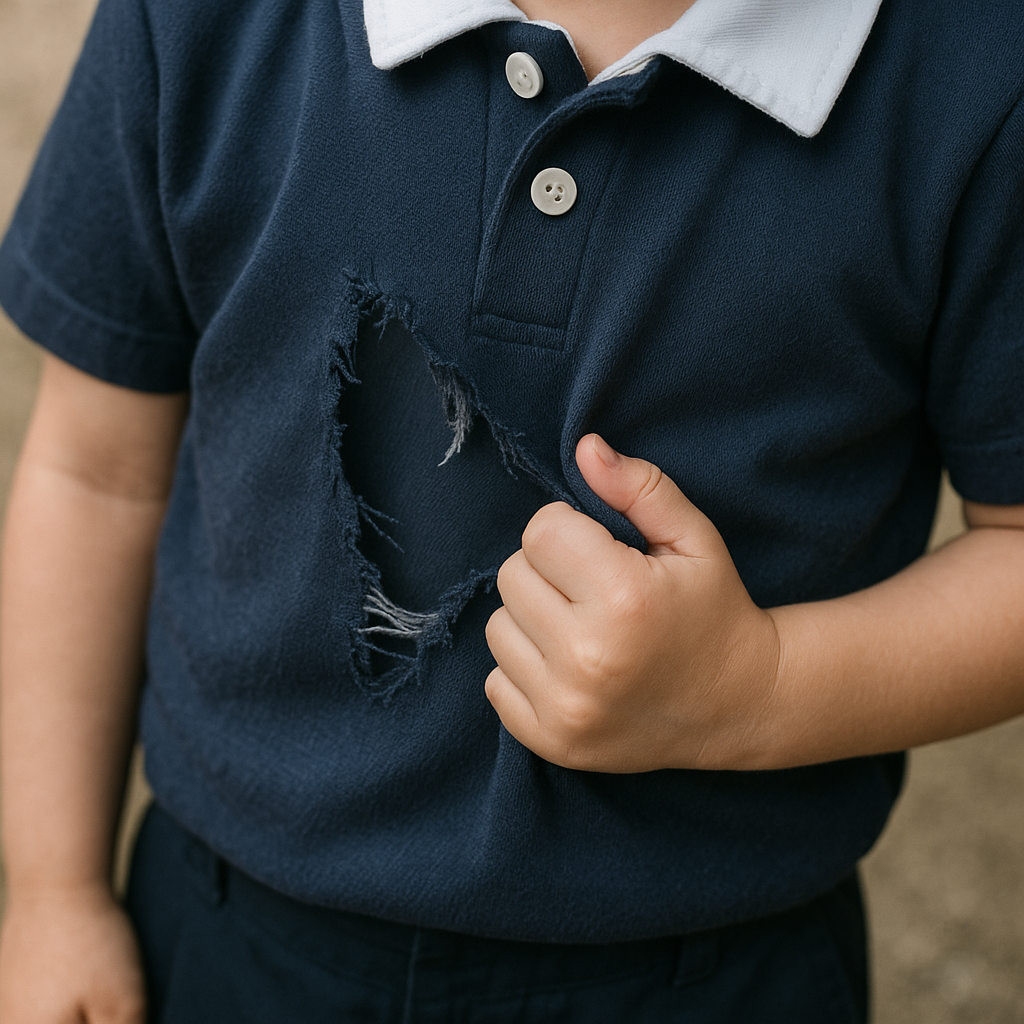
A Grade-R girl's harrowing bullying experience in a South African school exposes the critical fault lines in early-year education and policy.
A little girl named Aaliyah in Cape Flats is scared to go to school because other kids are mean to her. She faces bullying like gum in her hair and ruined schoolwork, making her terrified. Her mother, Nadia, tries to get the school to help, but they don't take it seriously, saying it's just "rough moments." This story shows how hard it is for families dealing with bullying when schools don't act and how costly it is to find other solutions.
What are the challenges faced by families dealing with early childhood bullying in the Cape Flats?
Families in the Cape Flats face significant challenges when dealing with early childhood bullying, including bureaucratic inaction from schools, dismissal of incidents as “rough moments,” and financial burdens. Parents often struggle to afford alternative schooling or therapy, and the system frequently fails to acknowledge the severity of “minor-on-minor” aggression, leading to lasting trauma for children.
Get Cape Town news in your inbox
Stay updated with the latest stories from the Mother City.
Section 1 – The Morning Mutiny
Aaliyah* should have bounced through the gates of Wesbank No. 1 Primary on 17 January, glittery backpack jumping on her shoulders like any other five-year-old. Instead, she froze on the patchy gravel outside the fence, knuckles white around her mother’s wrist, whispering, “They wait for me inside.”
Nadia Abrahams filmed the stand-off on her cracked Huawei: thirty-seven seconds of a little girl shaking her head while the school bell shrilled behind her. The clip, never meant for Facebook, now lives on single mothers’ group-chats as shorthand for “something is rotten in Grade R.”
What the video cannot show is the back-story: bubble-gum mashed into her cornrows the previous week, the left ribbon sliced off with safety-scissors, and a worksheet still crumpled in her lunchbox because classmates had stomped on it while the teacher glued glitter suns three tables away.
Section 2 – Why “Babies Don’t Bully” Is Expensive Mythology
UCT researchers tracked eighteen Cape Flats campuses in 2022 and discovered that nearly two-thirds of Grade R and Grade 1 pupils had already endured at least one deliberate humiliation before the March holidays. Adult eyes dismiss these events as trivial - one crayon stolen, a seat declared off-limits, a single gummy bear flicked into a child’s hair - yet spit-tests revealed cortisol levels matching those of kids who witness domestic violence.
Aaliyah’s body keeps the score: bed-wetting after two dry years, night terrors that send her top-bunk brother scurrying, and a new ritual of hacking off her own curls “so they have nothing to grab.” Therapists label the cluster “traumatic play regression,” but the school’s incident log calls it “rough moments.”
The class mentor told Nadia, “We avoid the B-word in Foundation Phase; it scares parents.” That lexicon sleight-of-hand matters: if the offence has no name, the remedy never arrives.
Section 3 – Bureaucratic Hide-and-Seek
Western Cape rules promise a four-rung ladder after any complaint: written statement, five-day internal probe by the campus support team, joint-parent mediation, and, if injuries surface, a disciplinary hearing. Nadia lodged her letter on 25 January; the minutes of the promised meeting remain ghost documents.
Instead, the family received a cheerful flyer: “Help Your Child Make Friends,” complete with cartoon toddlers sharing a yellow jungle-gym. The principal later explained that the pamphlet was left-over stock from a 2019 mental-health grant - “better than nothing,” he shrugged.
When 68-year-old Hazel Abrahams, a retired nurse, arrived with zip-locked evidence - soiled panties, snipped ribbons - the office allegedly told her to “return after netball fixtures.” The recorded exchange ends with Hazel banging the plastic folder on the desk: “Must we wait for blood on paper before you move?” No one answered; the chairs scraped, lights went off, another school day ended.
Section 4 – The Price of Walking Away
Wesbank sits in the northern corridor where working-class families hop schools the way wealthier households switch medical aids. Mid-year Grade R vacancies are unicorns; waiting lists reset every July.
Nadia earns R5 200 packing sinus tablets in Montagu Springs. A low-fee private school in Bellville wants R950 for a “developmental assessment” before it will even add Aaliyah to the lottery, then R1 750 a month - one-third of her wage. Crowdfunding has scraped together R3 110 in twelve days, enough for the test fee but not the petrol to get there.
Economists at Stellenbosch estimate that every “bullying migration” costs the province R18 750 in duplicate admin, transport rerouting and, eventually, UIF when parents quit shifts to escort children further afield. Multiply by an estimated 19 000 such moves and the invisible bill balloons to R356 million - three times the entire Safe Schools budget.
Section 3 – Inside the Classroom, Outside the Frame
A Pebbles-project volunteer spent twenty minutes outside the Grade-R window on 14 March and counted twenty-eight five-year-olds, one teacher, zero paid assistant. WCED allows the ratio because the floor space technically squeaks past 1.2 m² per child.
During that short watch, a boy flicked a girl’s ear twice; both times the adult, busy unsticking glue-stick lids, delivered a generic “Kind hands, please” without looking up. The observer’s shadow alone stopped the third flick - proof that deterrence here is accidental, not systemic.
Meanwhile Aaliyah’s brother, four-year-old Ismail, stages nightly toy tribunals: he lines up plush animals, demands “Why you push my sister?” and flings the guilty panda behind the couch. Their father now sleeps with white-noise earbuds so he can drive the afternoon taxi-run, trimming the family’s shared wake-time to fifty-three minutes a day.
Section 4 – Hearts, Courts, and the Long Road Back
Section 10 of the South African Schools Act criminalises assault or harassment, yet police dockets labelled “minor-on-minor” gather dust unless medical costs breach R10 000. Aaliyah’s CAS 32/02/2024 file sits in the “awaiting minor’s statement” tray - state shorthand for unlikely.
Across the ocean, Scotland funds a weekly “Friendly Ghost” supply teacher in every Grade R; early data show a 38 % drop in victim reports. New Zealand asks staff to wear VR goggles that simulate a six-year-old’s view of looming bullies; empathy scores climb 24 %. Both programmes cost less per capita than after-the-fact therapy, but Treasury has not ring-fenced a rand for replication here.
Still, hope leaks through the cracks. At a Saturday library session Aaliyah decorated a silver-starred heart and asked the librarian to mail it to school “so Miss can remember I’m good.” The paper rectangle now lives on Nadia’s Toyota dashboard - proof that recognition, not retribution, is the first antibiotic for a wound no one can see.
- Name changed to protect the child.
[{"question": "What kind of bullying did Aaliyah experience at school?", "answer": "Aaliyah experienced various forms of bullying, including having gum mashed into her hair, a ribbon cut from her hair, and her schoolwork stomped on and ruined by classmates. She also faced social exclusion and intimidation, making her terrified to go to school."}, {"question": "How did the school respond to Nadia's complaints about Aaliyah's bullying?", "answer": "The school largely dismissed Nadia's complaints, referring to the incidents as 'rough moments' and avoiding the term 'bullying.' They suggested pamphlets on making friends and did not follow through on promised internal investigations or mediation. School officials even told Aaliyah's grandmother to 'return after netball fixtures' when she tried to present evidence."}, {"question": "What are the physiological and psychological impacts of bullying on young children like Aaliyah?", "answer": "Bullying has significant impacts on young children. Aaliyah experienced bed-wetting after two dry years, night terrors, and self-harming behaviors like cutting her own curls. UCT research indicates that even seemingly minor incidents cause cortisol levels matching those of children witnessing domestic violence, leading to what therapists label as 'traumatic play regression.'"}, {"question": "Why do schools in the Cape Flats struggle to address early childhood bullying effectively?", "answer": "Schools struggle due to several factors, including a reluctance to label early aggression as 'bullying' ('babies don't bully' mythology), high student-to-teacher ratios (one teacher for twenty-eight five-year-olds), bureaucratic inaction, and a lack of resources for dedicated support staff. The system often dismisses incidents as trivial, and the focus is on avoiding the 'B-word' rather than implementing effective remedies."}, {"question": "What are the hidden economic costs associated with bullying and school migration in the Western Cape?", "answer": "The economic costs are substantial. Economists estimate that each 'bullying migration' costs the province R18,750 in duplicate administration, transport rerouting, and potential UIF claims when parents quit jobs. With an estimated 19,000 such moves, the invisible bill balloons to R356 million, which is three times the entire Safe Schools budget. This doesn't even account for the financial burden on individual families seeking alternative schooling or therapy."}, {"question": "Are there any effective strategies or programs implemented elsewhere that could help address early childhood bullying?", "answer": "Yes, other countries have implemented successful programs. Scotland funds a weekly 'Friendly Ghost' supply teacher in every Grade R, resulting in a 38% drop in victim reports. New Zealand uses VR goggles to simulate a six-year-old's view of bullying, leading to a 24% increase in empathy scores among staff. These programs are less costly than after-the-fact therapy but have not yet been replicated in the Western Cape due to lack of funding."}]

Lerato Mokena is a Cape Town-based journalist who covers the city’s vibrant arts and culture scene with a focus on emerging voices from Khayelitsha to the Bo-Kaap. Born and raised at the foot of Table Mountain, she brings an insider’s eye to how creativity shapes—and is shaped by—South Africa’s complex social landscape. When she’s not chasing stories, Lerato can be found surfing Muizenberg’s gentle waves or debating politics over rooibos in her grandmother’s Gugulethu kitchen.
View all articles →