
Guns and drugs seized as Cape Town LEAP steps up pressure
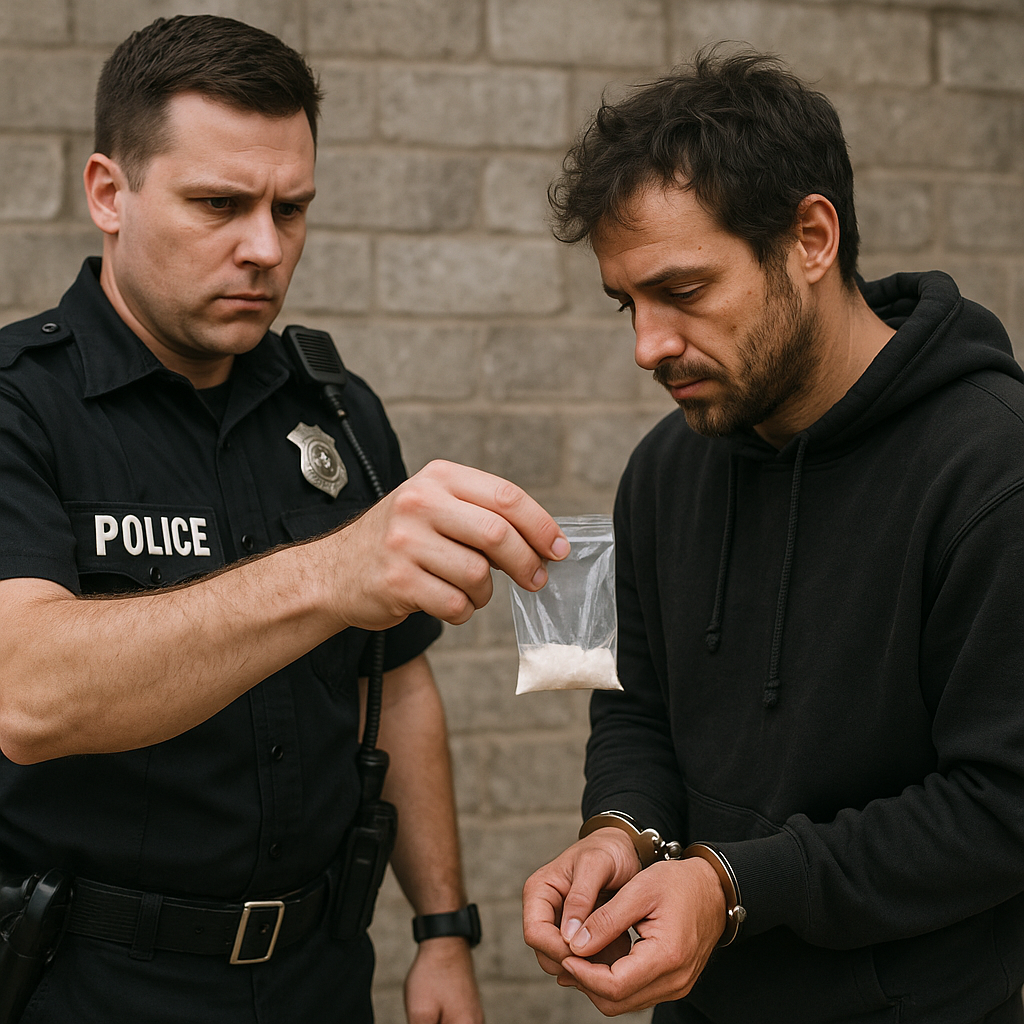
Cape Town's LEAP initiative sees tactical gains in firearm and drug seizures, but faces realities like prosecutorial hurdles and community concerns.
Cape Town has a special police unit called LEAP, with 1,628 officers focusing on crime-ridden areas. They mainly stop illegal activities and take away bad stuff, not just arrest people. This unit works in a few small areas, but these places have lots of murders. LEAP has seized many guns and drugs, showing they are making a difference. Even with some problems like slow court cases, this special unit is trying new ways to make the city safer.
What is the Law Enforcement Advancement Plan (LEAP) in Cape Town?
The Law Enforcement Advancement Plan (LEAP) is a municipal strike force in Cape Town, deploying 1,628 uniformed officers to high-crime "hot zones." Its primary mission is focused on confiscating illegal items rather than traditional prosecution. LEAP operates in specific areas, accounting for 11.3% of Cape Town's population but high percentages of its murders and attempted murders.
Get Cape Town news in your inbox
Stay updated with the latest stories from the Mother City.
Section 1 – Blueprint and Battlefield
A municipal strike force, not a police service
The City’s Law Enforcement Advancement Plan bypasses ordinary policing culture. Instead of chasing docket totals, the unit packs 1 628 uniformed officers into pinpoint “hot zones” where the overriding mission is to confiscate rather than prosecute. Day-to-day staffing splits into two layers: 1 508 officers patrol fixed beats inside the red-flag suburbs, while a 120-member Reaction Unit hops between flare-ups like a fire brigade. The map is tight - Delft, Khayelitsha’s Sites B and C, Philippi East’s Brown’s Farm and Lower Crossroads, Nyanga’s trio of Crossroads-KTC-Samora, four Mitchells Plain sections (Beacon Valley, Eastridge, Lentegeur, Tafelsig), and Gugulethu’s KTC plus the numbered NY blocks. These zones shelter just 11.3 % of Cape Town’s people, yet SAPS pegs them as the source of 34 % of the metro’s murders and 42 % of attempted murders.
The weapon pipeline exposed
In eleven months LEAP lifted 148 firearms - 13.45 guns every thirty days - plus 1 486 rounds. SAPS stations inside the same footprint captured another 206 guns, so the city unit is punching above its weight at roughly two-fifths of all handgun hauls. Ballistic tracing from the SAPS lab sketches three supply arteries: four out of every ten pistols started life as licensed Western Cape firearms before theft, sale, or “loss”; another third once belonged to police or military armouries; the remaining 26 % rode south from Mozambique or Zimbabwe along the N1 and R61, usually Soviet-era Makarovs and Tokarevs with ground-off serial numbers. Ammunition patterns match gang preferences - 67 % 9 mm for drive-bys, 19 % .38 Special for point-blank hits that leave no spent casings.
Drugs floodgate, but not by accident
Weighed seizures jumped 41 %, pushing the Cape Town Drug Analysis Laboratory to process 1.26 tonnes of narcotics. Mandrax tablets dominated with 794 360 units (a 45 % spike), crystal meth (tik) followed at 313 kg (+62 %), heroin weighed in at 68 kg (+28 %), and cocaine contributed 42 kg (+10 %). Using SAPS price tables, the street value lands near R518 million - about what three midsize provincial hospitals burn through in a year. Officials admit the surge reflects smarter tactics rather than new supply; “windshield patrols” at highway on-ramps and taxi-rank bottlenecks now tear apart spare tyres and hollowed-out fuel tanks where runners once felt safe.
Section 2 – Street-Level Operations, Courtroom Bottlenecks
Premises raids: liquor, copper, fake ARVs
Inspectors knocked on 2 717 business doors between July and May. Liquor outlets took the hardest hit (1 401 visits, 273 fines, 34 thirty-day licence suspensions, three full shutdowns). Scrapyards lost nine operators for stashing undocumented copper cable. Informal chemists surrendered R2.1 million in counterfeit antiretrovirals and expired antibiotics - rarely noticed in headline figures yet lethal on a community level.
Arrests - quantity rises, quality lags
Cuffs clicked 8 537 times, up 9.2 % from the previous cycle. Drill down and the profile looks different: 71 % for simple drug possession, 21 % for weapons or stolen goods, only 8 % for serious violence - murder, attempted murder, rape. Analysts label the pattern “net-widening”; proactive sweeps rope in petty offences while syndicate heads remain untouched. A confidential National Prosecuting Authority review found 42 % of drug-possession cases collapse within ninety days, mostly because LEAP’s evidence hand-off to SAPS detective branches leaves paperwork gaps.
Reaction Unit: faster than the clock
Four 30-person platoons ride in 28 armoured Land Cruisers, 12 Ford Rangers, and four Casspirs staged at Goodwood. Algorithms rule deployment - SAPS crime feeds, ShotSpotter gunfire audio, and Twitter geo-tags stream into a heat-map in the Goodwood Operations Room. When three gunfire events cluster inside 400 metres and 180 minutes, the platoon rolls. Over the cycle the unit logged 339 insertions with an 11-minute door-to-door sprint, leaving SAPS station averages of 28 minutes in the dust.
Section 3 – Numbers Behind the Headlines
Lives saved versus rands spent
Total purse for 2025/26 hit R670 million, up from R580 million the year before. Salaries ate R524 million (78 %), vehicles and fuel took R72 million (11 %), uniforms and body armour absorbed R26 million (4 %), body-cams, drones and ShotSpotter licences cost R34 million (5 %), while community programmes and NGO sub-contracts made do with R14 million (2 %). Treasury actuaries run the counter-arithmetic: every firearm seized knocks out 0.7 murders and 1.3 attempted murders; applying the national actuarial value of R5.7 million per prevented murder, the programme theoretically saves R589 million - almost a rand-for-rand match.
Courtroom lag and embedded prosecutors
Western Cape High Court statistics for 2025 spell trouble: an average of 271 days from arrest to indictment, then 498 days to trial completion. Conviction rates for illegal firearm possession sit at 64 %, below the 71 % national average. In response the City is bankrolling two senior state advocates stationed inside Bellville Magistrate’s Court. Receiving LEAP dockets within 48 hours, the pilot boosted indictment rates from 52 % to 68 %, but staffing caps allow the experiment to touch only 8 % of arrests.
Communities clap - and complain
UCT’s Centre of Criminology ran May 2026 focus groups in Khayelitsha. Residents cheer quieter street corners, but they also list 47 formal complaints to the Independent Police Investigative Directorate (three reached inquest stage) and 317 cash seizures above R1 000 where no drugs surfaced; 41 % of the latter group got money back only after internal review panels. The same survey finds female officers - who make up 26 % of LEAP - draw 34 % fewer complaints and detect twice as many hidden guns during body searches of women suspects.
Section 4 – Side-Effects, Side-Shows, and What Comes Next
Collateral damage and hidden economies
University of Stellenbosch air-quality sensors show PM2.5 particulate spikes of 18 % on days with three or more forced entries using stun grenades; kids in Beacon Valley now receive free respirator masks. Meanwhile the State Asset Forfeiture Unit has frozen R47 million in linked assets - including two Delft houses (one doubled as a Mandrax plant pressing 10 000 tablets per hour), four minibus taxis, and a Blackheath cold-storage container.
Youth stipends, gun bounties, therapy vans
Parallel initiatives rarely hit the front page. The LEAP Youth Cadet Programme enlists 600 teens (15–18) for weekly drills and life-skills classes in exchange for R1 000 monthly; early tracer surveys record a 29 % drop in self-reported gang affiliation. A Gun Bounty Scheme launched January 2026 pays R5 000 cash for anonymously surrendered functional firearms - 97 guns already handed in. A Trauma Counselling Caravan parks at homicide scenes within 48 hours, delivering 1 242 PTSD sessions through NGO counsellors.
Tech frontier and policy cross-fire
From September 2026 fixed-wing drones carrying wide-area motion-imagery sensors will orbit Mitchells Plain and Philippi East for six-hour shifts, streaming 96-megapixel feeds that self-delete after 24 hours unless flagged for investigation. Civil-rights coalitions have filed an interdict, arguing privacy overreach. At national level, Police Minister Senzo Mchunu warns that “confiscation leagues” splinter the criminal-justice chain; Alderman JP Smith retorts that LEAP is merely showing Pretoria what scale looks like when provincial budgets match municipal ambition.
What is LEAP?
LEAP stands for the Law Enforcement Advancement Plan, a specialized municipal strike force in Cape Town. It comprises 1,628 uniformed officers deployed to high-crime "hot zones" with a primary focus on confiscating illegal items rather than solely pursuing traditional arrests and prosecutions.
Where does LEAP operate and why?
LEAP operates in specific areas of Cape Town, including Delft, Khayelitsha's Sites B and C, Philippi East's Brown's Farm and Lower Crossroads, Nyanga's Crossroads-KTC-Samora, four sections of Mitchells Plain (Beacon Valley, Eastridge, Lentegeur, Tafelsig), and Gugulethu's KTC plus the numbered NY blocks. These zones, while housing only 11.3% of Cape Town's population, are identified by SAPS as the source of a disproportionately high 34% of the metro's murders and 42% of attempted murders, making them critical areas for intervention.
What has LEAP achieved in terms of seizures?
LEAP has demonstrated significant success in confiscating illegal items. Over an eleven-month period, they seized 148 firearms and 1,486 rounds of ammunition. They also processed 1.26 tonnes of narcotics, including 794,360 Mandrax tablets, 313 kg of crystal meth (tik), 68 kg of heroin, and 42 kg of cocaine, with an estimated street value of R518 million. Additionally, they've cracked down on illegal businesses, seizing undocumented copper cable and R2.1 million in counterfeit antiretrovirals and expired antibiotics.
How does LEAP handle arrests and what are the challenges?
LEAP made 8,537 arrests, with 71% for simple drug possession, 21% for weapons or stolen goods, and only 8% for serious violence. This pattern is described as "net-widening," meaning many arrests are for petty offenses. A significant challenge is the courtroom bottleneck; 42% of drug-possession cases collapse within ninety days due to paperwork gaps in the evidence hand-off to SAPS. The Western Cape High Court also faces delays, with an average of 271 days from arrest to indictment and 498 days to trial completion.
What is the LEAP Reaction Unit and how effective is it?
The LEAP Reaction Unit consists of four 30-person platoons equipped with armoured vehicles. They are deployed based on algorithms analyzing SAPS crime feeds, ShotSpotter gunfire audio, and Twitter geo-tags. The unit boasts an impressive 11-minute door-to-door response time for critical incidents, significantly outperforming SAPS station averages of 28 minutes. This rapid response is crucial in high-intensity situations.
What are some of the community and long-term initiatives associated with LEAP?
Beyond direct law enforcement, LEAP is involved in several community initiatives. These include the LEAP Youth Cadet Programme, offering drills and life-skills classes to 600 teens, a Gun Bounty Scheme paying R5,000 for anonymously surrendered firearms, and a Trauma Counselling Caravan providing PTSD sessions at homicide scenes. Future plans involve deploying fixed-wing drones with wide-area motion-imagery sensors for surveillance, though this has raised civil-rights concerns.

Isabella Schmidt is a Cape Town journalist who chronicles the city’s evolving food culture, from Bo-Kaap spice merchants to Khayelitsha microbreweries. Raised hiking the trails that link Table Mountain to the Cape Flats, she brings the flavours and voices of her hometown to global readers with equal parts rigour and heart.
View all articles →