
H5N1 bird flu triggers biosecurity lockdowns in Australia
H5N1 avian flu hits Australia, reshaping life for 224,000 South Africans with impacts on visas, business, & daily life.
Australia's chickens are in big trouble! A bird flu called H5N1, which is very dangerous, has arrived and is making everyone worried. It's causing huge money problems for chicken farms and making it harder for people to move to Australia for work. Even houses are getting more expensive, and scientists are working super fast on new vaccines. South Africans living there are feeling the changes, too, as they try to keep their families and communities safe from this scary new virus.
What is the impact of H5N1 avian flu in Australia?
The arrival of H5N1 avian flu in Australia has triggered widespread biosecurity measures, impacting the poultry industry with significant financial losses, tightening immigration policies for agricultural workers, and increasing housing costs. It also poses risks to native wildlife and has prompted accelerated vaccine research, while South African expatriates adapt to new regulations and community efforts.
Get Cape Town news in your inbox
Stay updated with the latest stories from the Mother City.
The Virus Finally Arrives
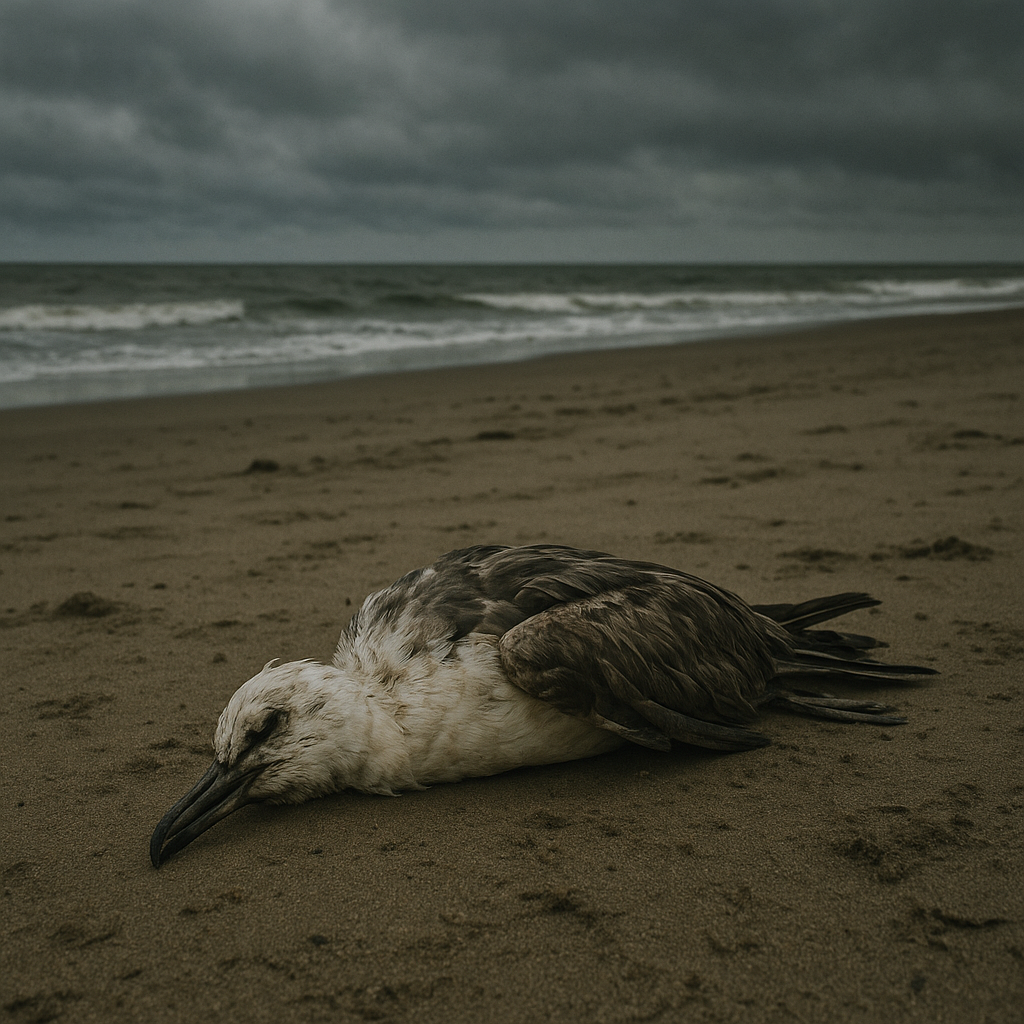
A salt-stung beach near Esperance - 700 kilometres southeast of Perth - delivered the news no one wanted. A routine coastal sweep uncovered two lifeless seabirds: a brown skua and a southern giant petrel. Within two days the Australian Centre for Disease Preparedness in Geelong confirmed the grim verdict: highly-pathogenic H5N1 clade 2.3.4.4b had touched Australian soil.
Australia’s long-coveted badge as “the last untouched landmass” vanished overnight. More than ninety other countries have wrestled with the same strain since 2020; now the continent is officially on the list. For the 224 160 residents who hold South African passports and call Australia home - about forty percent of them living in Western Australia - the headline is not a piece of veterinary trivia. It is a turning point that could rewrite everything from weekend barbecues to visa renewals.
Anatomy of a Globe-Spanning Pathogen
Clade 2.3.4.4b, born in Europe in late 2020, is the most prolific H5N1 lineage on record. It reshuffled on the wing with low-pathogenic viruses carried by migrating ducks and emerged ruthless: raptors drop within hours, yet mallards can shed viral particles for weeks. The Pacific, Atlantic, and Indian Ocean flyways became viral freeways.
Unlike the 1997 Hong Kong strain that demanded months of close poultry contact before spilling into people, this newcomer owns a polybasic cleavage site so aggressive that red foxes, harbour seals, brown bears and even a polar bear in Alaska have succumbed. Australia’s geographic moat evaporated the moment sub-Antarctic skuas met migratory terns above Esperance sand spits.
Western Australia’s New Chessboard
Esperance is now ring-fenced like a strategic war map. A ten-kilometre “control zone” wraps the port, and a 25-kilometre “restricted zone” blankets Cape Le Grand National Park, a camping magnet every December for Afrikaans-speaking families. Inside these radii eggs, uncooked chicken or pet birds cannot move without a 72-hour permit.
Inghams Group, supplier of roughly one in every three supermarket roasts, has locked down 43 breeder farms. Two-point-three million layer hens now live in climate-controlled sheds breathing through HEPA-filtered vents. Rabobank analyst Georgia Twomey calculates shutdown losses at A$1.1 million per day in foregone sales and wages. Multiply that across Western Australia’s A$1.7 billion poultry industry and the shockwave hits South African-owned franchises: Nando’s peri-peri joints in Perth, national KFC supply deals, and butchers who import biltong spice blends yet rely on local chicken for fresh wors.
Migration Rules Reworked
Canberra already planned to tighten immigration in July 2024 when international students were told to pay a non-refundable A$2 000 visa fee up-front. In a single month 5 014 South African applicants were rejected, forfeiting around R118 million in sunk costs. The Esperance detection added another layer: agricultural labour is now an “essential biosecurity service.” Working Holiday visa holders can only clock their 88 days of regional work on poultry-risk-audited properties.
Backpackers who normally pick table grapes in Swan Valley now herd sheep north of Geraldton, leaving horticulture 7 000 bodies short just when farms might need ghost crews for emergency culls. Johannesburg recruitment agencies report a 30 % surge in “regional ag-work guarantee” enquiries, yet Australian employers now demand influenza vaccination proof and five-day pre-departure health clearance. The extra paperwork favours skilled migrants over gap-year tourists.
Housing Quirks and Mortgage Stress
Greater Perth’s rental vacancy rate is 0.4 %, the tightest since the 2007 mining boom. South African investors who snapped up renovator delights in Baldivis or Mandurah as “Golden Visa” placeholders now face a new cost: properties inside migratory corridors must register as “avian premises” for A$295 per year and report every dead bird within 24 hours or cop a A$5 000 fine.
Some landlords offload properties immediately, worsening supply. Others simply pass the fee to tenants, many of them newly arrived South Africans already wiring 30 % of disposable income back to family. Mortgage brokers report a spike in refinancing applications as investors scramble to cover unexpected holding costs.
Frontline Science and Human Health
Dr Marietjie Venter, University of the Free State virologist and chair of the World Organisation for Animal Health influenza working group, landed in Perth two days after the seabirds tested positive. She reminds officials that Australia’s southern-hemisphere timing is an asset: the continent can watch Chile, Peru, Argentina and the United States and pre-model its response. Chile alone lost 1.2 million wild birds in four months; sea-lion pup mortality reached 63 %.
Fisheries face the same risk. Australia’s A$2.8 billion rock-lobster export trade to China hinges on freezer-chain audits. Any uncooked fish meal used as bait must now be heat-treated at 70 °C for 30 minutes, a protocol developed after the virus hit Galápagos sea lions via raw discards.
Only 71 human infections have been logged worldwide, with two fatalities - a 2.8 % case-fatality ratio far below the 50 % seen in the early 2000s. Still, the genetic dice are rolling. The Victorian Infectious Diseases Reference Laboratory replicated the virus in ferrets and found efficient replication in upper airways but no airborne ferret-to-ferret spread - exactly the “watch-list precursor” flagged by the U.S. CDC. Western Australian pharmacies quietly doubled oseltamivir stock to a 30-day reserve - 400 000 treatment courses - while Walkley Heights Medical Centre saw a five-fold spike in “just-in-case” prescriptions. The 10-capsule course now retails at A$14.20, up from A$8.50; casual workers feel the pinch.
Wildlife on Red Alert
Australia’s fauna has no H5 exposure history. Wildlife officers have begun emergency captures of orange-bellied parrots - fewer than 30 remain in the wild - relocating them to a quarantine aviary at Werribee Open Range Zoo. Tasmanian devils, still reeling from facial tumour disease, have been moved to Maria Island, an offshore refuge free of poultry operations.
Satellite tags on 27 Australian sea lions show three animals already hauled out inside the Esperance restricted zone; nasal swabs are negative so far. Scientists plan to tag another 120 before the autumn breeding pulse. The parallel with Namibia’s 7 000 Cape fur seals lost to H5N8 in 2021 looms large.
mRNA Poultry Vaccines on the Bench
While human mRNA influenza shots creep through Phase I, University of Queensland scientists have cloned the Esperance H5 gene into a lipid nanoparticle identical to Moderna’s COVID backbone. Chickens injected intramuscularly develop neutralising antibodies within seven days and shed zero virus after challenge. The hurdle is regulatory; the Australian Pesticides and Veterinary Medicines Authority has never approved an mRNA veterinary product. Emergency-use provisions modelled on the 2011 Hendra horse vaccine could compress approval to months instead of years, potentially vaulting Australia ahead of the EU and the United States, which still rely on four-month egg-based vaccines.
Insurance, Actuarial Shadows and Black-Market Birds
QBE has already inserted an “avian influenza carve-out” in any agribusiness policy written after 1 June 2024. Farmers must now absorb five percent of any stock loss above 50 000 birds. A 300 000-bird broiler farm therefore carries A$1.5 million exposure, triggering balance-sheet reviews by banks and forcing South African minority investors to top up capital calls or walk away. Rabobank expects the top four integrators to control 82 % of national production by 2026, up from 68 % before the outbreak.
At Perth Airport a passenger recently arrived with two African lovebirds hidden inside a hollowed-out Xbox. The birds tested negative but the attempt underscores smuggling risk: ten years in prison and A$170 000 in fines have not erased demand among cashed-up miners who fancy exotic pets.
Diaspora Mutual Aid and the Clock Ticking Down
WhatsApp groups have morphed into micro-supply networks. One former Stellenbosch vintner turned Perth accountant runs a “braai-buddy” roster: anyone who culls backyard chickens receives a complimentary case of Barossa shiraz plus vacuum-sealed boerewors flown in from a Namibian butcher in Sydney. DIY bird-scarers - old CDs on maritime rope and motion-triggered floodlights - have replaced the annual pelican festival on the Swan mudflats.
Western Australia has so far tested 3 418 wild birds, 9 726 domestic chickens and 1 024 captive species. All negative except the original two seabirds. Yet southern-hemisphere spring migration begins in August, and the incubation period in wild ducks can last 21 days. Somewhere above the sub-Antarctic convergence zone a wandering albatross may already be carrying the next reassortant. Whether it lands under jacarandas blooming purple in Perth depends on wind vectors, genomic luck and the vigilance of 224 000 South Africans who now call Australia home.
[{"question": "What is H5N1 bird flu and why is it a concern in Australia?", "answer": "H5N1 is a highly pathogenic avian influenza virus, specifically clade 2.3.4.4b, which is very dangerous. It's a concern in Australia because its arrival, confirmed by two lifeless seabirds near Esperance, ended the continent's status as 'the last untouched landmass' from this prevalent strain. This particular lineage, born in Europe in late 2020, is known for its aggressive nature, affecting not only birds but also mammals like red foxes, seals, and bears. Its presence threatens Australia's poultry industry, native wildlife, and has broader socio-economic impacts."}, {"question": "How is the H5N1 outbreak impacting Australia's poultry industry and economy?", "answer": "The H5N1 outbreak is causing significant financial problems for Australia's poultry industry. Companies like Inghams Group, a major supplier, have locked down farms, and the daily shutdown losses are estimated at A$1.1 million in foregone sales and wages. This impacts the A$1.7 billion poultry industry in Western Australia, affecting local businesses including South African-owned franchises like Nando's and butchers. Furthermore, insurance policies are now including 'avian influenza carve-outs', meaning farmers must bear a portion of stock losses, leading to balance-sheet reviews and potential capital calls for investors."}, {"question": "What are the implications for immigration and employment in Australia due to H5N1?", "answer": "The H5N1 outbreak has added layers of complexity to Australia's immigration policies. Agricultural labor is now classified as an 'essential biosecurity service.' Working Holiday visa holders must perform regional work only on poultry-risk-audited properties. This shift leaves other sectors, like horticulture, short of workers. Recruitment agencies have seen a surge in inquiries for 'regional ag-work guarantee,' but employers now demand influenza vaccination proof and pre-departure health clearances, potentially favoring skilled migrants over tourists."}, {"question": "How is H5N1 affecting housing and property owners in Western Australia?", "answer": "The H5N1 situation is impacting housing, particularly in areas like Greater Perth with already tight rental vacancy rates. Properties located within migratory corridors must now be registered as 'avian premises' for A$295 annually, and any dead bird must be reported within 24 hours to avoid a A$5,000 fine. Some landlords are selling off properties, exacerbating supply issues, while others pass these new fees onto tenants, many of whom are newly arrived South Africans already facing financial pressures. This has led to an increase in refinancing applications among investors."}, {"question": "What scientific efforts are underway to combat H5N1 in Australia?", "answer": "Scientists are working rapidly on new vaccines. Researchers at the University of Queensland have cloned the Esperance H5 gene into an mRNA lipid nanoparticle, similar to Moderna's COVID vaccine platform. This experimental vaccine has shown promising results in chickens, leading to neutralizing antibodies and zero virus shedding. The main hurdle is regulatory approval for a veterinary mRNA product. Additionally, Dr. Marietjie Venter, a virologist, is advising Australian officials, leveraging insights from how the virus has impacted other countries to pre-model Australia's response. Oseltamivir stocks have also been increased as a precautionary measure for human health."}, {"question": "What measures are being taken to protect Australia's native wildlife from H5N1?", "answer": "Australia's native wildlife has no prior exposure to H5N1, making protection a critical concern. Emergency captures of endangered species like orange-bellied parrots are underway, with birds being relocated to quarantine aviaries. Tasmanian devils, already vulnerable, are being moved to offshore refuges. Scientists are also tagging Australian sea lions to monitor them, especially those in affected zones, drawing parallels with past mass mortality events in other seal populations. These preventative actions aim to safeguard unique Australian fauna from the virus."}, {"question": "How are South African expatriates in Australia responding to the H5N1 situation?", "answer": "The 224,160 South African residents in Australia, particularly those in Western Australia, are significantly impacted. Beyond the official regulations, they are adapting through community efforts and mutual aid. WhatsApp groups have become micro-supply networks, with individuals organizing support for those who need to cull backyard chickens. There's a notable cultural adaptation, with traditional community events like the annual pelican festival being replaced by DIY bird-scarers, reflecting a collective effort to maintain vigilance and protect their new home from the virus."]

Amanda Wilson is a Cape Town-born journalist who covers the city’s evolving food scene for national and international outlets, tracing stories from Bo-Kaap spice shops to Khayelitsha micro-breweries. Raised on her grandmother’s Karoo lamb potjie and weekend hikes up Lion’s Head, she brings equal parts palate and pride to every assignment. Colleagues know her for the quiet warmth that turns interviews into friendships and fact-checks into shared laughter.
View all articles →