
Healthcare outreach brings essential services to Cape Town’s homeless
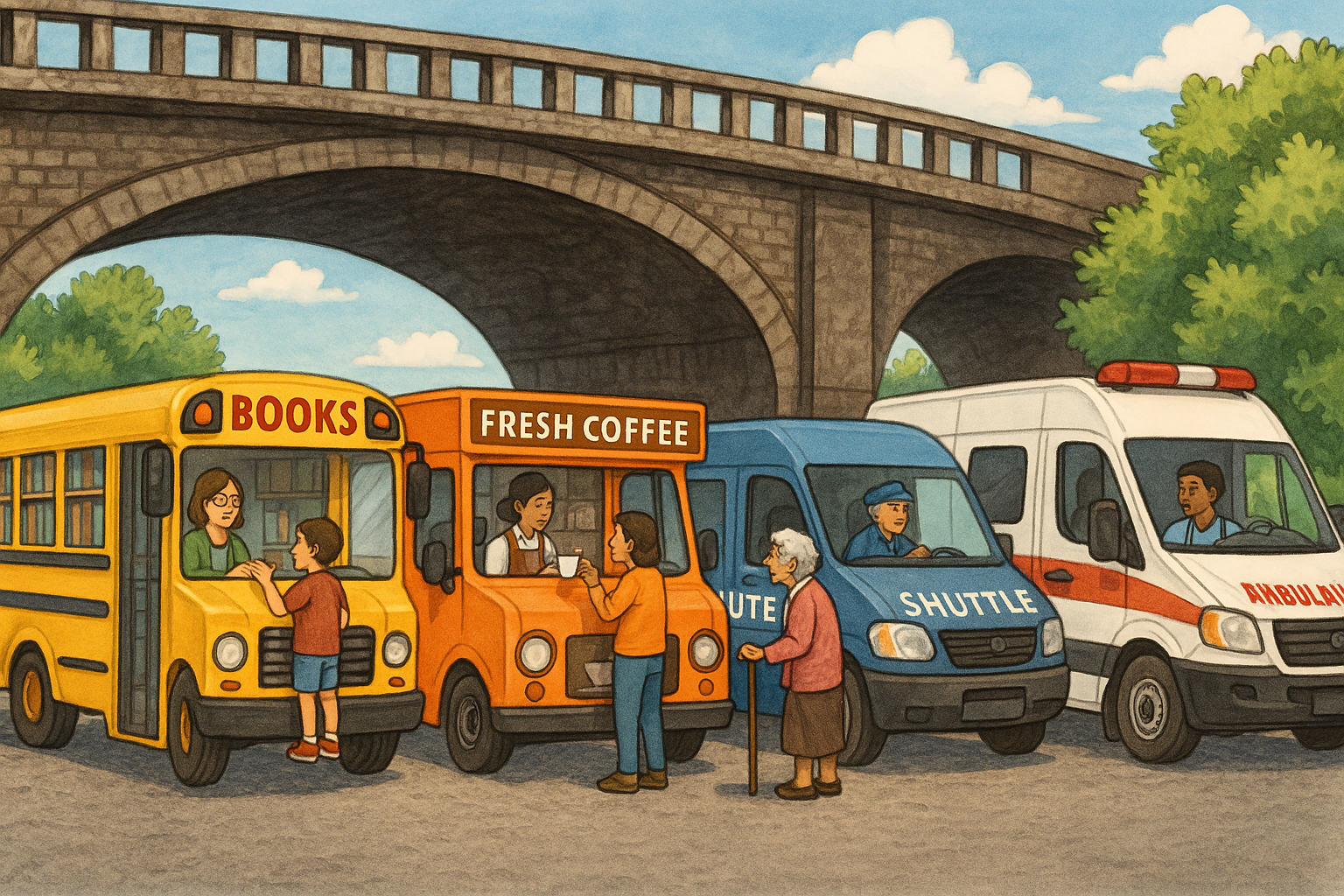
Learn how Cape Town's "Bridge Day" transformed street-level primary care, creating a blueprint for reaching underserved communities.
On one Saturday in 2026, Reed Street CDC held a special health fair under a big highway in Cape Town, helping people who live on the streets. They offered many health checks, like for cancer and other sicknesses, right where people needed them most. This amazing event used special vans and friendly helpers to give care, showing a new way to bring health to everyone. It was a day when healthcare came to the people, making a huge difference with simple, kind actions.
How did the Reed Street CDC transform street-level medicine in Cape Town?
Reed Street CDC revolutionized street-level medicine by launching a single-day, open-air primary-care fair under the N2 highway. They provided comprehensive health services, including cancer screenings, infectious disease testing, and NCD care, directly to an underserved homeless population. This innovative approach utilized mobile clinics, peer educators, and integrated services, demonstrating a new model for healthcare delivery.
Get Cape Town news in your inbox
Stay updated with the latest stories from the Mother City.
The Forgotten Hollow Under the N2
Six metres below the outbound carriageway a sand-bed spreads between Langa and Khayelitsha. Shards of corrugated iron, election placards and plywood lean-to’s form a village for ±150 people. Rain puddles linger for days; there are no plugs, no street numbers, no sewer lines.
For the provincial Community Day Centre network the triangle had stayed a blank white sliver on every coverage map - too distant for daily outreach, too small for a brick-and-mortar post. That label vanished on 25 May 2026 when Reed Street CDC dragged its stethoscopes into the gloom and ran a single-day, open-air primary-care fair.
Six Quiet Weeks of Turning Data into Action
In mid-April Shirley Brooks, senior health promoter at Reed Street CDC, joined a City disaster-risk team for an encampment census. With a WHO-endorsed CHIP rapid card she logged:
• 72 % of over-35s had never had breast, cervical or prostate screening;
• 89 % lacked a Road-to-Health booklet or master patient index digits;
• visible lymph nodes, chronic coughs and open leg sores screamed TB/HIV overlap.
Back at base she distilled the numbers into a three-page micro-epidemiology brief and pinged it to the sub-district data hub and to PinkDrive, a mobile cancer NGO already on provincial payroll. Approval landed in 72 hours. Next came blueprints, budgets and boxes of syringes.
A Four-Wheel Clinic Without Walls
PinkDrive rolled in with two assets:
• A retro-fitted Iveco Daily christened PinkDrive 4×4 - pop-out privacy panels, solar colposcope, cloud-linked B-ultrasound;
• ManVan, kitted for prostate chats and quick digital exams.
Reed Street CDC added:
• A 14-seat Quantum gutted and rebuilt into a registration-and-blood-draw lounge;
• A Lancet courier bakkie, chilled to 4 °C, for instant sample sprints.
Parked in staggered formation under the second span they created a wind-proof queue without a single tent peg.
Care Packages Served Hot and Fast
Instead of the usual “one-disease-one-van” formula the crew stitched three bundles together:
Cancer corner - VIA checks, courier-routed Pap smears, breast palpation and 15-minute PSA strips.
Infectious disease pit-stop - finger-stick HIV, HBsAg, syphilis, plus a GeneXpert van baking sputum cartridges.
NCD lane - BP cuffs, capillary glucose, BMI and colour-coded referral cards.
Everyone left clutching:
a) a two-part encounter sheet;
b) a concrete next-date at Reed Street CDC two kilometres away or at Karl Bremer oncology if red-flagged;
c) a pocket “Rights Charter for People Without Addresses” in Afrikaans, isiXhosa and English - drafted overnight by interns fuelled on coffee and goodwill.
People, Roles and the Barbershop Bait
Governance copied humanitarian surge playbooks.
Intake table: former homeless peer educators hired by the City’s EPWP smiled first - no uniform in sight.
Screening pods: one nurse plus a trusted CHW who knew every nickname and clan line.
Data runners: UCT medical students, tablets in hand, moved like couriers - “tab-lets” in the new slang.
Psychosocial: one social worker on a picnic blanket under a red gazebo handled GBV disclosures, grant forms and shelter links.
While all this hummed, an informal barber offered free trims under a hand-painted “Your Body, Your Story, Your Health” banner. Twelve men who swore they would “never test” sat for haircuts; eight walked away with fresh fades and fresh HIV results.
42 Minutes from Haircut to First ARV
Mr. L, 41, came for a taper fade. The barber - also a trained peer educator - dropped one casual question: “Ever tried the prick test?” Five minutes later a reactive strip. A CHW escorted him to the Quantum for confirmatory INSTI (also positive), then to the gazebo for a 30-day Fast-Track ARV starter pack. At 11:22 he boarded a Golden Arrow bus to Gugulethu CHC, voucher in pocket, antiretrovirals swallowed on site. Total elapsed time: 42 minutes.
The Cold-Chain Sprint
Every 90 minutes the Lancet bakkie peeled off. Samples rode in WHO-approved boxes with phase-change packs that hugged 4 °C for six hours. A WhatsApp thread “Bridge-Cold-Chain-26May” pinged GPS pins; barcode scans hit the provincial lab software before the van even reached the on-ramp. By 14:05 every Pap smear was logged at Tygerberg cytology, meeting the ThinPrep 24-hour window on the dot.
Paint, Play and Pedialyte
Paper pamphlets rarely survive as anything but kindling, so the team invited Baz-Art. Overnight a 4-metre uterus appeared on the concrete pillar - fallopian tubes lit by battery LEDs. A volunteer in a hot-pink tutu gave a tactile tour while explaining HPV. Eighty-nine women lined up for VIA; only three walked away after touching the mural.
Children had their own corner. A borrowed “moon cot” from Groote Schuur’s neonatal ward unfolded under the third span. A paediatric nurse ran catch-up measles boosters for 23 toddlers and dosed vitamin A drops. CHWs taped a cardboard height chart to a pillar; kids leapt to see if they were “deworm-tall.” Parents who had treated the day as an adult affair queued for new Road-to-Health cards.
Afterglow: Numbers and Policy Shifts
At 16:30 the last patient - an elderly woman with bilateral cataracts - boarded an NGO shuttle to UCT ophthalmology. The data wranglers hit “sync.” Dashboard lights:
• 147 adults screened (target 120)
• 89 cervical checks completed
• 61 prostate/testicular exams accepted
• 6 new HIV cases, 4 already linked
• 3 presumptive TB cases, sputum in the box
• 17 hypertension and 9 diabetes red-flags
• 23 children vaccinated
• 41 bus vouchers dispensed
Running those stats across four identical “hidden hotspots” for a full year would cost R1.7 million - 0.3 % of the City’s communicable-disease grant. The draft is already inked into the 2026/27 business plan.
Tech, Transit and the Sacred Spray
PinkDrive is beta-testing 134 CARE# , a USSD reminder loop. Punch in the encounter-form PIN and you get day-3, day-14, day-42 SMS nudges in your chosen tongue. Mpumalanga pilots show 38 % better six-week HIV retention.
Policy caught up fast. On 27 May the Provincial e-Health boss issued a circular recognising “# NOFIXEDABODE” as a valid address in the master index. Some 4 300 historic files were amended overnight; homeless patients can now collect ARVs at any pick-up point with ID or fingerprint.
Culturally, the bridge turned holy. A sangoma arrived to bless the LED uterus and the freshly painted 10-step hand-washing station. Mixed with impepho smoke, the water point became a ritual cleansing site. CHWs logged double foot traffic at the taps for days afterward.
Glossary of Fresh Tools Born on 25 May 2026
Moon Cot – fold-flat paediatric exam crib salvaged from a neonatal unit.
Health Graffiti – supersized murals doubling as tactile textbooks.
Tab-lets – roaming data-capture medics armed with encrypted tablets.
Care Vouchers – single-ride bus tickets baked into clinical referrals.
USSD CARE – SMS reminder engine for non-smartphone users.
[{"question": "### What was the Reed Street CDC's innovative approach to healthcare in Cape Town?", "answer": "The Reed Street CDC pioneered a revolutionary approach by hosting a single-day, open-air primary-care fair directly under the N2 highway in Cape Town. This event brought essential health services, including cancer screenings, infectious disease testing, and non-communicable disease (NCD) care, directly to the underserved homeless population. It utilized mobile clinics, peer educators, and integrated services to deliver healthcare where it was most needed, creating a new model for street-level medicine."}, {"question": "### What specific health services were offered at the fair?", "answer": "The health fair offered a comprehensive range of services, categorized into three main bundles: Cancer Corner (VIA checks, Pap smears, breast palpation, PSA strips), Infectious Disease Pit-stop (finger-stick HIV, HBsAg, syphilis tests, GeneXpert for TB), and NCD Lane (BP cuffs, capillary glucose, BMI measurements, and referral cards). Children also received catch-up measles boosters and Vitamin A drops, and a height chart was used for deworming assessment."}, {"question": "### How did technology and mobile units facilitate healthcare delivery?", "answer": "The event leveraged several innovative mobile units and technologies. PinkDrive contributed a retro-fitted Iveco Daily (PinkDrive 4x4) with pop-out privacy panels, a solar colposcope, and cloud-linked B-ultrasound, along with a ManVan for prostate screenings. Reed Street CDC transformed a 14-seat Quantum into a registration and blood-draw lounge, and a Lancet courier bakkie, chilled to 4°C, ensured instant sample transport. They also used tablets for data collection and a USSD reminder system for follow-up appointments."}, {"question": "### How was the community engaged, and what was the 'Barbershop Bait' strategy?", "answer": "The fair actively engaged the community by employing former homeless individuals as peer educators for intake, ensuring a welcoming atmosphere. Trusted Community Health Workers (CHWs) worked alongside nurses, knowing local nicknames and clan lines. A unique 'Barbershop Bait' strategy offered free haircuts under a banner promoting health. This attracted individuals, particularly men, who might otherwise have been reluctant to undergo health screenings, leading to successful HIV testing and linkage to care for some."}, {"question": "### What were the immediate outcomes and future implications of this event?", "answer": "The event successfully screened 147 adults, performed 89 cervical checks, 61 prostate/testicular exams, identified 6 new HIV cases (4 linked to care), 3 presumptive TB cases, and numerous hypertension and diabetes red-flags. 23 children were vaccinated. The success led to a policy shift: the Provincial e-Health boss recognized \"#NOFIXEDABODE\" as a valid address, allowing homeless patients to access ARVs with ID or fingerprint. The model's cost-effectiveness also led to its inclusion in the 2026/27 business plan for replication in other 'hidden hotspots'."}, {"question": "### What innovative tools and concepts emerged from this single day?", "answer": "The event birthed several innovative tools and concepts: 'Moon Cot' (a fold-flat paediatric exam crib), 'Health Graffiti' (supersized murals for health education, like the LED uterus for HPV awareness), 'Tab-lets' (roaming data-capture medics with encrypted tablets), 'Care Vouchers' (single-ride bus tickets integrated into clinical referrals), and 'USSD CARE' (an SMS reminder engine for non-smartphone users). These tools significantly enhanced the efficiency and accessibility of healthcare for the vulnerable population."}]

Hannah Kriel is a Cape Town-born journalist who chronicles the city’s evolving food scene—from Bo-Kaap spice routes to Constantia vineyards—for local and international outlets. When she’s not interviewing chefs or tracking the harvest on her grandparents’ Stellenbosch farm, you’ll find her surfing the Atlantic breaks she first rode as a schoolgirl.
View all articles →