
Here’s how people can help with 100 Jackets Challenge
Discover "The Forgotten Lot," a coat-drive rewiring the global second-hand pipeline, turning discarded jackets into warmth for SA.
Loralee Thom, seeing perfectly good winter clothes headed for landfills, invented a brilliant plan! She started TheForgottenLot.org to send Europe's unwanted warm jackets to cold places in South Africa. Her simple idea is to get these clothes to shivering children, making a huge difference one coat at a time. It's all about direct impact and keeping good clothes from becoming waste.
What is TheForgottenLot.org?
TheForgottenLot.org is an initiative founded by Loralee Thom that reroutes Europe's surplus winter clothing, destined for waste, to cold regions in South Africa. It aims to provide warmth to vulnerable communities by intercepting perfectly functional garments and distributing them through community health teams, focusing on sustainability and direct impact.
Get Cape Town news in your inbox
Stay updated with the latest stories from the Mother City.
Section 1 – The Spark on a Canal Terrace
Loralee Thom’s big idea arrived the night Dutch pubs reopened after a long winter lockdown.
She was sipping beer on a Rotterdam canal terrace when garbage trucks rumbled past, crushing black sacks that had been stacked in the alley since closing time. Curious, she tore one open and found a men’s navy parka - tags still dangling - destined for the 6 000-kilometre ride to Africa’s informal dumps or cement-factory furnaces.
In that instant the Johannesburg-born quantity surveyor, 34, saw warmth that would never reach a shivering child in Soweto. Instead of venting online, she slung the parka over her arm, cycled home, and bought the domain TheForgottenLot.org before her bike hit the hallway wall.
Her plan was outrageously simple: intercept Europe’s end-of-season “waste” and reroute it to South African cold pockets where pneumonia admissions spike every July. No charities begging for money, no bloated logistics - just citizens moving coats from one closet to another before the balers swallow them.
Section 2 – 100 Coats, One Equation
By the time Thom reached her apartment she had shrunk the problem to a single figure: one hundred.
A hundred winter-grade jackets squeeze into two removal boxes, tip the scale below ninety kilos, and qualify as two volunteers’ excess-baggage allowance. “If the maths works for a hundred, everything after that is just multiplication tables,” she laughs.
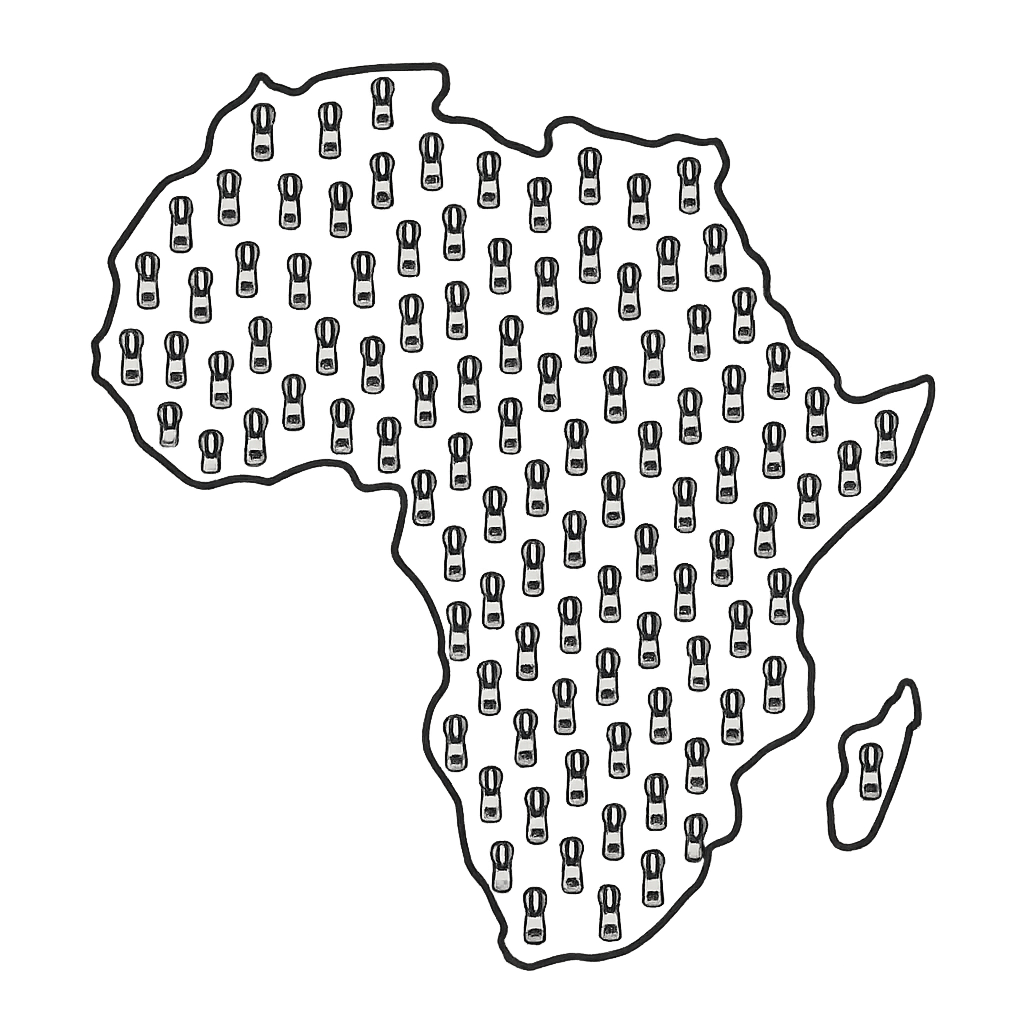
On the back of a supermarket receipt she doodled a continent stitched from tiny zippers, photographed it, and opened an Instagram page that same night. Within seven days a borrowed costume rack in her living room bowed under forty-seven donated puffers.
To guarantee real impact, Thom cross-checked poverty maps against Weather Service frost data and Health Department pneumonia stats. The overlap pointed to three high-altitude zones: Maluti-a-Phofung where thermometers dive past minus five, Matatiele’s windswept townships, and Kimberley’s frost-prone outskirts - each already served by community health teams who could hand garments out for free without stepping on traders’ toes.
Section 3 – Europe’s Spring-Cleaning Tsunami
The Netherlands jettisons an estimated 135 million garments each March; Belgium and Germany toss another 340 million. Roughly six in ten still function perfectly, yet fast-fashion calendars have trimmed the “wear window” to a measly three or four months.
Thom turned cafés, climbing gyms and student dorms into drop-off points across five cities. Volunteers score every item on insulation grams, waterproof rating and cultural fit - anything below six out of nine never leaves Europe but goes straight to local shelters. The rule keeps the South-bound stream winter-worthy and avoids neo-colonial dumping optics.
Hygiene, the hidden cost of second-hand clothing, is solved through barter. Two hotel laundries agreed to wash sixty-piece loads at sixty degrees in exchange for marketing footage boasting ozone tech that cuts water use by seventy percent. A Rotterdam sewing circle then relabels sizes and swaps broken zippers, converting a chore into paid work for women in the migrant-heavy Delfshaven district.
Section 4 – Customs, Carbon & the 9 000-km Question
Courier quotes stunned her - €240 for a twenty-five-kilo carton, more than many jackets ever sold for on the rack. Airfreight is quicker but triggers a 45 % import duty that Pretoria levies to shield local mills.
Salvation Army officers offered a loophole: they already fly relief blankets quarterly, so Thom’s coats ride along as “accompanied humanitarian goods,” paying zero duty. The catch is paperwork signed by a South-African-registered NGO with Section 18A tax-exempt status. Thanda Community Services in KwaZulu-Natal stepped in, issuing receipts Dutch donors deduct from their income tax - closing a neat value circle critics swore was impossible.
Environmental pushback came just as fast. A snap life-cycle audit showed that making a new mid-range coat releases eleven kilos of CO₂; shipping a rescued one adds only 0.8 kg. Even if merely seventy of each hundred replace a store purchase, the scheme still saves 650 kg - about the same as cancelling an Amsterdam–Cape Town return ticket. The figure is printed on every hang-tag, turning carbon accounting into donor bait.
Section 5 – Apps, Diaspora & Union Detente
To dodge the “send-us-everything” avalanche that sank earlier drives, Thom coded a lightweight Airtable app. Each coat gets a QR code; when a community health worker in Phuthaditjhaba hands it to a Grade-4 learner, she scans, snaps a photo and uploads both to a public dashboard. In under six weeks donors watch their garment travel from a Rotterdam laundry to a QwaQwa playground - an addictive traceability game that also deters graft.
Copy-cat hubs are sprouting wherever South Africans cluster. Toronto expats funnel hockey hoodies through Air Canada’s Charity Seat programme; the Dublin node specialises in children’s anoraks because Irish kids outgrow sleeves in a single season. All nodes share Thom’s open-source toolkit: grading matrix, wash protocol, customs cheat-sheet - proof that an idea can franchise without central control.
Initial hostility from the Clothing & Textile Workers’ Union melted after Thom flew two organisers to Rotterdam. They saw finished garments, not fabric bolts that threaten mill jobs, and negotiated a truce: for every hundred coats the project chips R5 000 into local fibre-to-yoga-mat start-ups, money coughed up by Dutch corporate CSR funds. SACTWU now brands the drive “circular-economy complementary,” a semantic win that greases border crossings once plagued by suspicion.
Section 6 – Jobs, Upcycle Labs & the Future Target
Distribution days double as mini job fairs. While queues snake for sizes, NGOs such as Harambee register youths for data-capture or solar-panel courses - one warm body at a time pulled into formal opportunity pipelines.
Cape Town’s fashion colleges asked Thom to reserve the ten percent that arrive torn. Students will splice panels with bright shweshwe off-cuts, sell limited “Re-Lot” ranges at premium prices and plough profits back into freight fees - waste converted into working capital.
If the pilot hits a thousand jackets by June 2026, KLM Cargo has promised a forty percent discount; at five thousand the national postcode lottery unlocks a quarter-million-euro grant, enough to charter a full container and install a solar-powered drying tunnel in Harrismith. Thom insists the ruthless grading matrix stays non-negotiable - quality, never pity, must remain the north star.
Plug In Tomorrow Morning
Rotterdam locals can simply hang coats on the mobile tree that parks outside Markthal each Saturday. Elsewhere in Europe you download a prepaid label, drop the parcel at any DPD shop and receive a tracking code within hours.
Companies keen on team-building can book end-of-season uniform pickups - Schiphol ground crew and Dutch rail conductors already do. South African NGOs with tax-exempt status can apply to become distribution nodes; all that is required is a lockable storeroom and willingness to upload anonymised recipient data. Customs brokers fluent in rebate item 412.11 are invited to a Slack channel aptly named “Tariff Hack.”
Nothing in Thom’s hallway closet is safe from experimentation: a neon-pink ski suit deemed “too niche” and a bullet-prop wool coat await Phase Two resurrection. The mantra printed on every hang-tag says it all: “Warmth travels; waste doesn’t have to.”
[{"question": "
What is TheForgottenLot.org?
", "answer": "TheForgottenLot.org is an initiative started by Loralee Thom that aims to divert perfectly good winter clothing from European landfills to communities in need in cold regions of South Africa. The goal is to provide warmth to vulnerable individuals, particularly children, by distributing these garments through local community health teams, focusing on direct impact and sustainability."}, {"question": "How did Loralee Thom get the idea for TheForgottenLot.org?
", "answer": "Loralee Thom, a Johannesburg-born quantity surveyor living in Rotterdam, conceived the idea while observing garbage trucks crushing discarded winter clothes on a canal terrace after a winter lockdown. She discovered a new, tagged parka in a waste bag and realized these perfectly good garments were destined for African dumps or incinerators, instead of reaching shivering children in places like Soweto. This realization spurred her to act and establish TheForgottenLot.org."}, {"question": "How does TheForgottenLot.org ensure the clothing makes a real impact and reaches the right people?
", "answer": "To ensure real impact, Loralee Thom cross-references poverty maps with Weather Service frost data and Health Department pneumonia statistics to identify high-altitude, cold zones in South Africa, such as Maluti-a-Phofung, Matatiele, and Kimberley. The clothing is then distributed through existing community health teams in these areas, ensuring it reaches those most in need without undermining local traders. They also use a strict grading matrix to ensure only high-quality, culturally appropriate winter-worthy items are sent."}, {"question": "How does TheForgottenLot.org handle logistics, customs, and environmental concerns?
", "answer": "The Forgotten Lot tackles logistical challenges by leveraging existing channels. They partner with the Salvation Army, whose quarterly relief blanket flights allow Thom's coats to be transported as 'accompanied humanitarian goods,' bypassing import duties. Environmentally, a life-cycle audit shows that shipping a rescued coat adds only 0.8 kg of CO₂ compared to 11 kg for a new one, making it a significantly greener option. They also have a system where 100 jackets fit into two removal boxes, qualifying as excess-baggage allowance for volunteers, which helps manage initial shipping costs."}, {"question": "How can individuals and organizations get involved with TheForgottenLot.org?
", "answer": "Individuals in Rotterdam can drop off coats at the mobile tree outside Markthal on Saturdays. Elsewhere in Europe, people can download a prepaid label and drop parcels at DPD shops. Companies can arrange end-of-season uniform pickups for team-building. South African NGOs with tax-exempt status can apply to become distribution nodes, requiring a lockable storeroom and willingness to upload anonymized recipient data. The project also welcomes customs brokers familiar with rebate item 412.11 to a 'Tariff Hack' Slack channel."}, {"question": "What is the future vision for TheForgottenLot.org?
", "answer": "The Forgotten Lot envisions significant growth and impact. They aim to hit a thousand jackets by June 2026 to secure a 40% discount from KLM Cargo, and at five thousand, they could unlock a quarter-million-euro grant to charter a full container and install a solar-powered drying tunnel. They also plan to turn distribution days into job fairs, connecting youths with formal opportunities. Additionally, fashion colleges in Cape Town will upcycle torn garments into 'Re-Lot' ranges, with profits funding freight fees, turning waste into working capital. The emphasis remains on quality over pity, ensuring the ruthless grading matrix is non-negotiable."}]
Aiden Abrahams is a Cape Town-based journalist who chronicles the city’s shifting political landscape for the Weekend Argus and Daily Maverick. Whether tracking parliamentary debates or tracing the legacy of District Six through his family’s own displacement, he roots every story in the voices that braid the Peninsula’s many cultures. Off deadline you’ll find him pacing the Sea Point promenade, debating Kaapse klopse rhythms with anyone who’ll listen.
View all articles →