
High Court showdown over the future of Joburg Zoo’s elephants
Historic trial in Pretoria: Elephants' sentience, constitutional rights, and indigenous stewardship converge in a landmark legal battle.
This trial in South Africa is a huge deal for elephants! It's like asking if an elephant can have rights, just like people. The court is looking at old laws, new laws about animal feelings, and even ancient tribal wisdom. They want to know if keeping elephants in small pens is fair, especially when elephants are so smart and feel deeply. This case could change how we treat all wild animals, making sure they have good lives and are seen as important parts of our world.
What is the significance of the South African elephants trial?
The South African elephants trial is significant as it represents a groundbreaking legal challenge for non-human personhood in the Global South. It weaves together constitutional environmental duties, explicit recognition of "sentient wildlife," and indigenous stewardship, potentially setting a precedent for animal rights and conservation by considering the sentience and cultural importance of elephants.
Get Cape Town news in your inbox
Stay updated with the latest stories from the Mother City.
Palace of Justice Packed as African Elephants Become Constitutional Litigants
Pretoria – The marble foyer of South Africa’s Palace of Justice buzzed like a Saturday market on Monday at dawn. Robed counsel swapped notes with wildlife vets, radio journalists shared power-banks with traditional healers in bead-work shawls, and every eye kept flicking toward the same file number: Animal Law Reform South Africa NPC & Others v Johannesburg City Parks and Zoo NPC & Others. At 09:30 sharp Deputy Judge President Aubrey Ledwaba entered, tapped his gavel once, and launched what advocates already call “the Global South’s most far-reaching fight for non-human personhood.”
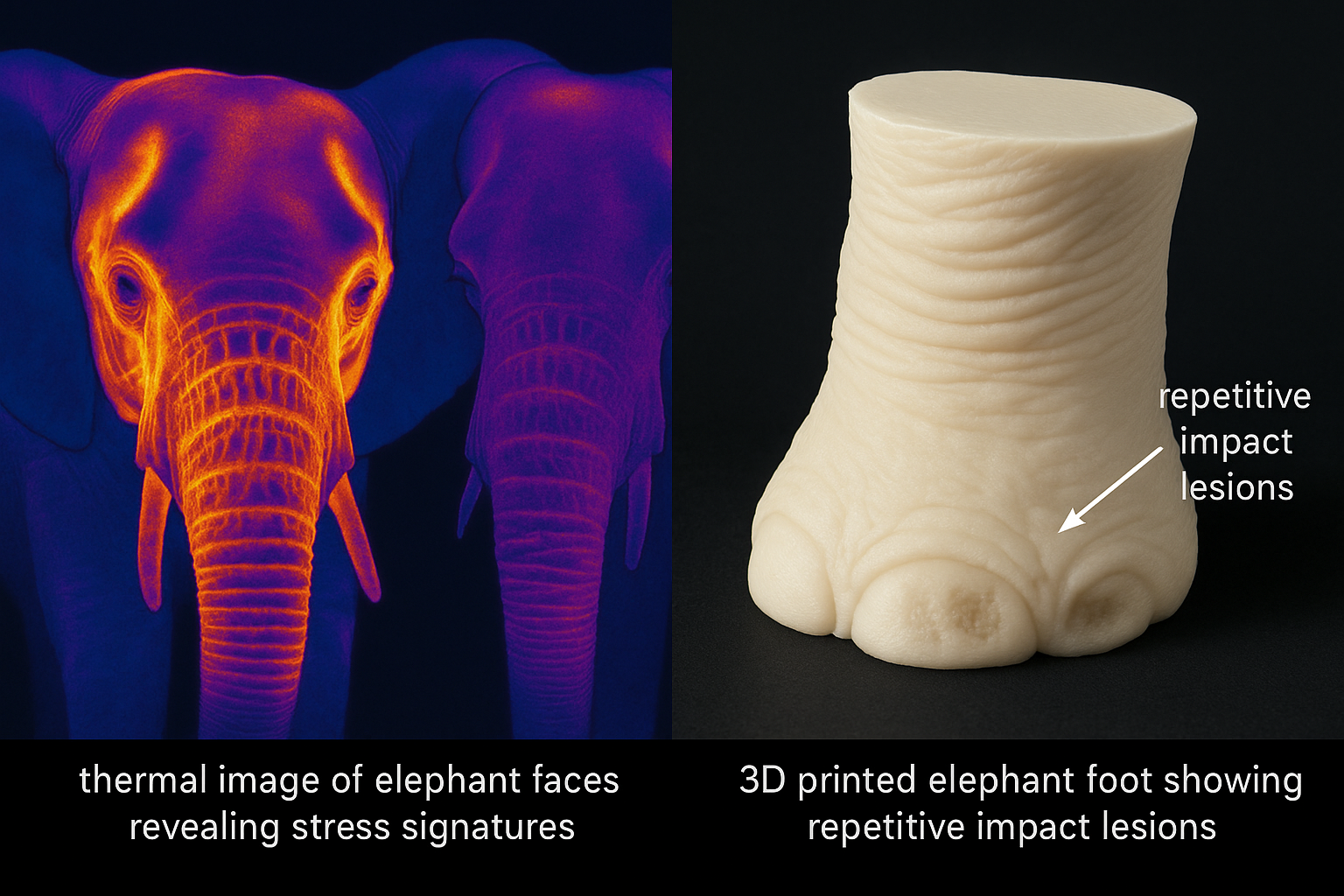
Court staff had worked through the night to remake the room: veterinary behaviour specialists occupied clerks’ benches; elders of the Khoi leadership, wrapped in kaross blankets, filled the public gallery; a white partition hid a pool of transcribers whose keyboards clicked like cicadas. Above the bench a new 4-K screen warmed up, projecting the thermal silhouettes of the three plaintiffs - Lammie, Mopane and Ramadiba - while colours revealed stress signatures pulsing under their wrinkled hides.
The 87-page summons, filed in late February, braids three legal strands:
- Section 24 of the Constitution, which orders the state to shield the environment, curb degradation and push ecologically sound development;
- The National Environmental Management: B Amendment Act 10 of 2022, the first South African statute that explicitly mentions “sentient wildlife” and compels organs of state to “err on the side of liberty” once sentience is shown;
- Sections 30 and 31 of the Constitution plus the National Heritage Resources Act, which protect indigenous “living heritage” and recognise Chief Steven Fritz’s clan as historical caretakers of animals on ancestral land.
Gilbert Marcus SC opened by arguing that confining Lammie to a 0.9-hectare pen - about one two-hundred-thousandth of the terrain she would roam in the wild - breaches each tier. “The issue,” he told the bench, “is not whether the zoo is ‘pretty good’, but whether any cage can be good enough for a mind that navigates by mental maps and keeps friendships for sixty-plus years.”
Week One: Stereotypy, Osteoarthritis, and !Nau
-
Infrared evidence of stereotypic behaviour*
Dr Joyce Poole, co-founder of ElephantVoices, used the first morning to narrate night-vision footage taken inside the zoo. The thermal clip showed Lammie rhythmically swinging her head at 03:00, a movement never recorded in free-roaming herds. Poole explained that because Lammie cannot receive the usual infrasonic check-calls elephants exchange every ninety minutes, her cortisol mirrors that of a human in solitary confinement. Zoo counsel countered that the footage might simply show “a bored but healthy animal,” yet conceded they had no comparable long-term data. -
LiDAR maps of captive foot trauma*
Archaeozoologist Prof. Vishnu Seetah wheeled in a 3-D print of Ramadiba’s left front foot, warm pink resin still curling. LiDAR had revealed micro-impacts consistent with pacing on concrete. In the wild, elephants walk up to eighty kilometres a day on shock-absorbing soil; the scans show micro-fractures stacking into early osteoarthritis by age fourteen. Ramadiba is fifteen. The exhibit, passed hand-to-hand among the judges, drew a rare collective intake of breath from the bench. -
Indigenous contract with the land*
Chief Steven Fritz took the stand next, invoking !Nau, the Khoi covenant among land, animal and spirit. Switching between Afrikaans and Khoekhoegowab, he told the court that elephant rumbles foretell drought or rain. “Deny an elephant the horizon and you mute the weather’s own voice,” he said. He tendered three artefacts for the record: a drought-sweet tsamma melon that trackers share with herds, a necklace of ostrich-shell disks etched with ancestral elephant paths, and a calfskin sheet signed by fifty-four clan elders authorising the group to act as friends of the court.
The Riposte and the Sanctuary Option
-
State argues standing and slippery slopes*
Advocate Tembeka Ngcshondwa, for the Gauteng Member of the Executive Council, moved to strike the matter out. She argued that welfare standards do not equal enforceable rights and warned that a ruling for the elephants would “invite every dassie and pigeon to clog our roll.” State veterinarian Dr Johan Oelofse listed recent zoo upgrades - heated salt-water pools, timed feeders, peanut-butter puzzles - yet admitted under cross-examination that no full-time ethologist is employed and husbandry protocols are patched together from open-access journals. -
A 12,000-hectare soft-release plan*
The applicants want the trio moved to the Kaapse Elephants Freedom Reserve near Beaufort West, a mountain-rimmed tract that GPS-collared herds used as a seasonal corridor in 2004. On Day 4 the court watched a live feed of the reserve’s boma where three Kruger orphans already browse thornveld. Ecologist Dr Anka Bedetti detailed a three-step rewilding plan: social bonding in a thirty-hectare camp, night-time release into a two-hundred-hectare zone laced with infrasound-tuned invisible fencing, and eventual full-reserve access while dung cortisol is tracked. A judicial site inspection is pencilled in for 12 June 2026, pending clearance from the Air Force, whose training flight-path skirts the property.
Ripples, Personhood, and the March Toward Judgment
-
Paralysis on permits, policies and premiums*
While the case sits, Mpumalanga has quietly frozen all new elephant-breeding permits for private facilities. Santam, South Africa’s largest short-term insurer, is inserting zoo-exclusion clauses for “mental distress in sentient megafauna.” Stellenbosch University will launch an LLM module titled “Multispecies Constitutionalism,” recruiting scholars who helped a 2021 Uttarakhand high-court order grant legal personhood to the Ganges River. -
Foreign briefs and Ubuntu beyond humans*
The bench accepted amicus briefs from Argentina’s Sandra the orangutan habeas ruling, New York’s failed “Free Happy” case, and Colombia’s Supreme Court decision that declared the Amazon itself a subject of rights. Retired Justice Johann Kriegler, elephant researcher Cynthia Moss, and Māori jurist Sir Joei Mummery will compile an advisory memo on “stretching ubuntu past our own species.” -
Neuroscience accepted into evidence*
Neurobiologist Dr Bob Jacobs presented fMRI scans from a seven-tonne portable imager, proving that elephant anterior cingulate cortex packs spindle neurons in densities matching those of humans - anatomy believed to anchor empathy and grief. The scans, admitted as Exhibit J-21, mark the first time raw neuroimaging data has entered the South African record. -
Funding and the road to 2027*
Billionaire Mark Shuttleworth has pledged R15 million toward relocation through his Shuttleworth Foundation. Leaked minutes show the City of Johannesburg toyed with privatising the zoo by selling naming rights, but that plan is now on ice until judgment. The docket will run through legal submissions on 19 May 2026 and a closed-door colloquium on 21 May 2026; a ruling is expected in early 2027. Outside the Palace of Justice each court day, a school brass band rehearses “Hlangabeza,” a liberation song whose 6/8 rhythm mirrors the cadence of elephant footfalls - an audible promise that the verdict, whatever it is, will echo well beyond parchment into the infrasonic songs of Africa’s largest land mammals.
[{"question": "
What is the South African Elephants Trial about?
", "answer": "The South African Elephants Trial is a landmark legal case in South Africa focused on whether elephants, specifically Lammie, Mopane, and Ramadiba, can be granted personhood rights. It questions the fairness of keeping highly intelligent and sentient elephants in confined zoo environments, arguing that their current conditions violate constitutional environmental duties, laws recognizing 'sentient wildlife,' and indigenous stewardship principles."},{"question": "
What legal arguments are being used to support elephant personhood?
", "answer": "The case braids three main legal strands: Section 24 of the Constitution, which mandates state protection of the environment; the National Environmental Management: B Amendment Act 10 of 2022, which explicitly mentions 'sentient wildlife' and compels organs of state to 'err on the side of liberty' once sentience is proven; and Sections 30 and 31 of the Constitution along with the National Heritage Resources Act, which protect indigenous 'living heritage' and recognize the Khoi leadership's historical role as animal caretakers."},{"question": "
What evidence has been presented in court to support the elephants' suffering?
", "answer": "Evidence includes infrared footage showing Lammie exhibiting stereotypic head-swinging behavior, indicative of stress similar to human solitary confinement, and LiDAR maps revealing micro-fractures and early osteoarthritis in Ramadiba's foot due to pacing on concrete. Additionally, neuroscience data from fMRI scans has been admitted, showing that elephant anterior cingulate cortex has spindle neurons in densities comparable to humans, suggesting complex emotions like empathy and grief."},{"question": "
What is the proposed solution for the elephants if the trial is successful?
", "answer": "The applicants propose moving Lammie, Mopane, and Ramadiba to the Kaapse Elephants Freedom Reserve near Beaufort West, a 12,000-hectare mountain-rimmed tract. A three-step rewilding plan has been detailed, involving social bonding, a phased release into increasingly larger areas with infrasound-tuned invisible fencing, and continuous monitoring of their well-being."},{"question": "
How could this trial impact animal rights and conservation beyond these specific elephants?
", "answer": "This trial could set a significant precedent for animal rights, particularly for non-human personhood, globally. It has already caused ripples, with Mpumalanga freezing new elephant-breeding permits and insurers adding 'mental distress in sentient megafauna' exclusion clauses. If successful, it could fundamentally change how wild animals are treated, recognized, and protected, emphasizing their sentience and cultural importance."},{"question": "
What is the timeline for the trial and its potential judgment?
", "answer": "The trial has involved extensive presentations of evidence and legal arguments. Legal submissions are set to conclude on May 19, 2026, followed by a closed-door colloquium on May 21, 2026. A ruling from Deputy Judge President Aubrey Ledwaba is expected in early 2027. Funding for relocation, if approved, has been pledged by the Shuttleworth Foundation."}]
Oliver Daniels is a Cape Town journalist who chronicles the intersection of food, migration and identity in South Africa's kitchens—from wood-fired Gugulethu braai spots to Constantia vineyards. Born and raised on the slopes of Devil’s Peak, he still starts each week with a dawn walk across Table Mountain to catch the first Atlantic light before filing copy.
View all articles →