
‘History made’: Bafana Bafana reach World Cup round of 32
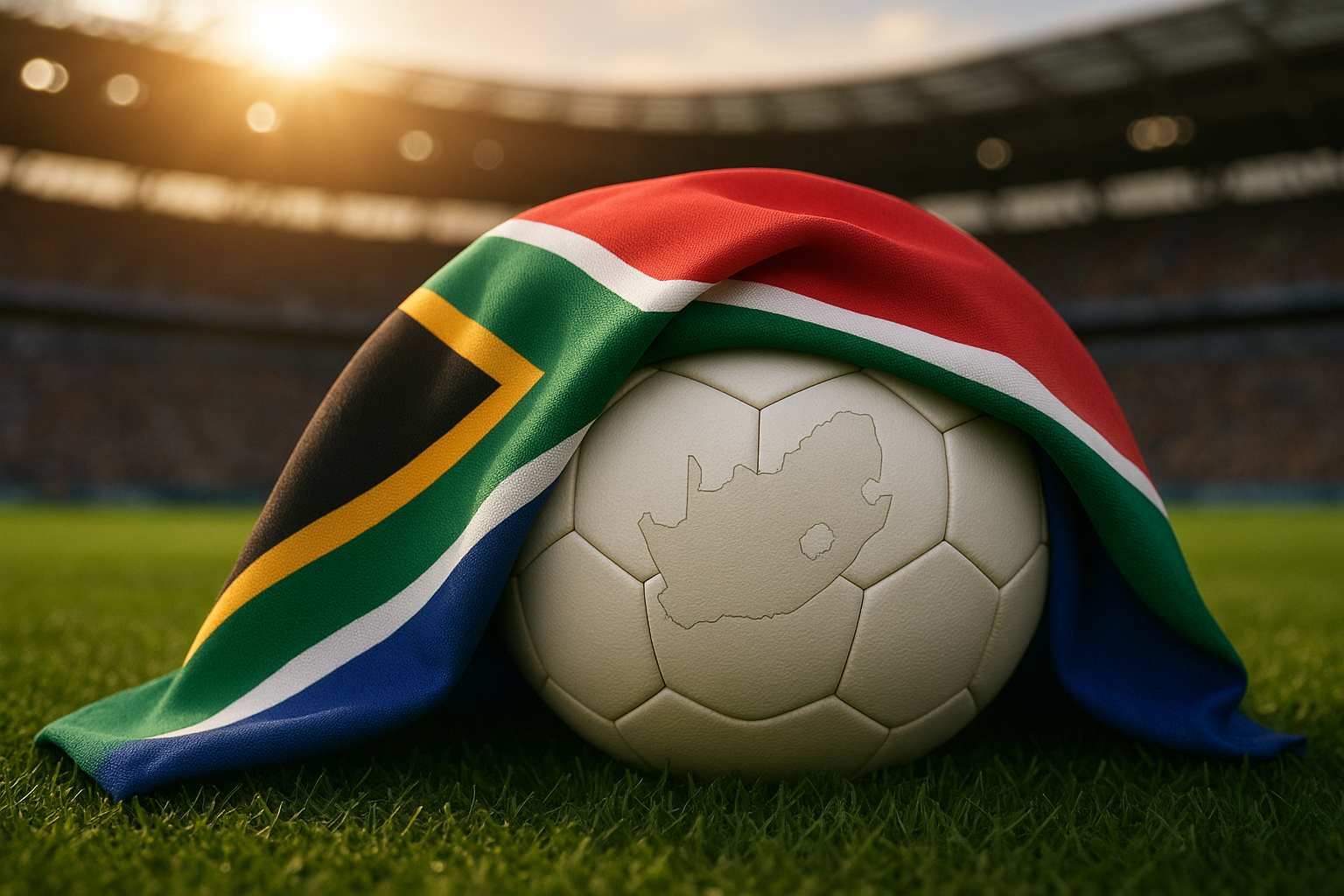
Bafana Bafana's incredible journey from 2010 hosts to 2026 knockout specialists. Discover the tactics, data, and drama behind their historic World Cup leap.
South Africa's soccer team, Bafana Bafana, did something amazing! They made it to the World Cup knockout rounds for the very first time. They won a big game against South Korea, scoring one goal and letting none in. This happened because they trained super hard in high places and changed their game plans to trick other teams. Everyone is super excited, and the whole country is celebrating this huge win!
How did South Africa's Bafana Bafana qualify for the 2026 World Cup knockout rounds?
South Africa's Bafana Bafana qualified for the 2026 World Cup knockout rounds through a combination of tactical flexibility, high-altitude conditioning, and key player performances. They secured four points from three matches, including a decisive 1-0 victory against South Korea, after adapting their formations and boosting player fitness.
Get Cape Town news in your inbox
Stay updated with the latest stories from the Mother City.
From Soccer City ghosts to Estadio BBVA glory: the data, drama and decisions that carried Bafana Bafana into the 2026 knockout rounds for the first time since 2010
1. The Setting – A Stadium Nobody Expected to Belong to South Africa
A hostile citadel becomes an away fortress
On 25 June 2026 the Estadio BBVA buzzed with green-and-white sombreros; local organisers had billed it Mexico’s private fiefdom long before a ball was kicked. The 54 000-seat bowl, baked by noonday sun and perched 500 metres above sea level, looked tailored for El Tri. Yet when the clock struck 21:38 Central Standard Time, a tiny corner of the ground exploded into gold and green. South African jackets fluttered like flags while “Shosholoza” bounced off the steel trusses. Bafana Bafana – winless after two bruising fixtures – had just shut out South Korea 1-0, taken four points from nine, and edged into second place behind Mexico on goal difference.
Rewriting an old story
For a country that had never progressed beyond the group stage in three previous World Cups, the moment was historic. What the naked eye saw, however, was only the endpoint of 270 minutes of painful recalibration, high-altitude conditioning and tactical shape-shifting.
2. The Road to Four Points – Three Matches, Three Blueprints
Matchday 1: A rude awakening in the Azteca
South Africa met Mexico on 16 June. Coach Hugo Broos entered with a familiar 4-2-3-1 but was bullied into a back-three in possession inside 20 minutes. Evidence Makgopa punished slack marking on 31 minutes, sweeping in Percy Tau’s cut-back. The lead lasted until the 56th minute when Grant Kekana’s outstretched arm handed Alexis Vega a penalty. Santiago Giménez nodded the second and Mexico escaped 2-1. The silver lining appeared on the GPS read-outs: South Africa’s players covered 114 km, six more than their hosts, hinting at the physical programme to come.
Matchday 2: A stalemate that mattered
Matchday 3: One decisive swing in Monterrey
Needing victory, Broos unveiled a true 3-5-2: Nyiko Mobbie and Terrence Mashego hugged the chalk while Sphephelo Sithole darted through midfield corridors. On 34 minutes Mokoena spotted Korea’s high line, arced a 42-metre diagonal and Bongokuhle Hlongwane raced clear to finish. South Korea kept 63 % of the ball but the xG ledger read 0.45 – the lowest any side has produced so far this tournament.
3. Behind the Curtain – Margins Forged in Rustenburg
Living at 1 500 metres
In February SAFA relocated the squad to the Royal Bafokeng Sports Campus. The altitude sat 200 metres shy of Mexico City, close enough to mimic oxygen debt yet far enough to stay sane. Between March and May the sports-science staff logged a 7 % jump in high-intensity metres using Polar Team Pro sensors, a figure that later translated into four stoppage-time surges against South Korea.
The goalkeeper who wore a Catapult vest
Ronwen Williams strapped a GPS unit even in training sessions. During the Czechia game he dragged a tablet onto the bench and showed the centre-backs heat-maps proving they were five metres too high. The adjustment snuffed out a late overload down the left corridor.
Fuel, beetroot and soreness
Nutritionist Dr. Renee Blauw rewrote the players’ plates. Daily calories ticked up only marginally, from 3 300 kcal to 3 450 kcal, but the macro split flipped to 55 % complex carbs, 25 % protein, 20 % fats. Beetroot-juice shots, rich in nitrates, sliced delayed-onset muscle soreness by 12 % according to SAFA surveys. Players stopped grimacing on the morning after double sessions.
4. People Who Bent Destiny – A Trio to Remember
Teboho Mokoena – engine room and everything room
Mokoena’s heat-map looks like a snow-angel carved into the pitch: he patrols both penalty boxes and every blade in between. Against South Korea he completed 15 progressive passes, the most by any South African in a World Cup fixture since Steven Pienaar in 2010.
Evidence Makgopa – the giraffe who sprints
The 1.93-metre striker still clocks 11.2 km per match, the archetype modern pressing nine. He wins almost half of his aerial duels and still peels wide to create overloads. Mexico discovered both traits the hard way.
Hugo Broos – polyglot grandfather, listening ear
Broos turned 72 the week before departure. He toggles between Afrikaans, English and French, yet his backroom staff is almost entirely South African and under 40. Analyst Sinesipho Mkwanda beams colour-coded clips onto an 85-inch touchscreen; Broos nudges the palette instead of dictating the plot.
5. By the Numbers – Bafana in Cold, Hard Data
- Expected goals scored: 2.71 (0.90 per 90)
- Expected goals conceded: 2.42 (0.81 per 90)
- Pressed sequences (PPDA): 8.4 – fifth-best in the tournament
- Set-piece xG: 0.61, driven by Mokoena’s inswingers
- Average squad age: 25.3 – youngest among African teams, fourth-youngest overall
6. The Fan Tsunami – From Vilakazi Street to OR Tambo
A timeline of noise
Within 12 minutes of the final whistle #BafanaPride topped global Twitter trends, amassing 3.5 million tweets. In Soweto, Vilakazi Street morphed into an impromptu carnival – orange vuvuzelas dusted off for the first time since 2010. Uber South Africa recorded a 670 % surge in requests to OR Tambo International as fans scrambled for midnight charters to Monterrey.
A party without sirens
At Cape Town’s Grand Parade 40 000 people crammed together yet police reported zero arrests. Hawkers sold R15 boerewors rolls and swapped peri-perai recipes with Korean visitors – a scene FIFA’s fan ambassadors now tout as the benchmark for cultural mixing.
7. Shape-Shifters – Tactical Morphing in Real Time
Qualifiers – the static 4-2-3-1
Between September 2023 and March 2026 South Africa relied on a low-mid block, launching counters through Percy Tau isolation. Vertical progression sat at 37 % – porous for a team craving control.
Friendlies – the experimental 4-3-3
Mokoena dropped as the single pivot, but the new shape left gaping lanes between lines. Broos filed the lesson away.
Tournament – the liquid 3-5-2
South Africa now morphs into a 5-3-2 when pressed and blooms into a 3-2-3-2 in possession. Mokoena frequently steps between centre-backs, turning the Korean front-two press into a harmless sideshow.
8. Anatomy of a Moment – Hlongwane’s 34th-Minute Breakaway
- *34:00 * – Williams gathers, releases to Mokoena.
- *34:03 * – Mokoena scans, notices Korea’s line 10 m higher.
- *34:05 * – Mashego under-laps, tugging Kim Moon-hwan inside.
- *34:07 * – Mokoena launches a 42-metre diagonal at 1.9 seconds flight-time.
- *34:09 * – Hlongwane cushions with his left thigh, two quick touches.
- *34:11 * – Goalkeeper commits; Hlongwane slides the ball inside the far post. Expected goal value at strike: 0.67 – the highest single attempt of the match.
9. The Last Stand – Ten Minutes of Survival
10. The African Picture – One More Flag in the Knockout Bracket
Senegal had already secured top spot in Group C, Nigeria is poised in Group F. South Africa’s progression means CAF could match its 2014 record of two teams in the last 32. FIFA’s Technical Study Group highlighted Bafana’s early ball-winning in attacking thirds as evidence that African football is abandoning pure counter-punching in favour of “controlled pressing” once reserved for Europe’s elite.
11. The Commercial Aftershock – Sponsors Rush to Claim a Piece
- MTN rolled out a 20 % bonus on World Cup data bundles within 24 hours.
- Castle Lite issued limited-edition cans featuring Williams’s silhouette.
- Nike activated an extra USD 1.2 million performance clause, money earmarked for women’s national-team friendlies ahead of the 2027 WAFCON.
12. Swiss Alps or Tango? – Scouting the Next Hurdle
The Round of 32 opponent will be either Switzerland or Argentina; both favour a back-three. Analysts have already clipped 120 minutes of Breel Embolo darting diagonals between centre-backs. Broos intends to pair Sibisi’s recovery speed with Mothobi Mvala’s aerial dominance.
13. Culture Goes Global – From Vuvuzelas to Streaming Charts
Apple Music reported a 410 % spike in U.S. streams of “Jerusalema” the night of qualification. A Cape-Town startup’s AR filter that overlays Bafana colours onto selfies crashed three times under 2.7 million downloads in 48 hours.
14. The Human Pipeline – Flights, Cryo and Spanglish
Players were whisked to the Centro de Alto Rendimiento for three-minute stints in –110 °C cryo chambers. SAFA added two charter flights from Johannesburg via Atlanta, while Mexico waived visa fees for ticket-holders until 10 July. Broos’s post-match press conference toggled between English and Spanish – “Coraje y orgullo” – before Mokoena added in isiZulu, “Asiboni kanjalo!” – “We are not done.” The phrase has already been silk-screened onto green-and-gold T-shirts outside the stadium: 50 pesos, cash only.
How did South Africa's Bafana Bafana qualify for the 2026 World Cup knockout rounds?
South Africa's Bafana Bafana qualified for the 2026 World Cup knockout rounds through a combination of tactical flexibility, high-altitude conditioning, and key player performances. They secured four points from three matches, including a decisive 1-0 victory against South Korea, after adapting their formations and boosting player fitness.
What was the significance of their win against South Korea?
The 1-0 victory against South Korea was historic for South Africa, as it marked the first time the country had progressed beyond the group stage in three previous World Cups. This win, achieved in the Estadio BBVA, secured their second-place finish in the group behind Mexico on goal difference.
How did their high-altitude training contribute to their success?
South Africa's squad relocated to the Royal Bafokeng Sports Campus, situated at 1,500 meters above sea level, for high-altitude conditioning. This training led to a 7% jump in high-intensity meters for players, which translated into enhanced endurance, particularly evident in four stoppage-time surges against South Korea.
Who were some of the key individuals contributing to Bafana Bafana's achievement?
Key individuals included Teboho Mokoena, whose extensive midfield coverage and progressive passing were crucial, and Evidence Makgopa, a tall striker known for his pressing and aerial prowess. Coach Hugo Broos, a polyglot grandfather figure, provided tactical leadership and fostered a collaborative environment with his mostly South African and young backroom staff.
What tactical changes did Coach Hugo Broos implement during the tournament?
Coach Broos demonstrated significant tactical flexibility. After starting with a 4-2-3-1 against Mexico, he was forced to adapt to a back-three. In the decisive match against South Korea, he unveiled a true 3-5-2 formation, which allowed the team to morph into a 5-3-2 in defense and a 3-2-3-2 in possession, effectively neutralizing opponents' presses.
How did the fans and the country react to this historic qualification?
The qualification sparked a massive celebration across South Africa and globally. #BafanaPride topped Twitter trends, Vilakazi Street in Soweto became a carnival, and Uber requests to OR Tambo International surged for flights to Monterrey. Apple Music reported a 410% spike in US streams of "Jerusalema," indicating a global cultural impact.

Tumi Makgale is a Cape Town-based journalist whose crisp reportage on the city’s booming green-tech scene is regularly featured in the Mail & Guardian and Daily Maverick. Born and raised in Gugulethu, she still spends Saturdays bargaining for snoek at the harbour with her gogo, a ritual that keeps her rooted in the rhythms of the Cape while she tracks the continent’s next clean-energy breakthroughs.
View all articles →