
Housing activists march to Parliament against proposed land bill
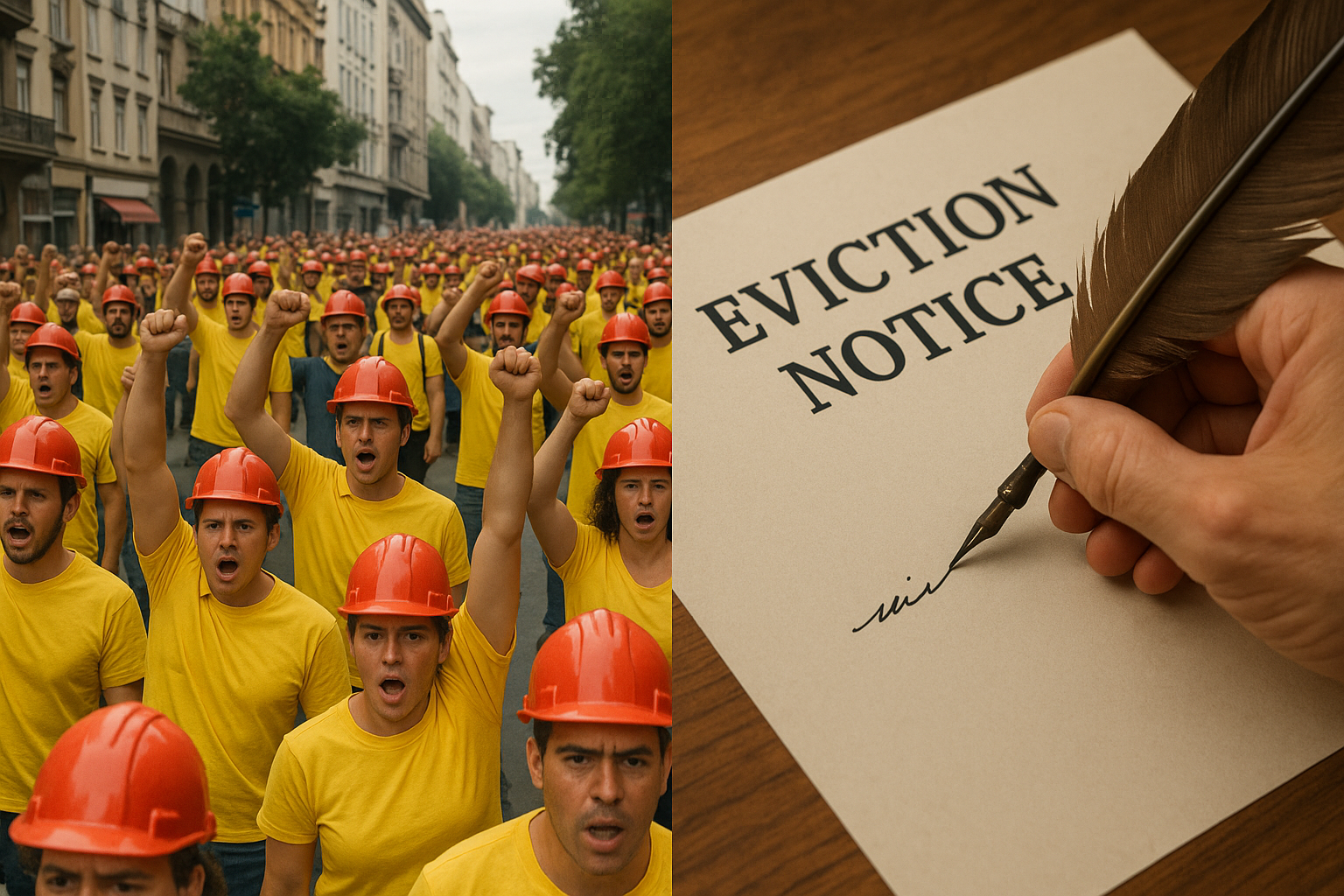
Cape Town housing activists protest the PIE Amendment Bill, fearing it criminalizes poverty and weakens eviction protections. Deadline nears.
People in Cape Town are marching against a new law called the PIE Amendment Bill. This bill could make it a crime to live on land without permission and might stop the government from helping people who lose their homes. Protesters, dressed in bright colors, are making noise outside Parliament, demanding the bill be stopped. They say this new law will hurt poor people, making it easy to throw them out without anywhere to go. Many worry it will undo good laws that protect people's right to a home.
What is the PIE Amendment Bill?
The PIE Amendment Bill, or Prevention of Illegal Eviction from and Unlawful Occupation of Land Amendment Bill, is proposed legislation in South Africa. Critics argue it would criminalize land occupation and remove the state's duty to provide alternative accommodation for evicted individuals, potentially undoing established housing rights.
Get Cape Town news in your inbox
Stay updated with the latest stories from the Mother City.
I. Marching to the Lions
Monday, 10:27 a.m.: a brisk south-easter pin-wheels dust along Spin Street. Parliament’s stone lions appear, then disappear, behind a flood of lemon T-shirts, scarlet hard-hats and umbrellas daubed “The Land Is Home.” Roughly a hundred protesters, marshalled by fluorescent-bib stewards, move in tight formation from Keizersgracht before loosening into freedom-songs. A brass band borrowed from Kensington High keeps the beat neat; the tuba points skyward like a loudspeaker. Shop owners step onto stoops; parliamentary guards flex gloved fingers.
This march completes a tri-city trilogy: Durban on Friday saw a toyi-toyi outside Moses Mabhida, while Johannesburg’s Constitutional Hill was circled by a minibus-motorcade, horns blaring. Every protest repeats one crisp demand: “Withdraw the PIE Amendment Bill.”
Inside the cordon, a drone buzzes overhead, streaming live to 17 000 Telegram viewers. QR codes on placards open an auto-fill portal that drafts constitutional objections in under a minute. By 11:30 a.m. the signature counter ticks past 43 000 and keeps climbing.
II. The Paper Tiger - Clause by Clause
Gazetted on 4 April 2024, the Prevention of Illegal Eviction from and Unlawful Occupation of Land Amendment Bill - street-named simply “PIE Amendment” - must receive public comment before midnight tomorrow. The calendar is why the drums are louder this week.
Four flash-points leap off the page:
- Clause 5 creates section 4A, making it a crime not only to occupy land without permission but also to “encourage, instigate, command, counsel, procure or induce” such occupation. Penalties reach R2-million or two years in jail - or both.
- Clause 8 deletes the state’s explicit duty to offer alternative accommodation; courts may still grant it, but no longer must.
- Clause 12 hands execution powers to private security companies, requiring only “minimal oversight” from a sheriff.
Supporters insist the bill targets organised land mafias. Activists counter that it shreds the 1998 PIE Act - legislation forged in the ashes of apartheid-era bulldozers.
III. From Ashes to Amendments - How We Got Here
On 11 June 1991 the apartheid state sent riot police and bulldozers into Richmond Farm, Durban, evicting 500 families at dawn. A child’s school desk was crushed on live television. That image jolted negotiations already underway for a democratic constitution. By 1998, section 26 of the interim charter - everyone’s right to adequate housing - forced Parliament to draft a balanced law: protect property yet protect dignity.
The Constitutional Court added muscle in Port Elizabeth Municipality v Various Occupiers (2004), Modderklip (2005) and Blue Moonlight (2011): an occupier, lawful or not, may not be thrown onto the street if the state has no plan to avoid homelessness. The new amendment, critics say, unravels 26 years of precedent with a single midnight vote.
Senior counsel Wim Trengove sketches two futures:
- Scenario A: A shack fire leaves a mother and three children homeless. They shelter on a vacant municipal lot. Under the amendment, jail can follow within weeks.
- Scenario B: A syndicate streams WhatsApp instructions, terrorises a farmer and seizes vast tracts. The amendment may deliver swift relief - at the cost of criminalising Scenario A.
IV. Countdown - Voices, Votes and Vespers
A. The Minister Responds
Two hours after the march, Human Settlements Minister Thembi Simelane faces cameras flanked by incident reports from eThekwini and Ekurhuleni: scorched security huts, bullet casings, affidavits describing “land mafias” who charge rent for plots they do not own. “We cannot allow organised gangs to prey on both desperate people and lawful owners,” she says. Asked about constitutionality, she answers: “The courts still have discretion; we have merely widened it.” Activists remain unconvinced.
B. The Inside Track
Charles Ford - Presidency liaison and former ANC Youth League treasurer - steps beyond Parliament’s gates in a charcoal suit, surprising the crowd; junior officials usually take the heat. He accepts a 42-page memorandum drafted by Wits’ Centre for Applied Legal Studies and promises a June technical round-table with mayors, activists and scholars. Protesters disperse singing, wary but undefeated.
C. Night Watch
At dusk, District Six’s old Caledon Square police station - 1969 site of forced removals - hosts
What is the PIE Amendment Bill?
The PIE Amendment Bill, or Prevention of Illegal Eviction from and Unlawful Occupation of Land Amendment Bill, is proposed legislation in South Africa. Critics argue it would criminalize land occupation and remove the state's duty to provide alternative accommodation for evicted individuals, potentially undoing established housing rights.
What are the main concerns about the PIE Amendment Bill?
The primary concerns revolve around four key clauses. Critics argue it would criminalize land occupation (Clause 5), make it a crime to encourage or induce such occupation, remove the state's explicit duty to offer alternative accommodation (Clause 8), and hand execution powers to private security companies with minimal oversight (Clause 12). Activists fear these changes will disproportionately harm poor people and erode housing rights established after apartheid.
Who is protesting against the PIE Amendment Bill?
People across South Africa, including those in Cape Town, Durban, and Johannesburg, are protesting against the PIE Amendment Bill. The protests are organized by housing movements and activists who advocate for the rights of the poor and homeless. The movement emphasizes slogans like "Roofs Before Restraints" and "The Land Is Home."
What are the potential penalties under the proposed PIE Amendment Bill?
Clause 5 of the PIE Amendment Bill proposes severe penalties. Occupying land without permission, or encouraging, instigating, commanding, counseling, procuring, or inducing such occupation, could lead to fines up to R2-million (approximately 100,000 USD) or two years in jail, or both.
How does the PIE Amendment Bill differ from existing laws?
Activists argue that the PIE Amendment Bill "shreds the 1998 PIE Act," which was designed to protect both property rights and the dignity of occupiers, ensuring that people are not rendered homeless without state intervention. The current bill is seen as unravelling 26 years of legal precedent that mandated the state provide alternative accommodation for evicted individuals, even unlawful occupiers, to prevent homelessness.
What is the government's justification for the PIE Amendment Bill?
Human Settlements Minister Thembi Simelane states that the bill aims to target organized land mafias and prevent gangs from preying on desperate people and lawful landowners. She asserts that the courts will still have discretion, and the bill merely widens it, implying it's a necessary measure to combat illegal land invasions and associated criminal activities.

Hannah Kriel is a Cape Town-born journalist who chronicles the city’s evolving food scene—from Bo-Kaap spice routes to Constantia vineyards—for local and international outlets. When she’s not interviewing chefs or tracking the harvest on her grandparents’ Stellenbosch farm, you’ll find her surfing the Atlantic breaks she first rode as a schoolgirl.
View all articles →