
Hout Bay fisherman dies after medical emergency off St Helena Bay coast
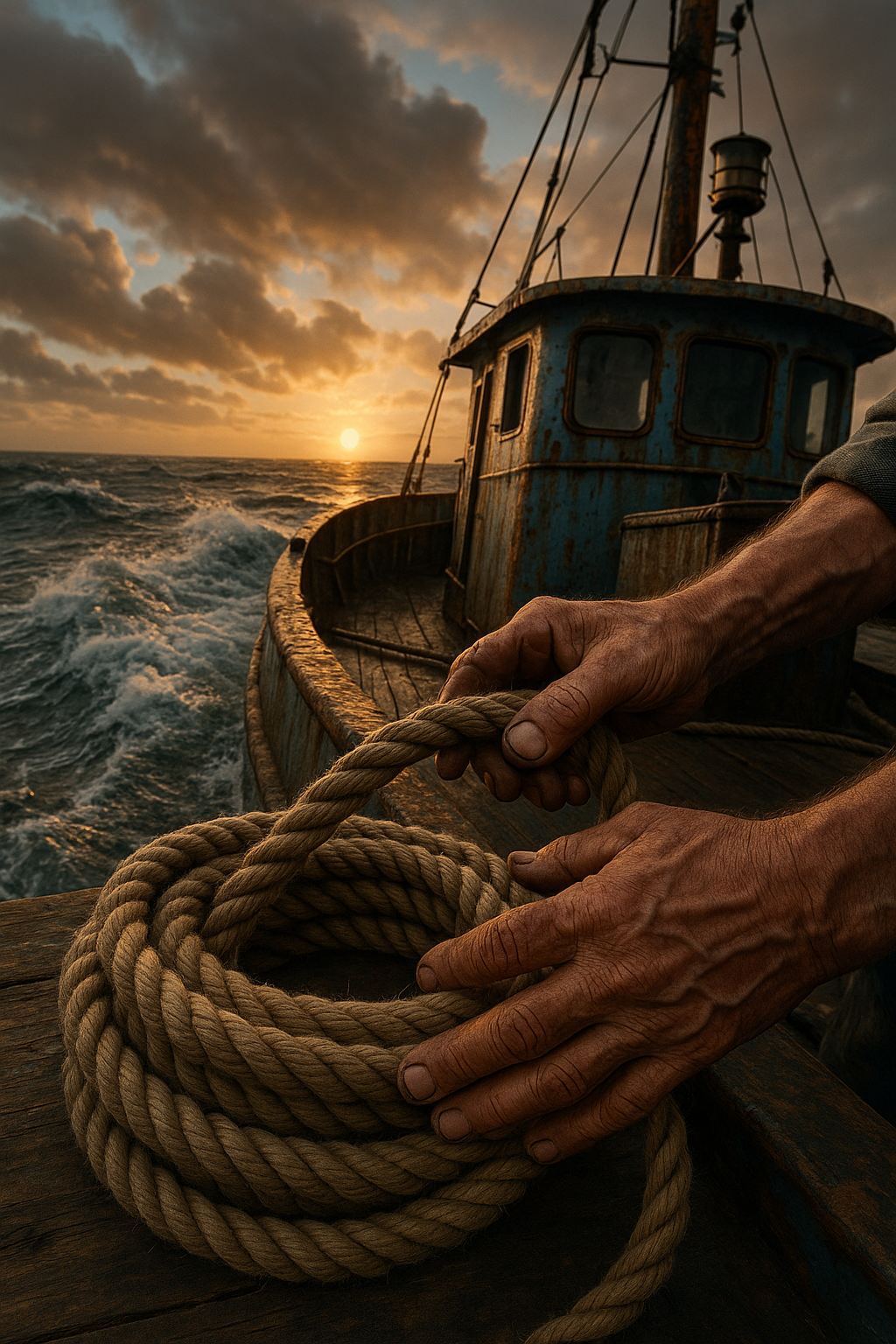
A fisherman suffers a heart attack on a trawler far out at sea. His crew and rescuers battle against time and the ocean.
In the cold, dark waters off South Africa, a fisherman named Willie collapses from a heart attack. His young crew fights to save him, performing CPR on a bucking boat, miles from shore. The rescue boat races against time, but the ocean is a harsh master. Despite their brave efforts, Willie doesn't make it, becoming another sad statistic in the dangerous life of a fisherman at sea.
What is the survival rate for heart attacks at sea in South Africa?
The survival rate for heart attacks at sea in South Africa's commercial fishing fleet is only six percent. This low rate is attributed to an average response time of over four hours to reach definitive medical care for the approximately seventeen heart attack-related medevacs annually.
Get Cape Town news in your inbox
Stay updated with the latest stories from the Mother City.
The Quiet Break
Friday, 07:14 – 38 nautical miles south-west of St Helena Bay
The day began without drama. Willie “Oom Wiel” September was coiling the trawl warp after the final night set when the strength simply left him - not with pain, but with the gentle, decisive courtesy of an old friend closing a door behind him. Heavy sisal slipped through his gloves, slithered over the rail and vanished into the grey dawn. Nineteen-year-old Leagan van Rooyen, the nearest deckhand, thought the veteran had merely misjudged the roll and reached to steady him. Instead he found 87 kilograms of lifelong fisherman folding forward like a marionette whose strings had been cut, eyes already glazing into a fixed, far-off stare every sailor recognises long before doctors attach a Latin name.
Esther Irene - nineteen metres of steel forged in the Cape Town yards - wallowed on the “12-mile bank,” the winter hake ground familiar to every West-Coaster. A four-metre swell, the last sigh of last week’s cold front, lifted her stern and let it crash down hard enough to rattle the wheelhouse. Below, the 320-horse Caterpillar drummed a second heartbeat. On the bridge, skipper Denver “Dikkop” October had the plot for the next trawl when the intercom rasped: “Kaptein, Oom Wiel is af.” The words mean only “Captain, Uncle Wiel is down,” yet on this coast they signal that time has just split into before and after.
In the open-plan theatre of a small trawler, crisis turns every crewman into fire-fighter, paramedic and undertaker. Leagan hooked his forearms beneath Willie’s shoulders and eased the inert weight onto the nonslip between the winch drum and the starboard rail. Ricardo “Ras” Swarts snapped the throttle shut; the sudden hush felt louder than the engine. Someone screamed for the first-aid bag, another for the sat-phone. The port trawl door hung half-submerged, slewing the hull broadside to the swell so that green water flowed burst across the deck and soaked Willie’s overalls as they stretched him flat.
CPR at sea is a duet with the ocean. Thirty compressions, two breaths, but the deck rises and falls like a slow piston, adding or stealing the rescuer’s weight. Leagan’s SAMSA course had used a carpeted classroom and a plastic torso that clicked when pressed hard enough. Now the chest beneath his palms belonged to the man who first showed him how to back-splice an eye in nylon rope when he was still a barefoot kid. Thirty… vier, vyf, ses… Another crest lifted the stern; Leagan’s knees left the plating and his entire mass slammed downward. A trough followed and he floated, arms locked, counting in Afrikaans while the others slid a rolled-up net under the shoulder-blades to let the head drain downhill, a trick picked up from the Namibian tuna fleet.
Engines and Echoes
Denver kept two radios crackling. Channel 16 carried the Mayday relayed via Cape Town Radio in crisp international phrasing: Pan-pan, pan-pan, F/V Esther Irene, medical emergency, 63-year-old male, cardiac arrest, CPR continuing, request urgent medevac. The second conversation hummed on the crew’s cheap handheld: Oom Wiel’s wife Antjie waited on the harbour wall with his enamel lunch tin; who would tell her? Silence answered, broken only by the compressor topping up the R-22 refrigeration.
The skipper spun the wheel hard to port, lining up the bow on 075° - the shortest rhumb to St Helena Bay. The doors were still out; cutting the bridles would sacrifice R28 000 of steel, chain and shackles. Denver recalled the winter Willie had dived into a flooded fish-room and cleared a blocked chute with his bare hands, saving thirty tonnes of hake. He stabbed the knife switch. Hydraulic shears snipped the wires; the doors plumm soundlessly into the dark. Released from drag, Esther Irene levelled, turbochargers howling as Denver nudged the tachometer to 1 850 rpm - well past the continuous rating - black smoke streaming aft like mourning bunting.
Below, the crew rotated every two minutes before forearms cramped and calves turned to stone. They peeled the orange oilskin down to Willie’s waist, shaved a fist-sized square of grey chest hair with a filleting knife, and slapped on the AED pads: sternum–apex. The calm voice of the box announced in Oxford English: “Analyse rhythm. Shock advised. Charing.” Leagan lifted his hands, the hull rolled, the capacitor fired and Willie’s torso arched. Then the ocean inhaled and everything relaxed into another trough. Still no pulse. Compressions resumed, the count now a whispered prayer riding the engine note and the cry of gulls astern.
Running the Distance
08:02 – NSRI Station 44 had already been paged. Devon Wild, ex-diamond diver with 24 years of rescue, was pulling on his dry-suit when the call-back came: Transnet wanted to launch a helicopter. Wild shook his head - coastal fog sat at 100 feet; the Sikorsky would never break visual. Instead he yelled for the 8-metre Gemini RIB Spirit of Surfski II. Six minutes later the tractor nosed the trailer down the slip; at 08:11 the RIB planed into a 22-knot south-easter. Sea 13 °C, air 11 °C, gusts to 28 - ugly but doable. They took suction unit, military stretcher that splits in half to fit a trawler’s hatch, and a pelican case of pre-loaded adrenaline. Wild texted his wife: Big one. Don’t wait lunch.
The RIB slammed across the swell at 36 knots, each impact flinging spray over the console. Wild crouched aft, one hand on the radar mast, the other keying the handheld that kept losing the trawler under the roll. Eighteen nautical miles; closing one every minute-forty. Over the radio he heard Leagan counting, the numbers staccato with effort. Wild pushed the transmit: Keep going, kid, we’re nearly there. Colour? Grey lips, blue nails, blown pupils. The timeline was pitiless - irreversible brain injury after ten minutes. They were already past eight.
08:47 – First sight: Esther Irene’s masthead light flickering through low cloud. Wild throttled back to come alongside the lee, but Denver, focused only on speed, kept the wind on the quarter. The RIB surged on the swell, rising and falling three metres against the steel flank. On the third crest Wild gunned the twin 115s, a boathook snagged the ladder, and he vaulted across with the paramedic bag. The deckhands knelt in a rough semicircle, palms shredded from rope fibres, the old man’s chest patterned with AED burns. Wild knelt, slid two fingers into the groin - nothing. Laryngoscope in, airway clear; tubes and cords frozen in a half-sigh. He passed the endotracheal tube on the first attempt, squeezed the bag-valve mask, then nodded for the stretcher. Willie’s green-check merino blanket - knitted by Antjie thirty years earlier - appeared from somewhere and was tucked around him as though modesty still counted.
Transfer or stay? Wild chose the boat; shifting a pulseless casualty across a three-metre drop risked dropping the body into the Atlantic. The RIB took station on the starboard quarter as escort. Esther Irene settled to a steady fourteen knots, engines moaning just below red-line. CPR continued; every six minutes Wild pushed another milligram of adrenaline through the IO needle drilled into the tibia. The AED cycled three more times, each verdict identical. Leagan sobbed, but his rhythm never slipped.
09:41 – White tower of St Helena Bay lighthouse slid past port. Boats at anchor dipped sterns in greeting. On the quay, EMS had the gurney and a Lucas mechanical compressor ready. Paramedic Nontobeko Dladla boarded before the spring lines were fast, glanced at pupils and Lifepak trace, and knew the mathematics of survival had closed its account. Still, protocol demanded performance: she attached her own leads, confirmed asystole, let the Lucas take over the metronomic thump that had begun on a rolling deck forty-five nautical miles earlier. Antjie stood on the jetty in gumboots three sizes too big, stainless lunch tin clutched to her chest. Not until the ambulance doors slammed slammed did the sound escape her - a low, moaning note swallowed by the departing trawler’s fog-horn.
Aftershocks
By noon the VHF had gone quiet; jokes about catch rates were replaced by terse acknowledgements. In the harbourside bar stools stayed empty; even the slot machine sounded apologetic. At the slipway divers checked Esther Irene’s props for kelp, careful not to look at the pink-stained deck where chlorine and seawater had already scrubbed the worst away. Karel “Kabeljou” van der Ross fetched a tin of white enamel and painted a small cross on the bulwark - an old custom from canvas-and-chain days. No one stopped him; no one spoke.
Forty-eight hours later the pathologist in Tygerberg listed “acute myocardial infarction secondary to severe triple-vessel disease.” A healed fifth-rib fracture testified to the night long ago when Willie had leapt between two boats in a running swell to help neighbours untangle gear. Caffeine levels were double the normal limit - the man had coffee for blood. The family declined an inquest; on the West Coast the ocean collects its taxes without itemised receipts.
The statistics linger. South Africa’s commercial fleet - about 2 300 vessels - logs seventeen medevacs a year for heart attacks alone, ahead of trauma, drowning and crushed limbs. Average time to definitive care: four hours twelve minutes. Survival: six percent. The IMO’s STCW code now suggests mechanical CPR devices for any craft beyond thirty nautical miles, but adoption is voluntary under twenty-four metres. Esther Irene carried an AED only because her insurer dangled a five-percent discount; the crew had drilled once, on a quiet afternoon tied to the jetty, laughter bouncing off wheelhouse glass.
Weeks later Station 44 ran extra courses in the community hall; attendance spiked to seventy, then drifted back to the usual twelve. Leagan signed on a bigger trawler at twice the wage, but the calm voice of the AED rides every watch with him: Stand clear. Denver installed a second defibrillator, this one with a paediatric switch for because his fourteen-year-old nephew now works the school holidays. And every Friday at 08:00, when Esther Irene crosses the twelve-mile bank, throttle is eased for sixty seconds. Turbo whine drops to a bass note that feels, to those aboard, like the echo of a heartbeat still trying to catch up.
What happened to Willie September?
Willie "Oom Wiel" September, a veteran fisherman, collapsed from a heart attack while coiling trawl warp on the fishing vessel Esther Irene, 38 nautical miles southwest of St Helena Bay. Despite the valiant efforts of his crew and a rescue team, he did not survive.
What efforts were made to save Willie at sea?
Willie's crew immediately began CPR on the rocking boat. They also used an Automated External Defibrillator (AED) and administered adrenaline. The skipper, Denver October, cut the expensive trawl doors to speed up the vessel's return to shore, while also relaying a Mayday call. A rescue RIB from NSRI Station 44 was dispatched, bringing an experienced rescuer and paramedic to the scene.
How challenging was performing CPR on the fishing vessel?
CPR at sea was extremely challenging due to the rough conditions. The deck of the Esther Irene rose and fell with a four-meter swell, making compressions difficult. Rescuers had to adapt by using the boat's motion to assist with compressions and by placing a rolled-up net under Willie's shoulder blades to aid drainage.
What was the survival rate for heart attacks at sea in South Africa at the time?
The survival rate for heart attacks at sea in South Africa's commercial fishing fleet is only six percent. This low rate is attributed to an average response time of over four hours to reach definitive medical care for the approximately seventeen heart attack-related medevacs annually.
What were Willie September's medical findings after his passing?
The pathologist's report listed Willie's cause of death as "acute myocardial infarction secondary to severe triple-vessel disease." It also noted a healed fifth-rib fracture, indicating a past injury, and caffeine levels double the normal limit, suggesting a heavy coffee consumer.
What changes were made after Willie's death?
Following Willie's death, NSRI Station 44 ran extra CPR courses, and attendance initially spiked. Leagan, the young deckhand who performed CPR, moved to a larger trawler. Skipper Denver installed a second defibrillator on the Esther Irene, including a pediatric switch. Additionally, every Friday, when the Esther Irene crosses the twelve-mile bank, the throttle is eased for sixty seconds in Willie's memory.

Lerato Mokena is a Cape Town-based journalist who covers the city’s vibrant arts and culture scene with a focus on emerging voices from Khayelitsha to the Bo-Kaap. Born and raised at the foot of Table Mountain, she brings an insider’s eye to how creativity shapes—and is shaped by—South Africa’s complex social landscape. When she’s not chasing stories, Lerato can be found surfing Muizenberg’s gentle waves or debating politics over rooibos in her grandmother’s Gugulethu kitchen.
View all articles →