
How an old friend ended up part of the story
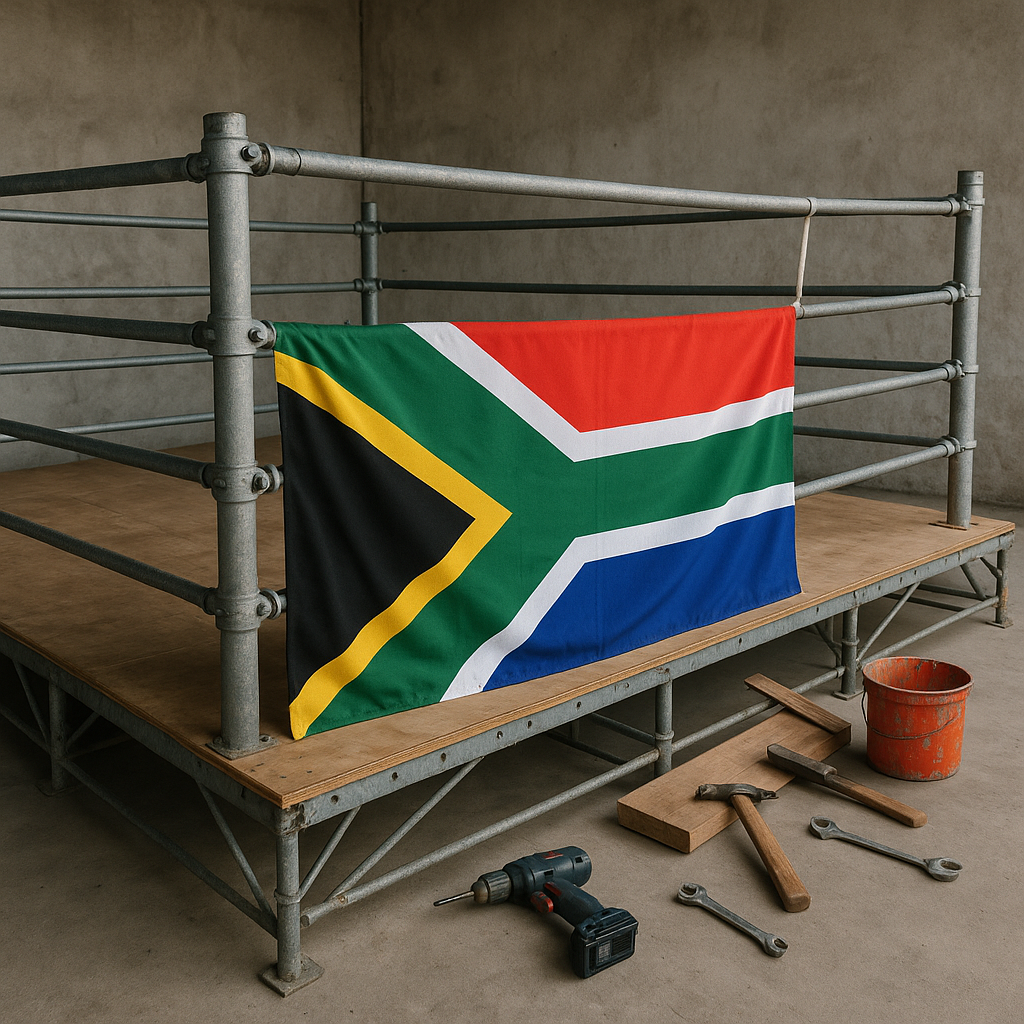
From a tin-roof shack to an Olympic pathway, Thubalethu Boxing Club's quiet redemption story is one of grit, vision, and community.
In the heart of KwaNobuhle, a once broken-down shed has become a beacon of hope: the Thubalethu Boxing Club! This amazing place, led by the inspiring Mazizi Vumazonke, uses boxing to make young people strong, smart, and ready for life. It's not just about punches; it's about helping kids with school, teaching them important life lessons, and even dreaming of the Olympics. From old scraps and big dreams, this club is changing lives, one jab and one lesson at a time, proving that even a small township can raise champions for the world.
What is the Thubalethu Boxing Club?
The Thubalethu Boxing Club in KwaNobuhle is a transformed boxing haven, initially a derelict space, now a state-of-the-art facility. Led by Mazizi Vumazonke, it uses boxing to empower township youth, offering athletic training, academic support, and life skills, with a vision for the 2028 Olympics and beyond.
Get Cape Town news in your inbox
Stay updated with the latest stories from the Mother City.
Township Canvas, Global Horizon
KwaNobuhle wakes to gravel dust, bass lines thumping from overloaded taxis and rows of RDP houses painted in weather-worn pastels. At its heart squats the Thubalethu Community Hall - little more than brick, flaking plaster and a tin roof that chatters whenever the wind picks up. Slip behind the main block and you enter a 6 × 12-metre cavity that once looked like every other forgotten corner of the township: fractured cement, a single heavy bag leaking sand and a bent rebar hook the only luxury.
Today the same doorway reveals rubber mats that swallow sound, calibrated LEDs bouncing off aqua-blue ring canvas, and freshly painted red-and-white ropes that look runway-ready. Hand wraps drip from bespoke stainless racks; Everlast gloves - each pair tagged with township monikers like “Bhut’V” and “Princess” - wait in tidy battalions. The facelift demanded 52 days, cost less than a boutique Joburg wedding and ran on invoices scrawled on bout sheets. Money could buy lights, gloves and plumbing; what it could not purchase was Mazizi Vumazonke’s lifetime of unpaid kilometres, skipped suppers and shoe-boxes of index cards dense with punch counts.
The Man Who Chose to Stay
Mazizi arrived in 1968, fifth of eight children. His father tightened bolts on Volkswagen assembly lines; his mother pressed suburban shirts for families she never met. The household had one pair of school shoes - two brothers took turns, padding the toes with yesterday’s Daily Dispatch when the fit gave way. He learnt the jab by watching Sugar Ray Leonard pirouette across a 14-inch Sanyo in the living room, shadow-boxing in front of a cracked mirror.
At 17 he followed a rumour to a Saturday club in a Methodist church hall. Transkei amateur legend Bulelani Mgoqi spotted the tall kid slipping punches between pews and handed him two cracked 10-ounce gloves. Six months later Mazizi hoisted the Border amateur bantamweight trophy. A vicious right in an Eastern Cape trial fight shattered his orbital socket, ending his own ring dreams but redirecting his talent toward whistles and scorecards. By 1997 he had breezed through the South African Boxing Board of Control exams, riding kombi taxis deep into the Border league’s dusty heartland. Calm under pressure earned him continental gigs - Algiers, Glasgow - and the honour of becoming South Africa’s first black ref in a world-title bout, Hekkie Budler versus Byron Rojas under Monte Carlo lights.
Each return to KwaNobuhle made the contrast starker: car guard gloves dangling from the same young wrists. “I could keep flying to paradise while my own street stayed a desert,” he told himself. In 2012 he stopped boarding the plane.
Bare-Hands Budget: Scraps, Liver and Duct Tape
The Thubalethu Boxing Club opened its doors on a fiscal diet that would make any NGO blush. Monthly dues? Thirty rand - less than a stuffed kota - yet half the kids still rocked up empty-handed. One pair of focus mitts survived eight years of abuse; when the foam disintegrated, grey duct tape gave them a second life. Mazizi charmed local butchers for spare liver, simmering it on a paraffin stove so his fighters could “run heavy” on iron. Mouthguards rotated through Milton baths until the plastic gave up and retired as key rings. Running shoes arrived in black refuse sacks from Catholic schools upgrading their sports kits. For four years the gym had no running water; athletes hauled buckets from a communal tap 300 metres down the road.
Nothing about the place looked like a talent factory, yet the conveyor belt kept moving:
- Siphosethu “Smokin’ Joe” Myeki - 2012 All-Africa welterweight king, 14-0 domestically, now coaching inmates at St Albans Prison.
- Anathi “A-Town” Jafta - national youth flyweight champion who walked away from an R80 000 signing bonus to finish a BSc at Nelson Mandela University.
- Sinazo “Princess” Yeko - three-time SA junior female titlist who escaped an abusive home and now mentors 30 township girls every Friday afternoon.
Their medals rust on a corkboard nailed next to the ring; no sports channel ever replayed the finals.
When a Drone Met a Dream
Seven kilometres south of the hall, 2 500 hectares of thornveld and acacia now answer to the name Nyosi Wildlife Reserve. Launched in 2016, the conservancy aimed to re-wild the buffer zone between township and Volkswagen smokestacks, proving ecotourism could bankroll human neighbours. In 2021 staff brought drones into local schools to teach biodiversity. One drone, chasing dawn light, captured boys jogging barefoot along gravel tracks; the pilot tailed them to the alley behind Thubalethu Hall. Footage ping-ponged around Nyosi HQ until it landed in Paul Gardiner’s inbox at 02:18.
Gardiner - ex-London creative director turned conservation filmmaker - likes his khaki with a side of social justice. He strolled into the gym expecting dust and maybe raw talent. Instead he found Mazizi barefoot in Zara slacks, whistle between teeth, orchestrating pad work for forty-three boys and eleven girls with surgeon-like precision. Gardiner drove straight to a 24-hour café and fired off an email to Jamie Nye at Ranmore Fund Management: “A Rassie in boxing gloves on a shoestring.” Nye flew down on a Thursday, watched three sparring rounds, asked three blunt questions - ceiling, showers, coaches’ salaries - and walked out with a signed partnership deed by Friday afternoon.
Fifty-Two Days, One Township, Zero Shortcuts
- Day 1* – A structural engineer condemns half the roof trusses. An ex-plant worker sneaks a VW tarpaulin from storage; it becomes a temporary canopy.
- Day 7* – Community meeting. A tavern owner donates leftover paving bricks; mothers arrive with trays of koeksisters; teenagers form a human conveyor belt hauling rubble into skips.
- Day 14* – Solar technicians scale the roof; the inverter is couriered by hand from Durban after dusk curfews scare trucking firms.
- Day 21* – Fresh gloves roll in - powder blue for the boys, hot pink for the girls. A Grade-6 girl spots her own name stitched on a cuff and bursts into tears.
- Day 35* – A domestic geyser purrs to life; the first athlete in eight years showers on site instead of trekking home in sweat-soaked kit.
- Day 42* – CCTV goes live - not for security but to stream sparring sessions to consultants in Johannesburg and mentors in Havana.
- Day 52* – Ribbon-cutting. The Eastern Cape MEC slices the tape; a brass plaque reads, “Thubalethu Boxing Club - Fuelled by Grit, Funded by Vision.” Local taxis hoot in unison.
The Road to Los Angeles 2028 – and Beyond
Ask anyone inside the refurbished gym about the next Olympic cycle and they’ll answer, “LA 2028, no longer a dream.” Behind the bravado lies a spreadsheet. Mazizi, backed by two paid assistants and a university sports-science intern, has isolated 19 athletes aged 14–22 for the Olympic pipeline. Criteria: biometric thresholds, mental-resilience scores and - crucially - academic averages. Flunk math and the south-paw prodigy warms the bench until grades rebound. Funding is a three-legged stool: Helpmore SA pays baseline stipends, Nyosi funnels safari revenue and a PE logistics firm sponsors monthly altitude camps in the Drakensberg.
Boxers maintain a “red book” logging heart-rate variability, sleep cycles and mood. A Cuban masseur - ex-Che Guevara Sports Complex - flies in quarterly under a bilateral exchange. Video sessions dissect Lomachenko angles, Shields counters and Morocco’s Mohammed Rabii. Nutrition is township-sensible: amasi, spinach, fortified mielie-meal powered by whey donated from a Stellenbosch dairy. Sixteen-year-old Awonke “Left Hook” Mngxuma already holds a VO2 max of 65 ml/kg/min - elite territory for a teen bantamweight - and has been shortlisted for the 2024 African Youth Games trials in Accra.
Crime stats tell their own knock-out story. SAPS sector commander Colonel Mandla Stofile reports a 34 % drop in common assault within a 500-metre radius of the gym since renovation. Three nearby taverns now pay lower insurance premiums because loitering plummeted. A spaza shop sells out of “fighter smoothies” (peanut butter, banana and rooibos) before 8 a.m. every weekday.
Girls in Gloves, Boys with Books
Female enrolment leapt from 11 to 44 members in just fourteen months. Ten-year-old Lithalethu “Chilli” Nkqayi skips rope barefoot while reciting multiplication tables to keep rhythm. Twenty-eight-year-old Nonkosi “KO” Matshoba returned post-maternity and now mentors teenage mothers. A gynaecologist from Port Elizabeth hosts sessions on pelvic-floor strength and how to sync menstrual cycles with training blocks. A pink mural on the exterior wall reads, “Strong Girls Lift the Nation,” painted with eco-pigments brewed from rooibos leaves and red-clay soil.
The township’s WhatsApp brigade calls itself “Gloves & Goals.” Members discuss ETFs discovered on free Udemy courses streamed over the gym’s solar Wi-Fi. Two fighters just signed micro-sponsorships with health brands; their weekend earnings outstrip their mothers’ monthly domestic-work wages.
Conservation Meets Combination Punch
The KwaNobuhle template is now export-ready. Conservation NGO scouts talent, impact storyteller curates narrative, private capital bankrolls bricks, local municipality fast-tracks permits and the community owns the keys. The same trio - Helpmore SA, Nyosi, Ranmore - has begun replicating the model in Mdantsane and Soweto. A 67-year-old gogo named Nobantu Diko is upgrading her netball court in Motherwell using the exact cross-sector recipe.
Every competitive boxer must enrol in a skills track - coding via CapaCiTi, drone-pilot licensing through Nyosi, or hospitality at a partner game lodge. Graduate Bulelani “Iron Head” Dyonase now earns more as a field ranger at Amakhala Game Reserve than his father did in a lifetime as a security guard. The athlete-ranger pipeline fuses conservation with sporting excellence, torching the tired myth that green causes and black townships sit on opposite teams.
Nightfall Rituals and Starlit Futures
At 19:30 the overhead LEDs dim, gloves stop thudding and fighters form their nightly circle. Mazizi asks three questions: What did you learn? Whom did you assist? Where are you sore? Answers murmur in isiXhosa and English before they’re inked into red books. Outside, taxis hoot, generators growl and the Milky Way leaks across a violet sky. In some high-tech PE facility, Rassie Erasmus is dissecting scrum angles on a 4K wall. Here in KwaNobuhle, Mazizi nods while a 14-year-old southpaw describes the moment his left hook finally snapped. Different fields, same province, same mandate: unlock potential where spreadsheets say none exists.
If - no, when - a South African flag climbs the Los Angeles 2028 podium and a shy kid from KwaNobuhle bows for the anthem, the footage will beam around the globe. Few viewers will know the journey began on a gravel road under corrugated iron held together by duct tape, whey protein and an ungodly amount of stubborn hope.
What is the Thubalethu Boxing Club?
The Thubalethu Boxing Club in KwaNobuhle is a remarkable facility that transformed from a derelict shed into a vibrant hub. Under the leadership of Mazizi Vumazonke, it uses boxing as a tool to empower young people in the township, offering not just athletic training but also academic support and crucial life skills. The club aims to develop well-rounded individuals and has ambitions to produce Olympic champions, particularly for the 2028 Los Angeles Games.
Who is Mazizi Vumazonke and what is his role?
Mazizi Vumazonke is the inspiring leader behind the Thubalethu Boxing Club. A former amateur boxing prodigy whose own career was cut short by injury, he became a highly respected boxing referee, even becoming South Africa's first black referee in a world-title bout. Despite opportunities to travel the world, Mazizi chose to return to KwaNobuhle in 2012 to uplift his community through boxing. He dedicates his life to mentoring young athletes, teaching them discipline, resilience, and valuable life lessons.
How was the Thubalethu Boxing Club renovated and funded?
The renovation of the Thubalethu Boxing Club was a testament to grit and community spirit. Initially, it ran on a shoestring budget, relying on donated equipment, makeshift solutions, and community support. The significant transformation occurred after a conservation filmmaker, Paul Gardiner, discovered the club and connected Mazizi with Jamie Nye of Ranmore Fund Management. This led to a partnership with Ranmore Fund Management, Helpmore SA, and Nyosi Wildlife Reserve, providing crucial funding for a 52-day overhaul that included new mats, lighting, plumbing, and state-of-the-art equipment.
What impact has the club had on the community of KwaNobuhle?
The Thubalethu Boxing Club has had a profound impact on KwaNobuhle. It provides a safe and structured environment for young people, significantly reducing common assault crime rates in its vicinity (a 34% drop reported by SAPS). Beyond boxing, the club instills discipline, offers academic support (flunking math means bench time for prodigies), and equips members with life skills and even career pathways through programs like coding, drone piloting, and hospitality. It has also seen a dramatic increase in female participation, with dedicated programs and mentorship for girls and young mothers.
What are the club's aspirations for its athletes?
The club has ambitious goals, with a clear focus on the 2028 Los Angeles Olympics. Mazizi and his team have identified 19 athletes for an Olympic pipeline, based on biometric thresholds, mental resilience, and academic averages. They provide comprehensive support, including advanced training, nutritional guidance (using locally sourced ingredients), and even access to international expertise like a Cuban masseur. The club aims to empower its athletes to achieve both sporting excellence and successful careers beyond boxing, with many pursuing further education or careers in fields like conservation.
How is the Thubalethu Boxing Club model being replicated?
The successful model of the Thubalethu Boxing Club, which effectively combines conservation, community development, and private funding, is now being replicated in other South African townships. The same partnership of Helpmore SA, Nyosi, and Ranmore is expanding the initiative to Mdantsane and Soweto. This approach, which involves identifying local talent, curating impact stories, securing private capital, and fostering community ownership, is proving to be a sustainable blueprint for positive change and development in underserved areas.

Oliver Daniels is a Cape Town journalist who chronicles the intersection of food, migration and identity in South Africa's kitchens—from wood-fired Gugulethu braai spots to Constantia vineyards. Born and raised on the slopes of Devil’s Peak, he still starts each week with a dawn walk across Table Mountain to catch the first Atlantic light before filing copy.
View all articles →