
How is the Western Cape's unemployment rate lower than the national rate?
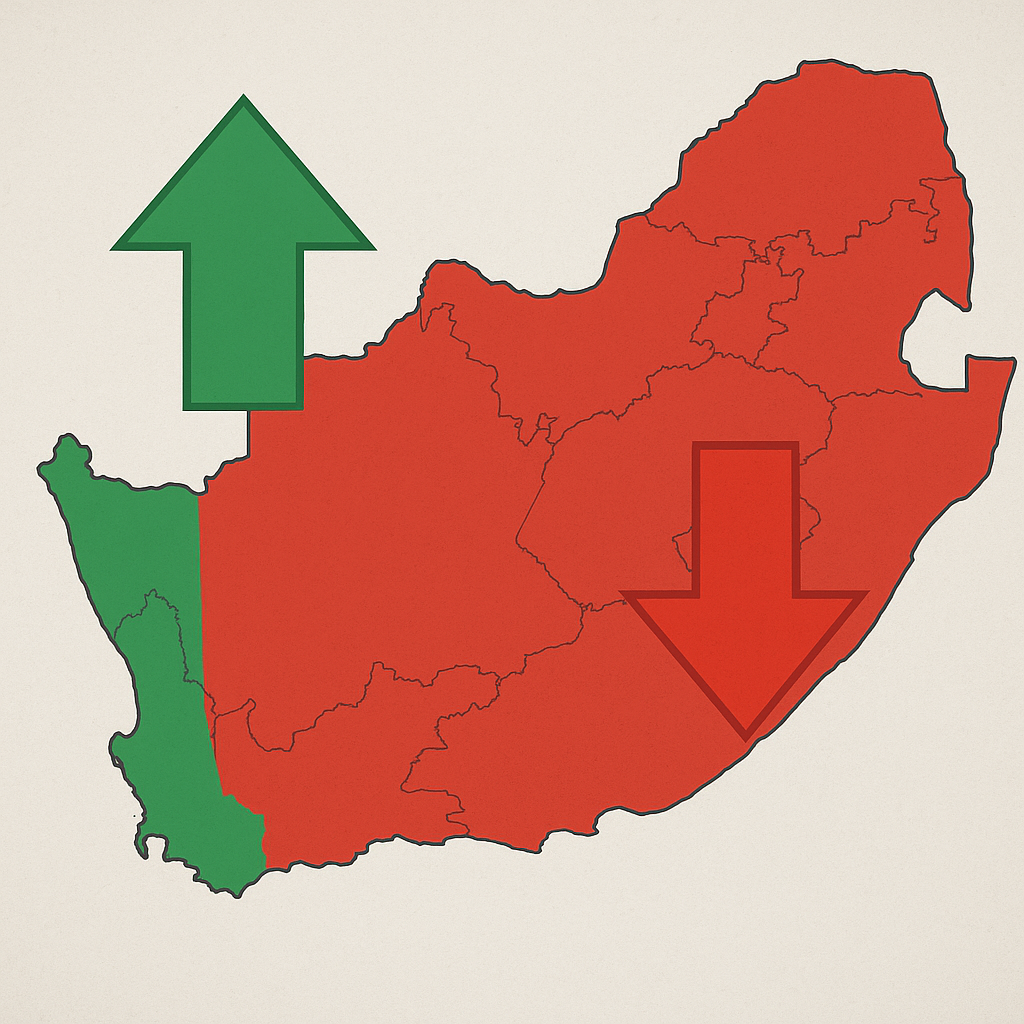
The Western Cape defies national trends with sustained employment growth, driven by a diversified economy, strong investment, and skilled workforce.
The Western Cape's job market is booming, unlike the rest of South Africa! It's like a shining star because it has many different types of businesses, like tech, tourism, and farming. Smart leaders and good roads help too. This means more people find jobs and the economy stays strong, even when other places struggle. It's a real success story!
Why is the Western Cape's labor market outperforming the rest of South Africa?
The Western Cape's labor market thrives due to economic diversification, robust investment attraction, strong entrepreneurial dynamism, and effective human capital development. The province benefits from a varied economy spanning technology, tourism, and agriculture, supported by good governance and reliable infrastructure, leading to sustained employment growth despite national challenges.
Get Cape Town news in your inbox
Stay updated with the latest stories from the Mother City.
The Western Cape has established itself as South Africa's most resilient economic region, with its labor market demonstrating remarkable strength in stark contrast to the broader national picture. While South Africa grapples with some of the highest unemployment rates globally, this coastal province has carved out a distinctly different trajectory, maintaining employment levels and generating new opportunities that have eluded much of the country. The divergence between provincial and national labor market performance has become increasingly pronounced, offering valuable insights into the factors that enable regional economic vitality within a challenging macroeconomic environment.
The Employment Divide: Understanding Regional Disparities
South Africa faces a severe unemployment crisis, with expanded unemployment figures frequently surpassing 40 percent when discouraged job seekers enter the calculation. Yet the Western Cape has consistently maintained the lowest unemployment rates in the country according to official data, though the specific gap to national averages varies across different time periods. This positioning stands as one of the most striking regional economic disparities across the African continent.
These differences extend beyond mere statistics to reveal fundamental structural variations in how the provincial economy functions. The Western Cape demonstrates superior labor market absorption capacity compared to its counterparts, meaning a larger share of working-age residents successfully find employment here than anywhere else in South Africa. This suggests that the systems linking job seekers to available positions operate with greater efficiency in this region, creating a more dynamic and responsive employment landscape.
Understanding this divergence requires examining how historical development patterns, institutional quality, and economic composition have combined to produce outcomes that national policy frameworks have failed to replicate elsewhere. The Western Cape experience demonstrates that regional factors can substantially override uniform national policies in shaping labor market trajectories.
Economic Diversification: Building Resilient Employment Foundations
The Western Cape owes much of its employment stability to an exceptionally varied economic structure that shields it from sector-specific shocks. Rather than depending heavily on extraction industries or single dominant sectors, the province has nurtured multiple thriving industries that collectively sustain job creation even when individual segments falter.
Technology and business process outsourcing have emerged as particularly vibrant engines of employment growth. Cape Town has secured its position as Africa's leading technology hub, drawing multinational corporations alongside a flourishing startup ecosystem that generates jobs across skill levels. This digital economy expansion creates employment opportunities that differ fundamentally from traditional industrial patterns, emphasizing cognitive skills and adaptability over manual labor.
Tourism and hospitality, despite vulnerability to external disruptions like the COVID-19 pandemic, historically supplied substantial employment spanning from entry-level service positions to specialized management roles. The province's extraordinary natural assets, complemented by sophisticated destination marketing and continuous infrastructure investment, sustain visitor volumes that translate directly into service sector jobs. Meanwhile, agriculture - particularly wine production and fruit exports - maintains global competitiveness through quality leadership rather than cost minimization, preserving employment that commodity-dependent regions have lost to automation and international competition.
Manufacturing has evolved toward premium products, with clothing and textiles showing renewal through specialized and sustainable production approaches. The creative economy, including film production, has become an unexpected employment contributor, with Cape Town's facilities drawing international projects that generate both temporary work surges and permanent technical capability development in the local workforce.
Investment Attraction and Entrepreneurial Dynamism
Business investment flows correlate strongly with the Western Cape's employment performance. Despite occasional difficulties, provincial and municipal authorities have cultivated a reputation for administrative effectiveness that exceeds other South African regions. This perception - regardless of its complete accuracy - influences corporate location decisions, with enterprises frequently highlighting dependable permitting procedures and operational infrastructure among their expansion considerations.
New enterprise formation rates in the Western Cape surpass those elsewhere in the country, generating employment through entrepreneurial initiative rather than exclusively through established corporate growth. Small and medium enterprises contribute disproportionately to job creation expansion, indicating that the provincial environment successfully supports business development across organizational scales. Financial access, while remaining problematic, appears somewhat less restrictive than in competing regions, with venture capital and private equity activity concentrating in Cape Town and surrounding areas.
This investment climate creates virtuous cycles where employment opportunities attract talent, which subsequently draws additional investment and entrepreneurship. The resulting agglomeration effects reinforce the Western Cape's competitive position relative to other provinces struggling to initiate comparable dynamics.
Human Capital Development: Aligning Education with Opportunity
Educational alignment with employer requirements underpins much of the Western Cape's labor market achievement. The province accommodates several of South Africa's premier universities and technical institutions, graduating students whose capabilities correspond more closely to emerging employment needs than in regions where educational provision is scarcer or more disconnected from economic demands. The University of Cape Town, Stellenbosch University, and Cape Peninsula University of Technology collectively inject thousands of qualified graduates annually into local employment markets.
Technical and vocational pathways, despite needing continued strengthening, display greater responsiveness to employer specifications than equivalent offerings elsewhere. Formalized collaboration between industry and academia has advanced further in the Western Cape, with structured internship and apprenticeship arrangements smoothing transitions from education to employment. The information and communications technology sector has especially gained from this coordination, as coding academies and targeted training initiatives emerge to address specific skill deficits identified by growing employers.
This educational ecosystem produces human capital that supports continued economic diversification and employment expansion, creating self-reinforcing advantages over regions where talent development and economic opportunity remain poorly connected.
Migration Patterns and Labor Market Absorption
The Western Cape's employment figures reflect selective in-migration alongside domestic job creation. Skilled workers from across South Africa and the wider African continent relocate here, attracted by professional opportunities and quality of life attributes. Though this movement creates housing and service delivery pressures, it contributes to human capital accumulation that enables further economic growth. The clustering of qualified workers generates network effects that draw additional investment and entrepreneurial activity, establishing self-sustaining employment expansion cycles.
This dynamic complicates unemployment measurement interpretation. In-migration of job seekers could theoretically elevate recorded unemployment even as absolute employment increases, rendering the Western Cape's national outperformance particularly impressive. The province has succeeded in accommodating not merely its native working-age population but also considerable migrant numbers seeking economic advancement - evidence of the underlying vigor characterizing its labor market.
Governance Quality and Infrastructure Reliability
National labor market regulations apply uniformly nationwide, yet implementation and supplementary provincial programs vary markedly. The Western Cape administration has advanced economic development approaches emphasizing business enablement, infrastructure preservation, and targeted sectoral assistance. These efforts, conducted within stringent fiscal limitations, address binding obstacles identified through ongoing employer organization consultation and economic analysis.
Municipal administration, especially in the City of Cape Town, has sustained service delivery standards supporting commercial operations. Electricity supply reliability, water resource management, and waste services generally exceed national norms. These operational fundamentals, often assumed in developed economies, constitute significant competitive advantages in the South African context where infrastructure failures regularly disrupt economic activity in other regions.
Contrasting Provincial Experiences
Comparison with fellow South African provinces clarifies the Western Cape's exceptional standing. Gauteng, despite larger absolute employment due to greater population, has experienced more unstable labor market performance and elevated unemployment rates. The Eastern Cape, Limpopo, and KwaZulu-Natal continue battling joblessness substantially above national averages, frequently exceeding 50 percent under expanded definitions. The Northern Cape and Free State, with their resource-dependent economies, confront employment difficulties tied to commodity price fluctuations and mechanization trends in mining and agriculture.
This provincial variation persists despite national policies designed to reduce regional inequalities, demonstrating that local conditions - governance standards, economic structure, educational institutions, and historical development trajectories - overwhelm uniform policy interventions in determining employment outcomes.
Medium-Term Outlook: Emerging Opportunities
The Western Cape's labor market position appears relatively secure for the coming years, though not insulated from national and international economic pressures. Green economy transitions offer specific possibilities, with the province's renewable energy resources and established environmental awareness positioning it to capture employment in solar and wind development, sustainable agriculture, and circular economy activities. The transition away from carbon-intensive operations, while threatening some existing jobs, presents net employment potential given the Western Cape's sectoral composition.
Remote work patterns, accelerated by pandemic experiences, have enabled the province to attract location-independent professionals whose consumption supports additional local employment. Though still quantitatively limited, this digital nomad phenomenon represents a potential growth avenue that could further distinguish the provincial economy from national trends. Cape Town's emergence as a lifestyle destination for international remote workers generates demand across housing, hospitality, and personal services - creating employment for less-skilled workers alongside direct benefits to the relocating professionals themselves.
These emerging vectors suggest the Western Cape may continue extending its employment advantage even as national conditions remain challenging, provided it maintains the governance quality and institutional responsiveness that have underpinned its exceptional performance to date.
[{"question": "Why is the Western Cape's labor market outperforming the rest of South Africa?", "answer": "The Western Cape's labor market thrives due to a combination of factors including economic diversification across sectors like technology, tourism, and agriculture, robust investment attraction, strong entrepreneurial dynamism, effective human capital development through aligned education, and reliable governance and infrastructure. This creates a resilient economy that sustains employment growth even when other regions struggle."}, {"question": "What is the \"expanded unemployment\" figure and how does the Western Cape compare to it?", "answer": "Expanded unemployment includes discouraged job seekers who have given up looking for work, and it frequently surpasses 40% nationally in South Africa. The Western Cape has recorded job gains and maintained the lowest official and expanded unemployment rates in South Africa according to official data, showcasing a significant regional disparity in labor market performance."}, {"question": "How does economic diversification contribute to employment stability in the Western Cape?", "answer": "The Western Cape's stable employment is largely due to its highly varied economic structure, which prevents over-reliance on a single industry. Thriving sectors like technology (with Cape Town as a leading tech hub), tourism, agriculture (especially wine and fruit exports), and even the creative economy (film production) collectively sustain job creation and shield the province from sector-specific economic shocks."}, {"question": "What role do investment and entrepreneurship play in the Western Cape's job growth?", "answer": "The Western Cape fosters an attractive investment climate due to perceived administrative effectiveness and reliable infrastructure. This, combined with higher rates of new enterprise formation compared to other regions, leads to significant job creation through both established businesses and a vibrant small and medium enterprise sector. This environment creates a positive feedback loop, attracting talent and further investment."}, {"question": "How does human capital development support the Western Cape's labor market success?", "answer": "The province benefits from several premier universities and technical institutions that produce graduates with skills aligned to emerging employment needs. Strong collaboration between industry and academia, including internships and apprenticeships, helps smooth the transition from education to employment, particularly in sectors like ICT, ensuring a steady supply of qualified talent."}, {"question": "How do migration patterns affect the Western Cape's unemployment figures?", "answer": "The Western Cape attracts skilled workers from across South Africa and the wider continent, drawn by job opportunities and quality of life. While this in-migration can put pressure on services, it contributes to human capital accumulation and economic growth. The province's ability to accommodate a significant number of job seekers, even as its absolute employment increases, makes its low unemployment rates particularly noteworthy."}]

Aiden Abrahams is a Cape Town-based journalist who chronicles the city’s shifting political landscape for the Weekend Argus and Daily Maverick. Whether tracking parliamentary debates or tracing the legacy of District Six through his family’s own displacement, he roots every story in the voices that braid the Peninsula’s many cultures. Off deadline you’ll find him pacing the Sea Point promenade, debating Kaapse klopse rhythms with anyone who’ll listen.
View all articles →